Animal anatomy knowledge Worksheets for Kids
1 filtered results
-
From - To
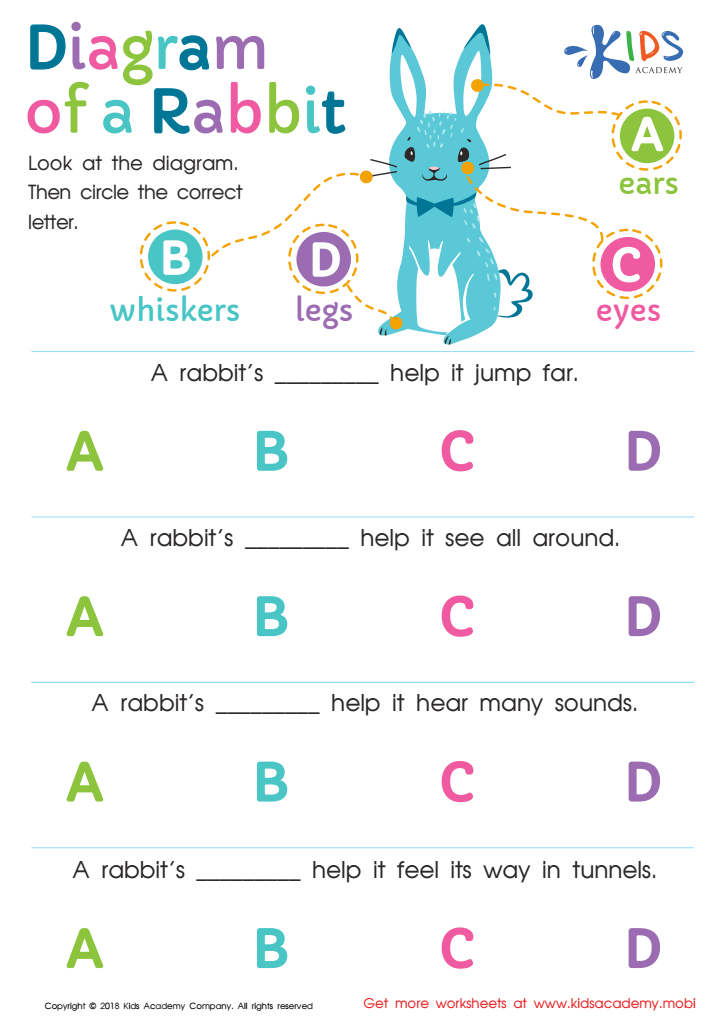
Diagram of a Rabbit Worksheet
 Assign to My Students
Question/Answer

How to test a Grade 1 student’s Animal anatomy knowledge skills?
To test a Grade 1 student's animal anatomy knowledge skills, use simple, visual quizzes or hands-on activities. For example, provide pictures of animals with labeled body parts and ask the student to name each part. Alternatively, use models or toys of animals and have students point to and identify different parts, such as the head, tail, legs, and wings.
How does the mastery of the Animal anatomy knowledge skill affect a student's performance at an early age?
Mastery of animal anatomy at an early age enhances a student's understanding of biological concepts, improves observation and memorization skills, and fosters a deeper appreciation for science and nature. This solid foundation can boost academic performance, encourage scientific curiosity, and potentially guide career interests in fields related to biology, veterinary science, or environmental conservation.
What are some effective activities to train students’ Animal anatomy knowledge skill when teaching them about Reading Non-Fiction?
Engage students in dissecting animal texts, employing graphic organizers like KWL charts (Know, Want to know, Learned) for structured research and comprehension. Utilize comparative anatomy charts for cross-species understanding. Implement interactive anatomy labeling exercises, and organize group discussions for deeper insights. Incorporate digital tools and games focused on anatomy for engaging learning experiences.