Castling rule learning Worksheets for Kids
1 filtered results
Difficulty Level
Grade
Age
-
From - To
Subject
Activity
Standards
Castling rule learning worksheets are a valuable tool for players looking to master the art of castling in chess. These worksheets provide a structured approach to learning and practicing this complex rule, ensuring a thorough understanding of its mechanics and strategy.
Favorites
With answer key
Interactive
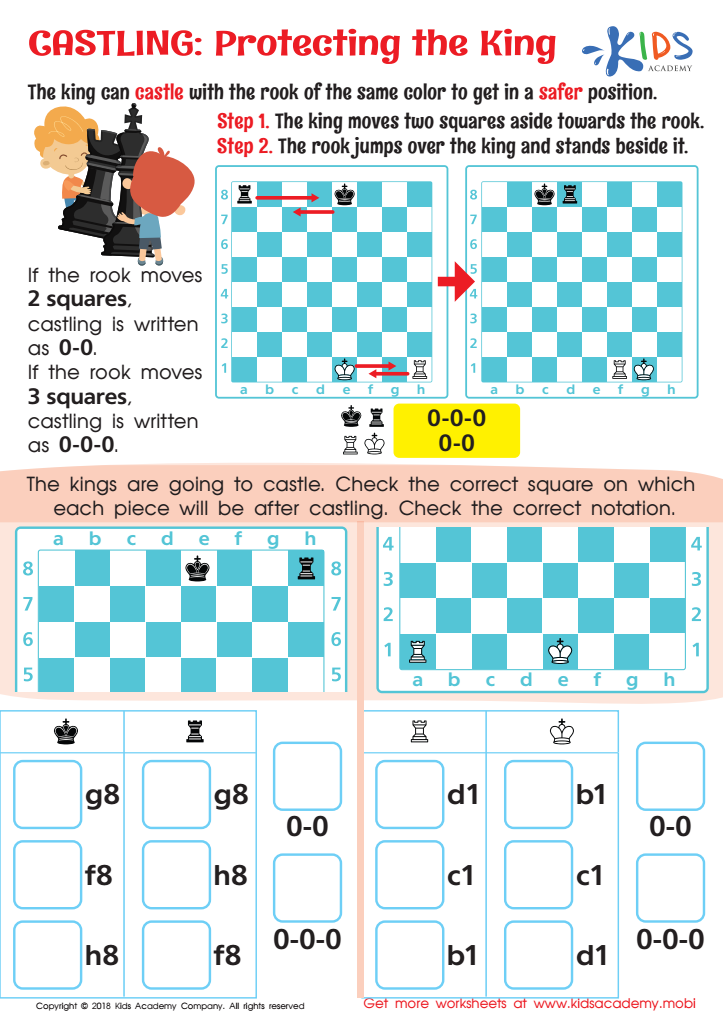
Castling: Protecting the King Worksheet
Castle your king with the rook to get into a safer position! Write 0-0 for a two-square move, or 0-0-0 for a three-square move. Look at the worksheet with your child; on the first chessboard, the king has moved two squares and the rook is beside it. On the second, the rook has jumped over the king. Let your child use their castling knowledge to answer the questions in the easy pdf.
 Assign to My Students
Castling: Protecting the King Worksheet
Worksheet
Question/Answer

Why is the Castling rule learning skill important for Grade 1 students?
The Castling rule learning skill is important for Grade 1 students as it enhances critical thinking, strategic planning, and problem-solving skills. This chess move teaches them how to safeguard their king while also activating their rook, integrating the concepts of defense and offense. It fosters patience, foresight, and the ability to make decisions considering future possibilities.
What does the Castling rule learning skill mean when it comes to Grade 1 Chess learning?
The Castling rule learning skill in Grade 1 Chess learning refers to teaching students the basic chess maneuver of castling. This skill involves moving the king two squares towards a rook on the player's first rank, then moving that rook to the square over which the king crossed.
How to test a Grade 1 student’s Castling rule learning skills?
To test a Grade 1 student's understanding of the Castling rule in chess, set up a chessboard with pieces in their initial positions. Ask the student to perform a castling move, ensuring they know when it is legal (no pieces between the king and rook, neither piece has moved before, the king is not in check).
Join Kids Academy for Free
Who is primarily going to use this learning content?