Emotional awareness Worksheets for Kids
1 filtered results
-
From - To
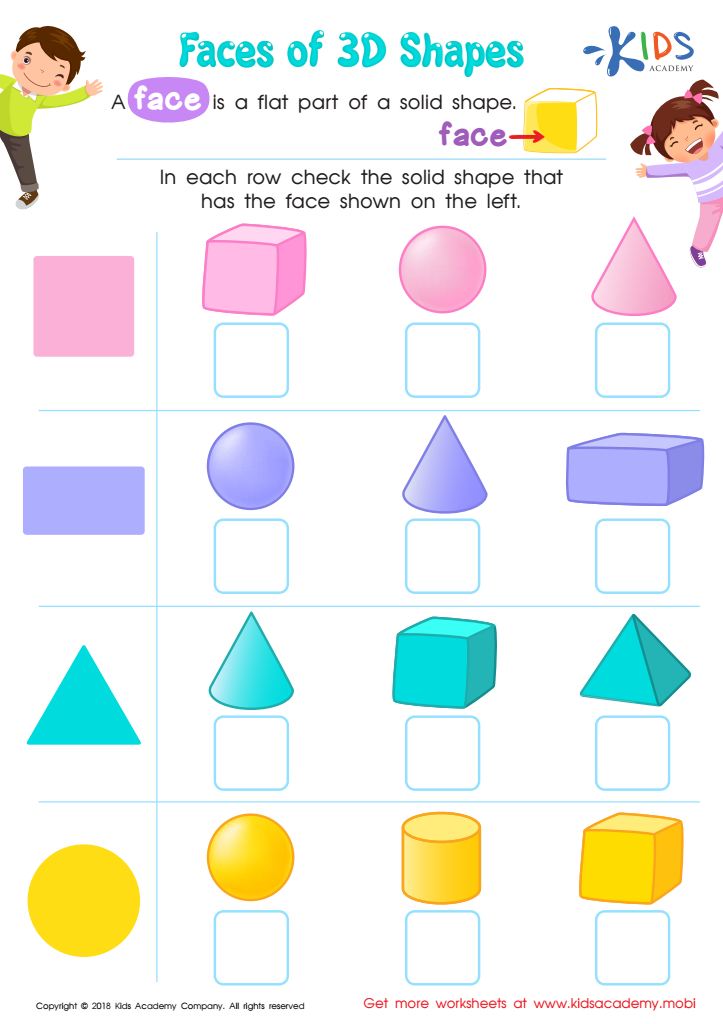
Faces of 3D Shapes Worksheet
 Assign to My Students
Question/Answer

What does the Emotional awareness skill mean when it comes to Grade 2 Geometry learning?
Emotional awareness in Grade 2 Geometry learning refers to the ability to recognize and understand one’s own emotions and the emotions of others while engaging with geometric concepts. It involves being sensitive to the frustration or excitement that can accompany understanding shapes, sizes, and patterns, thereby fostering a supportive and empathetic learning environment.
Why is the Emotional awareness skill important for Grade 2 students?
Emotional awareness is crucial for Grade 2 students as it helps them understand and manage their feelings, fosters empathy towards others, and improves social interactions. This skill lays the foundation for effective communication, conflict resolution, and building positive relationships. Early development of emotional awareness supports children's mental well-being and academic success by promoting a conducive learning environment.
How does the mastery of the Emotional awareness skill affect a student's performance at an early age?
Mastery of emotional awareness at an early age significantly enhances a student's performance by improving self-regulation, empathy, social skills, and stress management. This foundation fosters a positive learning environment, encourages better relationships with peers and teachers, and facilitates higher academic achievement and problem-solving abilities, laying the groundwork for successful personal and academic development.