Introduction to statistics Worksheets for Kids
1 filtered results
-
From - To
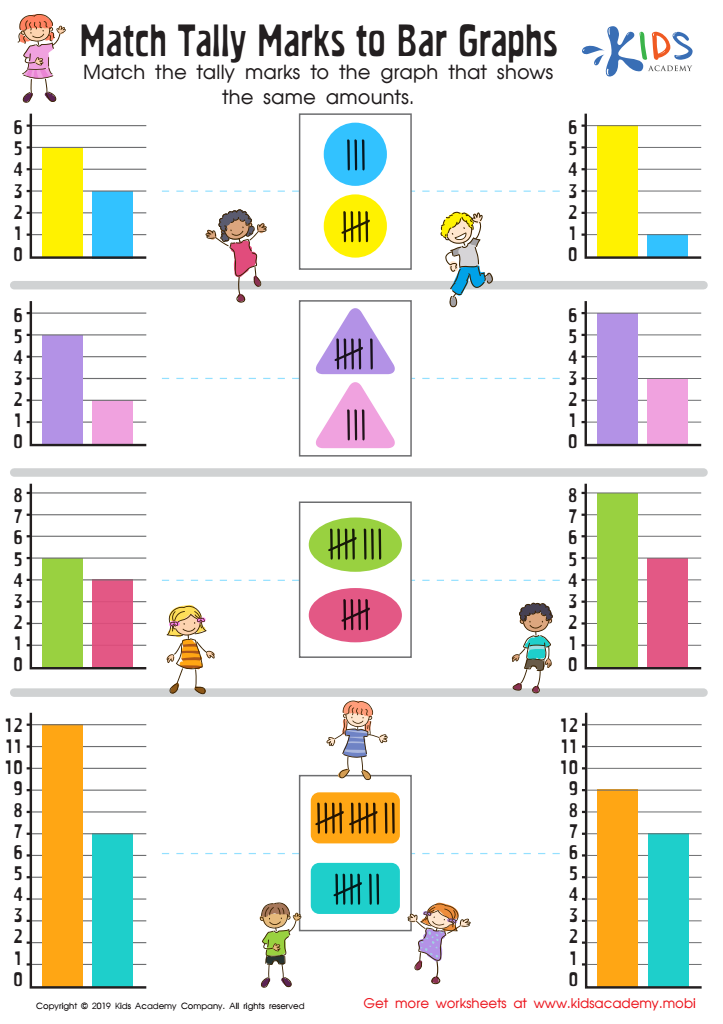
Match Tally Marks to Bar Graphs Worksheet
 Assign to My Students
Question/Answer

How to train the Introduction to statistics skill in Grade 1 students learning about Numbers?
To train the Introduction to Statistics skill in Grade 1 students, start with basic concepts like counting and comparing quantities. Use visual aids like charts or graphs made from familiar items (e.g., fruits or toys) to categorize and count. Incorporate games that involve sorting and tallying objects to make learning interactive and fun, reinforcing the foundational statistics skills.
Why is the Introduction to statistics skill important for Grade 1 students?
Introducing statistics to Grade 1 students is important because it helps them develop critical thinking and analytical skills early on. By learning to collect, organize, and interpret data, they gain a better understanding of the world around them. This foundation in statistical thinking supports their future learning in mathematics and science, and equips them with practical skills for everyday decision-making.
What are some effective activities to train students’ Introduction to statistics skill when teaching them about Numbers?
Effective activities for training students’ introduction to statistics skills when teaching about numbers include: creating surveys and analyzing collected data, organizing and visualizing data using charts and graphs, engaging in probability games to understand chance and outcomes, and exploring real-world data sets to apply statistical concepts. These activities promote hands-on learning and the application of statistical methods in everyday contexts.