Learning about animals Worksheets for Kids
1 filtered results
Difficulty Level
Grade
Age
-
From - To
Subject
Activity
Standards
Exploring animal life is vital for kids, teaching them about diverse species, habitats, and behaviors. Engaging worksheets from our Learning about Animals collection offer an interactive educational experience. Topics range from animal classification to adaptation and conservation. Worksheets foster critical thinking, problem-solving, and creativity, making learning fun and memorable. Activities like coloring, quizzes, and matching keep kids engaged, nurturing interest in wildlife. Our worksheets help children delve into animal wonders, boosting their cognitive skills.
Favorites
With answer key
Interactive
Learning Skills
Question/Answer

How to test a Preschool student’s Learning about animals skills?
To test a preschool student's learning about animals, you can use picture cards or toys of different animals and ask them to identify each one. Include questions about animal sounds, habitats, and simple characteristics to gauge their understanding. A mix of familiar and less familiar animals will help assess their ability to apply learned skills to new situations.
How does the mastery of the Learning about animals skill affect a student's performance at an early age?
Mastering the Learning about Animals skill at an early age can significantly enhance a student's cognitive development, improve memory and comprehension skills, foster curiosity and a love for learning, and encourage empathy towards living beings. This foundational knowledge also supports the development of scientific thinking and can positively impact students’ performance in other academic areas by integrating interdisciplinary learning.
How to train the Learning about animals skill in Preschool students learning about Adding at the Zoo?
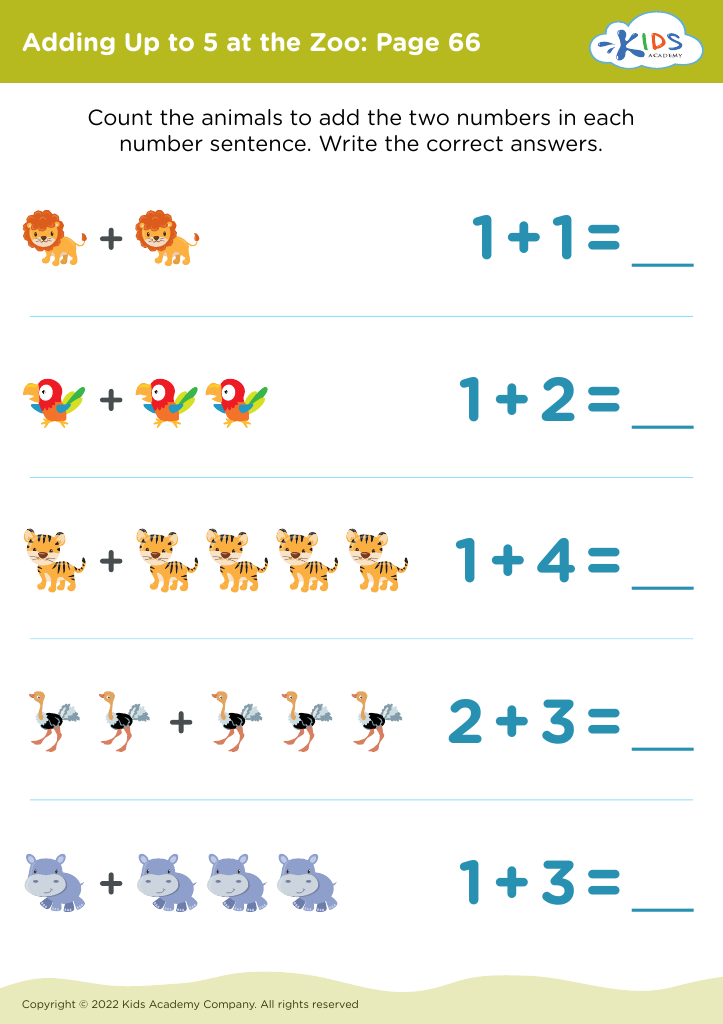
To train the "Learning about Animals" skill in preschool students during "Adding at the Zoo" activities, engage them in interactive counting exercises featuring animal figures or images. Incorporate animal facts during the addition tasks, such as counting legs, wings, or tails, and encourage discussions about each animal's characteristics, habitat, and behavior to enhance both math and animal knowledge simultaneously.
Join Kids Academy for Free
Who is primarily going to use this learning content?