Money handling skill Worksheets for Kids
1 filtered results
-
From - To
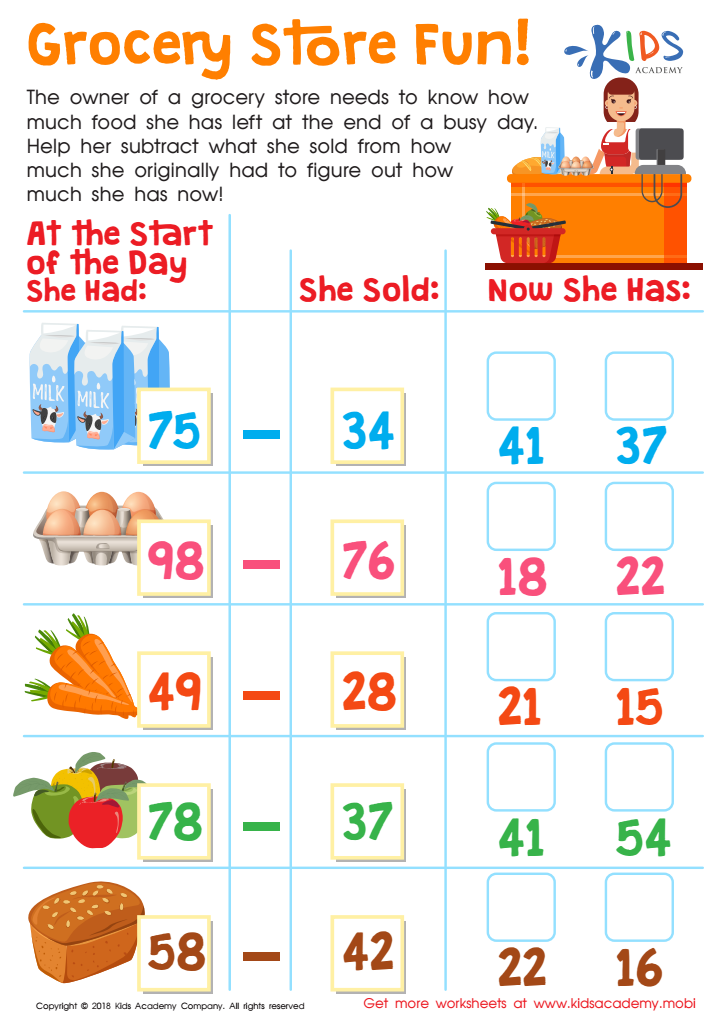
Grocery Store Fun! Worksheet
 Assign to My Students
Question/Answer

How to test a Grade 2 student’s Money handling skills?
To test a Grade 2 student's money handling skills, create practical exercises such as counting coins and bills, making change, and simulating real-life purchasing scenarios. Use play money to facilitate understanding and engagement. Incorporate questions that require adding and subtracting amounts, identifying denominations, and understanding the concept of saving versus spending.
What does the Money handling skill mean when it comes to Grade 2 Addition & Subtraction learning?
In the context of Grade 2 Addition & Subtraction learning, the Money handling skill refers to teaching children how to count, add, and subtract units of money (e.g., coins and bills). This serves as a practical application of addition and subtraction, enhancing their understanding of math concepts while introducing them to basic financial literacy.
What are some effective activities to train students’ Money handling skill when teaching them about Addition & Subtraction?
To teach students about addition and subtraction through money handling, effective activities include playing store where they "buy" and "sell" items using play money, using real or simulated cash registers for hands-on practice, engaging in role-play scenarios like setting up a lemonade stand, and creating budget worksheets where they add expenses and subtract from their total budget to manage finances.