Practical life skills development Worksheets for Kids
1 filtered results
Difficulty Level
Grade
Age
-
From - To
Subject
Activity
Standards
Practical life skills development worksheets are interactive and innovative tools designed to help individuals acquire essential skills that are necessary for daily living. These worksheets offer a structured and organized approach to learning skills such as cooking, cleaning, budgeting, and time management.
Favorites
With answer key
Interactive
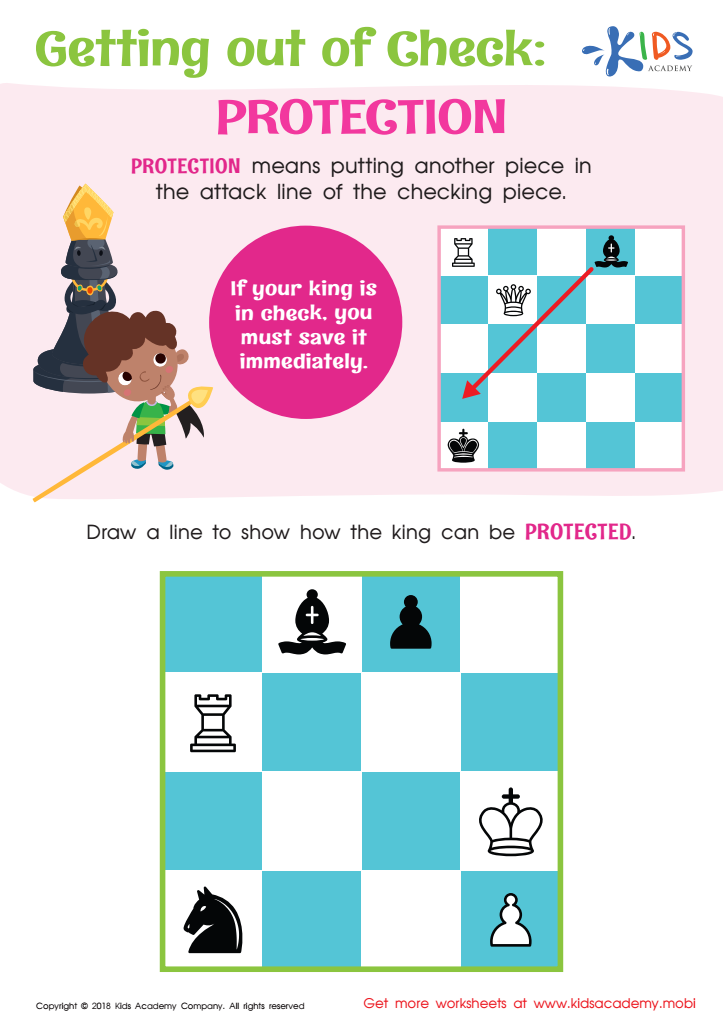
Getting out of Check: Protection
Chess is a game of strategy and outwitting opponents. Kids love it for the challenge of one-upping their friends! This free chess strategy worksheet will help your child learn to protect their king and capture the checking piece. With this downloadable, they'll be able to practice protecting and capturing with the sample boards.
 Assign to My Students
Getting out of Check: Protection
Worksheet
Question/Answer

How to test a Grade 1 student’s Practical life skills development skills?
To test a Grade 1 student's practical life skills development, use simple, engaging tasks that reflect everyday activities. Assess their ability to perform tasks such as tying shoelaces, buttoning clothes, setting a table, pouring water without spilling, and cutting with scissors. Observe their coordination, attention to detail, independence, and problem-solving skills as they complete these tasks.
How to train the Practical life skills development skill in Grade 1 students learning about Chess?
To train Practical Life Skills Development in Grade 1 students learning chess, start by teaching them to set up the chessboard, emphasizing the importance of organization and patience. Introduce basic chess moves and rules, fostering critical thinking and decision-making. Encourage playing in pairs to enhance social interaction, teamwork, and sportsmanship.
What are some effective activities to train students’ Practical life skills development skill when teaching them about Chess?
To train students' practical life skills through chess, focus on activities that enhance critical thinking, patience, and strategic planning. Introduce problem-solving exercises with chess puzzles, encourage planning ahead by analyzing potential moves and outcomes, practice patience through timed games, and develop decision-making by having students explain their moves and strategies. These activities help build essential life skills while learning chess.
Join Kids Academy for Free
Who is primarily going to use this learning content?