Recognizing musical instruments Worksheets for Kids
1 filtered results
-
From - To
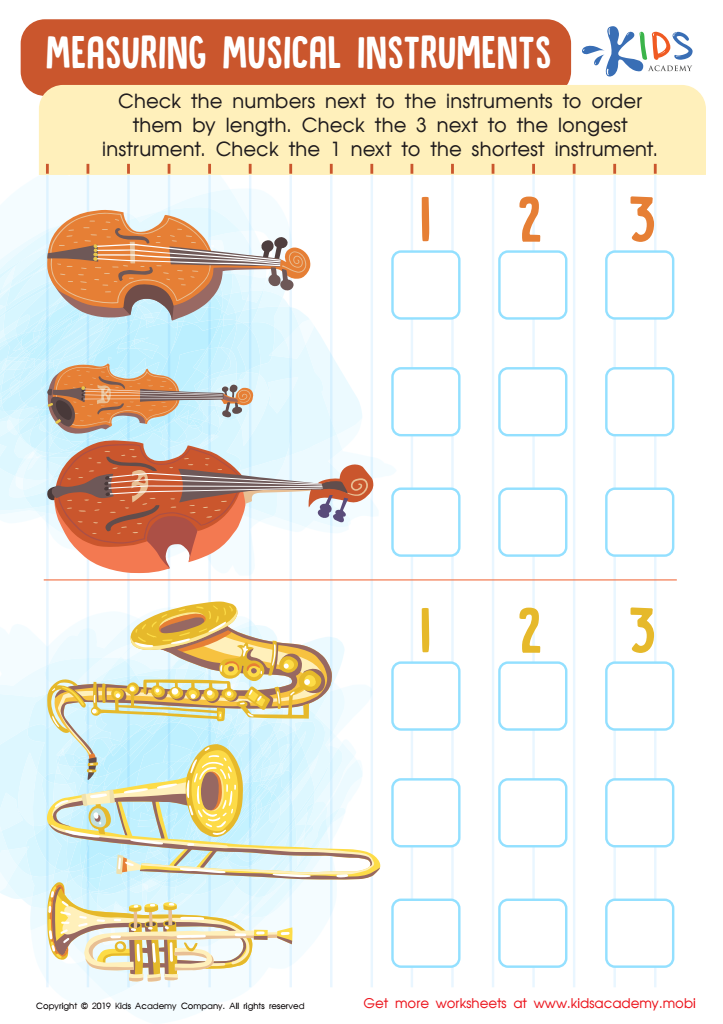
Measuring Musical Instruments Worksheet
 Assign to My Students
Question/Answer

How to test a Grade 1 student’s Recognizing musical instruments skills?
To test a Grade 1 student's skills in recognizing musical instruments, use picture cards or digital images of various instruments, play audio clips of instruments being played, and ask the student to match the sound to the correct instrument.
How does the mastery of the Recognizing musical instruments skill affect a student's performance at an early age?
Mastery of the Recognizing musical instruments skill at an early age can enhance a student's auditory discrimination, improve their understanding of music theory, and foster an appreciation for different musical genres. It also aids in cognitive development, including memory and attention skills, and can increase their confidence and motivation in learning music or pursuing musical activities.
What are some effective activities to train students’ Recognizing musical instruments skill when teaching them about Measurement?
Effective activities include: 1. **Sorting and categorizing**: Have students group instruments by size or shape, discussing measurement concepts such as length or height. 2. **Comparative measurement**: Use comparative language (longer/shorter, bigger/smaller) to describe instruments, enhancing descriptive skills. 3. **Creating instruments**: Students can construct simple instruments, incorporating measurement in the design process, enhancing hands-on learning and practical application of measurement concepts.