Understanding plot development Worksheets for Kids
1 filtered results
-
From - To
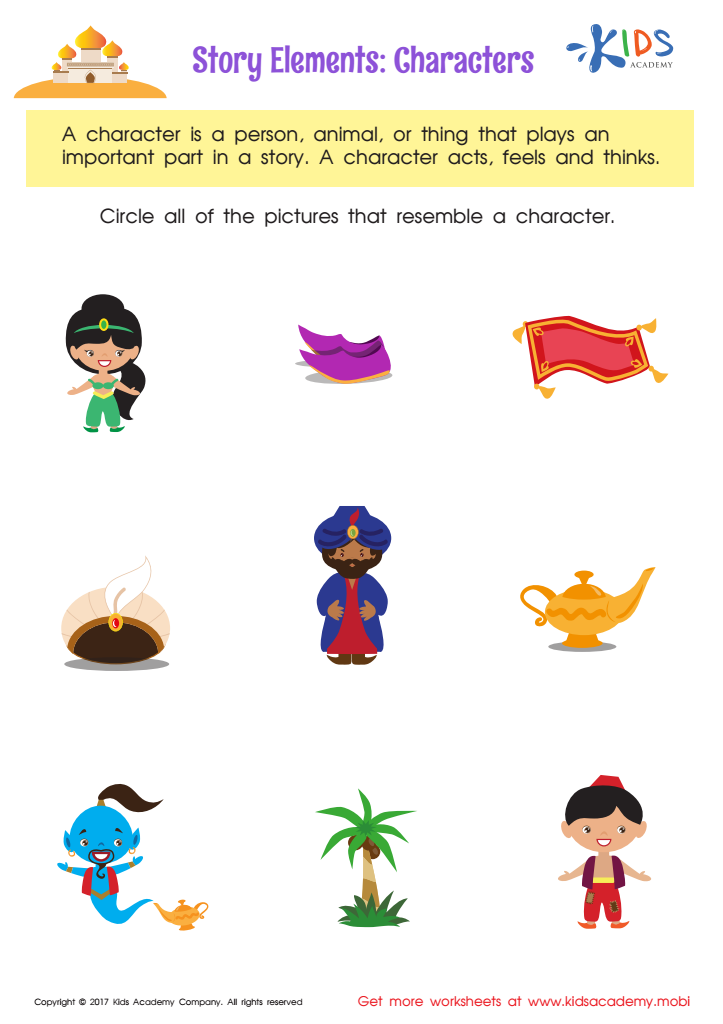
Story Elements Printable
 Assign to My Students
Question/Answer

What does the Understanding plot development skill mean when it comes to Grade 1 Reading Fiction learning?
Understanding plot development in Grade 1 Reading Fiction involves recognizing the sequence of events in a story. This skill includes identifying the beginning, middle, and end, understanding how characters move the story forward, and grasping simple cause-and-effect relationships within the narrative. It lays the foundation for comprehension and appreciation of storytelling.
What are some effective activities to train students’ Understanding plot development skill when teaching them about Reading Fiction?
Effective activities include story mapping where students visually outline plot elements, sequencing events on a timeline to understand progression, role-playing key plot points to deepen comprehension, using graphic organizers for identifying and analyzing plot structure, and writing alternative endings to explore plot possibilities. These activities engage students actively, helping them grasp plot development intricately.
How to test a Grade 1 student’s Understanding plot development skills?
To test a Grade 1 student's understanding of plot development, use simple stories they're familiar with. Ask them to identify the beginning (introduction of characters and setting), middle (main events/problem), and end (resolution/outcome) of the story. Use visual aids or story maps for support, ensuring the test matches their developmental stage and incorporates a mix of verbal and non-verbal responses.





.jpg)