Understanding similarities/differences Worksheets for Kids
1 filtered results
Difficulty Level
Grade
Age
-
From - To
Subject
Activity
Standards
Understanding similarities/differences worksheets are educational materials designed to help students enhance their comprehension skills by comparing and contrasting different concepts or ideas. These worksheets allow learners to delve deeper into the subject matter, build critical thinking skills, and cultivate a deeper understanding of the topics being studied.
Favorites
With answer key
Interactive
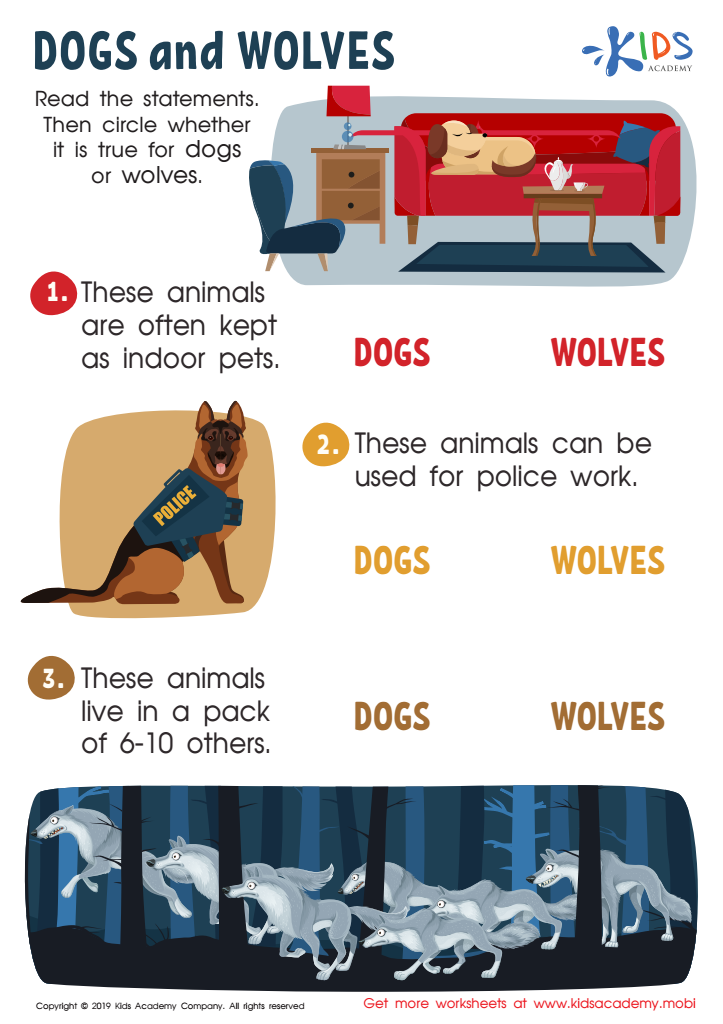
Dogs and Wolves Worksheet
Kids love dogs and wolves, so engaging them with text about them is key. This free, downloadable worksheet allows kids to read statements about dogs and wolves and use picture clues and prior knowledge to decide if the statements are true or false, strengthening their reading comprehension.
 Assign to My Students
Dogs and Wolves Worksheet
Worksheet
Question/Answer

Why is the Understanding similarities/differences skill important for Grade 1 students?
The skill of understanding similarities and differences is crucial for Grade 1 students as it lays the foundation for critical thinking and categorization. It helps them recognize patterns, make connections between concepts, and develop problem-solving strategies. This skill also fosters early literacy and numeracy by aiding in the comprehension of basic math concepts and the nuances of language.
How does the mastery of the Understanding similarities/differences skill affect a student's performance at an early age?
The mastery of the Understanding similarities/differences skill significantly boosts a student's performance at an early age by enhancing critical thinking, improving problem-solving abilities, and promoting flexible thinking. This skill helps in the development of analytical skills, making it easier for students to grasp complex concepts, categorize information, and establish connections between different ideas, thereby improving overall academic achievement.
What are some effective activities to train students’ Understanding similarities/differences skill when teaching them about Building Vocabulary?
Effective activities for training students in understanding similarities and differences while building vocabulary include using Venn diagrams to compare and contrast word meanings, categorizing word lists into related groups, engaging in word sorting games, creating analogies, and using mind maps to visually represent word relationships. These activities help students discern nuanced meanings and develop a deeper vocabulary.
Join Kids Academy for Free
Who is primarily going to use this learning content?