Logical Reasoning 2D Shapes Worksheets
4 filtered results
-
From - To
Enhance your child’s logical reasoning skills with our engaging 2D Shapes worksheets! Designed for young learners, these worksheets provide a fun and interactive way to understand shapes and attributes. Each activity promotes critical thinking by challenging students to recognize, categorize, and manipulate various 2D shapes, fostering both cognitive development and mathematical understanding. Perfect for classroom or home use, our worksheets offer vibrant illustrations and diverse exercises that ensure your child stays motivated while learning. Download and explore a rich resource of logical reasoning problems tailored for early grade students to build a strong foundation in geometry and reasoning capabilities!
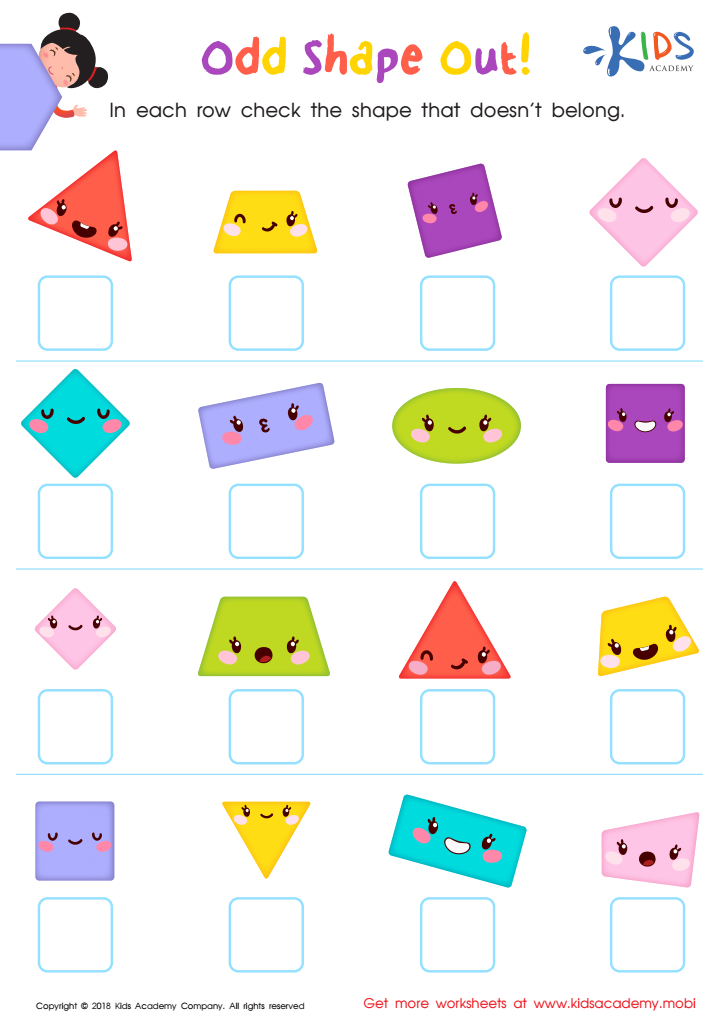
Odd Shape Out Worksheet for Grade 3
 Assign to My Students


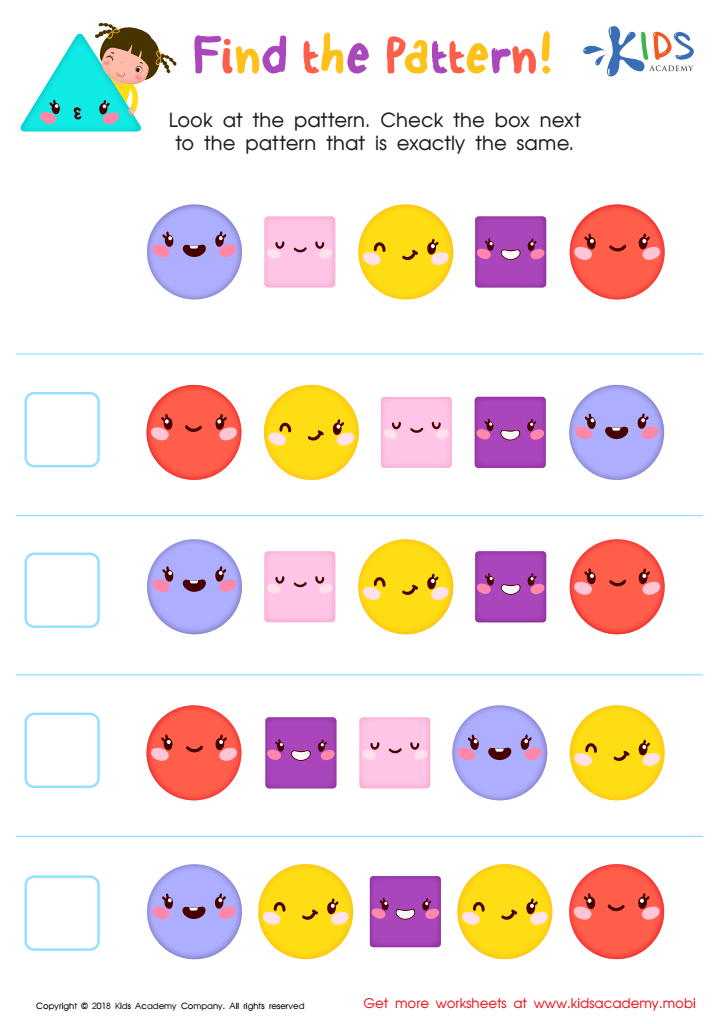
Find the Pattern Worksheet
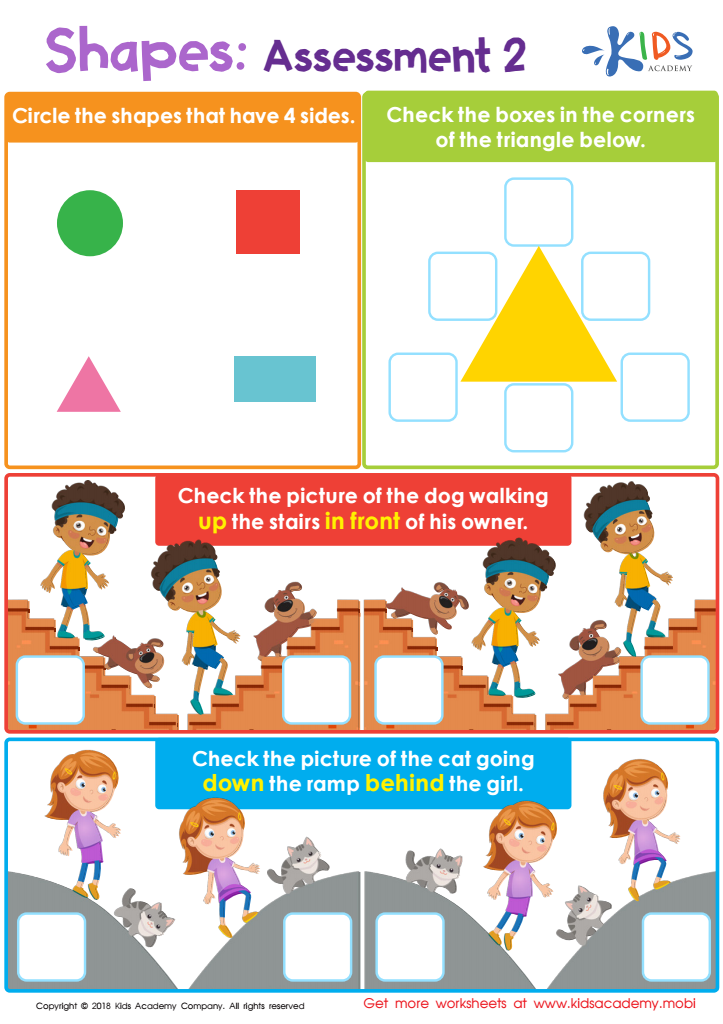
Shapes: Assessment 2 Worksheet
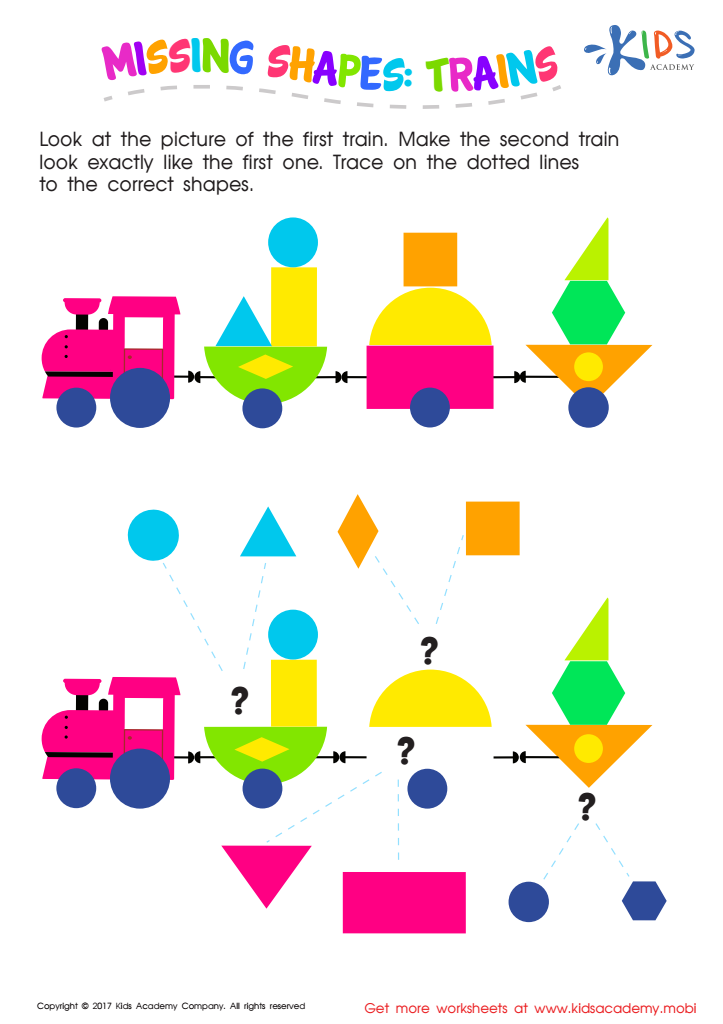
Missing Shapes: Trains Worksheet








Parents and teachers should prioritize logical reasoning in the context of 2D shapes because it lays the foundation for critical thinking and problem-solving skills in young learners. Understanding 2D shapes enhances a child's ability to recognize patterns, categorize objects, and make connections across different areas of study, including math, art, and science.
When children engage in activities involving 2D shapes, they develop spatial awareness and visual perception, essential competencies for their overall cognitive development. Learning to classify shapes and understand their properties encourages children to reason mathematically, which is crucial for their future academic success.
Moreover, mastering basic geometry concepts is an essential step in mathematics, paving the way for understanding more complex topics later on, such as three-dimensional shapes, symmetry, and measurement. These skills are applicable in everyday life, influencing decision-making and logical thought processes in various real-world scenarios.
Lastly, engaging with shapes through games and creative activities makes learning enjoyable, fostering a positive attitude toward education. This creates a supportive environment where curiosity and exploration thrive, allowing children to build confidence in their abilities, which benefits their overall development and future learning.