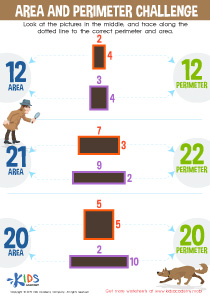
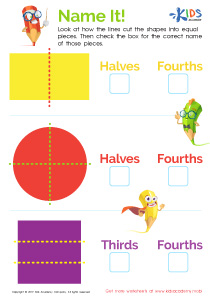
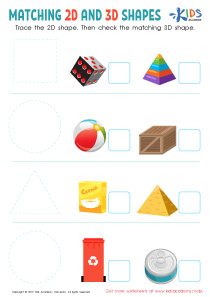
Recognizing shapes 2D Shapes Worksheets
5 filtered results
-
From - To
Discover the joy of learning with our "Recognizing Shapes 2D Shapes Worksheets" at Kids Academy! These engaging worksheets are expertly designed to help young learners identify and differentiate between various two-dimensional shapes. Ideal for preschool and early elementary students, our vibrant, user-friendly materials make shape recognition fun and interactive. Each worksheet offers a blend of visual aids and hands-on activities to reinforce understanding and retention. Encourage problem-solving, fine motor skills, and cognitive development as children explore circles, squares, triangles, and more. Unlock your child’s geometric potential with our comprehensive 2D shapes worksheets today!
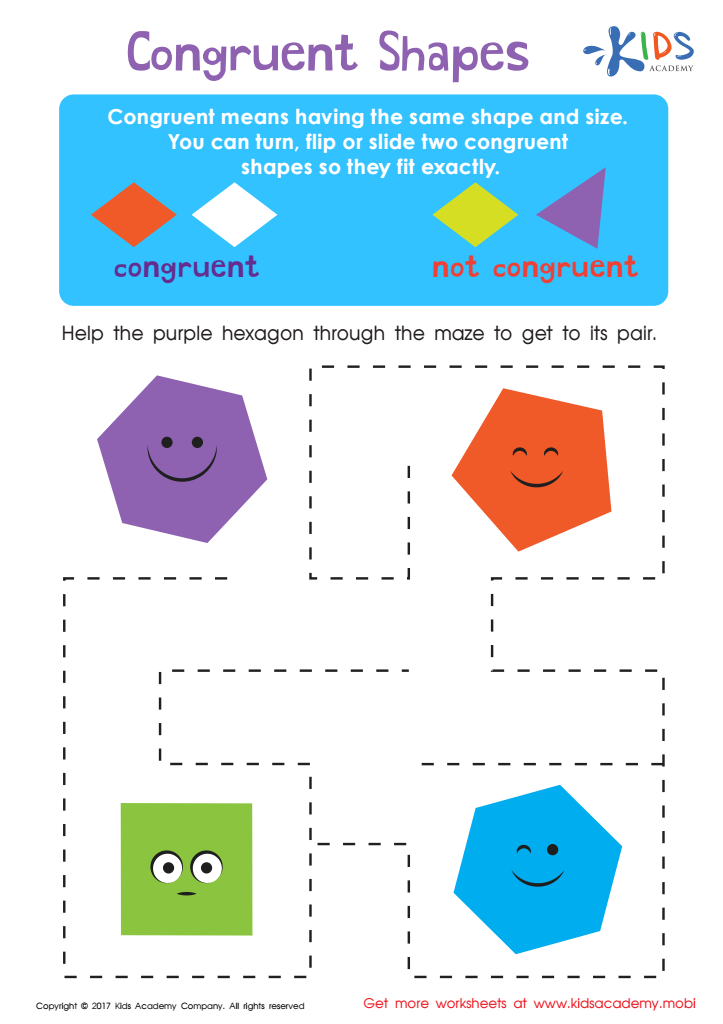
Congruent Shapes Worksheet
 Assign to My Students


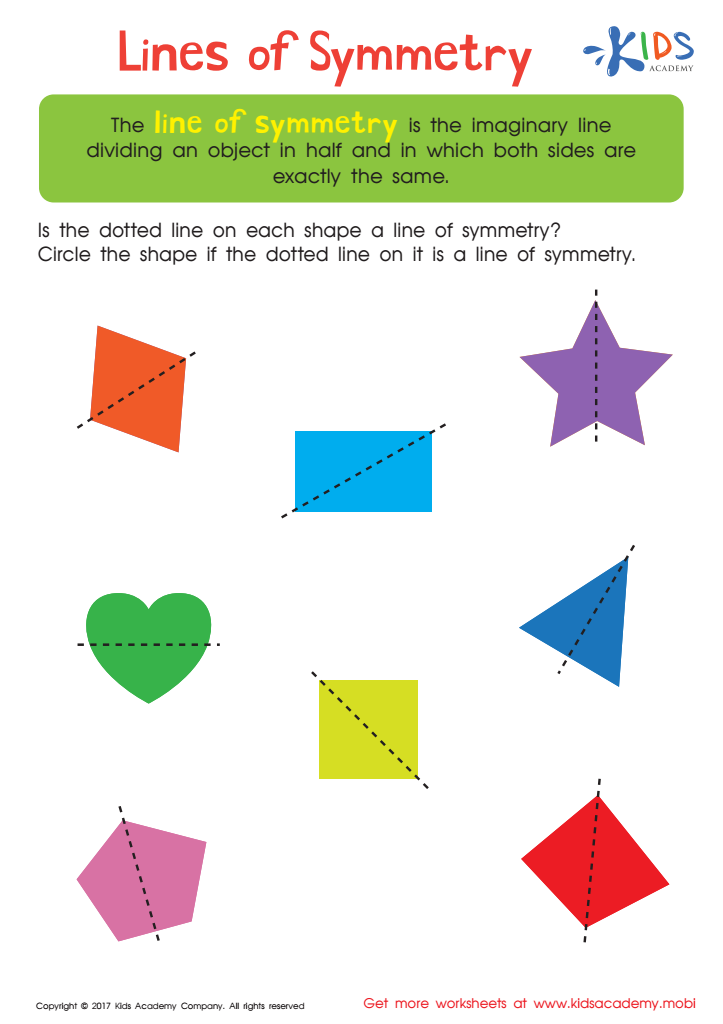
Lines of Symmetry Printable
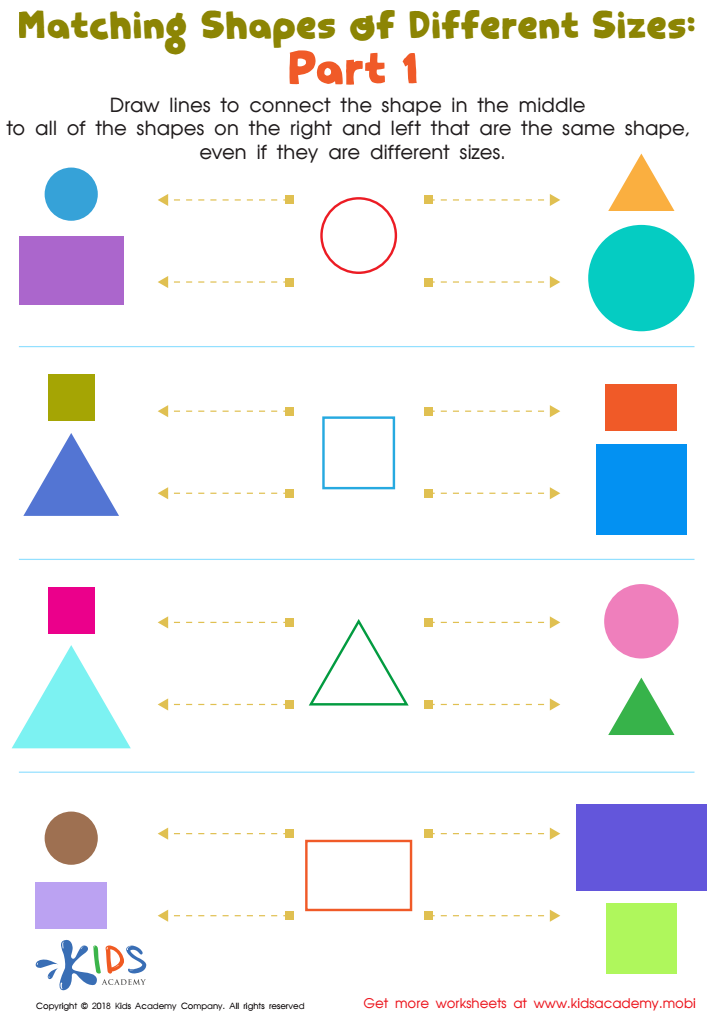
Geometry: part 1 Worksheet
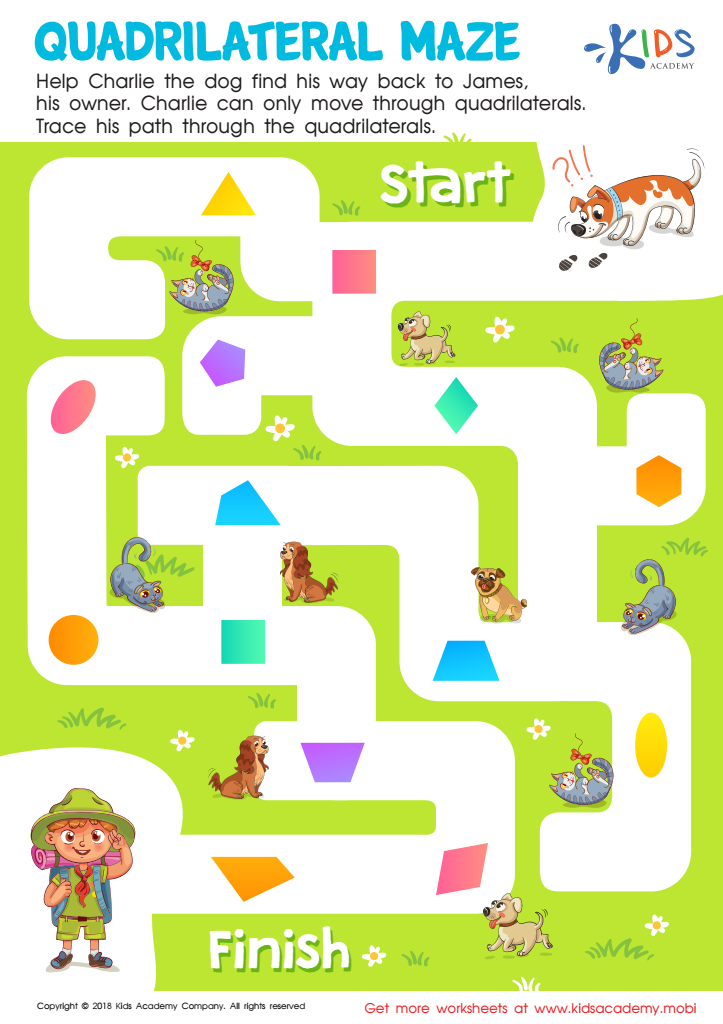
Quadrilateral Maze Worksheet
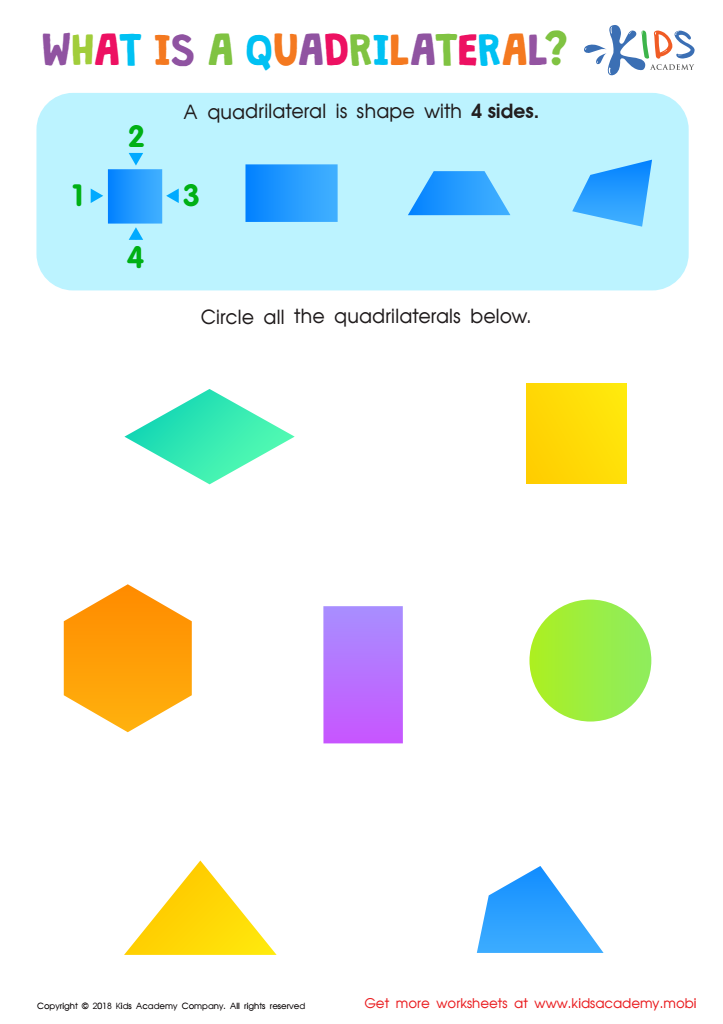
What Is a Quadrilateral? Worksheet








Recognizing 2D shapes is a fundamental skill in early childhood education that plays a critical role in a child’s cognitive and mathematical development. When parents and teachers focus on this area, they help children build a strong foundation for more complex concepts. Understanding shapes involves recognizing and categorizing different geometric forms, such as circles, squares, triangles, and rectangles. This process enhances spatial awareness, which is essential for problem-solving and reasoning abilities.
Grasping the properties and characteristics of 2D shapes also assists children in developing early geometry skills, which are crucial for later success in STEM (Science, Technology, Engineering, and Mathematics) subjects. Moreover, it improves language and communication skills as children learn to describe the shapes and their features. This lays the groundwork for vocabulary development and the ability to articulate more abstract ideas in the future.
Socially, recognizing shapes fosters collaborative learning. Activities that involve sorting, comparing, and constructing shapes encourage teamwork and sharing of ideas. This type of interaction supports emotional development and the ability to work well with others in collaborative settings.
In summary, emphasizing the recognition of 2D shapes helps in cognitive development, strengthens mathematical understanding, boosts language skills, and encourages social cooperation. This holistic benefit underscores why parents and teachers should prioritize this fundamental aspect of early education.