Basic Math Skills Adding up to 100 Without Regrouping Worksheets
4 filtered results
-
From - To
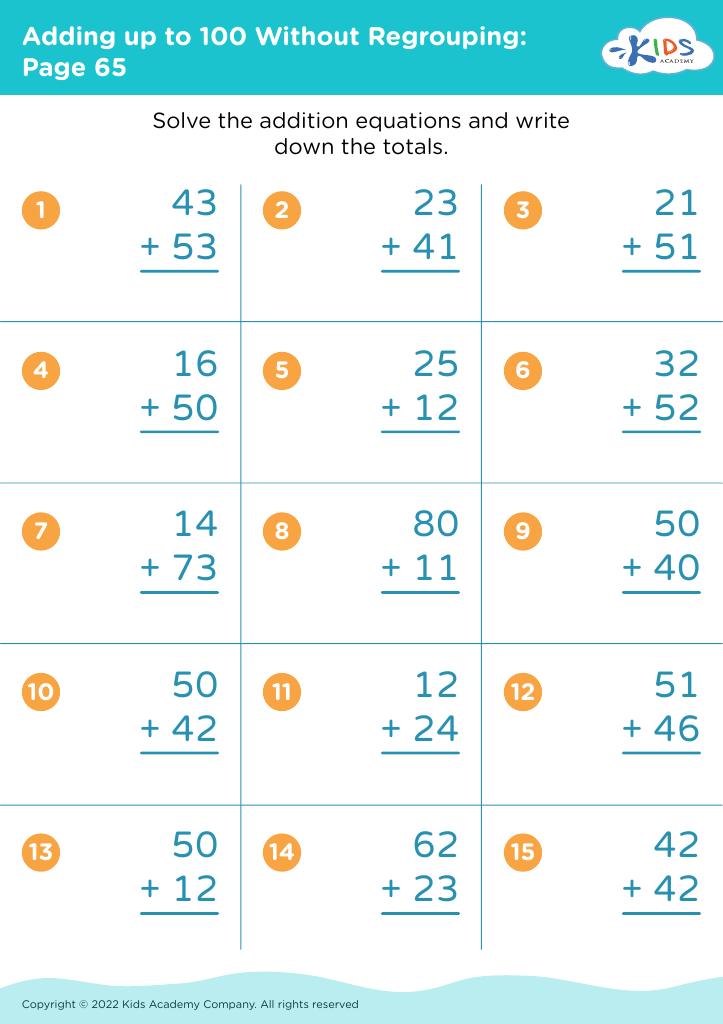
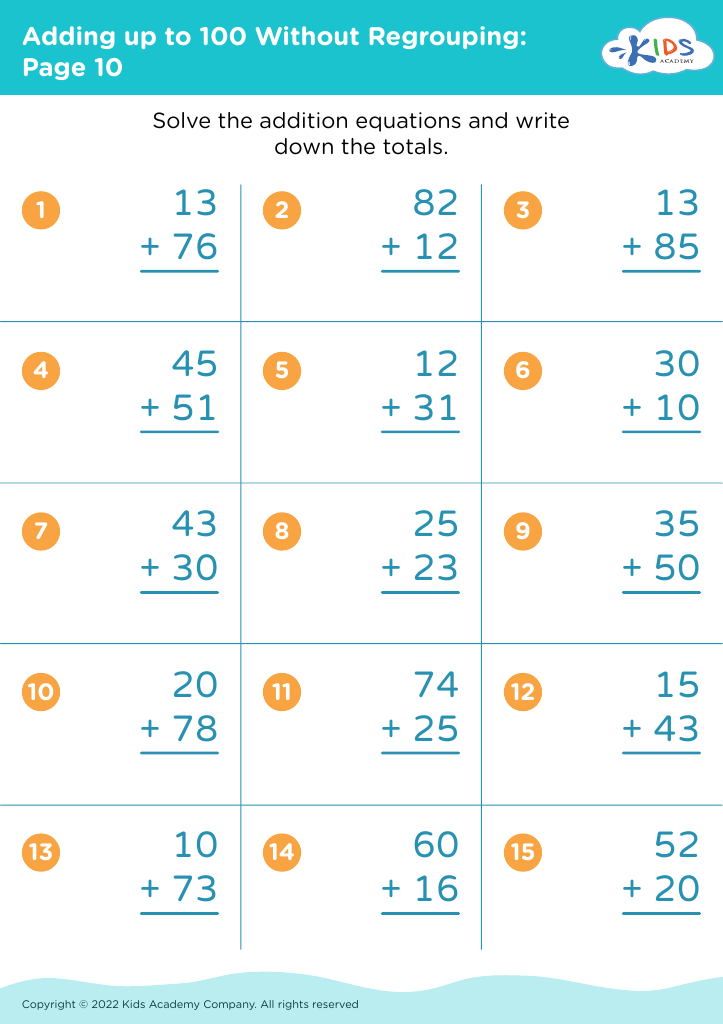
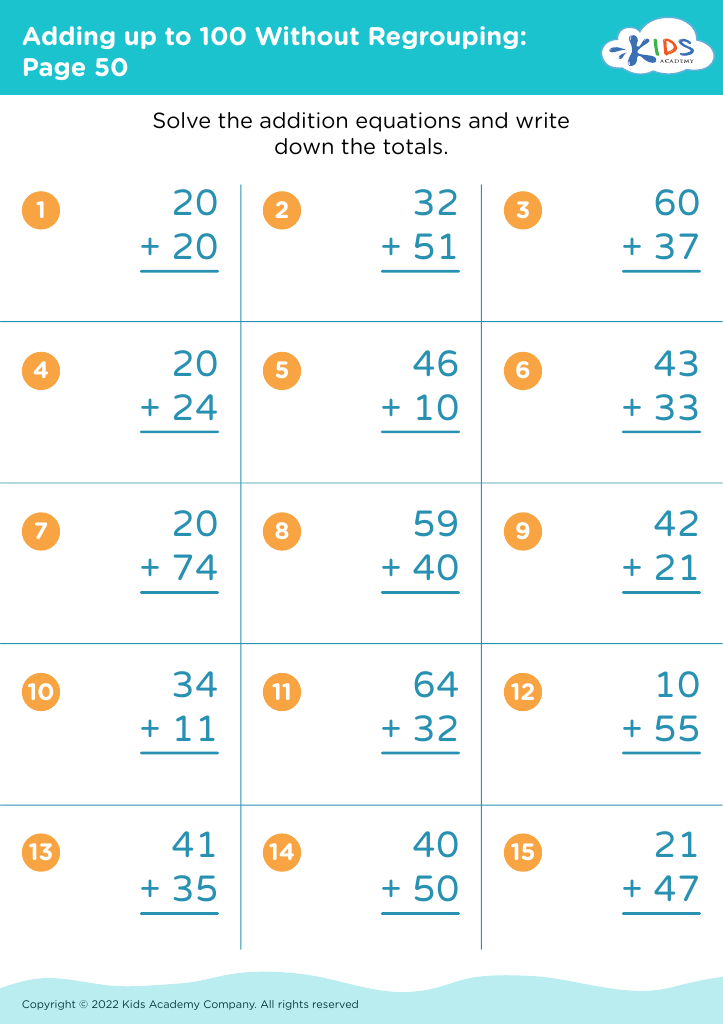
Boost your child’s confidence in math with our "Basic Math Skills: Adding up to 100 Without Regrouping Worksheets." Designed for early learners, these printable worksheets focus on mastering addition without the need for regrouping. Perfect for building a strong foundation in arithmetic, they help kids practice their skills in a fun and engaging way. Each worksheet presents simple, straightforward problems that enhance computation speed and accuracy. Whether for classroom use or extra practice at home, these exercises are the ideal resource to support young learners on their journey to becoming proficient in basic math skills. Start now and watch your child excel!
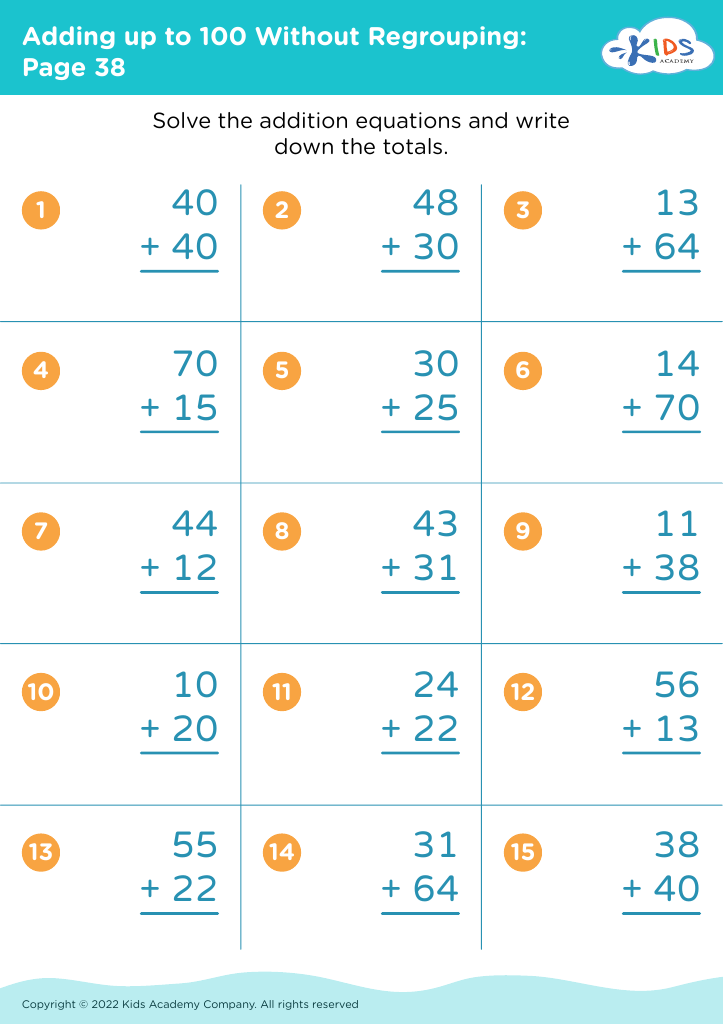




Parents and teachers should care about basic math skills like adding up to 100 without regrouping because these foundational skills are essential for children's overall math proficiency and confidence. These basic addition skills serve as building blocks for more complex mathematical concepts, such as subtraction, multiplication, and division. Mastery in basic math ensures students can smoothly progress to more advanced topics without a shaky foundation that could lead to confusion and frustration.
Developing early competence in addition up to 100 helps children recognize numerical relationships and patterns, enhancing their problem-solving abilities and logical thinking. When kids understand and practice these skills, they build a strong mathematical mindset that reduces anxiety around numbers and fosters academic enthusiasm.
Furthermore, early mastery of basic math fosters independence and practical life skills. Whether it’s managing time, budgeting an allowance, or participating in games that require quick mental arithmetic – proficiency in addition is deeply integrated into daily life.
Focusing on this ensures that children have the tools they need to succeed not only in academic settings but also in real-world applications, thus building confidence and ensuring a positive attitude towards learning and using math throughout their lives.