Filters

19 filtered results

Clear all filters
Favorites
With answer key
Interactive

19 filtered results

Difficulty Level

Grade


Explore our "Understanding Fractions Adding Up to 100 Without Regrouping Worksheets" designed for young learners! These engaging worksheets help students grasp essential fraction concepts, enabling them to confidently add fractions that total 100 without the need for regrouping. Through interactive exercises, kids will relate fractions to everyday situations, enhancing their math fluency while building a solid foundation in understanding parts of a whole. Perfect for early grade classrooms, our worksheets promote critical thinking and analytical skills, ensuring a well-rounded approach to fraction proficiency. Download your worksheets today and empower your students to master fractions with ease!
Check out this FREE Trial Lesson on Adding up to 100 Without Regrouping!

Sorting Objects into 3 Categories

Favorites
With answer key
Interactive
  • Understanding fractions
  • Adding up to 100 Without Regrouping
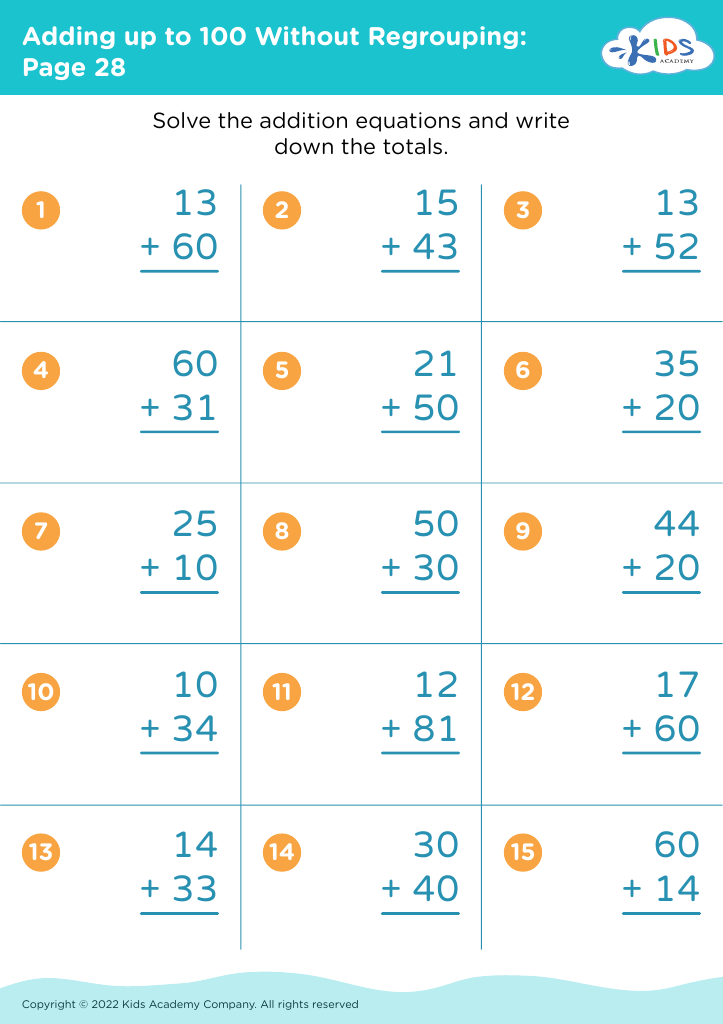
Adding up to 100 Without Regrouping: Page 28
Worksheet
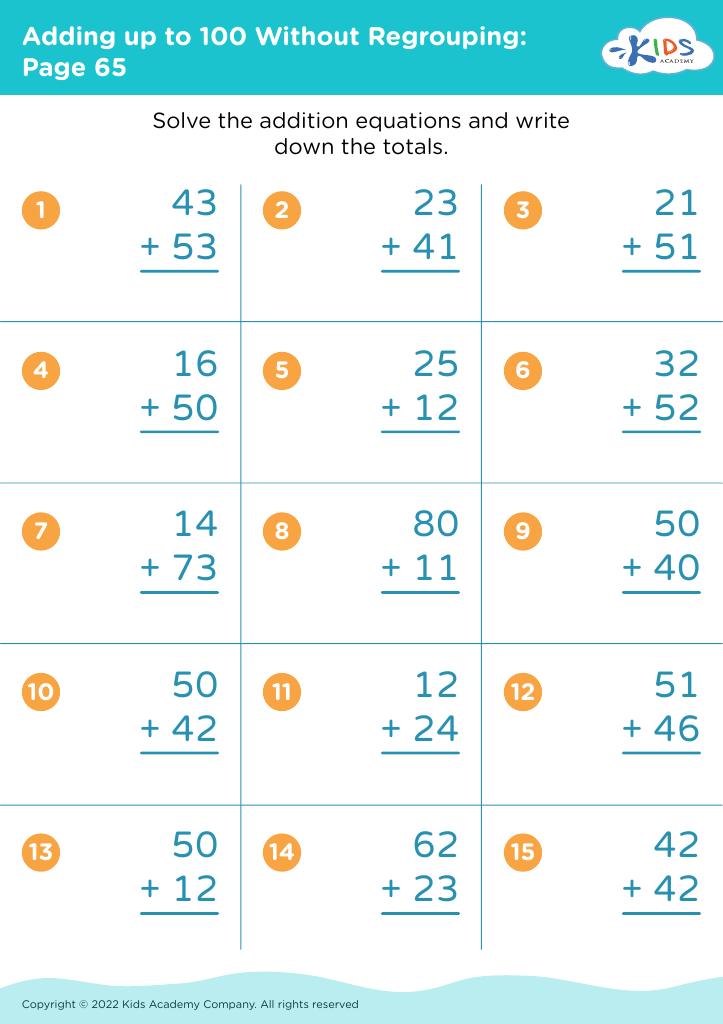
Adding up to 100 Without Regrouping: Page 65
Worksheet
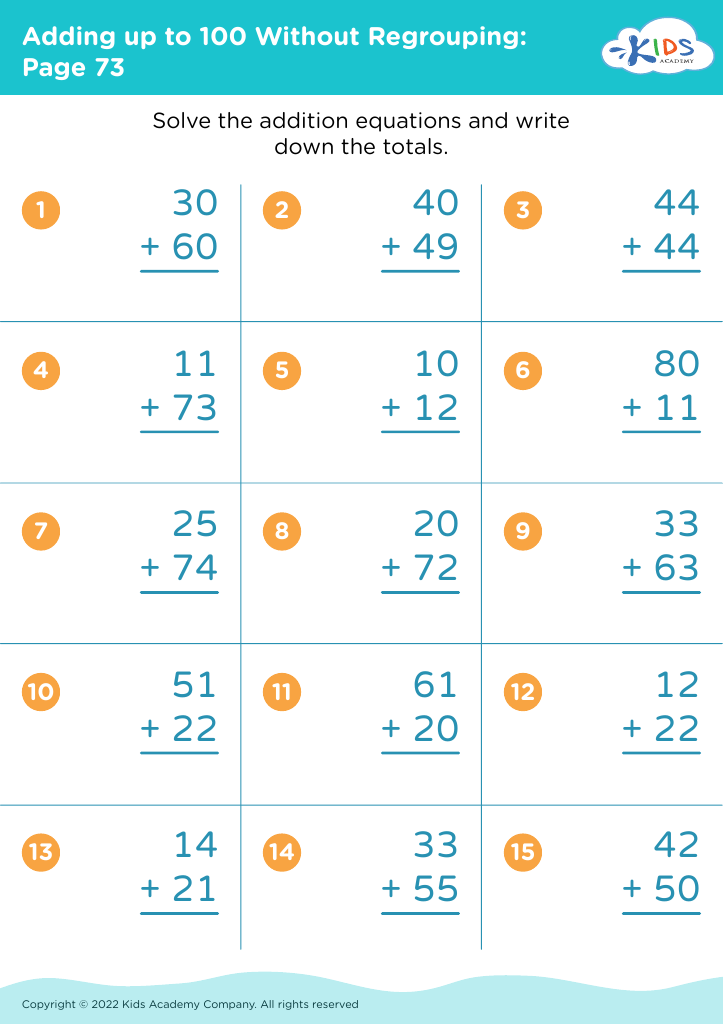
Adding up to 100 Without Regrouping: Page 73
Worksheet
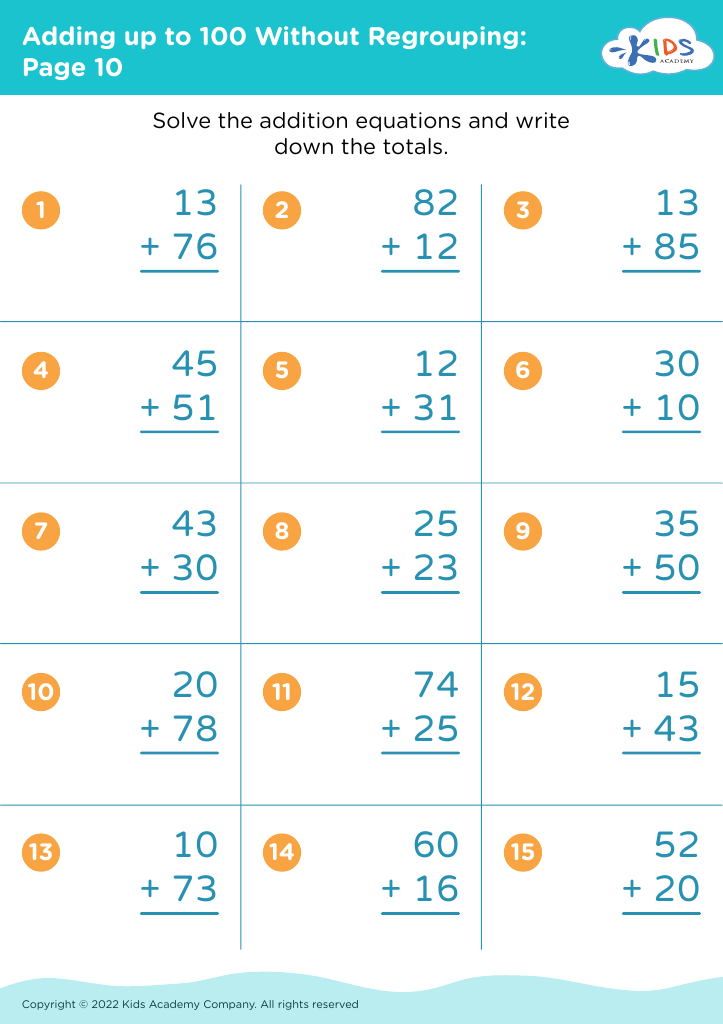
Adding up to 100 Without Regrouping: Page 10
Worksheet
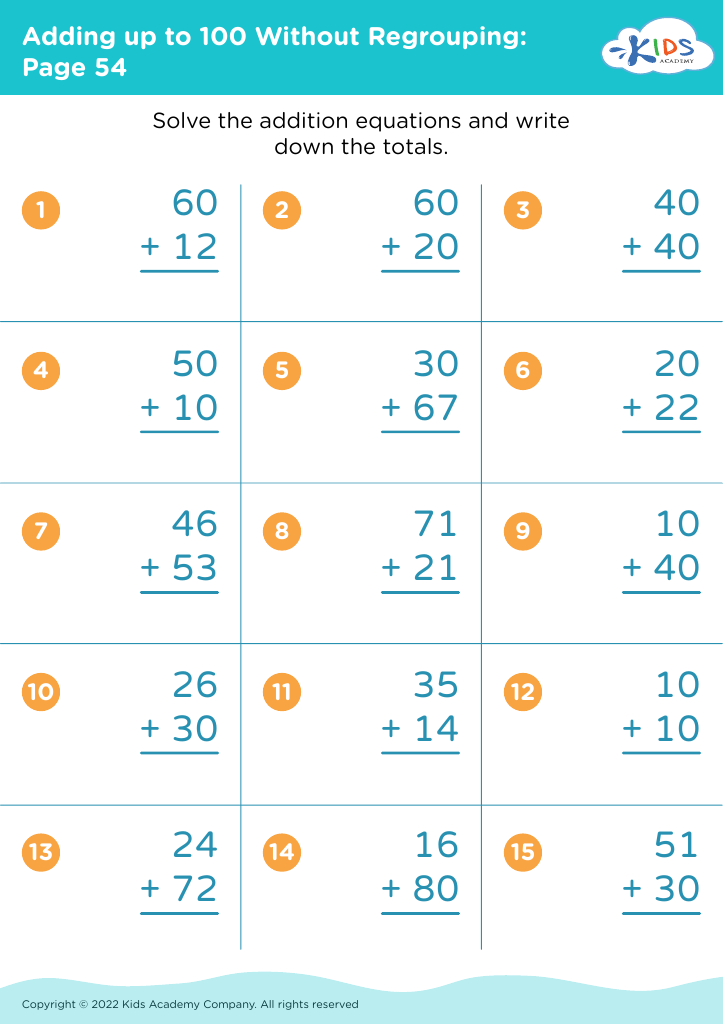
Adding up to 100 Without Regrouping: Page 54
Worksheet
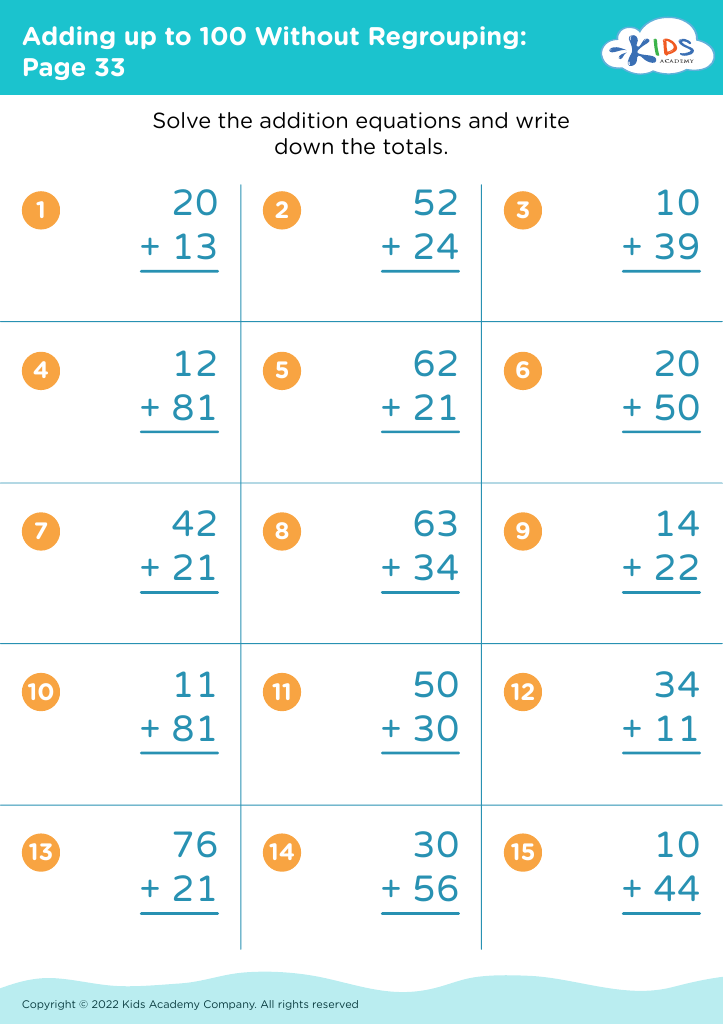
Adding up to 100 Without Regrouping: Page 33
Worksheet
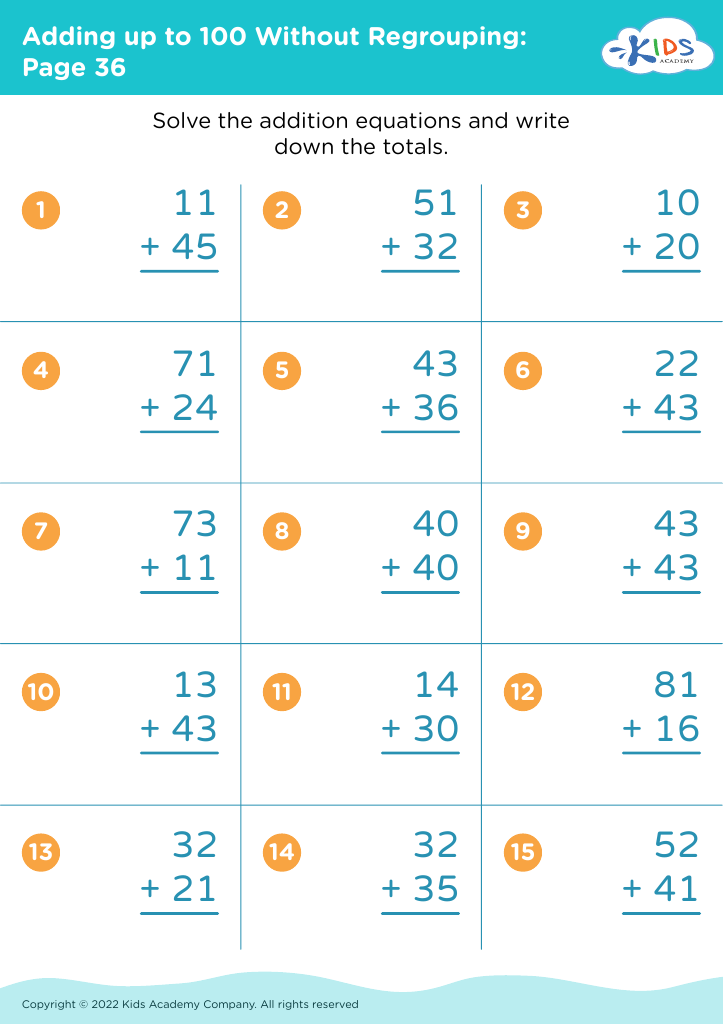
Adding up to 100 Without Regrouping: Page 36
Worksheet
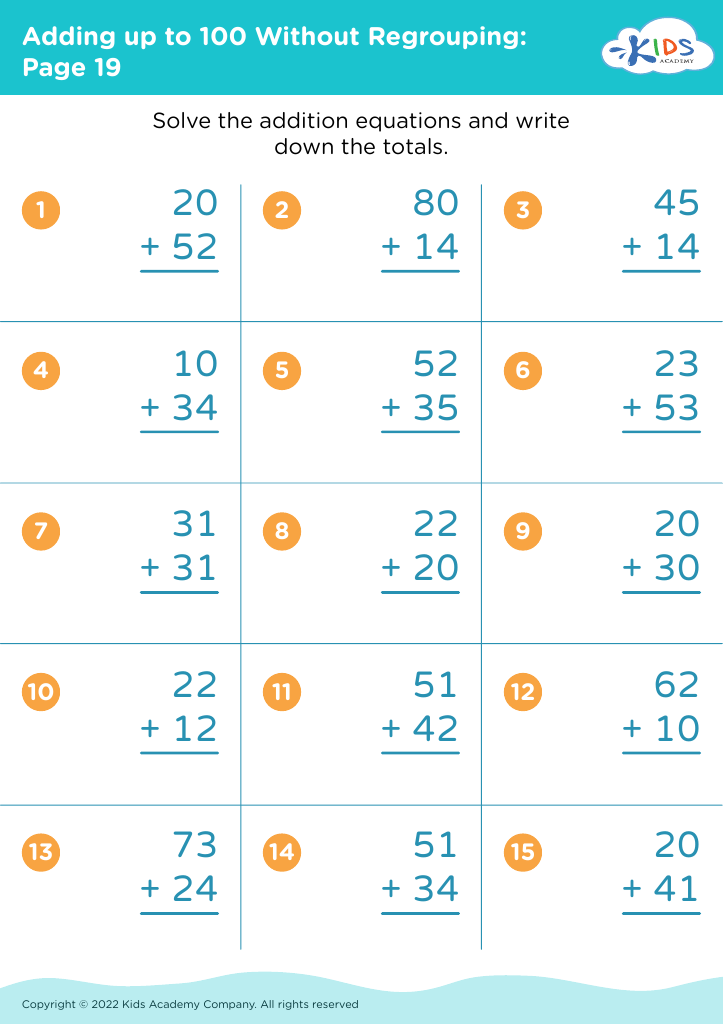
Adding up to 100 Without Regrouping: Page 19
Worksheet
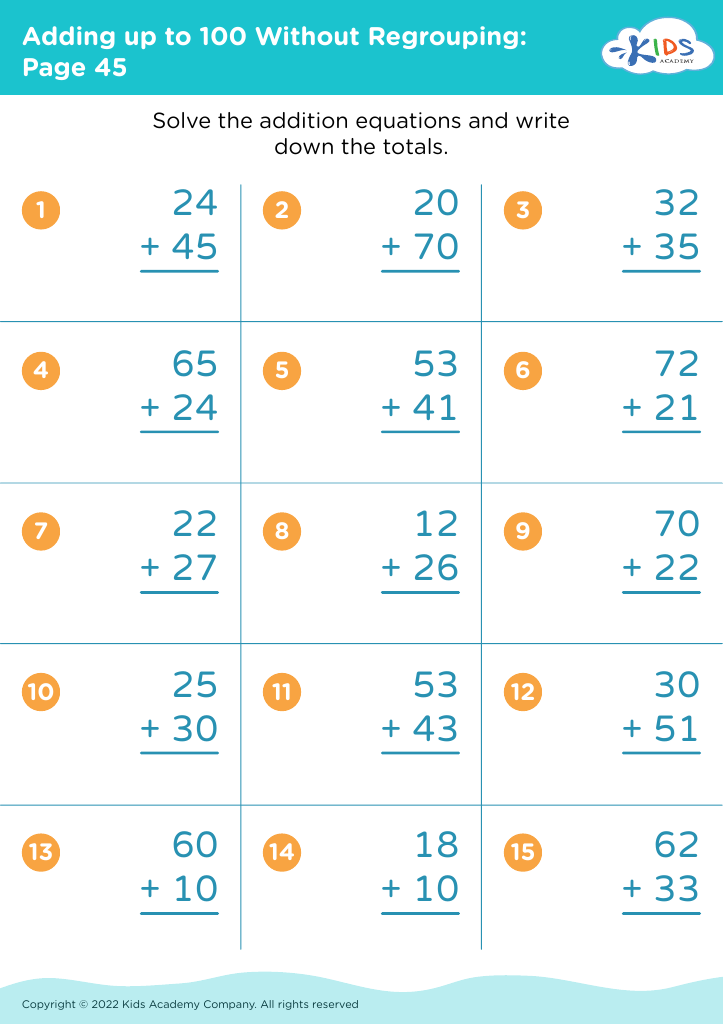
Adding up to 100 Without Regrouping: Page 45
Worksheet
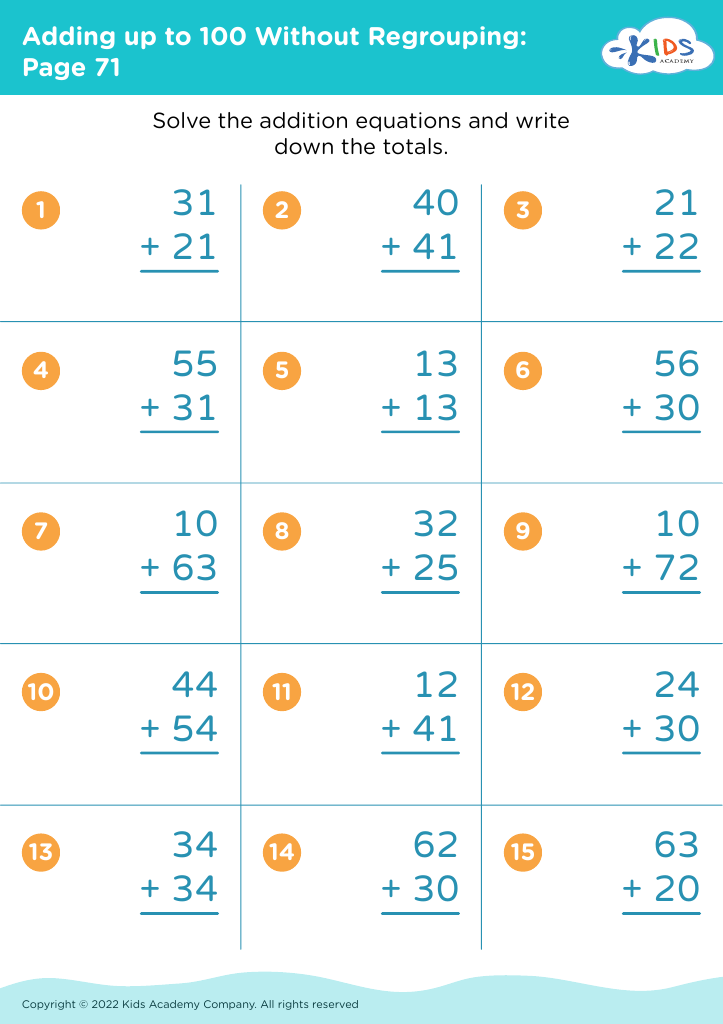
Adding up to 100 Without Regrouping: Page 71
Worksheet
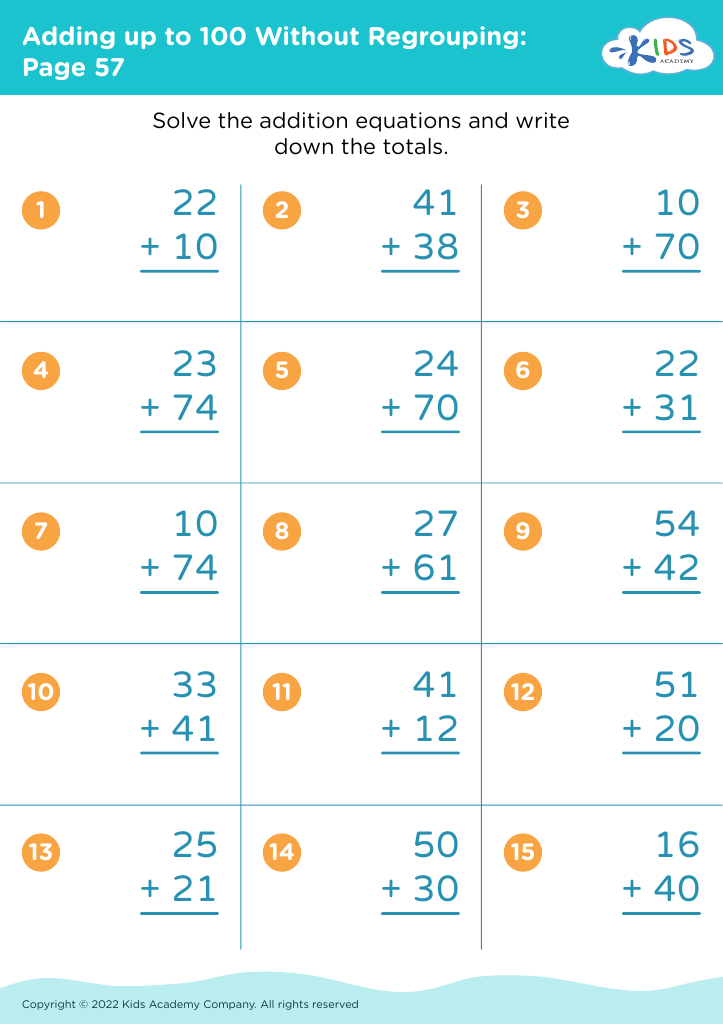
Adding up to 100 Without Regrouping: Page 57
Worksheet
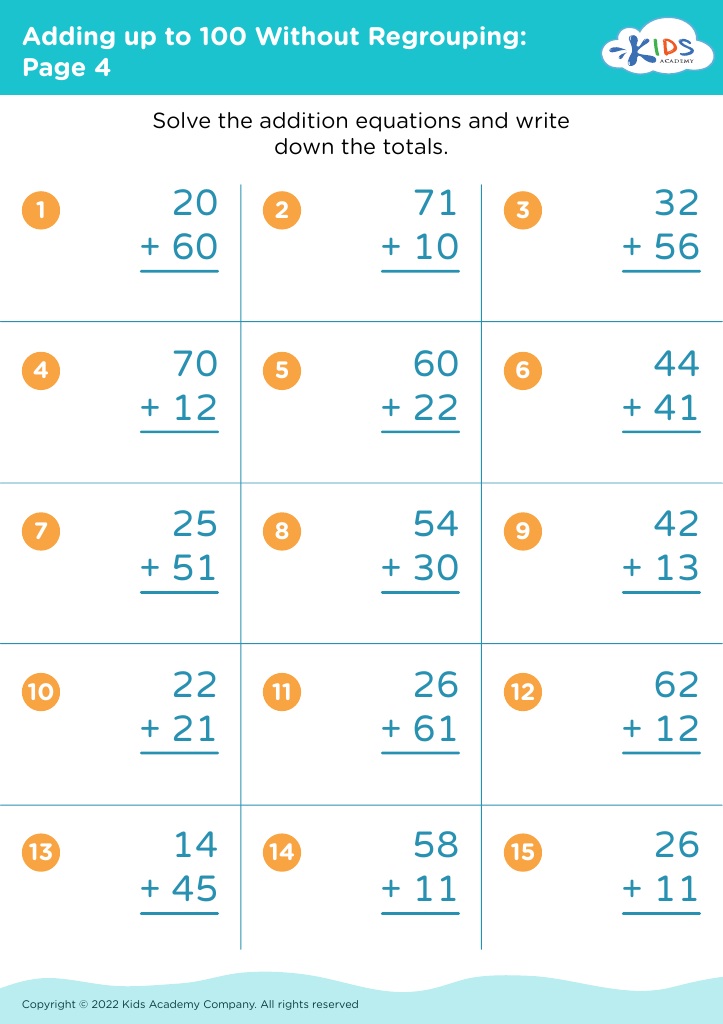
Adding up to 100 Without Regrouping: Page 4
Worksheet
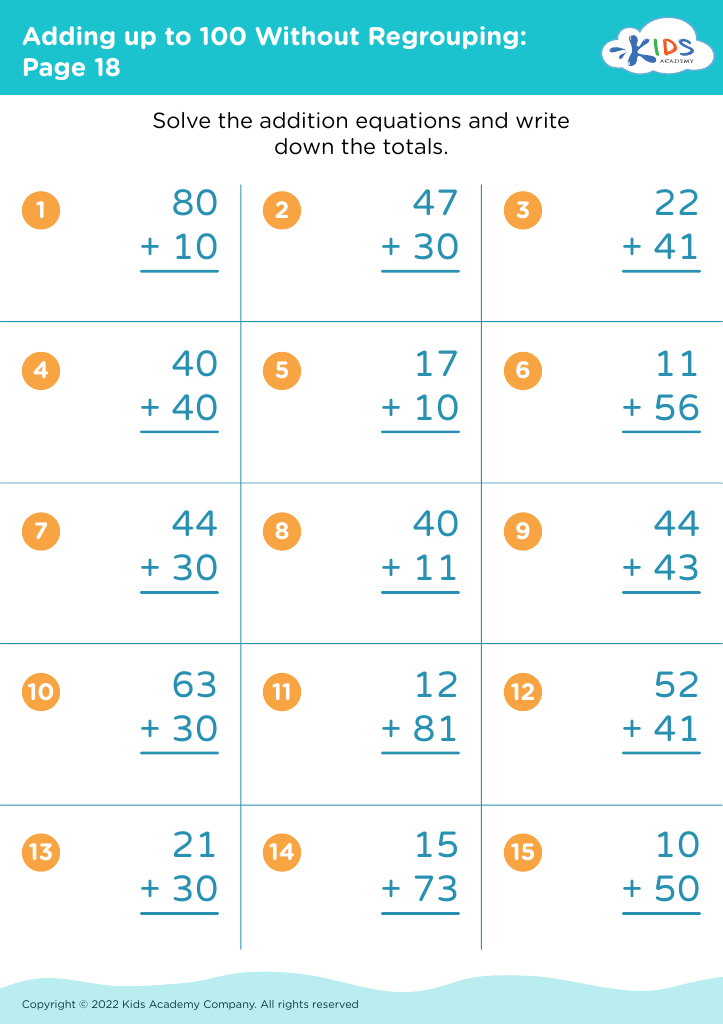
Adding up to 100 Without Regrouping: Page 18
Worksheet
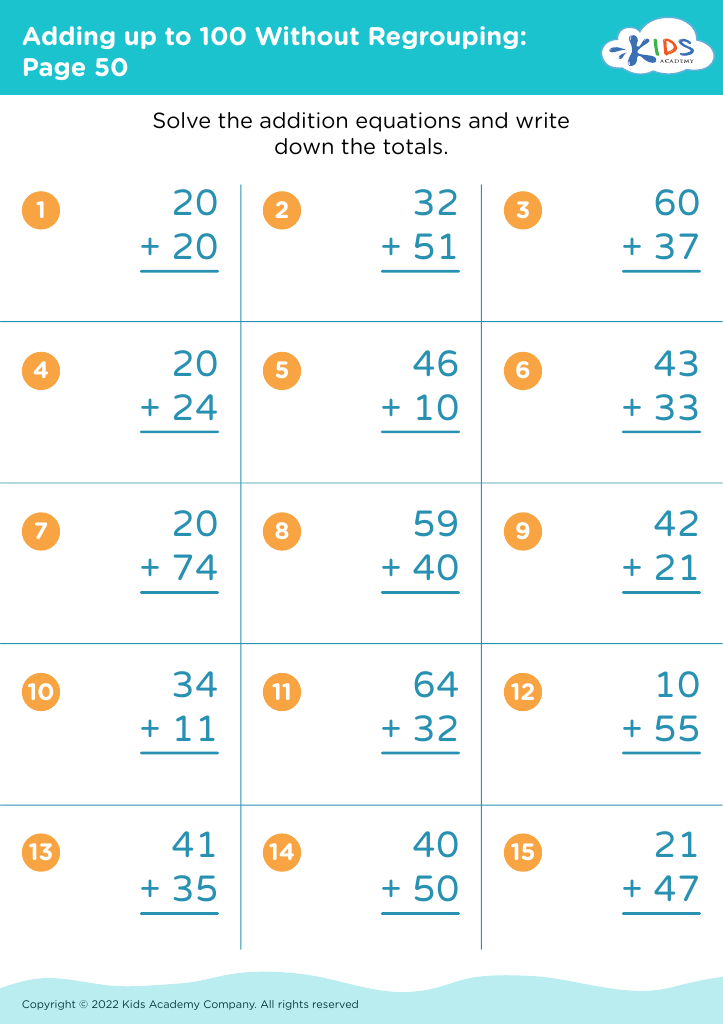
Adding up to 100 Without Regrouping: Page 50
Worksheet
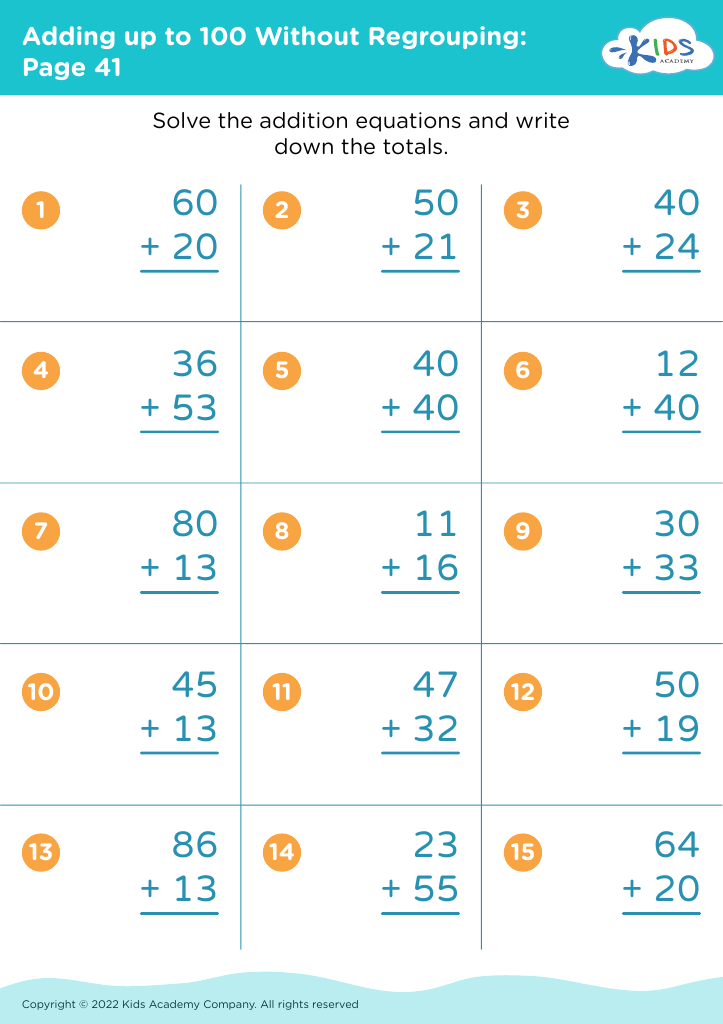
Adding up to 100 Without Regrouping: Page 41
Worksheet
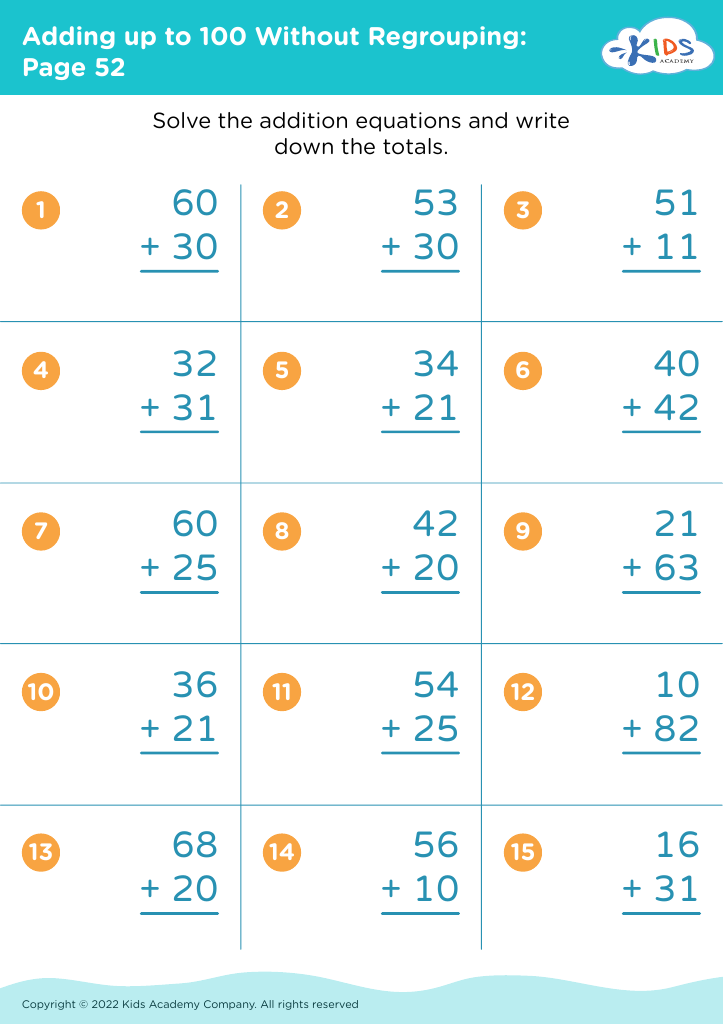
Adding up to 100 Without Regrouping: Page 52
Worksheet
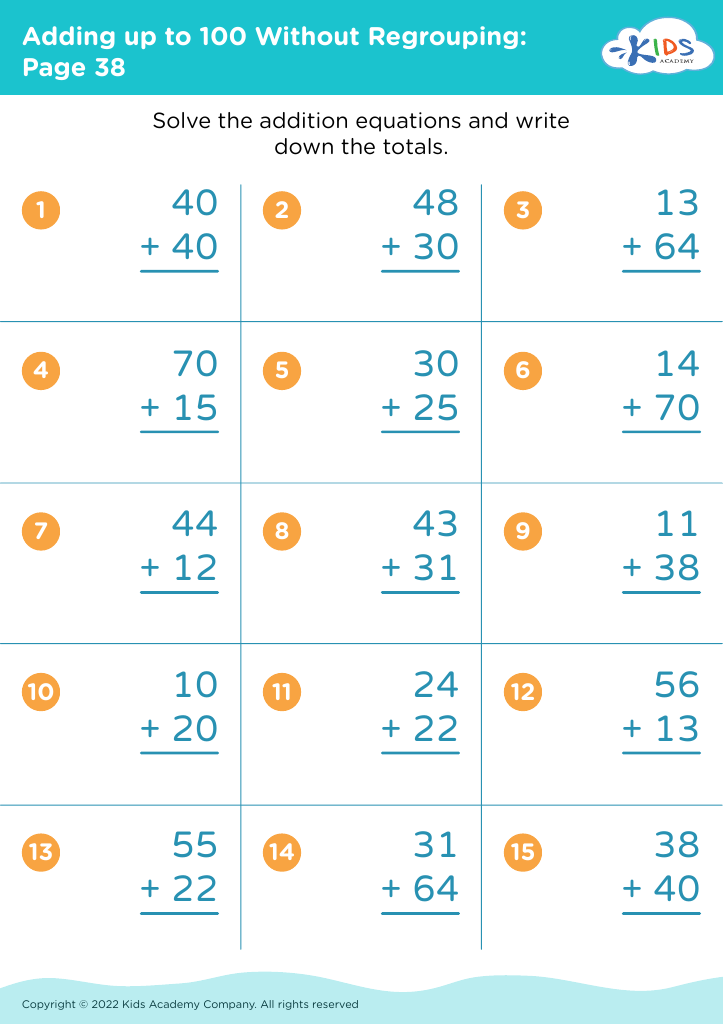
Adding up to 100 Without Regrouping: Page 38
Worksheet
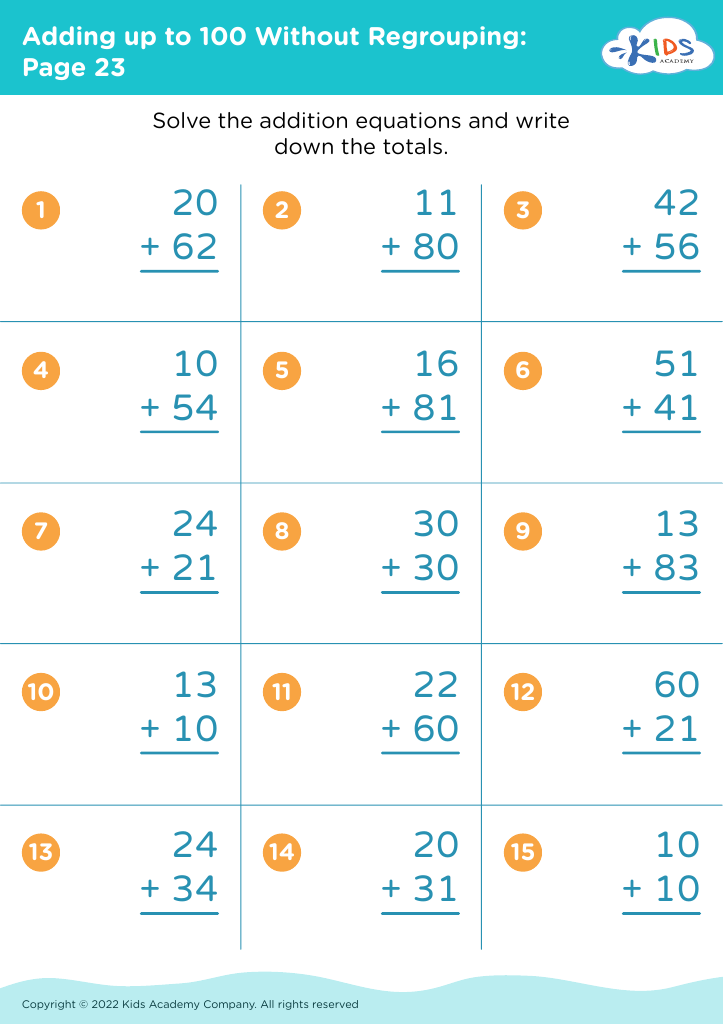
Adding up to 100 Without Regrouping: Page 23
Worksheet
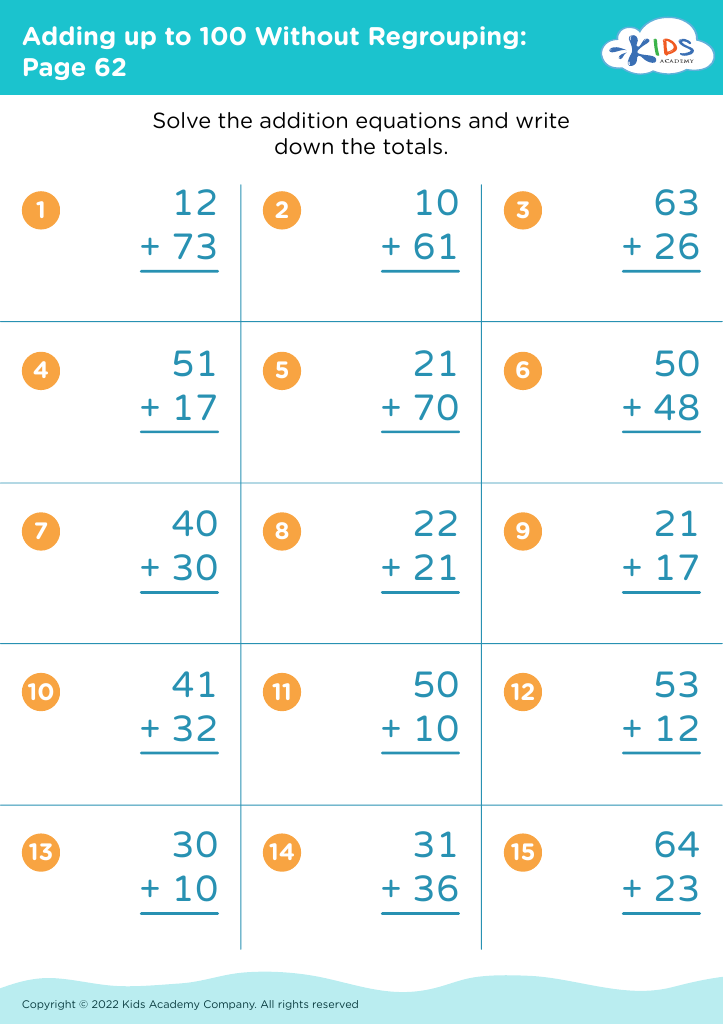
Adding up to 100 Without Regrouping: Page 62
Worksheet


Understanding fractions, particularly the concept of adding up to 100 without regrouping, is crucial for young learners, as it forms the foundation for more advanced mathematical skills and logical thinking. Fractions are prevalent in everyday life—from cooking to budgeting—and being comfortable with them helps children make relevant connections outside the classroom.

When students grasp how to combine fractions that sum to 100, they also enhance their ability to see relationships between numbers, crucial for later topics in fractions, ratios, and percentages. This concept fosters critical thinking, as they learn to analyze problems and find different ways to express values.

For parents and teachers, ensuring children understand these concepts helps build their confidence in math. Recognizing how fractions work enhances overall mathematical literacy, which is vital for future academic success. Additionally, helping children see the relevance of fractions can inspire them to engage with math in relatable contexts. Ultimately, foundational comprehension of fractions boosts problem-solving skills and establishes a solid groundwork, paving the way for subsequent mathematical concepts. Therefore, parents and teachers should prioritize this topic to equip students with essential life skills and prepare them for future educational challenges.