Color Identification Adding up to 100 Worksheets
8 filtered results
-
From - To
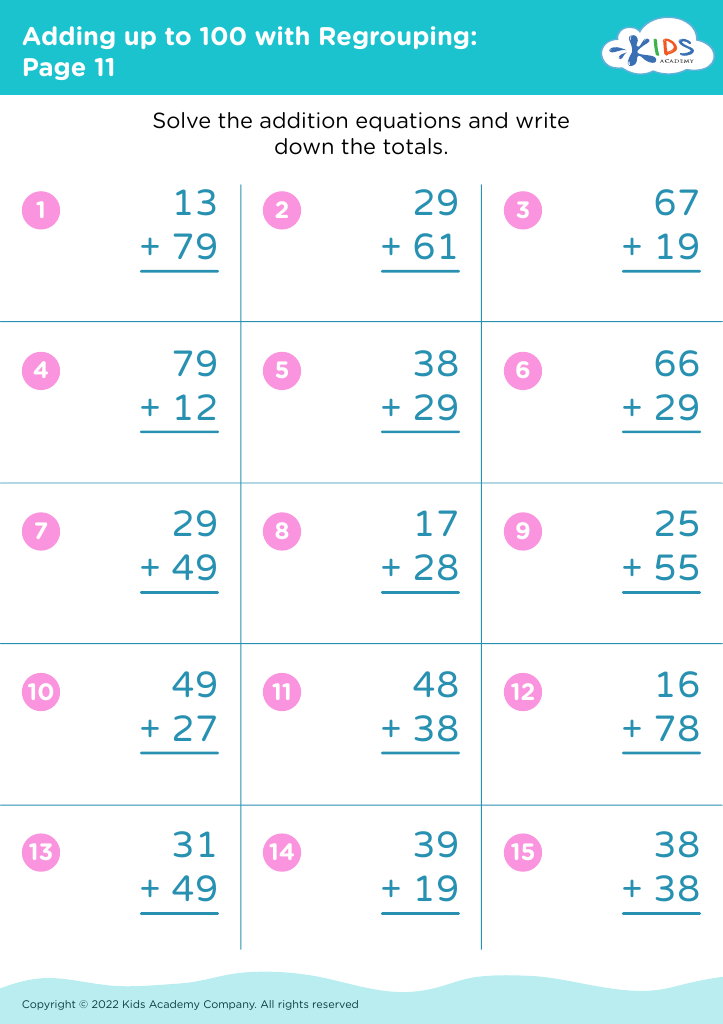
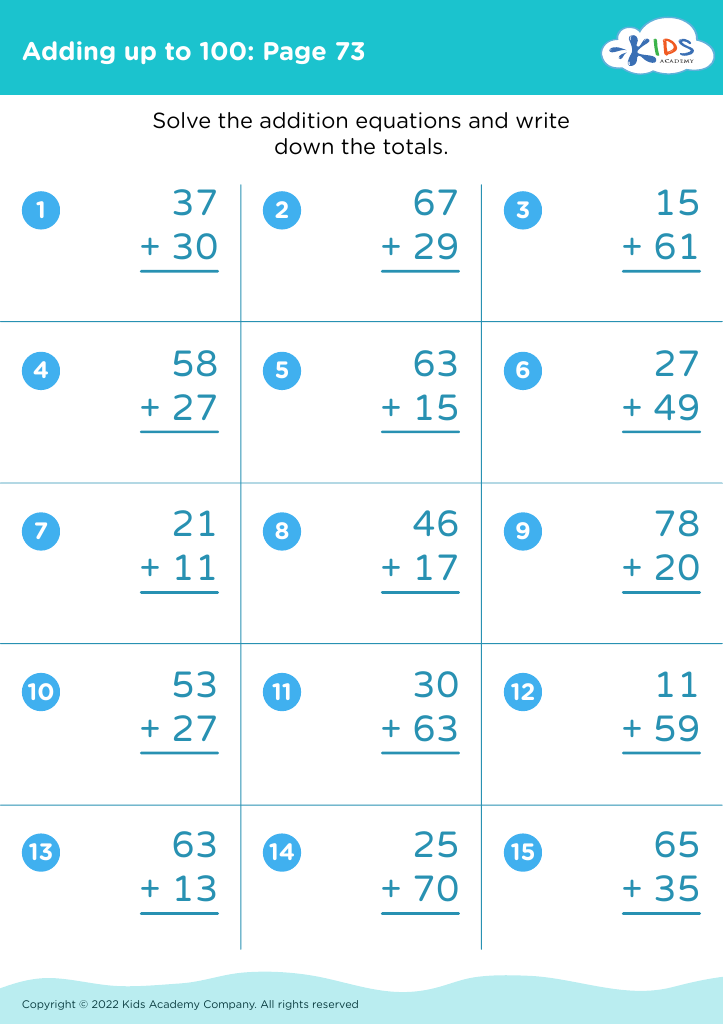
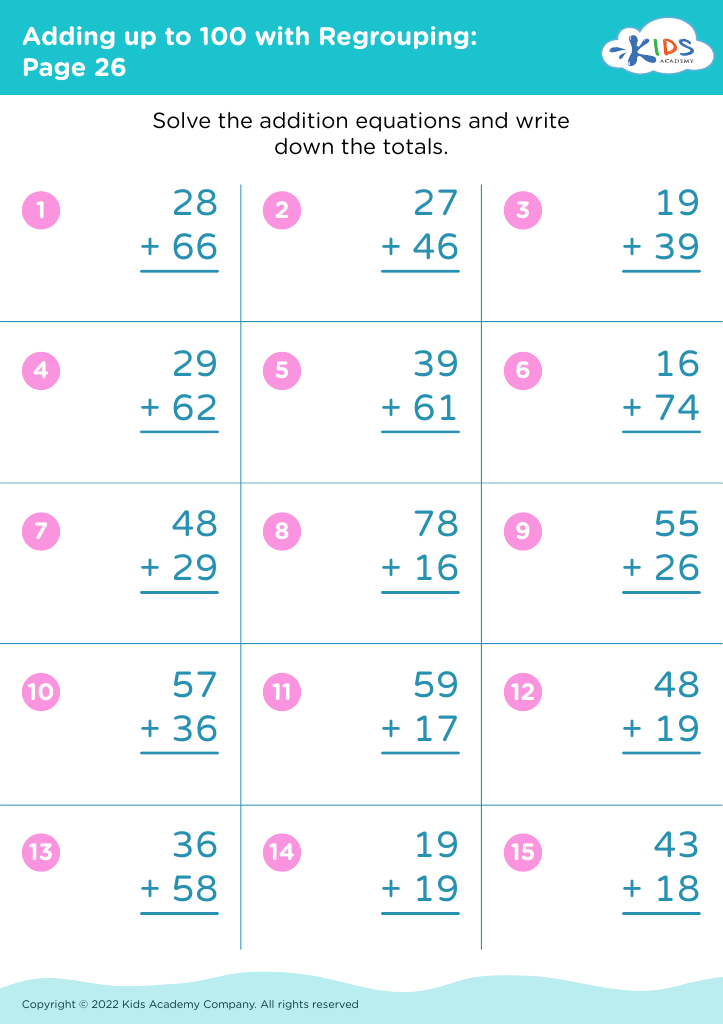
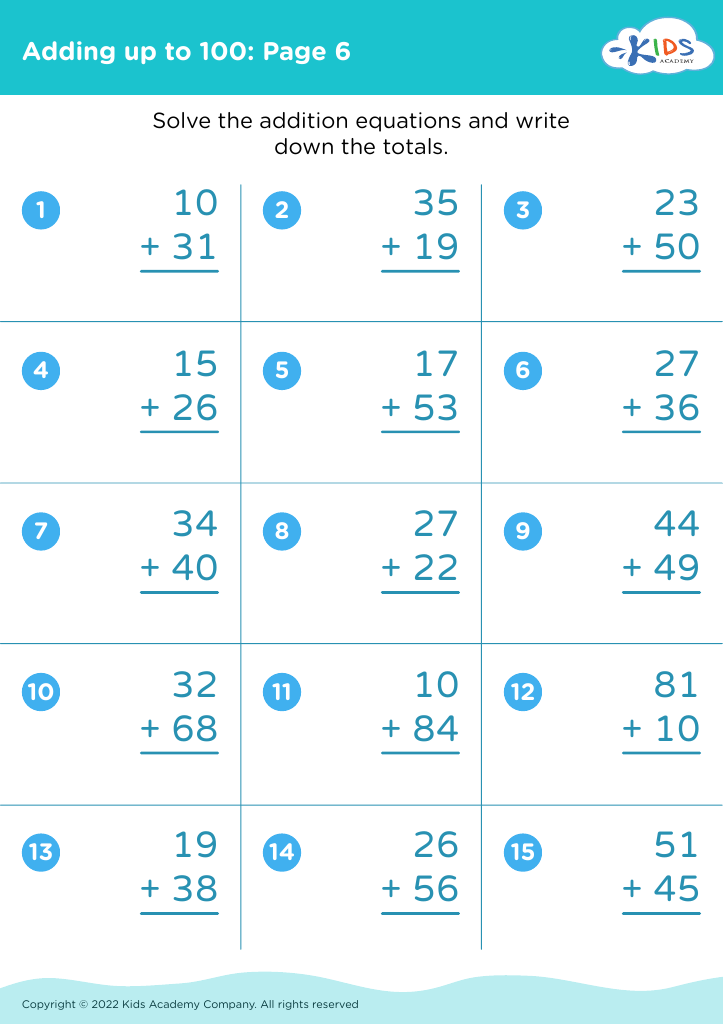
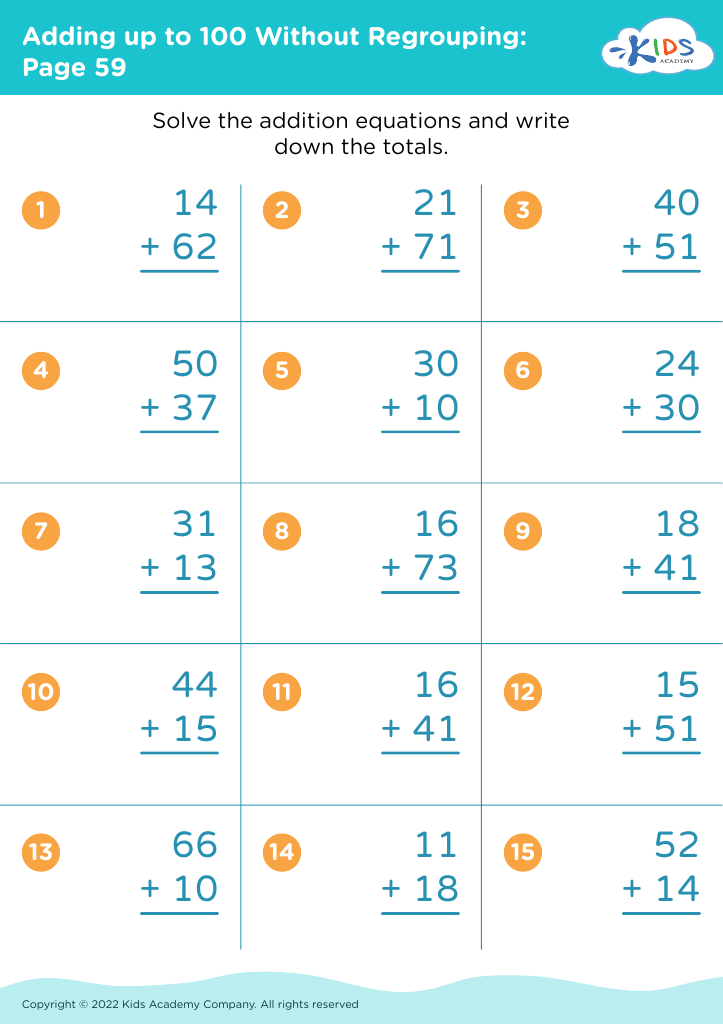
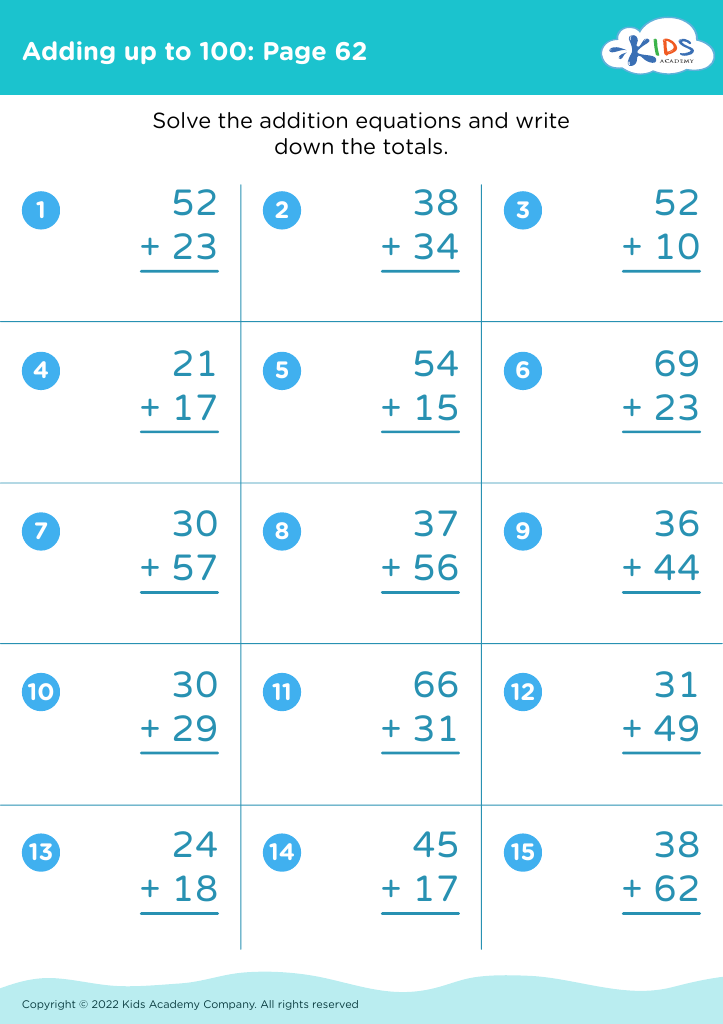
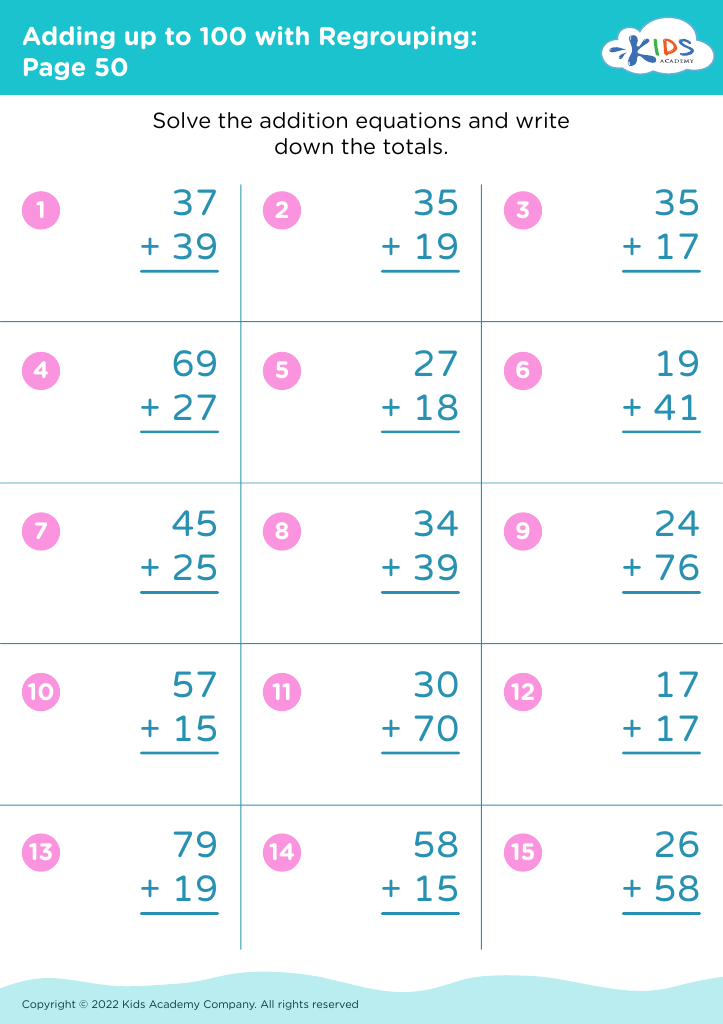
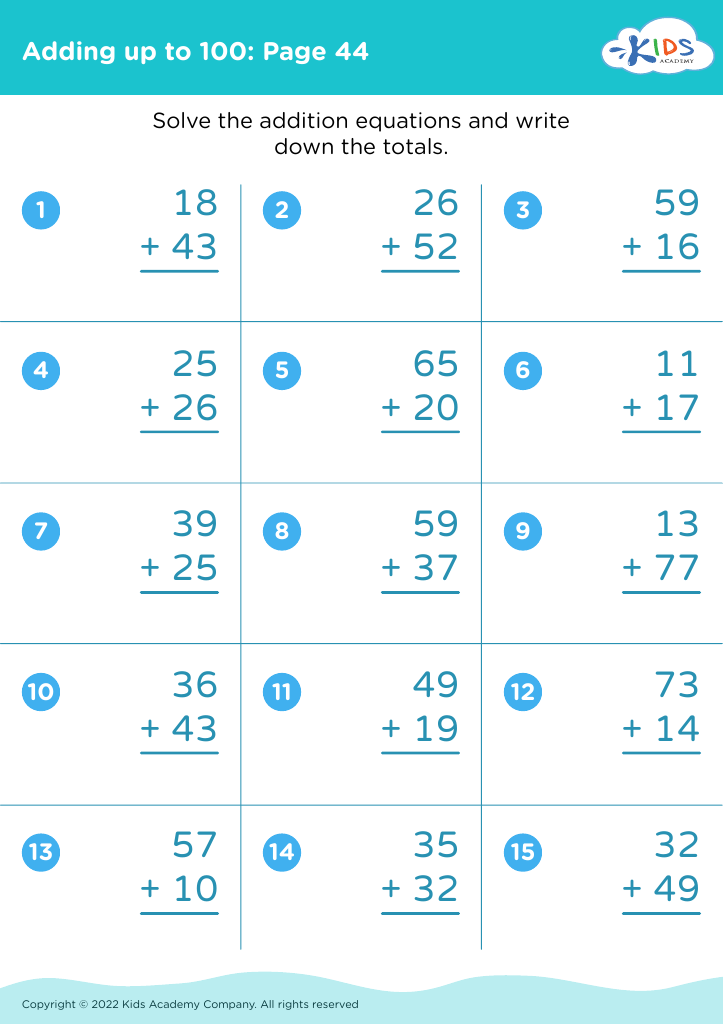
Discover our "Color Identification Adding Up to 100 Worksheets" designed for young learners to enhance their math and color recognition skills! Each worksheet combines vibrant colors with engaging addition exercises, helping kids practice sums up to 100 while identifying and naming colors. These interactive worksheets not only make math enjoyable but also foster creativity and critical thinking. Perfect for classroom activities or home study, they cater to various learning styles to ensure each child grasps the concept of addition in a fun and visually appealing way. Boost your child’s confidence in math and color identification today with our playful and educational resources!


%20(1).jpg)




Color identification is a crucial skill in early childhood development, serving as a foundational aspect of learning that parents and teachers should prioritize. First, understanding colors helps children develop language skills, as they learn to articulate and describe different hues. This vocabulary acquisition not only enhances communication but also fosters their ability to express thoughts and feelings with clarity.
Moreover, color identification is tied to cognitive skills, specifically in categorization and memory. When children learn to recognize colors, they practice sorting objects, which engages critical thinking and enhances problem-solving abilities. This cognitive development can seamlessly transition into more complex mathematical concepts, including addition. For example, the activity of adding up groups of colored objects can visually represent math problems, making abstract concepts tangible and accessible.
In addition, colors play an essential role in emotional development. Different colors evoke various feelings; understanding this helps children navigate their emotions while relating to others. Parents and teachers should, therefore, incorporate color and its identification into educational activities. Doing so fosters a comprehensive learning environment that nurtures linguistic, cognitive, and emotional growth, ultimately enhancing a child’s overall educational experience and preparing them for future challenges.








