Critical Thinking Adding up to 100 Worksheets
5 filtered results
-
From - To
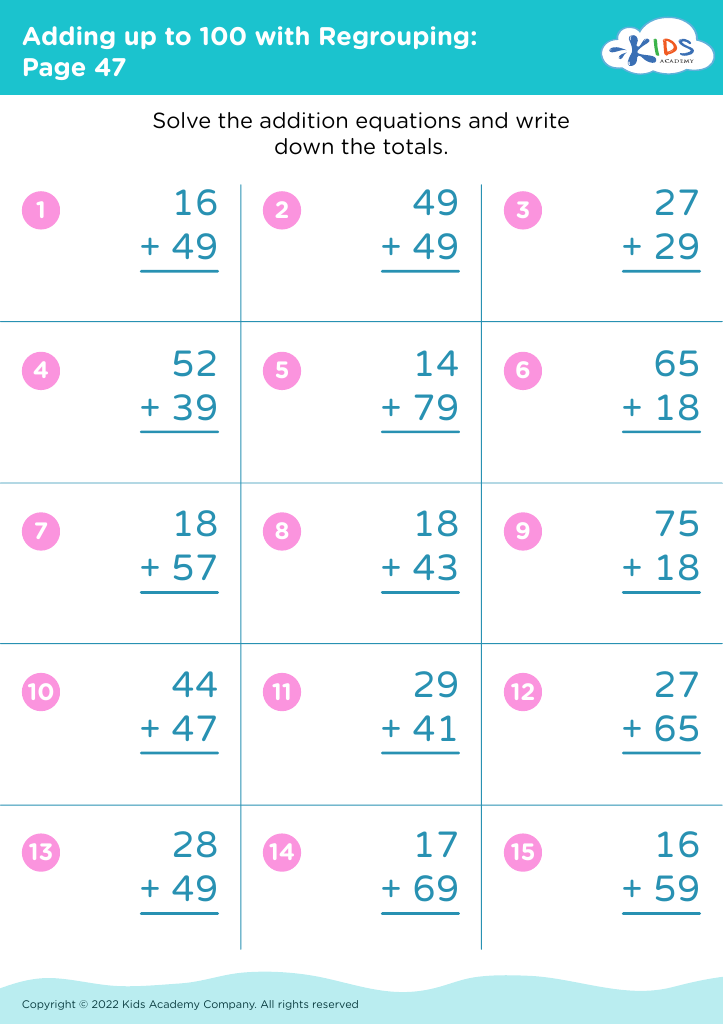
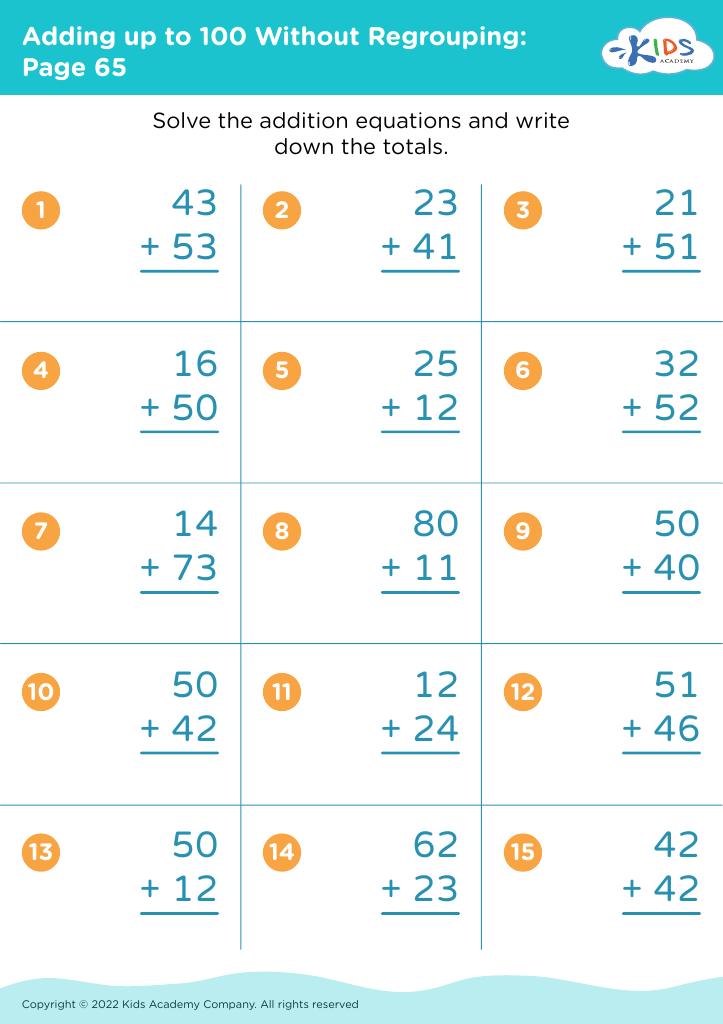
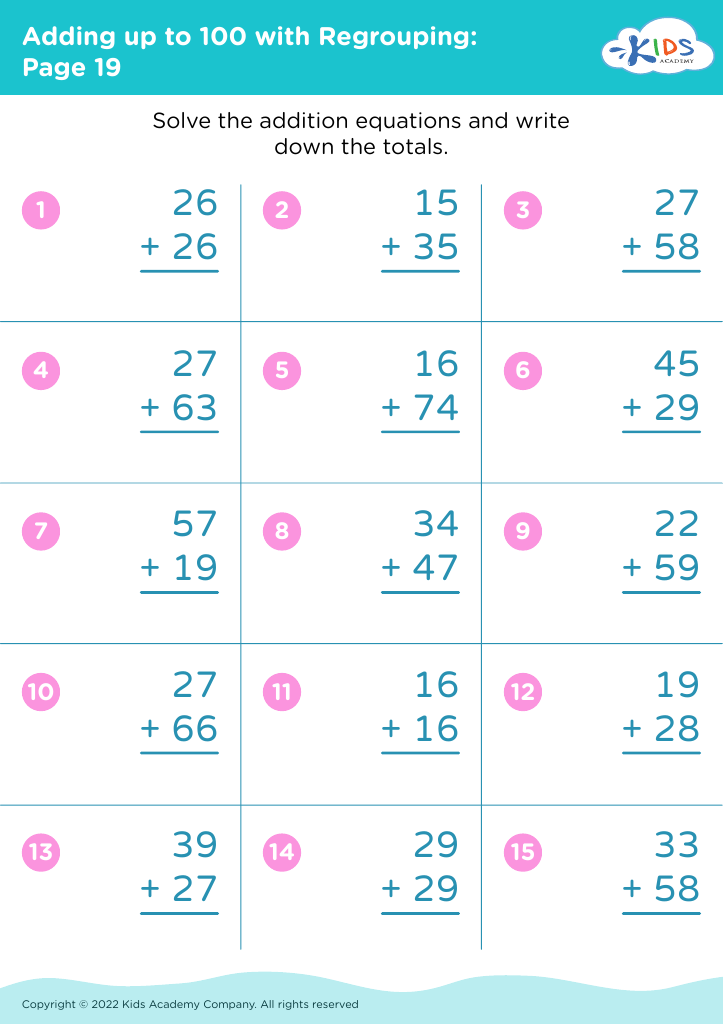
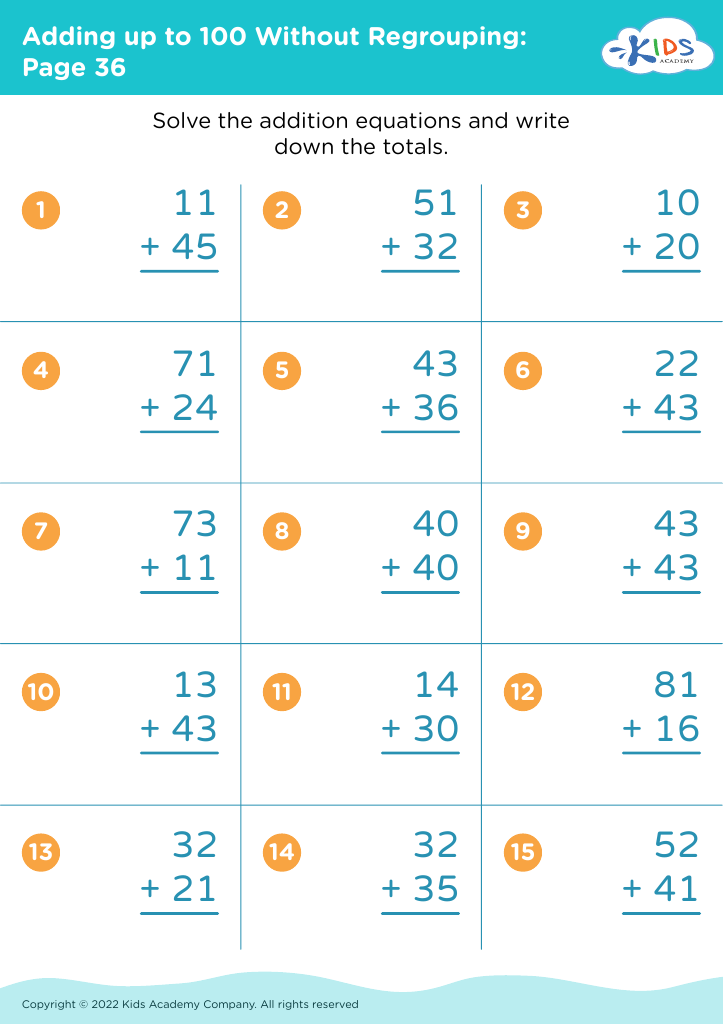
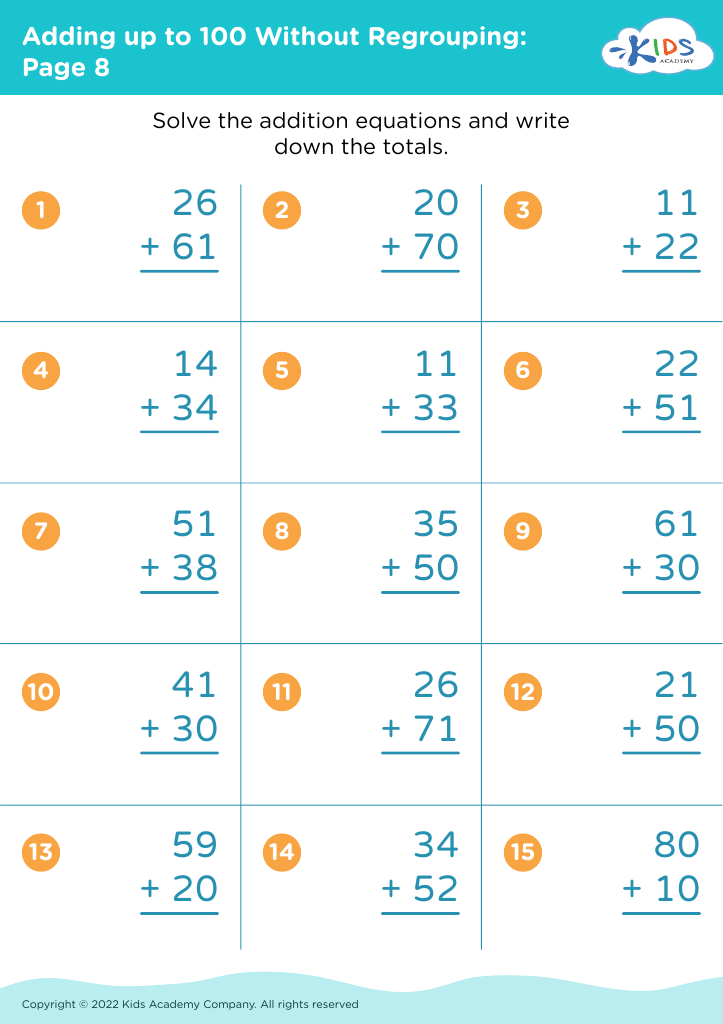
Cultivate your child’s analytical and problem-solving abilities with our "Critical Thinking Adding up to 100 Worksheets." These specialized worksheets go beyond basic arithmetic by engaging young minds in deeper thinking processes. Each activity is thoughtfully designed to develop essential critical thinking skills as children practice addition problems that total up to 100. Perfect for enhancing math proficiency, these exercises encourage logical reasoning, pattern recognition, and strategic thinking. Ideal for early grade students and homeschooling parents, our worksheets offer a smart combination of learning and fun to build solid mathematical foundations. Explore a rich collection now to make math exciting and educational!





%20(1).jpg)

Critical thinking and developing skills for students to efficiently add up to 100 is essential for fostering a solid mathematical foundation in young learners. Parents and teachers should prioritize this aspect for a myriad of reasons. Firstly, it equips children with foundational numeracy skills that are crucial for daily life. Simple tasks such as shopping, cooking, or managing money often involve basic arithmetic, and being proficient in these areas boosts confidence and independence.
Secondly, mastering addition up to 100 encourages problem-solving abilities and logical thinking. When children learn strategies for efficient addition, such as grouping numbers to make tens, it enhances their overall analytical skills which can transfer to other academic subjects and real-life scenarios.
Furthermore, early competence in math builds a positive attitude towards the subject, reducing math anxiety and fostering a lifelong interest in learning. Understanding how numbers interact and develop strategic approaches to solving addition problems lays the groundwork for more complex mathematical concepts encountered later in education.
In conclusion, critical thinking in addition to 100 not only enhances numerical literacy but also promotes general cognitive faculties—benefiting academic performance across the curriculum and practical everyday situations. Adding emphasis on this skill supports well-rounded intellectual development for children.








