Develop critical thinking Adding up to 100 Worksheets
5 filtered results
-
From - To
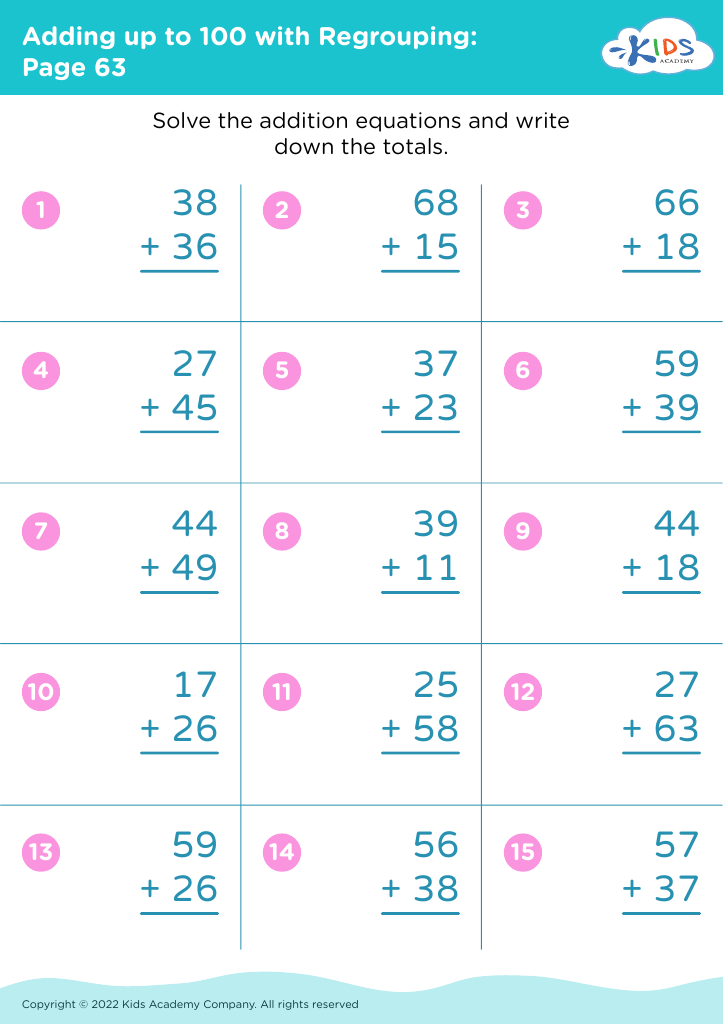
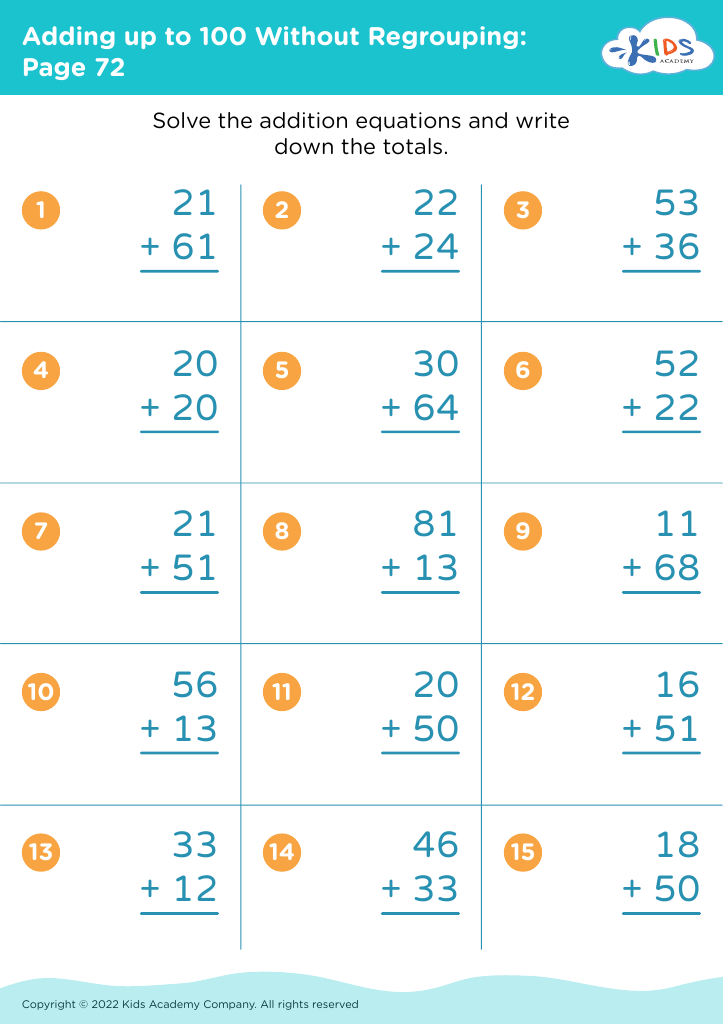
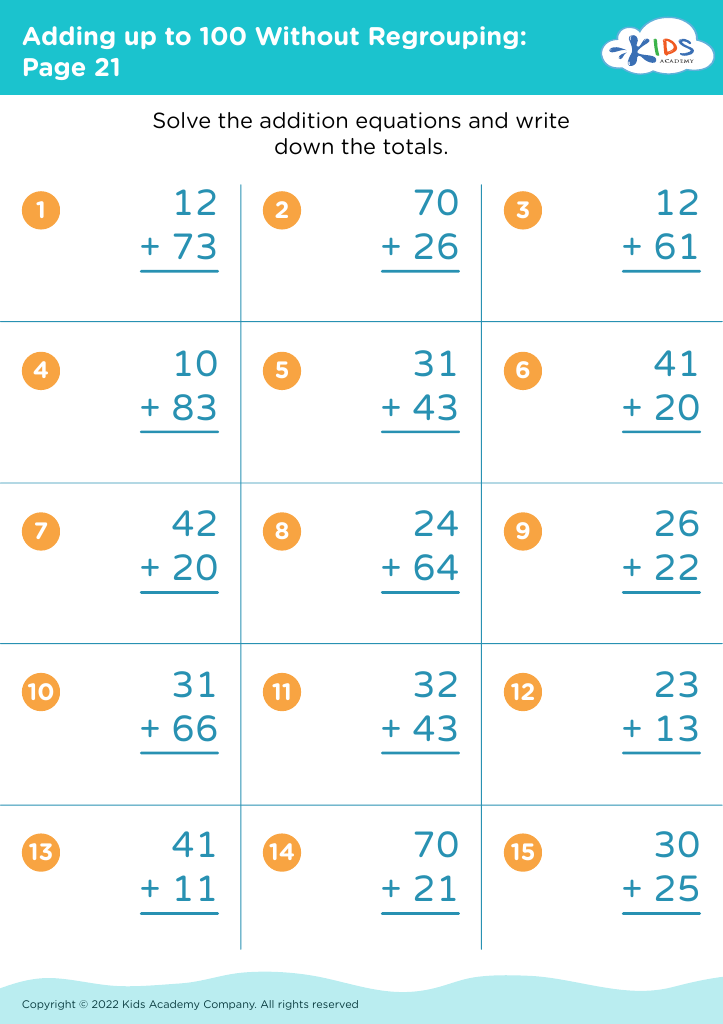
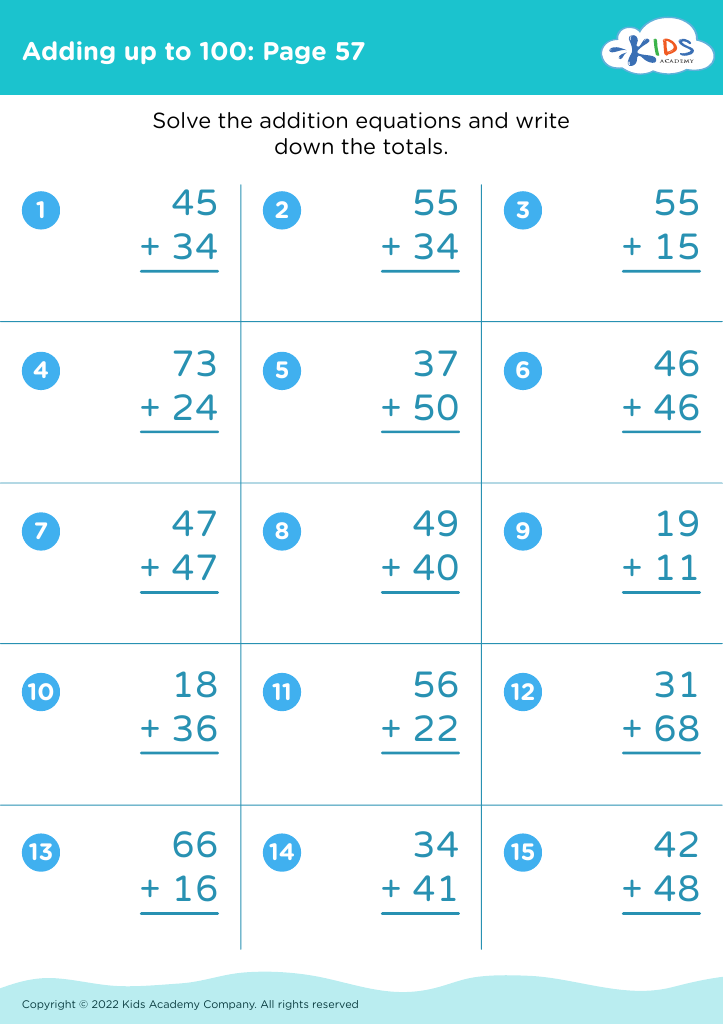
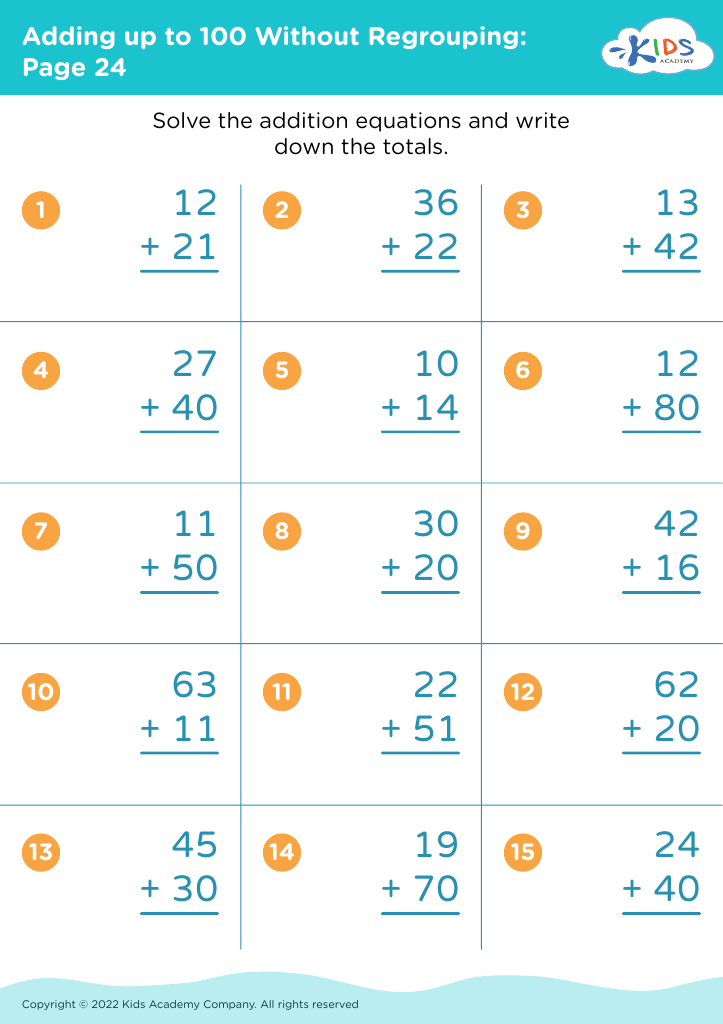
Unlock the power of critical thinking in your young learners with our "Develop Critical Thinking: Adding Up to 100 Worksheets." Designed for early graders, these interactive worksheets encourage children to explore mathematical concepts while enhancing their analytical skills. Through engaging activities focused on addition up to 100, students will learn to approach problems with a solution-oriented mindset. Mastering numerical operations fosters confidence and promotes strategic thinking, essential for future academic success. Ideal for classroom or home use, our worksheets are a fun, effective way to bolster math comprehension and critical reasoning abilities. Perfect for educators seeking to inspire thoughtful exploration in mathematics!




%20(1).jpg)


Developing critical thinking skills in children is essential for their academic success and personal growth. Critical thinking helps children assess information, solve problems, and make informed decisions, laying a foundation for lifelong learning. When parents and teachers prioritize critical thinking, they nurture independent thinkers who can navigate the complexities of the modern world.
Firstly, critical thinking promotes creativity and innovation. Children who can analyze situations and evaluate various solutions are more likely to develop unique ideas and approaches in their projects and future careers. This skill becomes increasingly valuable as the job market demands more adaptable and skilled individuals.
Moreover, critical thinking fosters emotional intelligence. By engaging in discussions and debates, children learn to view issues from multiple perspectives, enhancing their empathy and understanding. This trait is crucial for building meaningful relationships and working cooperatively in diverse environments.
Additionally, critical thinkers tend to be better at managing stress, as they approach challenges with a more analytical mindset, leading to effective problem resolution instead of frustration.
In summary, investing in critical thinking equips children with essential tools for success in school and life, making it vital for parents and teachers to emphasize its importance.








