Developing math skills Adding up to 100 Worksheets
3 filtered results
-
From - To
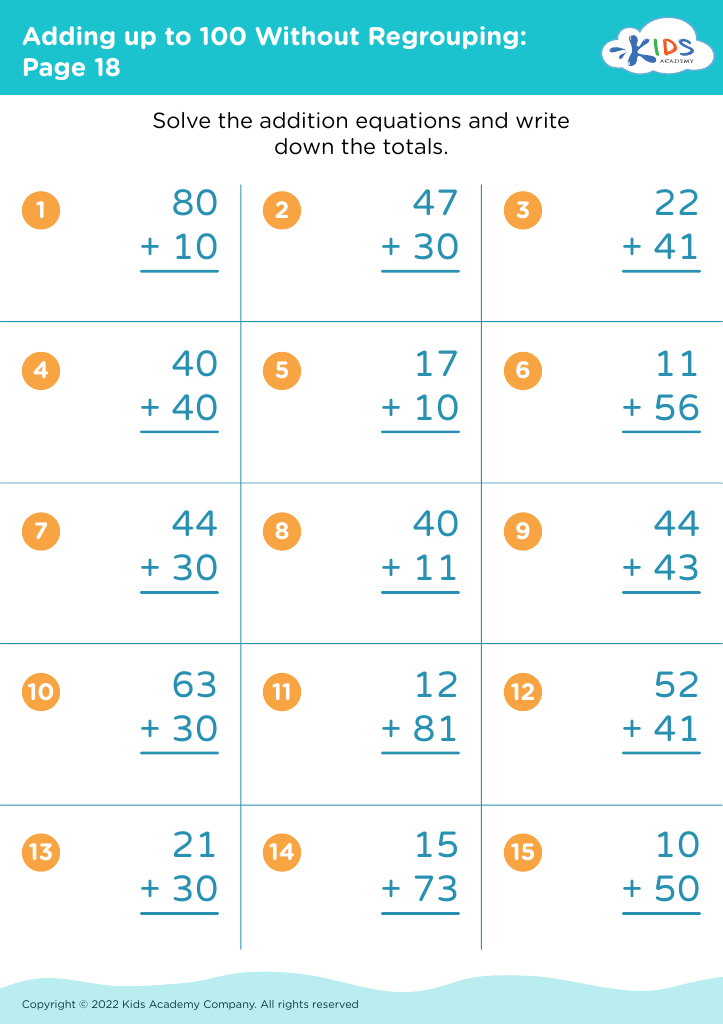
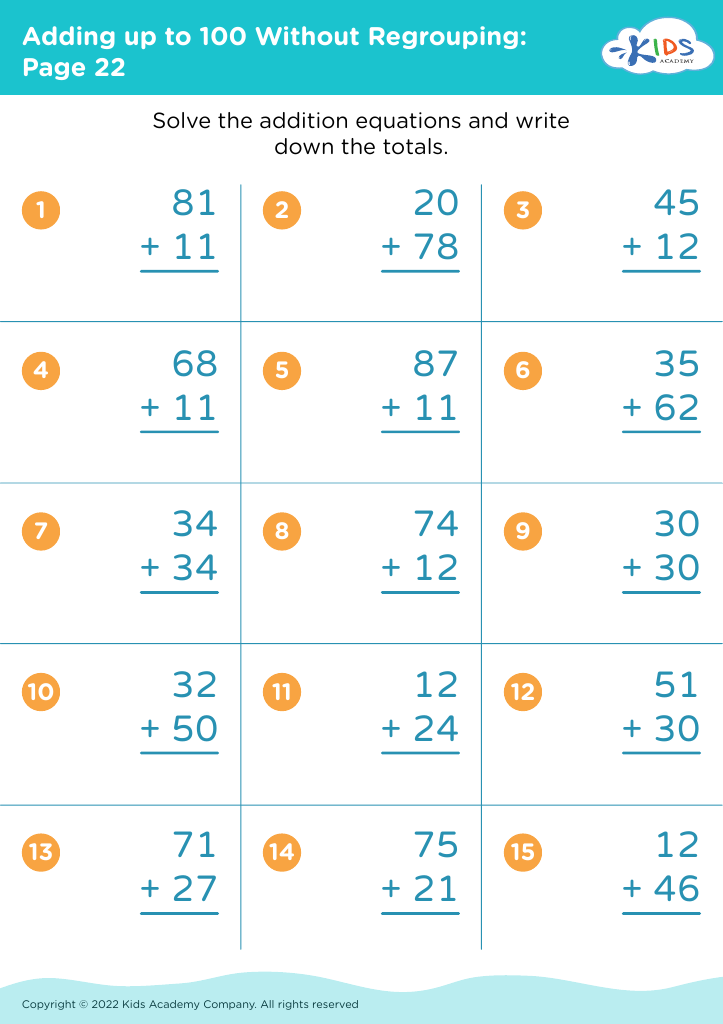
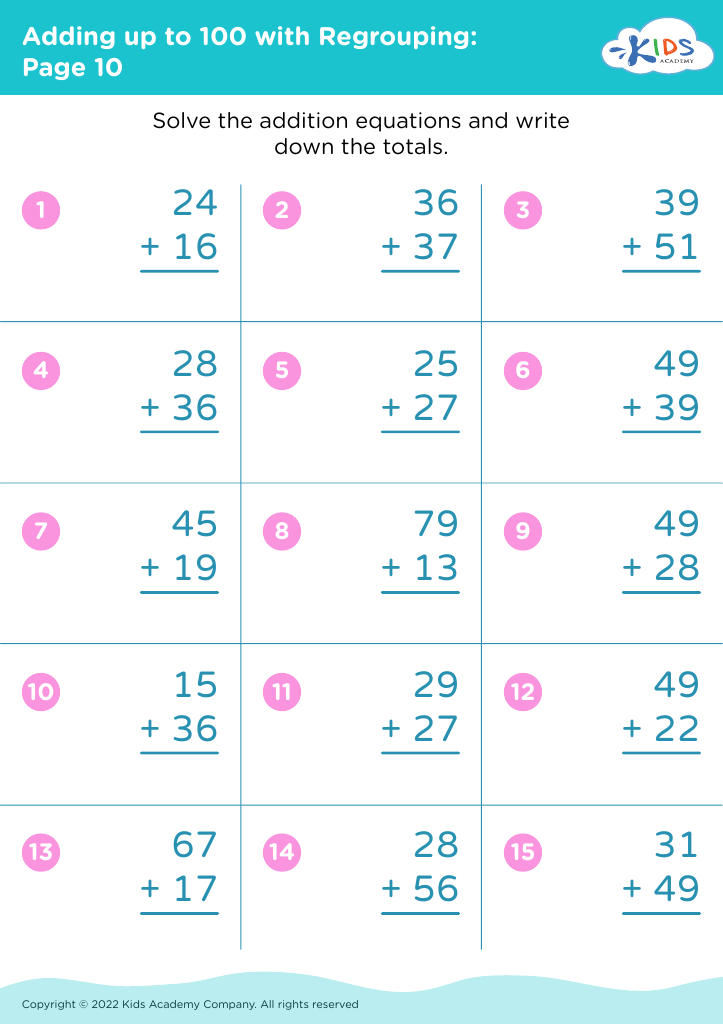
Enhance your child's math skills with our "Adding Up to 100 Worksheets"! Perfect for early learners, these engaging worksheets provide fun and interactive exercises to practice addition while emphasizing number sense and problem-solving. Designed to cater to various learning styles, the worksheets build confidence as children learn to add numbers mentally and with written strategies. Featuring colorful designs and age-appropriate challenges, they make mastering addition enjoyable. Parents and teachers can easily access and print these resources to support classroom activities or home practice. Start helping your young learners reach their math potential today!



%20(1).jpg)



Developing math skills, specifically adding up to 100, is crucial for children’s cognitive and academic growth. First, mastery of this foundational skill enhances number sense, allowing students to manipulate and understand numbers more effectively. By learning to add up to 100, children build a solid base for more complex math operations, such as subtraction, multiplication, and division.
Moreover, this skill significantly impacts everyday life. Basic calculations are essential for tasks such as shopping, budgeting, and time management, ensuring kids grow into functional, financially literate adults. Additionally, proficiency in math promotes confidence and problem-solving skills, encouraging children to tackle challenges with a positive mindset.
For teachers, fostering these skills cultivates a supportive learning environment where students feel comfortable engaging with mathematics. Parents play a pivotal role too; by reinforcing these concepts at home, they help create a collaborative learning experience.
Lastly, strong math skills directly correlate with academic success. Schools increasingly emphasize STEM education, making arithmetic operations pivotal in ongoing subjects. Parents and teachers are therefore integral in guiding children to not only understand math but also appreciate its value in their lives, fostering a love for learning that lasts a lifetime.








