Drawing skills Adding up to 100 Worksheets
3 filtered results
-
From - To
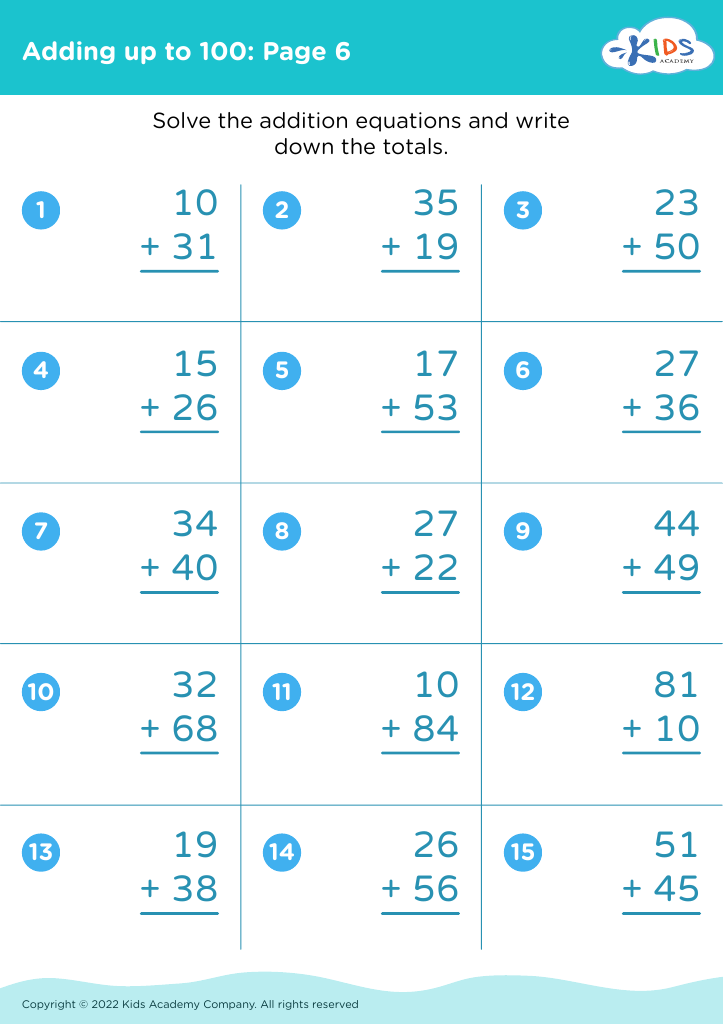
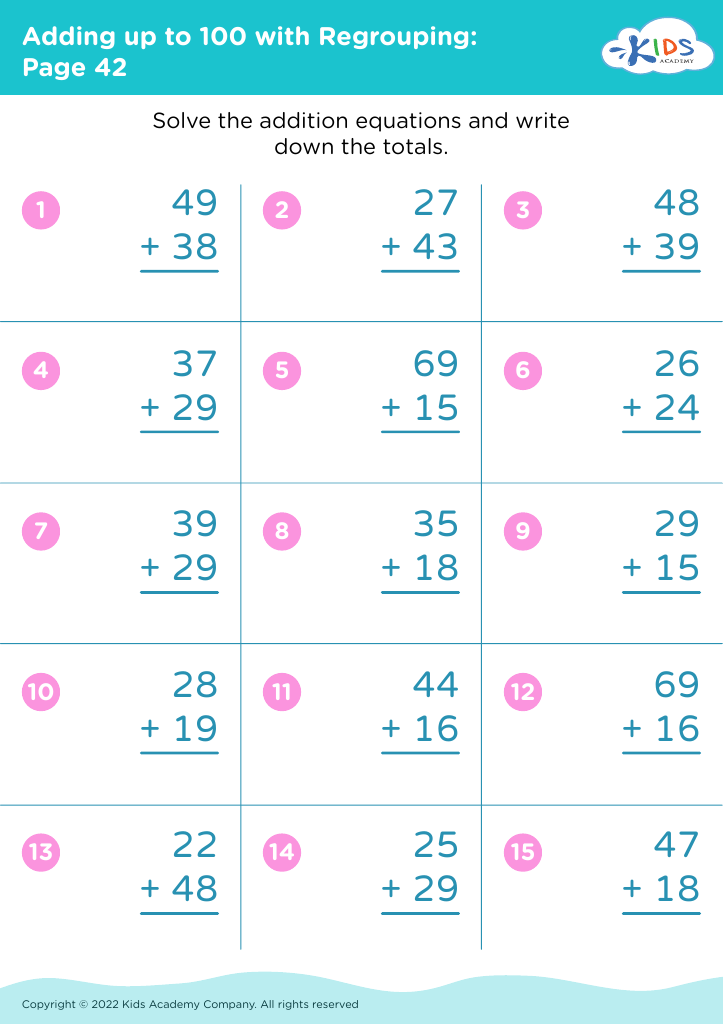
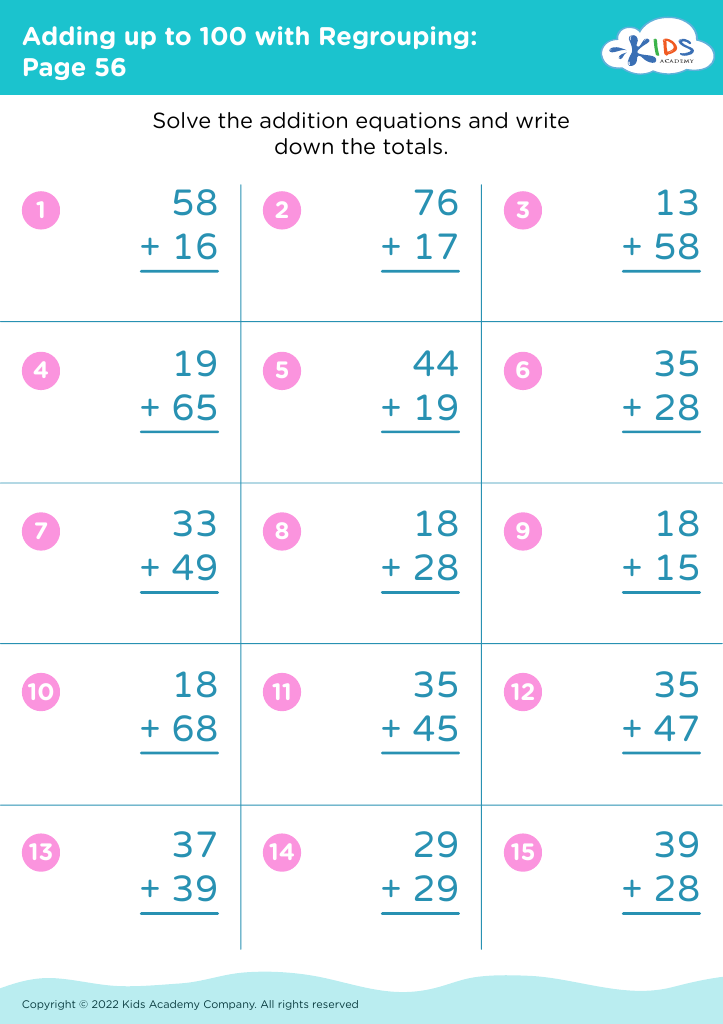
Introducing our "Drawing Skills Adding up to 100 Worksheets," specially designed to help kids combine their love for drawing with essential math skills! These engaging worksheets teach children addition by allowing them to complete images and patterns, counting up to 100. As they solve math problems, they'll also enhance their creativity and fine motor skills. Perfect for both classroom and home learning, our printable sheets make math fun and visually stimulating. Download now from Kids Academy to support your child in mastering addition in an artistic and enjoyable way!



%20(1).jpg)



Developing drawing skills and the ability to add up to 100 in early childhood education are crucial for several reasons. Firstly, drawing is a fundamental form of creative expression. It helps children improve their fine motor skills, hand-eye coordination, and dexterity—all of which are essential for writing. Moreover, drawing aids in cognitive development by encouraging children to observe, conceptualize, and create, which in turn boosts problem-solving and critical thinking skills.
On the other hand, learning to add up to 100 is vital for building a solid mathematical foundation. This skill lays the groundwork for more complex arithmetic operations and problem-solving techniques, which are essential for real-life situations and advanced mathematical learning. Mastery of addition also enhances a child's ability to understand number relationships and counting techniques, reinforcing their overall numeracy.
Parents and teachers should emphasize these skills because they cultivate a balanced intellectual growth. Drawing fosters visual and spatial learning, while arithmetic boosts logical and analytical thinking. Together, they equip children with a diverse skill set that spans both the creative and quantitative spectrum, fostering well-rounded development and better preparing them for future academic challenges and daily life.








