Enhance problem-solving skills Adding up to 100 Worksheets
3 filtered results
-
From - To
Enhance your child’s problem-solving skills with our "Adding Up to 100" worksheets! Designed for young learners, these engaging worksheets provide a variety of math exercises that challenge kids to think critically and develop their addition skills. By working with fun scenarios and colorful visuals, students will improve their ability to solve problems efficiently. Each worksheet encourages independent thinking, allowing children to approach math with confidence. Plus, our resources are easy to access and perfect for use at home or in the classroom. Start your child’s journey toward math mastery today and watch their skills grow with these interactive activities!
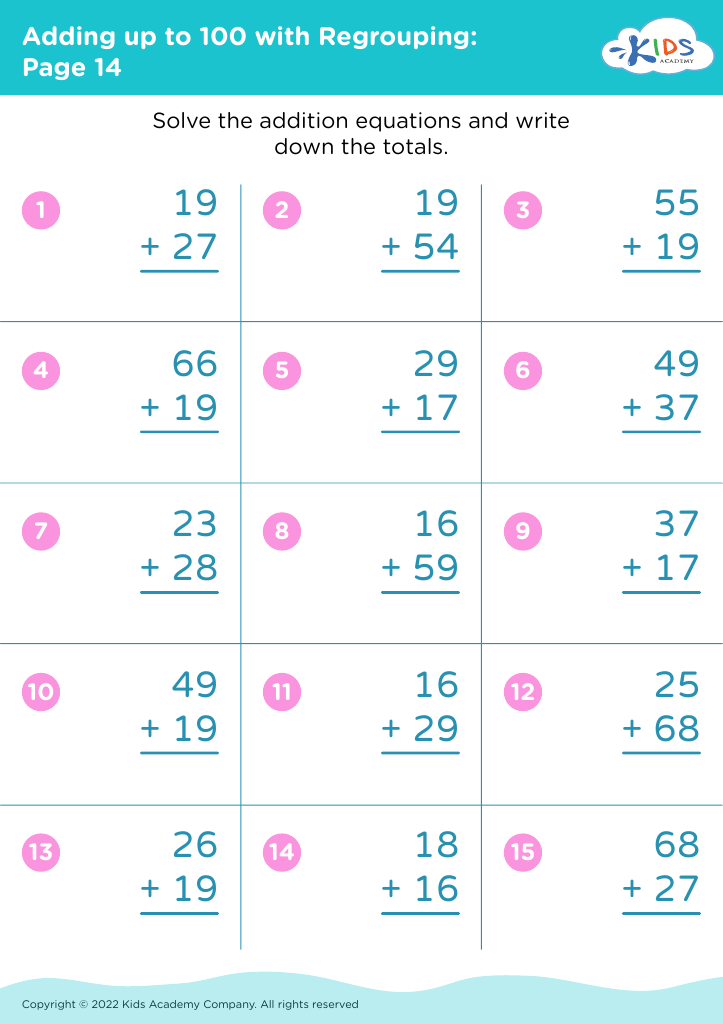
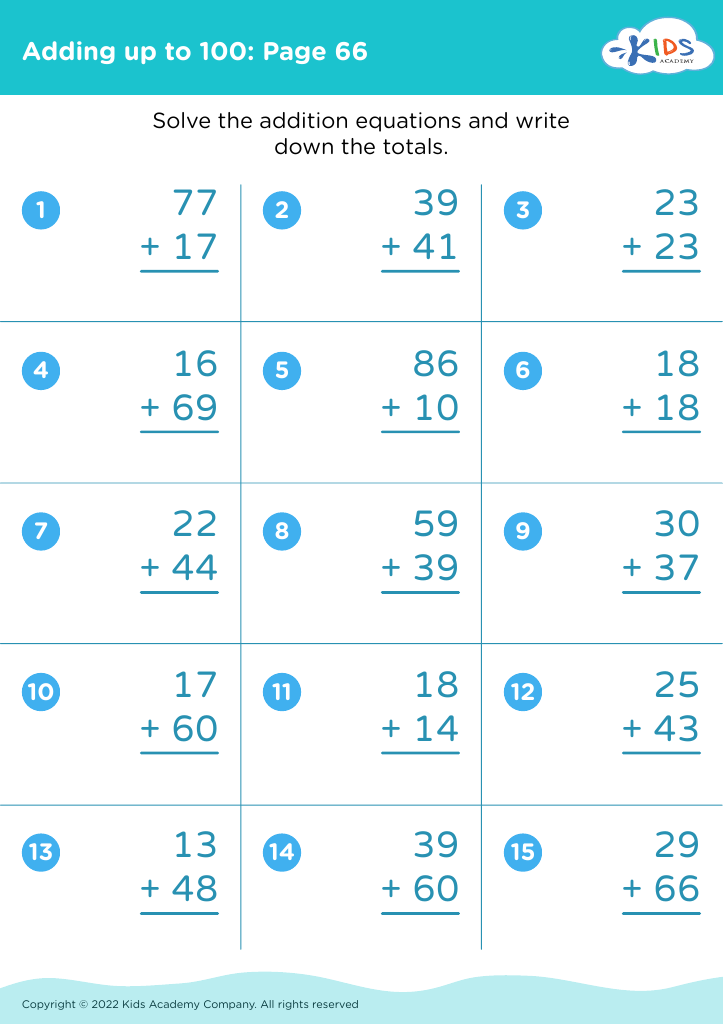
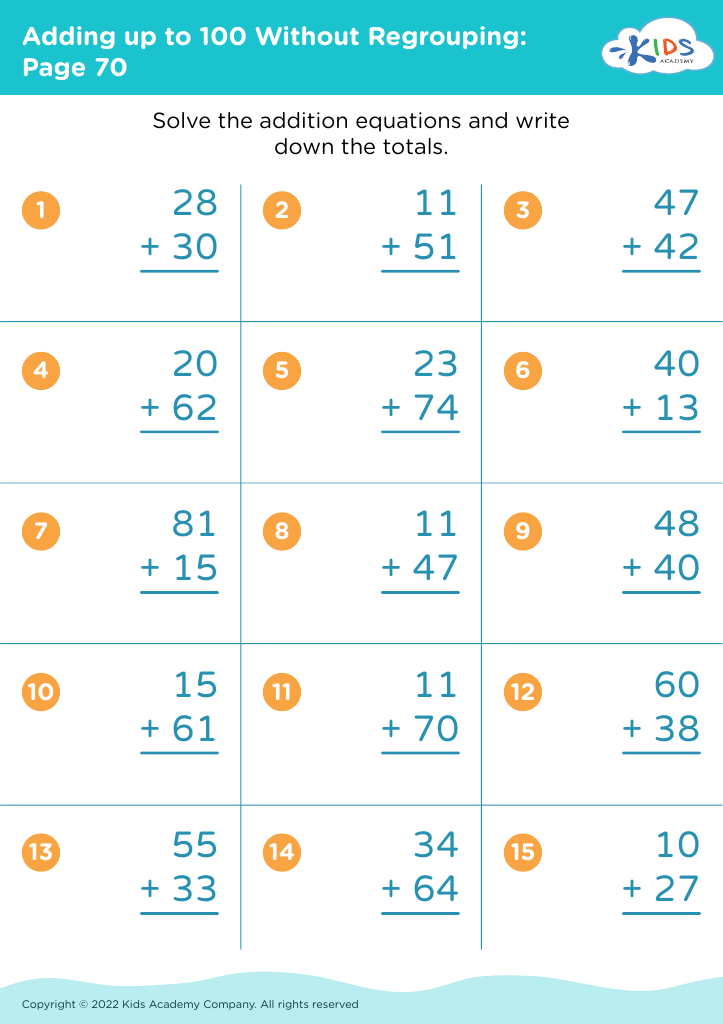




%20(1).jpg)


Enhancing problem-solving skills in young children, particularly around the concept of adding up to 100, is crucial for their cognitive development and future success. When children engage in problem-solving activities, they learn to analyze situations, think critically, and approach challenges with confidence. This foundational skill not only applies to mathematics but also to various aspects of life as they grow.
Problem-solving exercises involving numbers, such as adding up to 100, encourage children to explore different strategies, which fosters mathematical understanding and fluency. It helps them grasp concepts like number relationships, place value, and mental math, which are integral to their overall mathematical development. Moreover, when teachers or parents promote this skill, they reinforce persistence and resilience, teaching children to approach complex problems without fear of failure.
Furthermore, enhancing these cognitive skills at an early age sets the stage for future academic achievement. Children who are confident in their problem-solving abilities tend to excel in subjects requiring analysis and critical thinking. Ultimately, prioritizing problem-solving skills in early education enables children to navigate an increasingly complex world and empowers them with the tools they need to succeed throughout their educational journey and beyond.








