Enhancing calculation skills Adding up to 100 Worksheets
4 filtered results
-
From - To
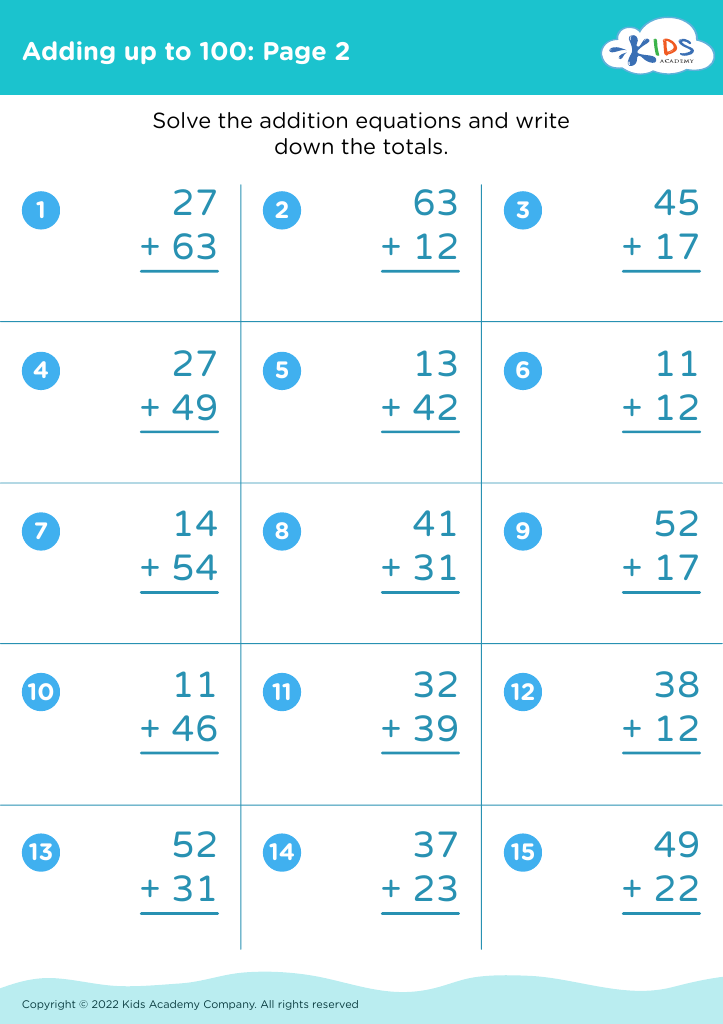
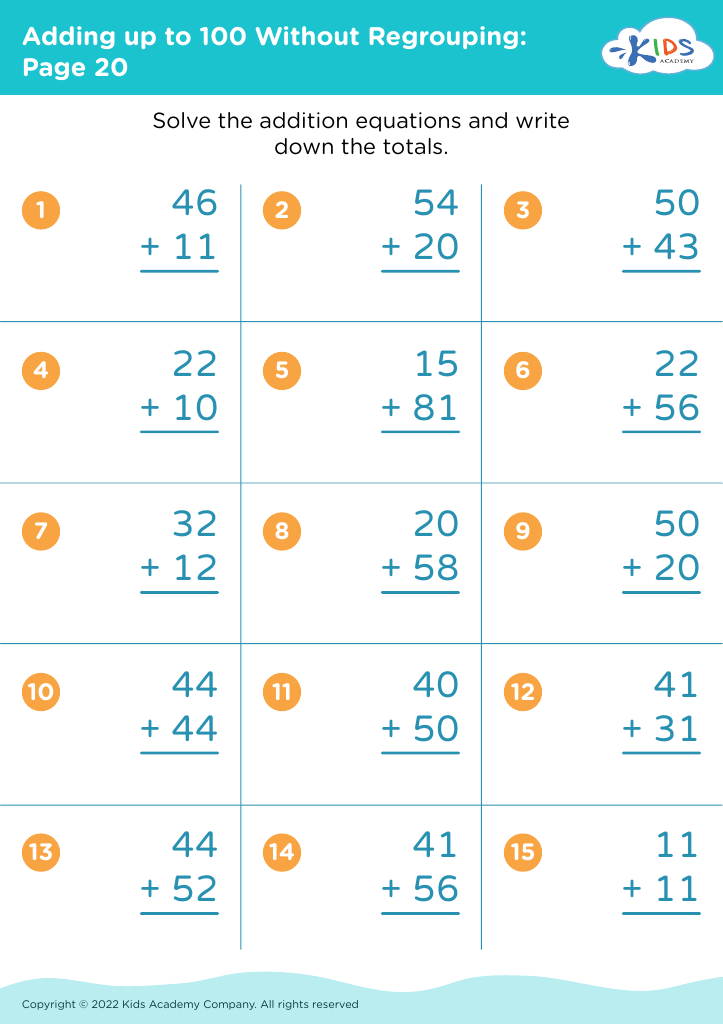
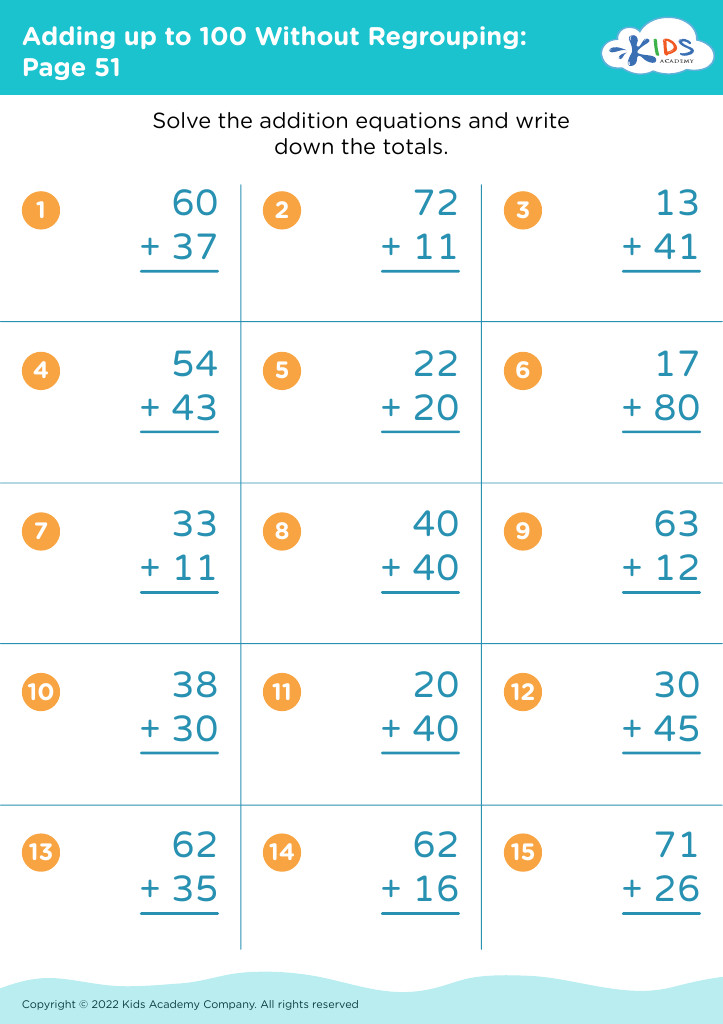
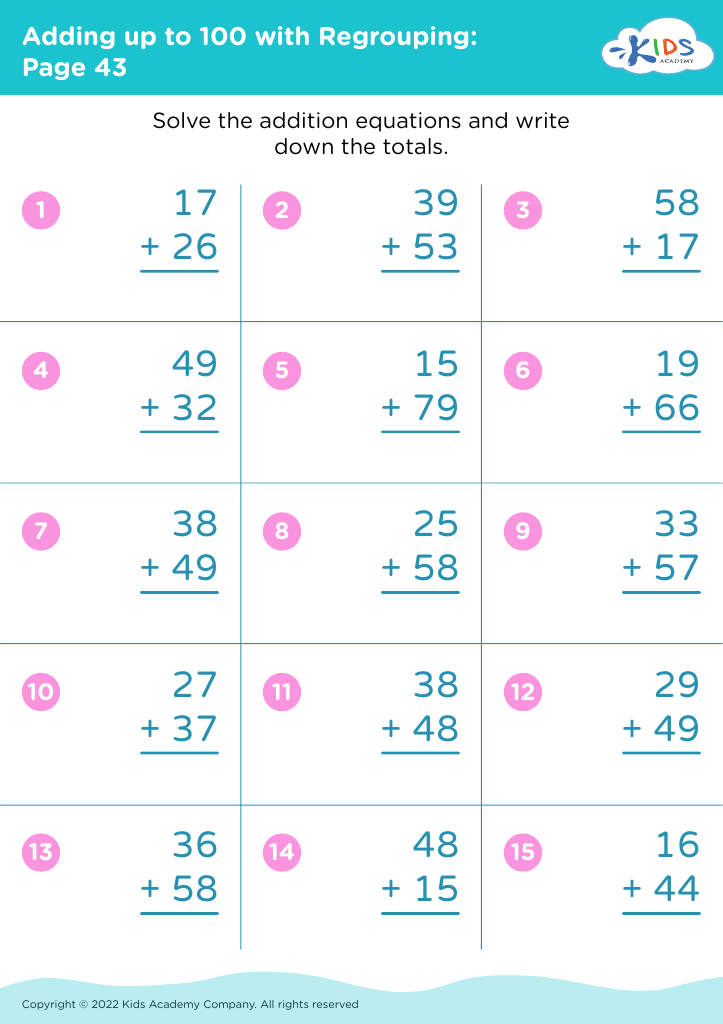
Boost your child's mathematical abilities with our "Enhancing Calculation Skills: Adding Up to 100 Worksheets." Designed for early learners, these engaging worksheets provide a fun and interactive way for students to practice addition and develop crucial calculation skills. Each worksheet features a variety of exercises, from vibrant visuals to relatable scenarios, making learning enjoyable and effective. Tailored to meet different learning levels, our resources help students gain confidence as they work towards mastering addition up to 100. Download these worksheets today and watch your child thrive in math while building a strong foundation for future success!






%20(1).jpg)
Enhancing calculation skills, particularly in adding up to 100, is crucial for a child's academic development and everyday life. First, strong foundational math abilities foster confidence in young learners, making them more willing to engage with complex math concepts as they progress. Being adept at addition aids in mental calculations, which are essential for problem-solving in more advanced operations like multiplication and division.
Furthermore, mastering addition up to 100 equips students with practical skills for daily activities. Simple tasks such as budgeting, shopping, and measuring become easier and help children understand the value of money and numeracy in real-life contexts. This foundation also promotes critical thinking and logical reasoning, enabling students to analyze and approach problems systematically.
For teachers and parents, nurturing these skills can bridge gaps in understanding and performance, ensuring that each child is better prepared for future academic challenges. Additionally, it fosters a love for learning by making math feel approachable and enjoyable. Prioritizing calculation skills not only supports a child's educational journey but also prepares them for a world where numerical literacy is increasingly essential. Overall, cultivating strong addition skills promotes lifelong benefits, equipping children for success both in and out of school.








