Fine Motor Skills Adding up to 100 Worksheets
12 filtered results
-
From - To
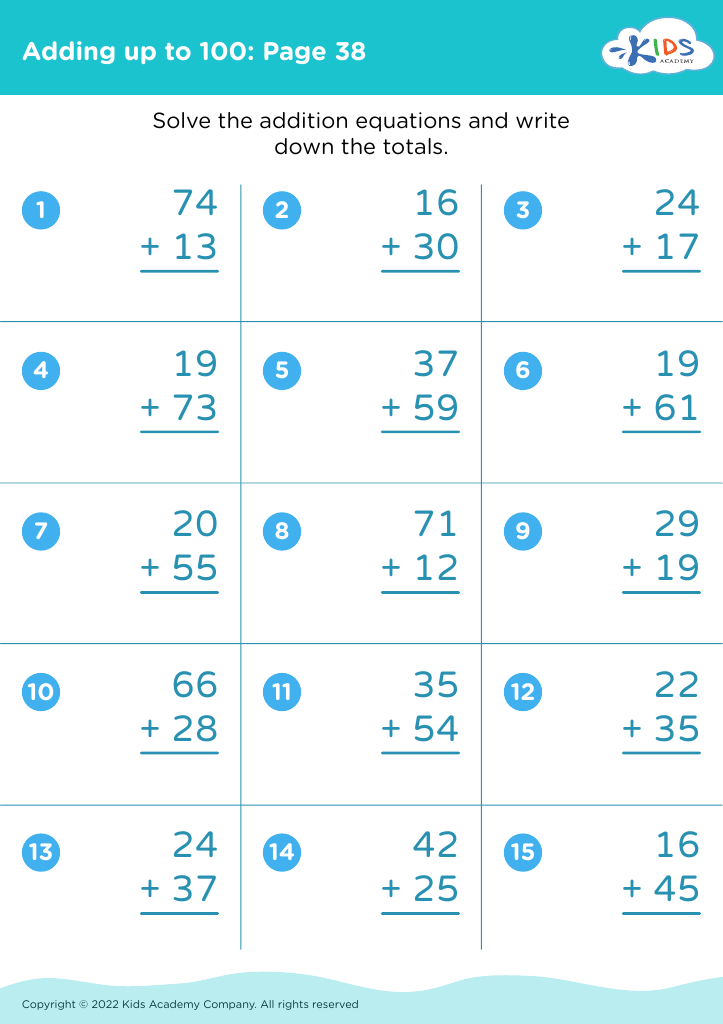
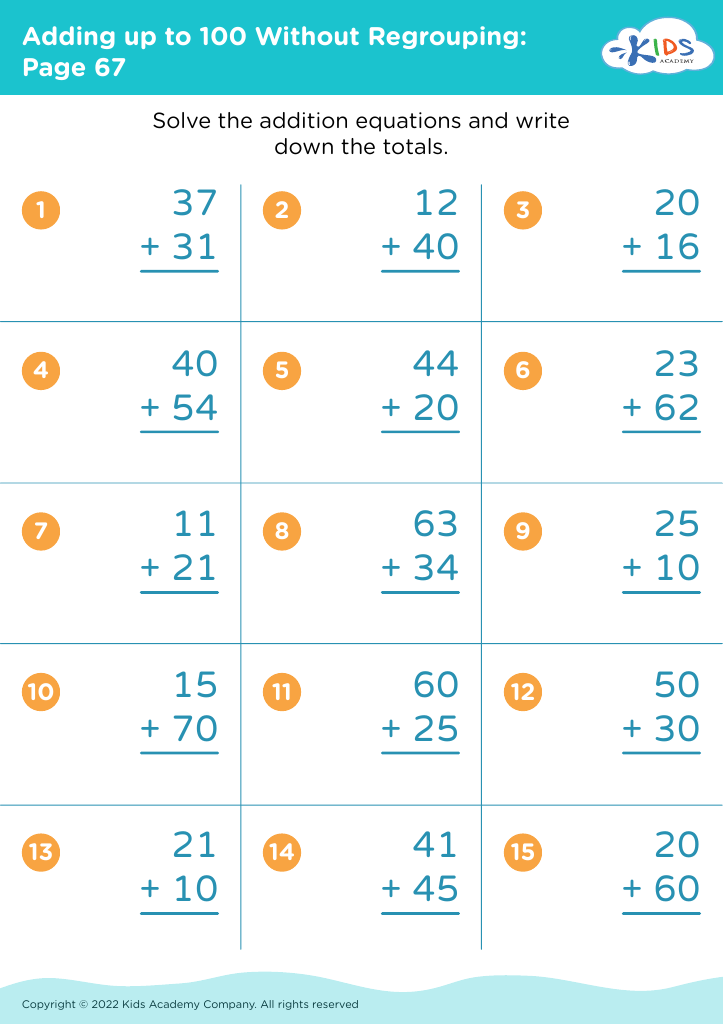
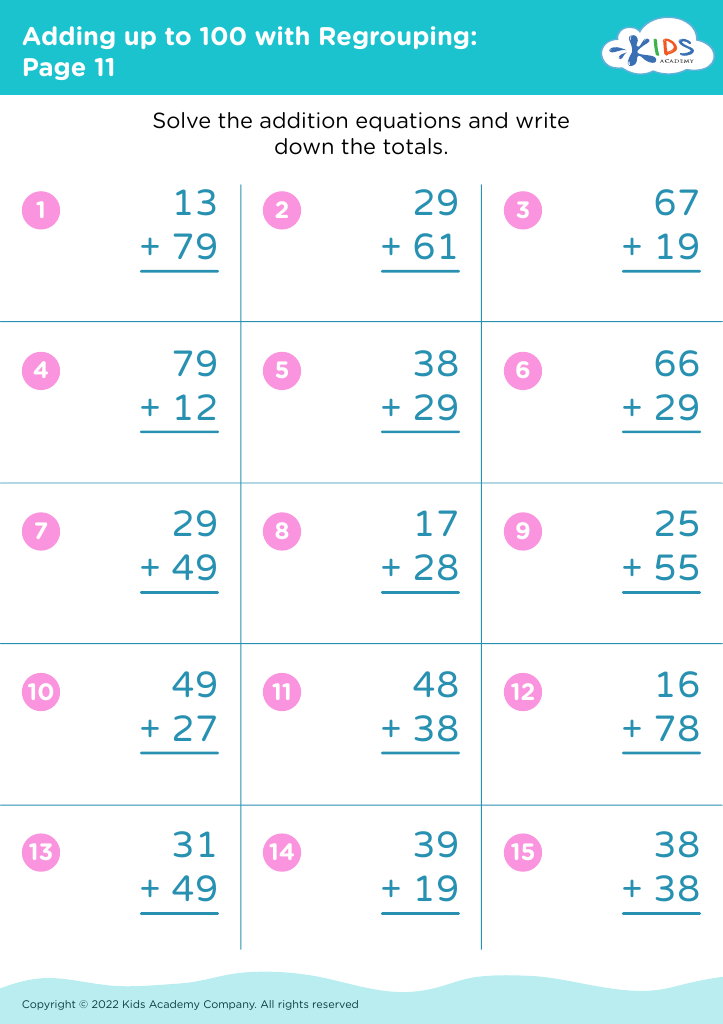
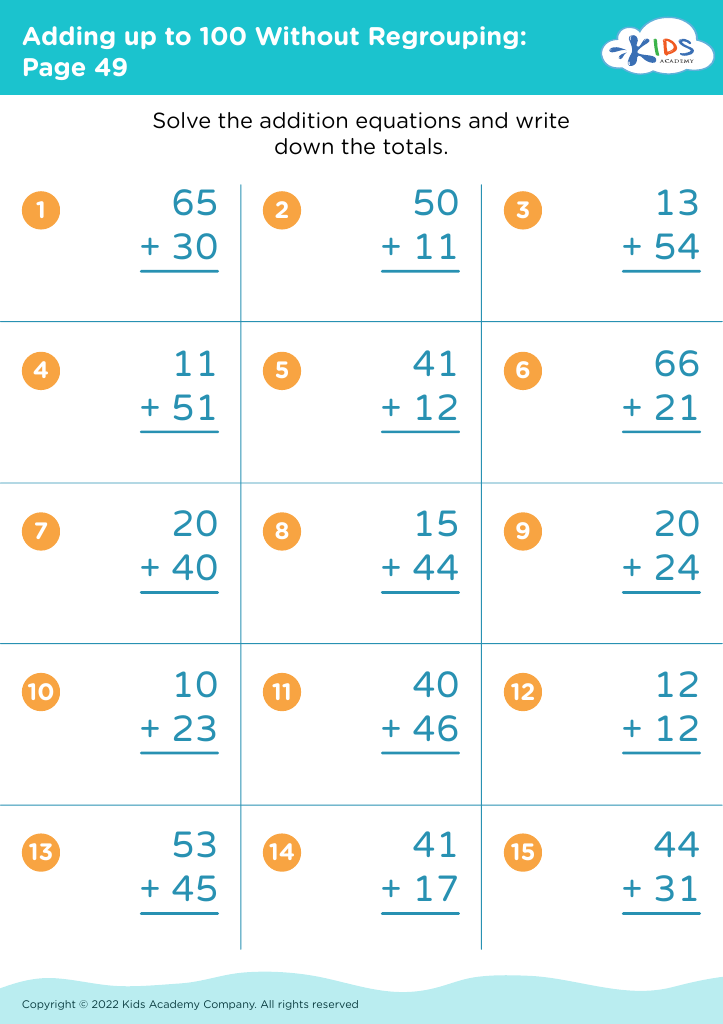
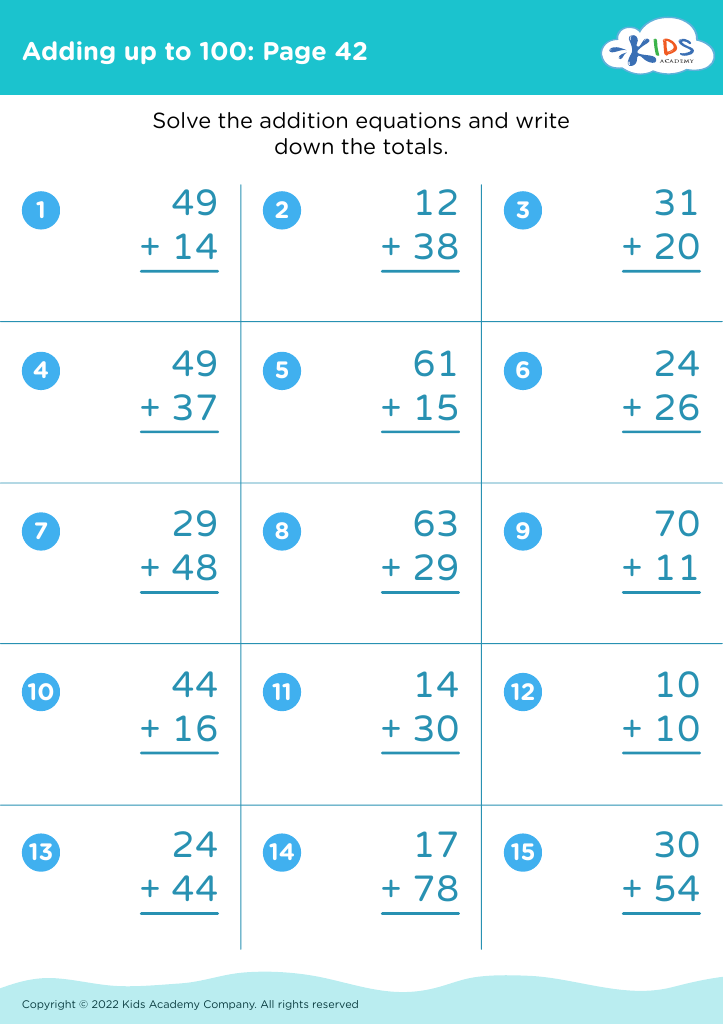
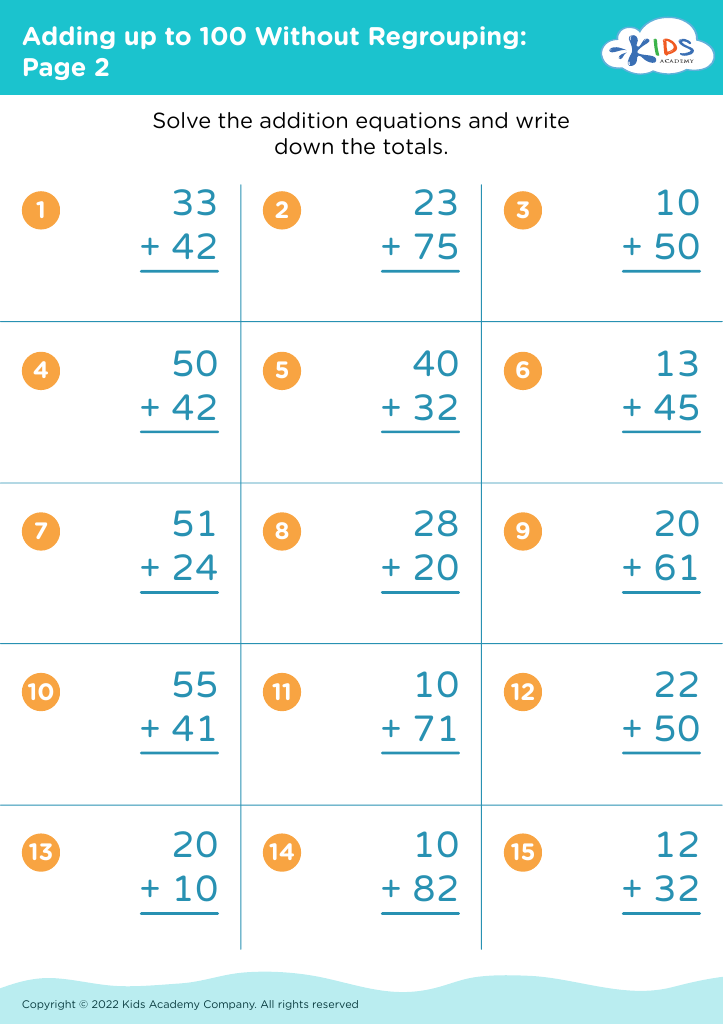
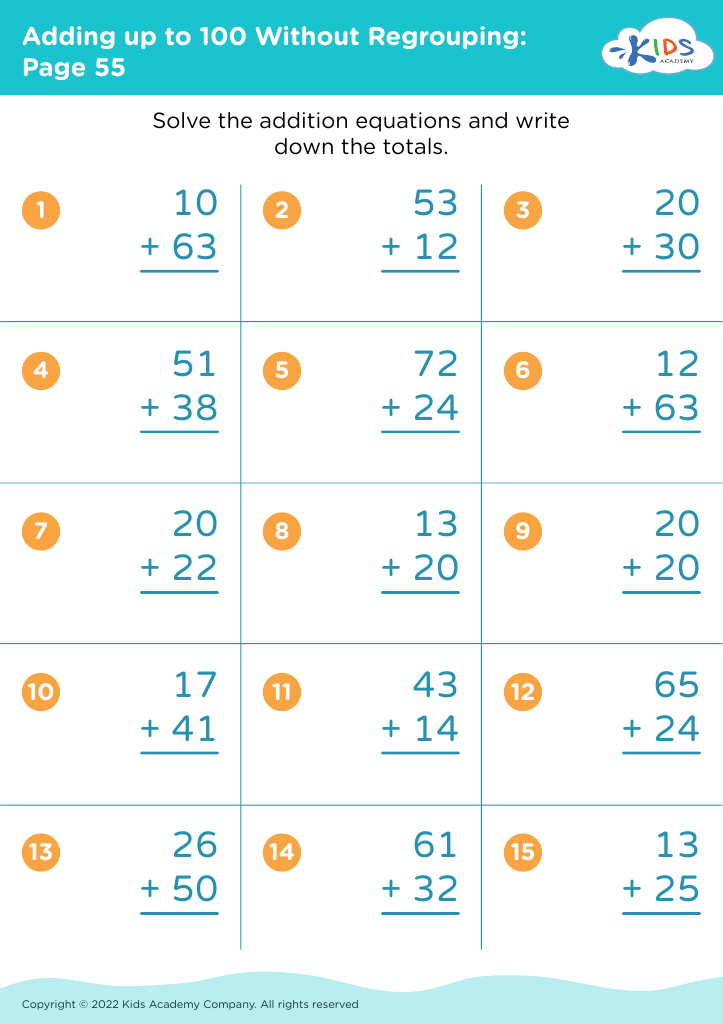
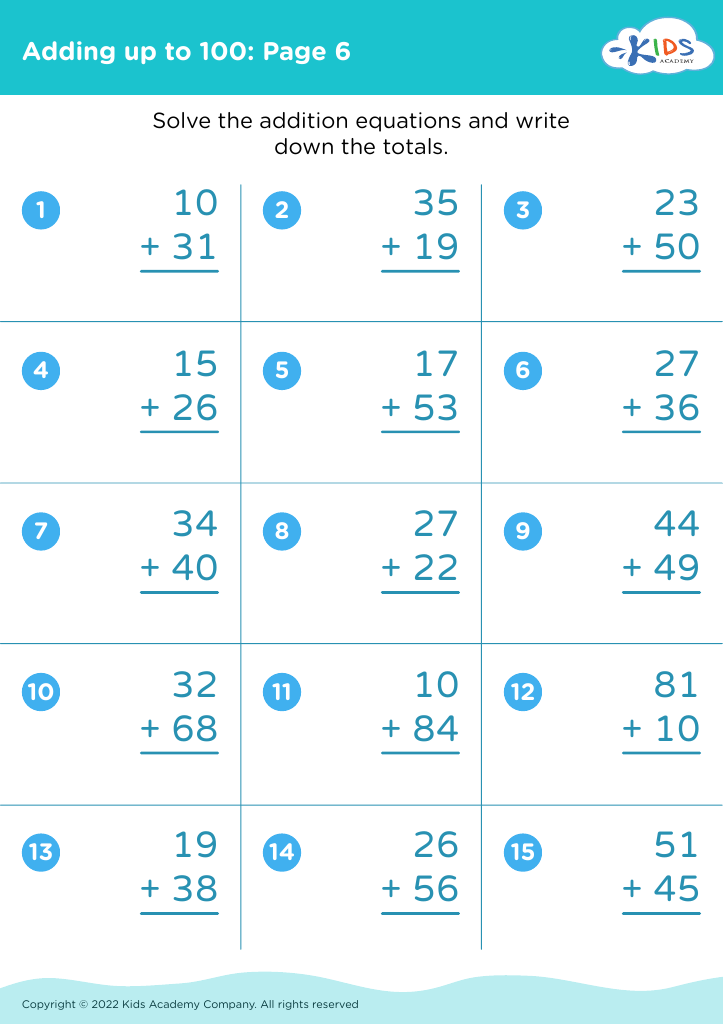
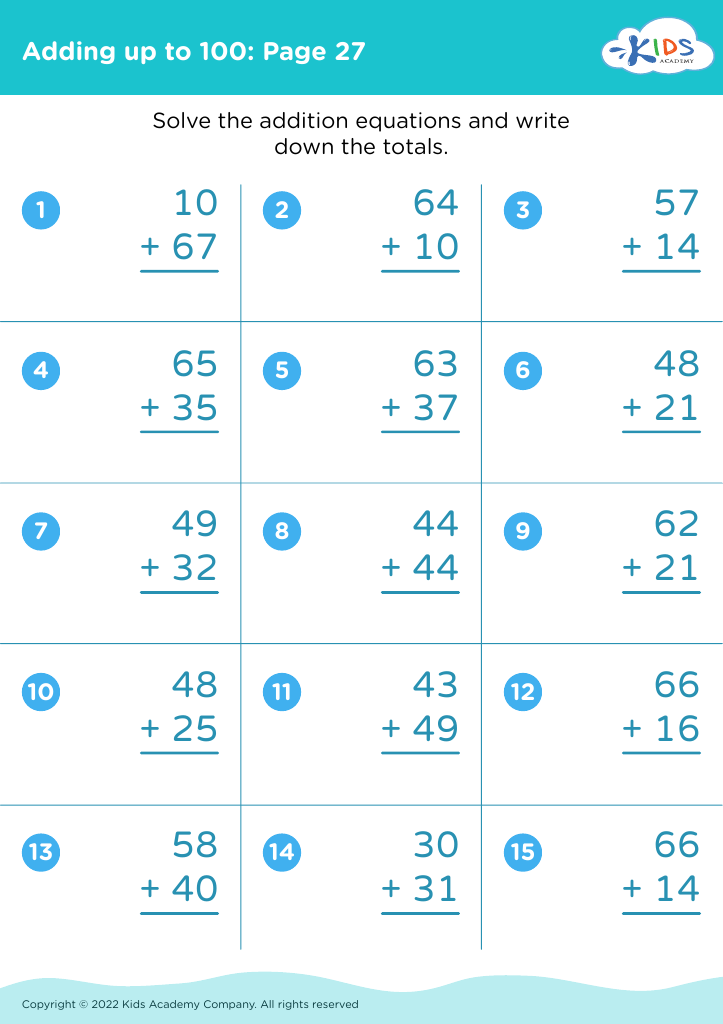
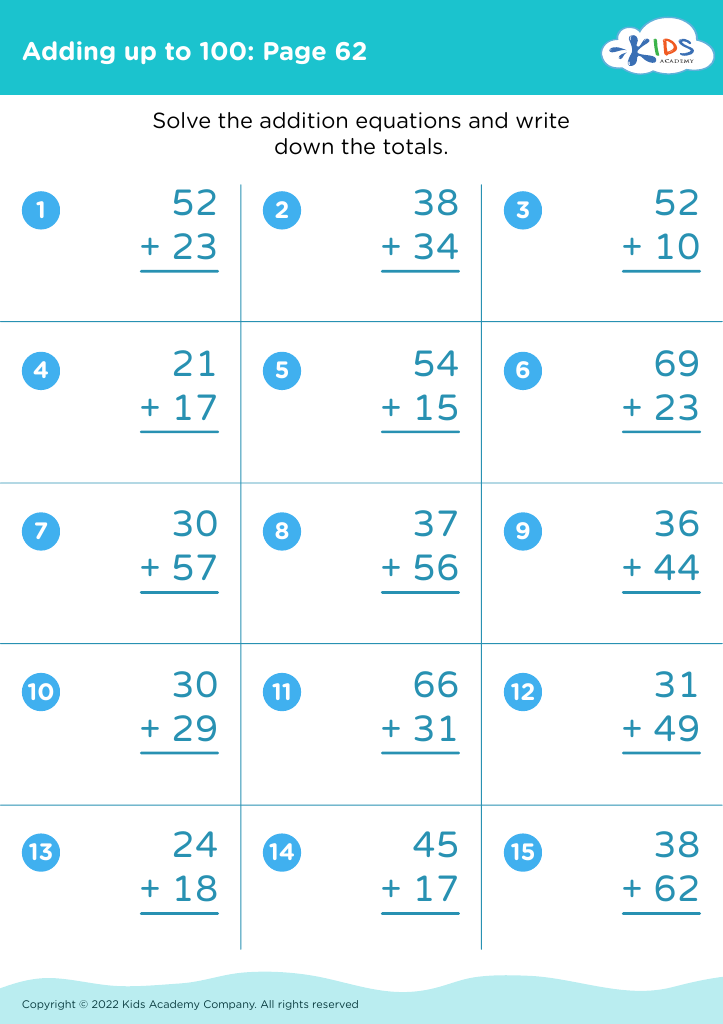
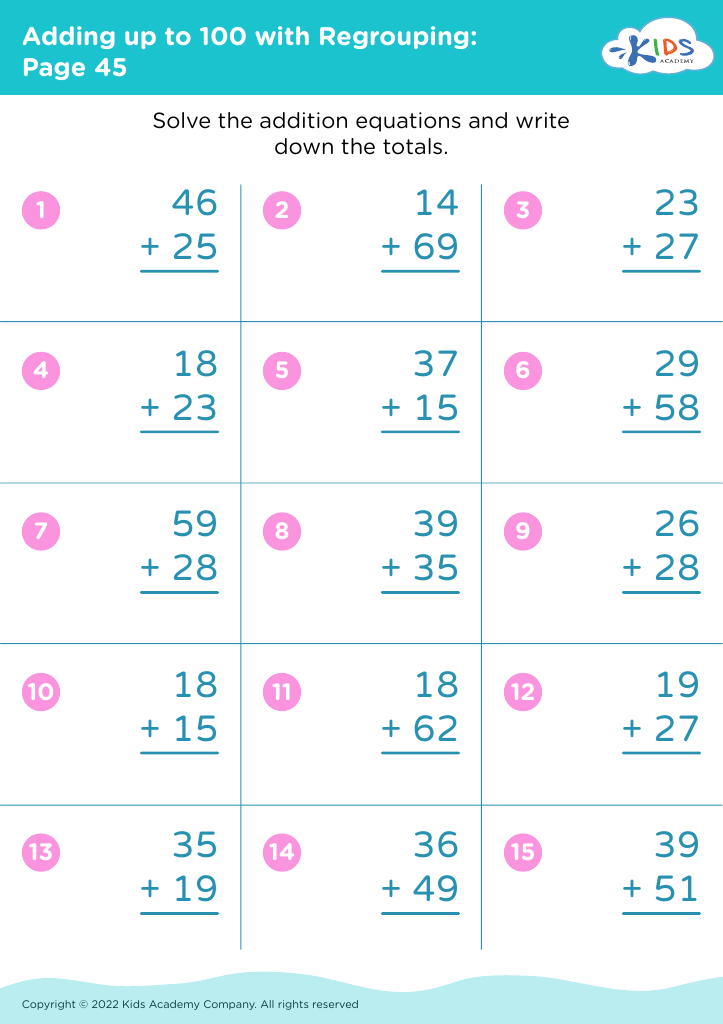
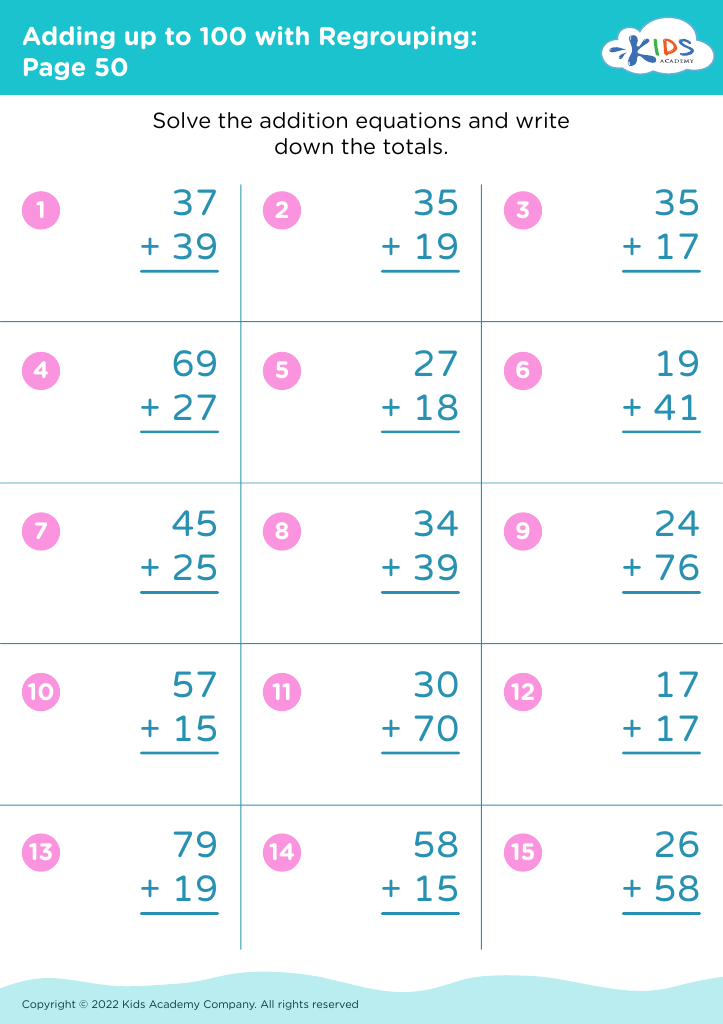
Enhance your child's fine motor skills while mastering addition with our "Fine Motor Skills Adding up to 100 Worksheets"! Designed for young learners, these engaging worksheets combine math practice with fun activities that promote dexterity, hand-eye coordination, and concentration. Kids will enjoy coloring, tracing, and cutting as they solve addition problems, making learning enjoyable and interactive. Perfect for preschool and early elementary students, our worksheets are crafted to support skill development in a playful way. Boost your child's confidence in math as they practice adding up to 100 and improve their motor skills simultaneously. Explore our collection and watch your child thrive!





%20(1).jpg)

Fine motor skills are essential for children's overall development and academic success, making it crucial for parents and teachers to pay attention to them. These skills involve the precise movements of small muscles in the hands and fingers, enabling tasks such as writing, drawing, cutting with scissors, and manipulating small objects. When children possess strong fine motor skills, they are better equipped to engage in classroom activities effectively. This enhances their ability to express their creativity and ideas, essential components of learning in early education.
Moreover, fine motor skills are linked to cognitive development. Activities that strengthen these skills can improve hand-eye coordination and concentration, fostering a positive learning environment. Strong fine motor skills can also boost children's confidence, as they achieve tasks independently. When children struggle with fine motor skills, they may experience frustration and reluctance to participate in activities, which can hinder their social and emotional development.
Finally, these skills are foundational for future academic endeavors. Parents and teachers who prioritize fine motor development can help prepare children for success in subjects such as math and writing. Supporting fine motor development, therefore, enhances children's overall growth, carving a path for academic and personal success.








