Fraction Addition Adding up to 100 Worksheets
3 filtered results
-
From - To
Welcome to our "Fraction Addition Adding Up to 100 Worksheets" page! Specifically designed for early learners, these engaging worksheets help students master the concept of adding fractions. With a variety of exercises that emphasize fractions with like and unlike denominators, kids can practice their skills in a fun and interactive way. Each worksheet provides clear instructions and visual aids to support understanding. Perfect for reinforcing classroom learning or for independent study, our worksheets foster confidence and proficiency in fraction addition. Join us in making math enjoyable as your child explores the world of fractions up to 100!
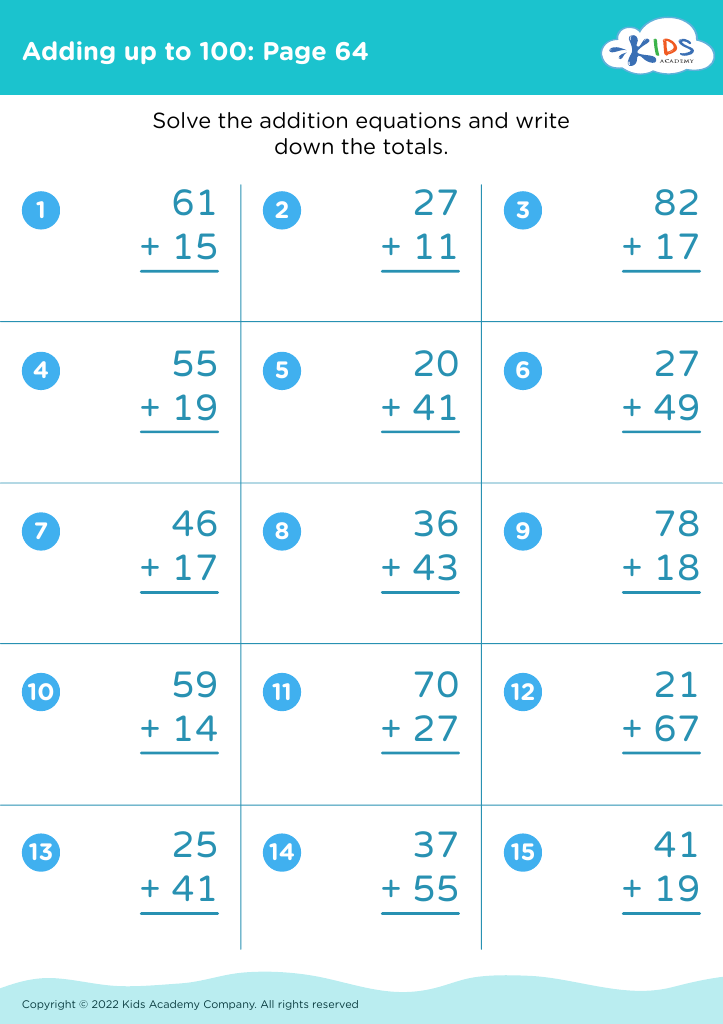
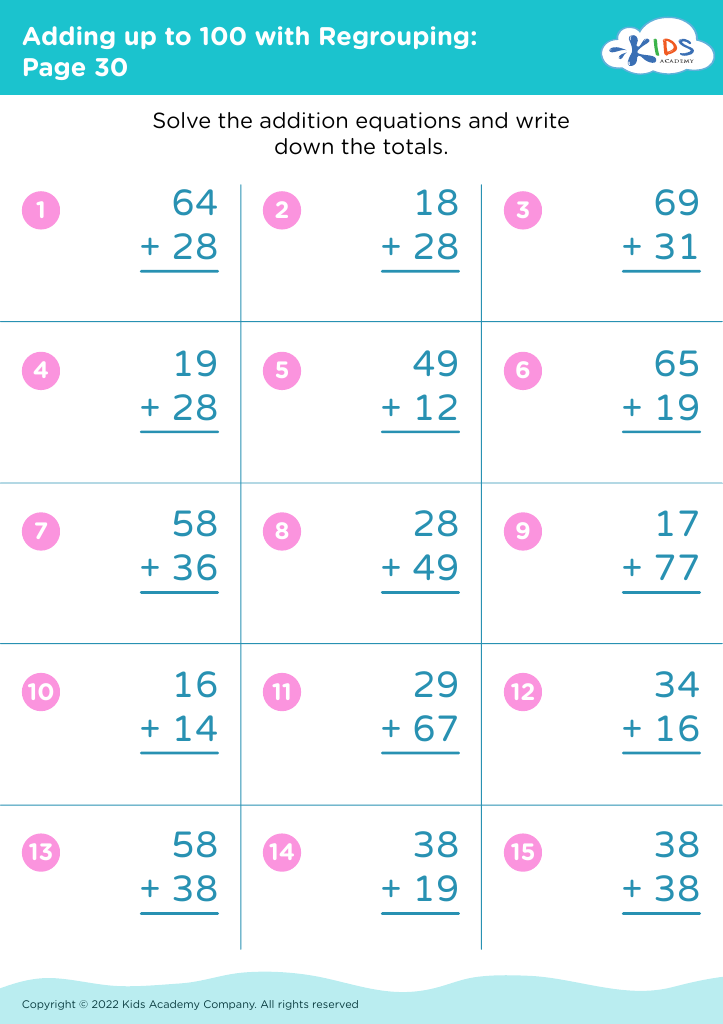
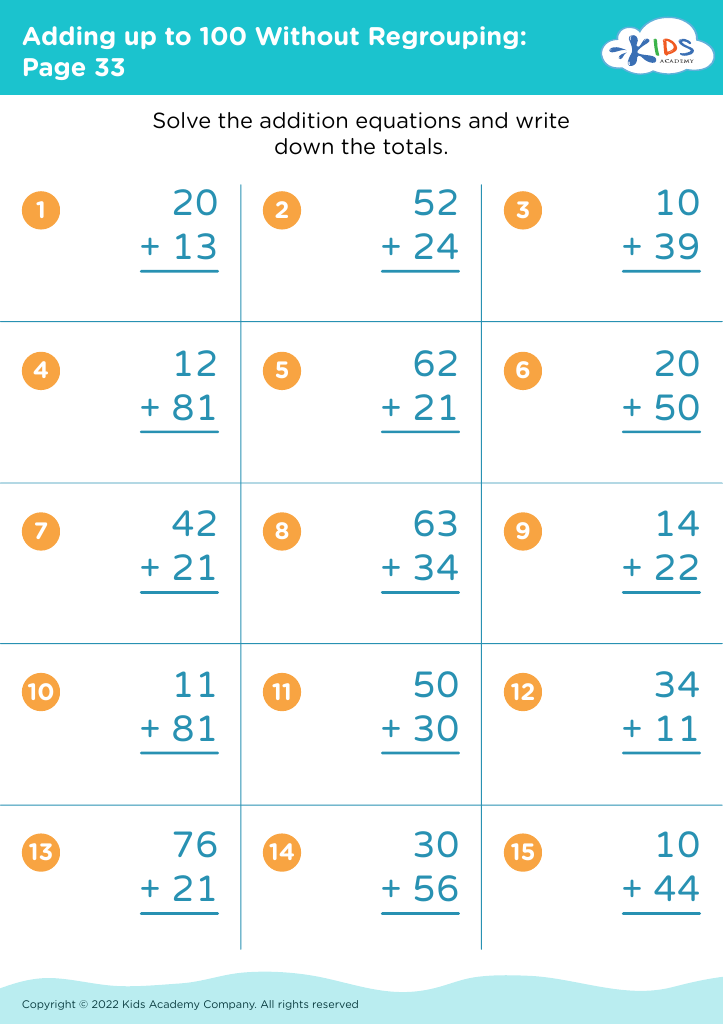


%20(1).jpg)




Understanding fraction addition, particularly when focusing on sums that add up to 100, is crucial for parents and teachers in shaping children's mathematical abilities. Firstly, mastering this concept builds a foundation for more complex math topics, including algebra and ratio, crucial for everyday problem-solving.
Fraction addition strengthens critical thinking skills as children learn to manipulate numbers, understand relationships, and visualize parts of a whole. This skill becomes especially relevant in real-world contexts, such as splitting tasks or resources, budgeting, and cooking measurements, where fractions often come into play.
Moreover, when parents and teachers emphasize the importance of this topic, students develop greater confidence in their math skills. This confidence can translate to a positive attitude toward learning, reducing math anxiety and fostering persistence when faced with challenges.
Lastly, sharing strategies and engaging students in fraction-related activities creates an interactive learning environment, making math enjoyable and relatable. This involvement cultivates not just academic growth, but also essential life skills, reiterating the importance of cooperation, communication, and problem-solving. Thus, encouraging proficiency in fraction addition not only enhances academic achievement but also equips children with the tools they need for success both inside and outside the classroom.








