Identifying shapes Adding up to 100 Worksheets
8 filtered results
-
From - To
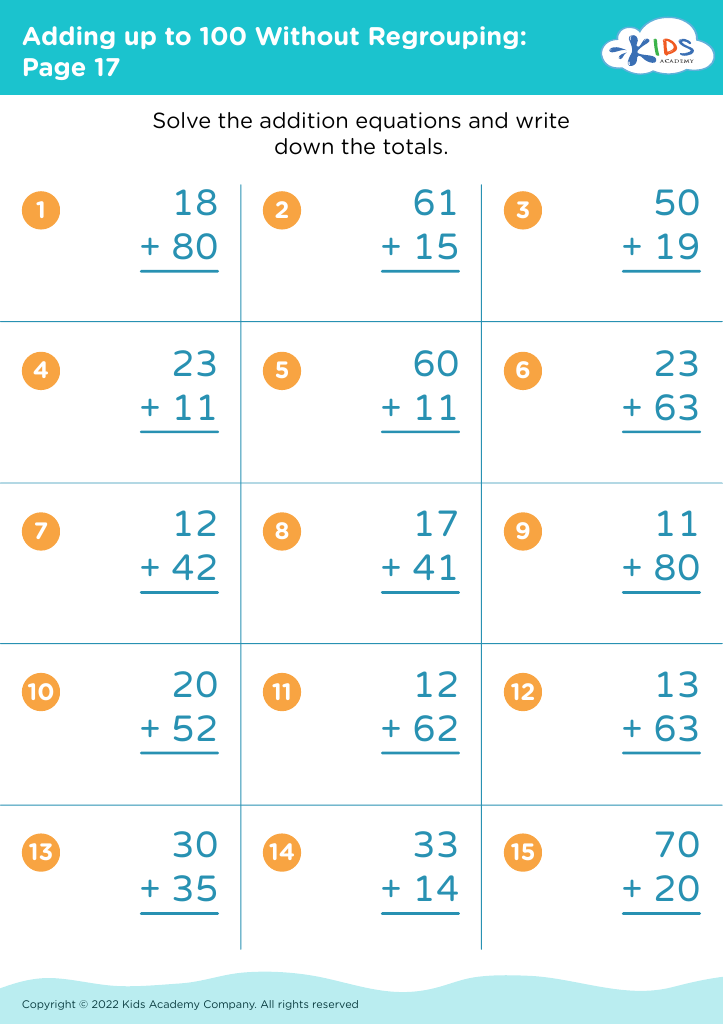
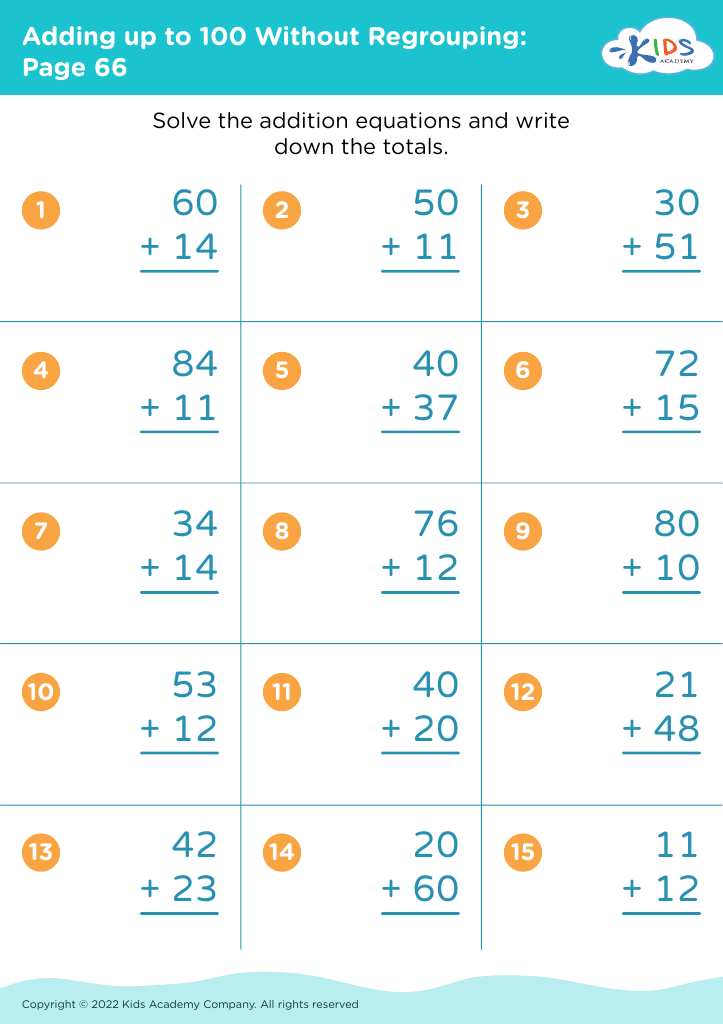
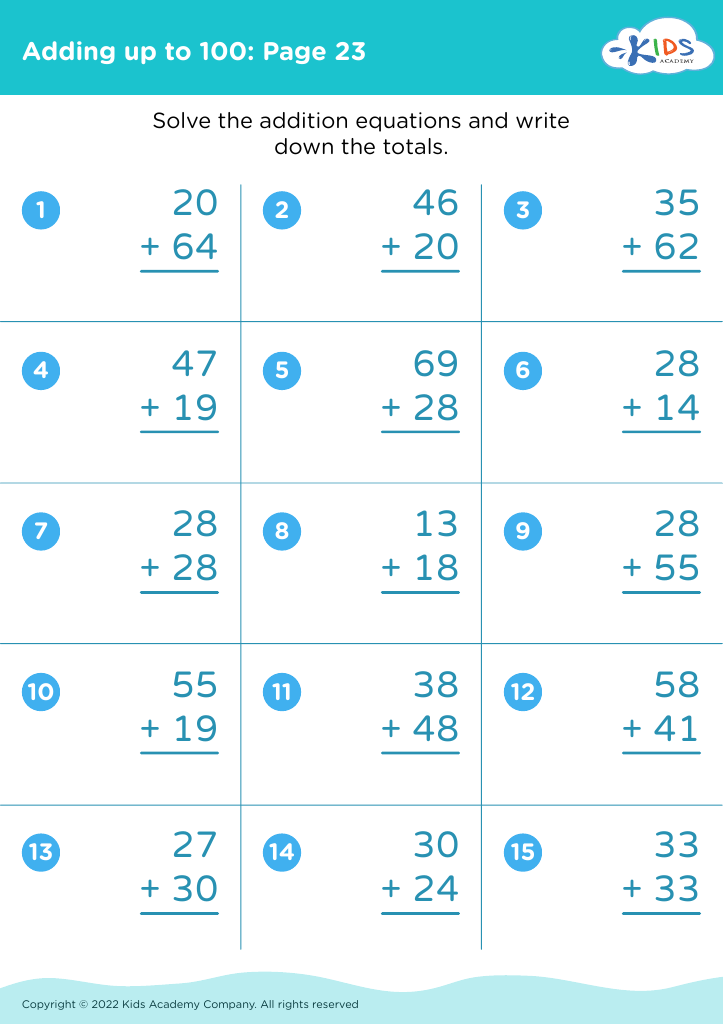
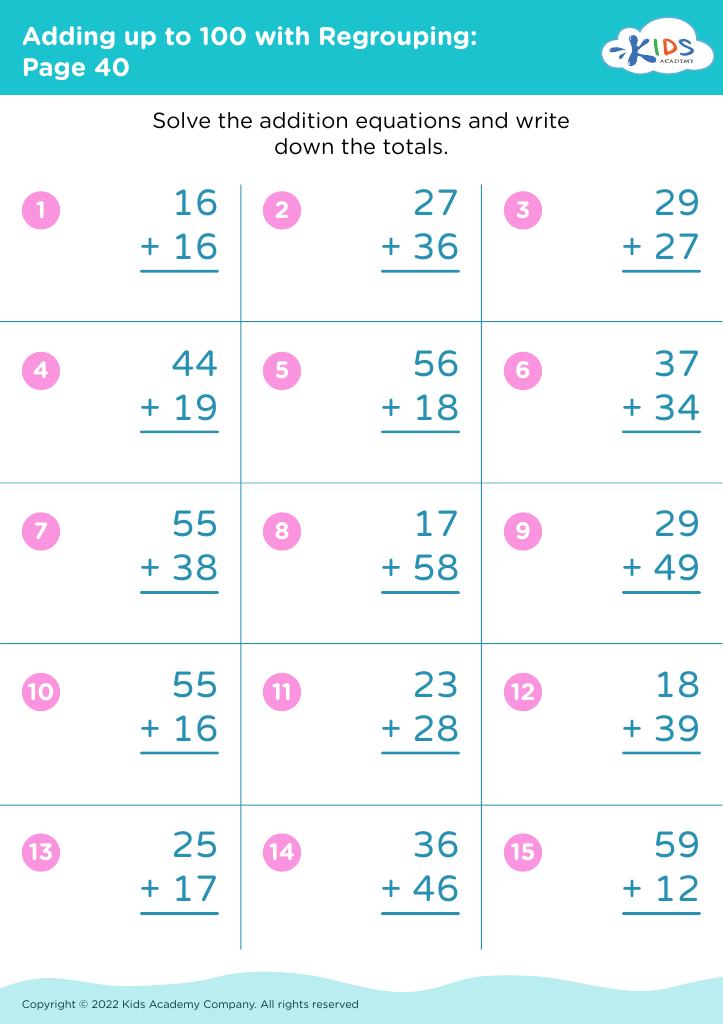
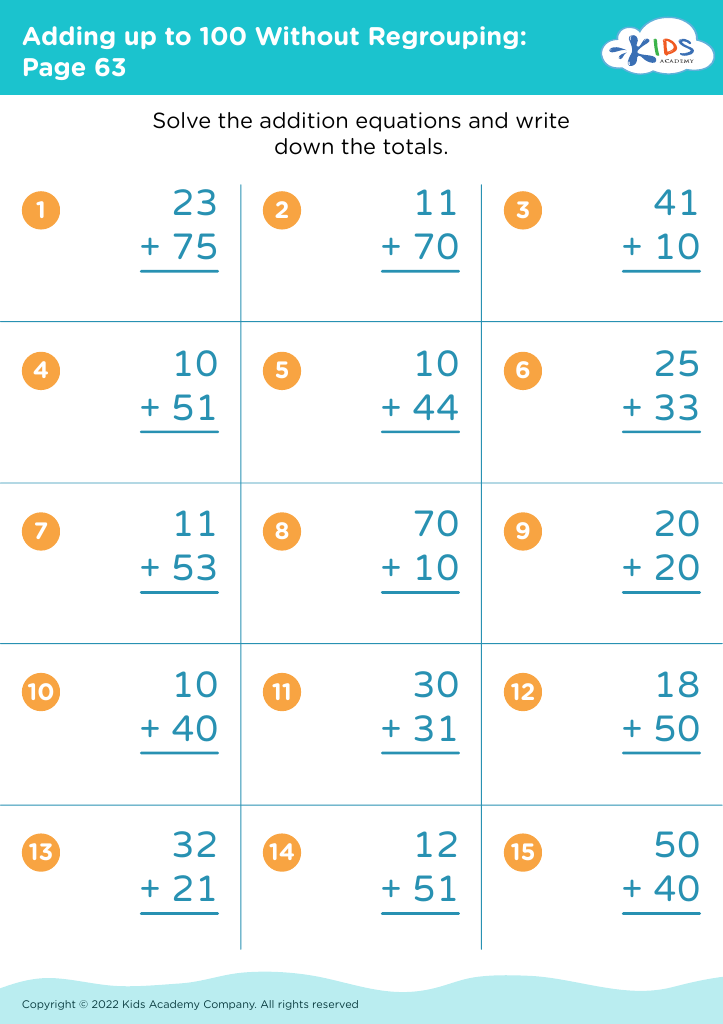
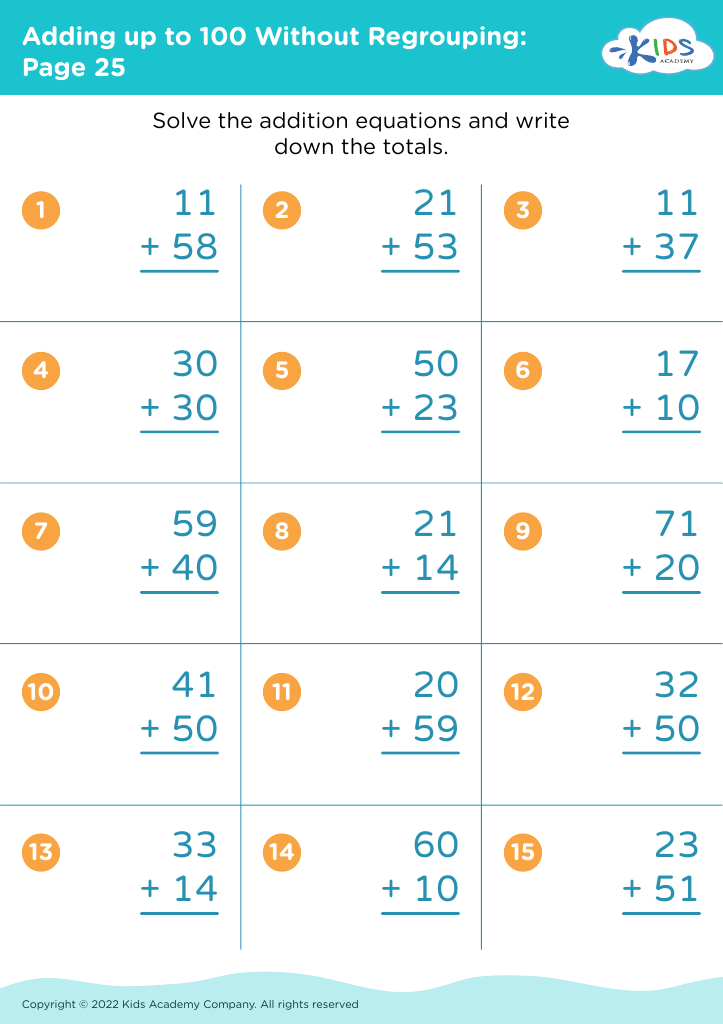
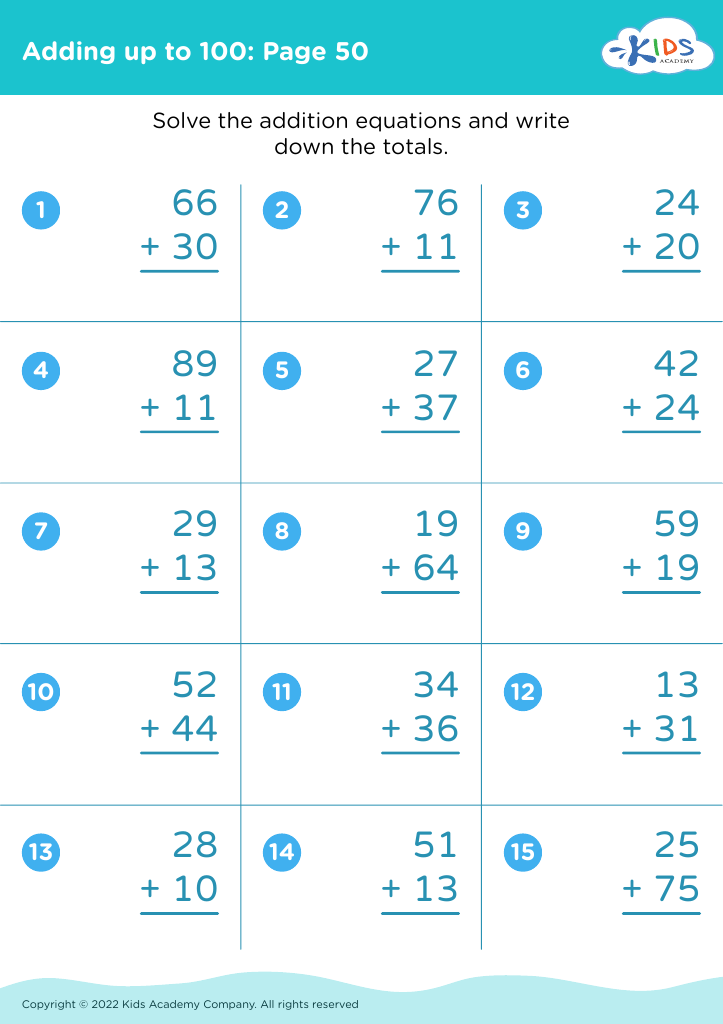
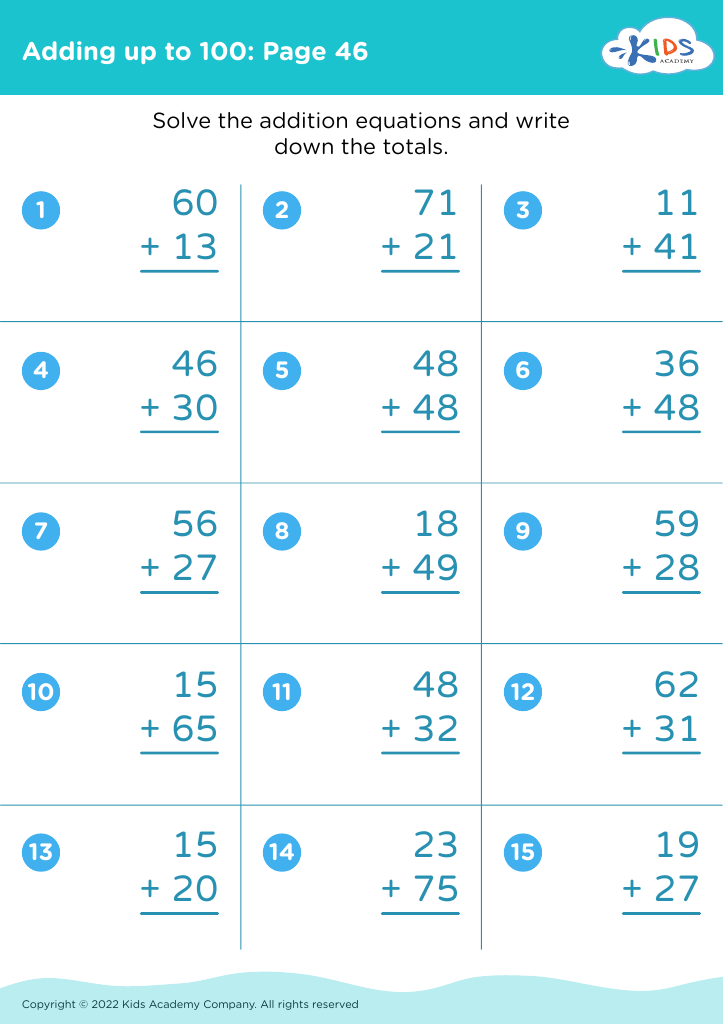
Unlock your child's mathematical potential with our "Identifying Shapes Adding Up to 100 Worksheets." These engaging and interactive worksheets are designed to help young learners recognize different shapes while practicing addition skills up to 100. Tailored for early grade students, these resources seamlessly integrate shape identification with basic arithmetic, making learning fun and effective. Perfect for classroom use or at-home practice, our worksheets promote critical thinking and visual learning. Encourage your child's confidence in math with our thoughtfully crafted exercises, ensuring they build a strong foundation in both geometry and addition. Download now and make learning shapes an exciting adventure!




%20(1).jpg)


Identifying shapes and understanding the concept of numbers adding up to 100 are foundational skills that support a child's overall cognitive development and mathematical proficiency. For parents and teachers, fostering these skills is essential for multiple reasons.
Firstly, recognizing shapes helps children develop spatial awareness and enhances their problem-solving abilities. It lays the groundwork for more complex math concepts, including geometry and measurements, which children will encounter later in their education. Moreover, engaging children in activities revolving around shape identification encourages creativity and critical thinking, as they learn to associate shapes with objects in their environment.
Secondly, mastering the concept of numbers adding up to 100 builds a solid foundation in arithmetic. It allows children to grasp important mathematical concepts such as addition, subtraction, and place value. By practicing this skill, children improve their mental math abilities and learn to approach problem-solving systematically.
Additionally, incorporating fun activities involving shapes and numbers can promote positive attitudes toward math. When children experience success in these areas, they develop confidence and enthusiasm for learning. In sum, parents and teachers play a crucial role in encouraging these skills to help children thrive academically and develop a lifelong appreciation for mathematics.








