Mathematical reasoning Adding up to 100 Worksheets
3 filtered results
-
From - To
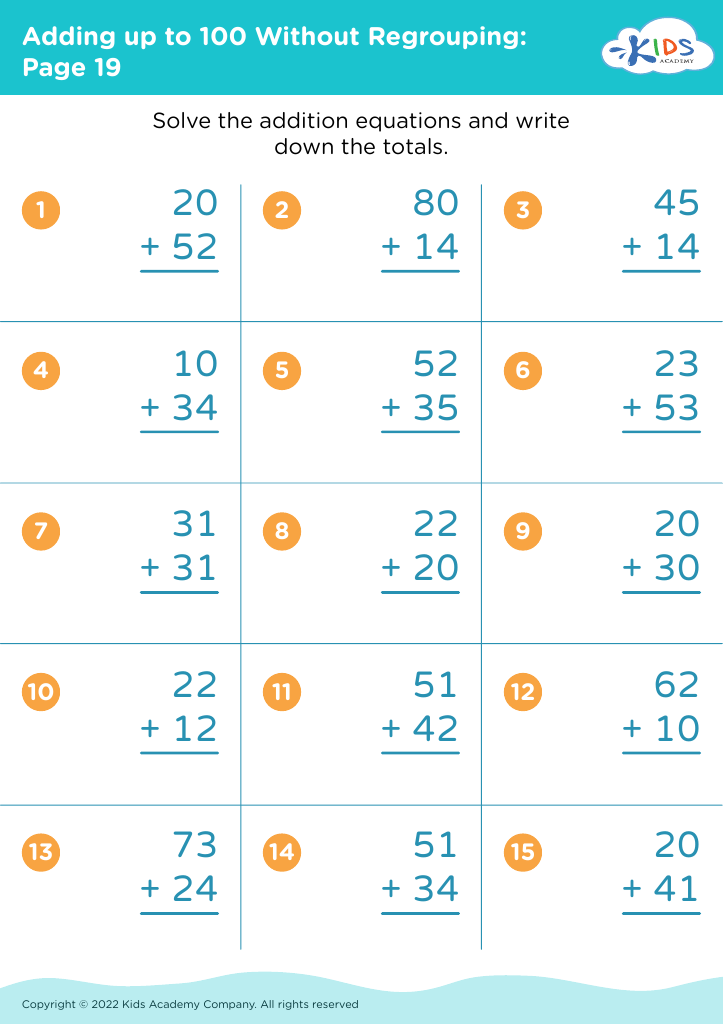
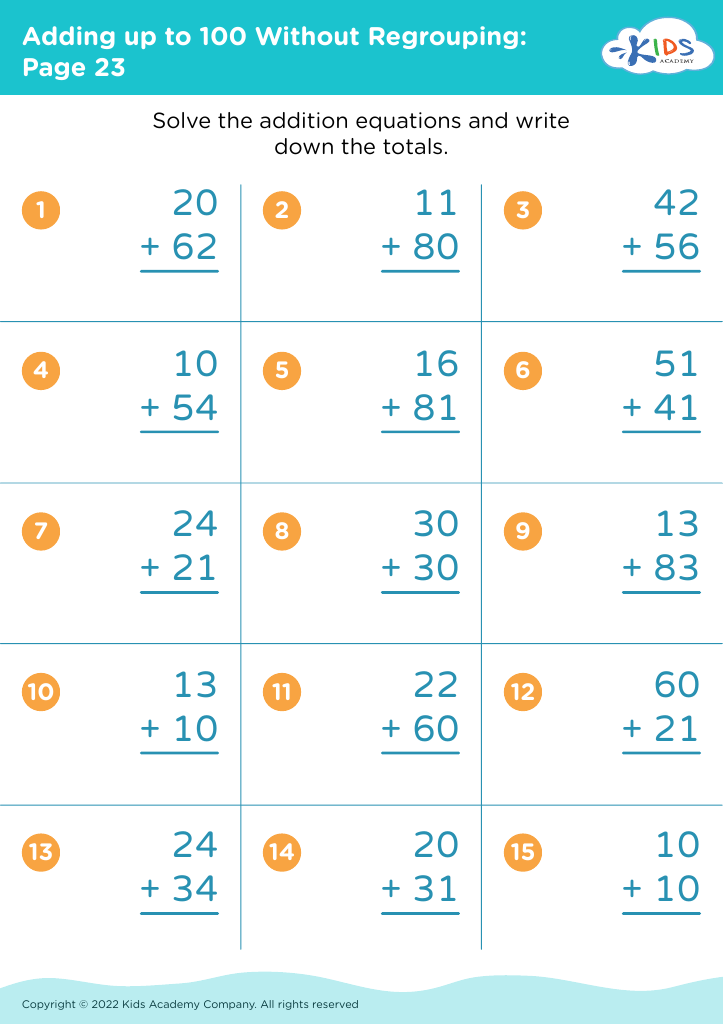
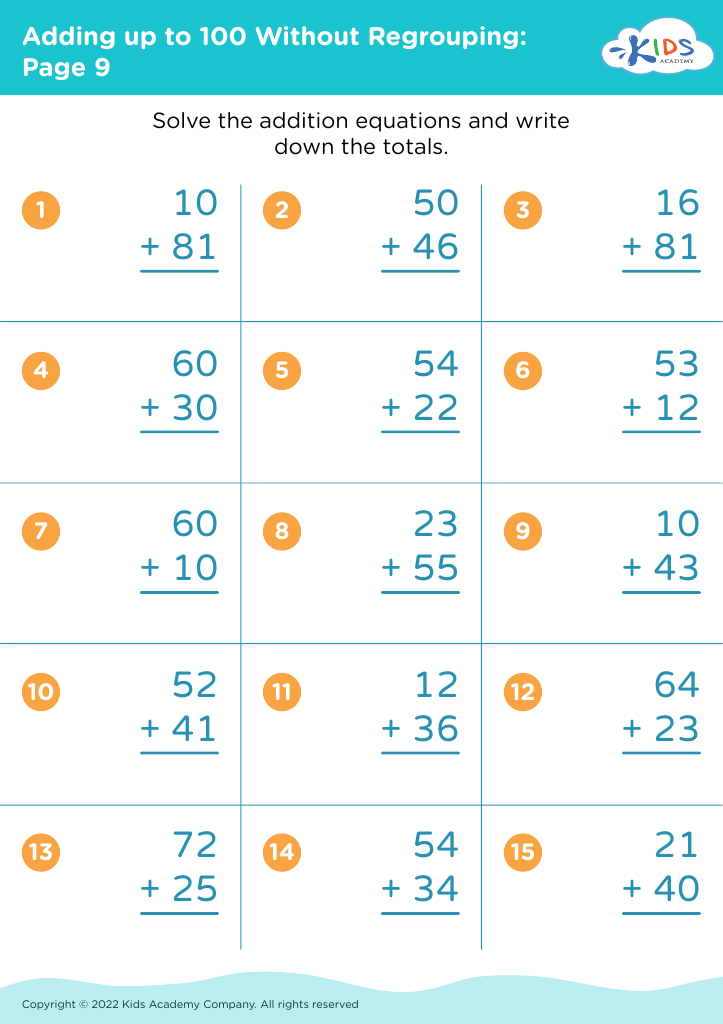
Enhance your child's mathematical reasoning skills with our "Adding Up to 100" worksheets! Designed for early learners, these engaging worksheets help students practice addition while building critical thinking capabilities. As they explore various math problems, children will strengthen their understanding of numbers and develop problem-solving strategies. Each worksheet combines fun visuals and practical exercises, making learning enjoyable and effective. Whether at home or in class, our printable resources provide a perfect blend of challenge and support to foster confidence in math. Encourage your child to think critically and become proficient in addition with our thoughtfully crafted worksheets today!


%20(1).jpg)




Mathematical reasoning, particularly in the context of adding up to 100, is vital for young learners as it lays the groundwork for various mathematical concepts they will encounter later on. Understanding how to manipulate numbers to reach a total of 100 fosters critical thinking and problem-solving skills. This foundational practice helps students recognize patterns, relationships among numbers, and develop mental math strategies, which can enhance overall mathematical fluency.
Parents and teachers should prioritize this skill because it promotes confidence in young mathematicians. It supports the development of perseverance as students face challenges with numbers. Additionally, strong reasoning skills can be applied across subjects, helping students connect math to real-world situations, such as measuring, budgeting, or time management.
Encouraging this approach in a supportive environment allows children to engage in discussions about numbers, promotes collaboration among peers, and makes math an enjoyable subject. Furthermore, establishing a firm grasp of basic addition contributes significantly to future mathematical success, paving the way for more complex topics such as algebra and geometry. Ultimately, by focusing on adding up to 100, parents and teachers can nurture numeracy skills that are crucial for academic achievement and everyday life.








