Numeracy skills Adding up to 100 Worksheets
4 filtered results
-
From - To
Enhance your child's numeracy skills with our "Adding Up to 100 Worksheets." Designed for early learners, these engaging worksheets provide a fun and interactive way for students to practice addition and improve their mathematical abilities. Each worksheet features a variety of problems that challenge young minds while reinforcing essential skills needed for future math success. Ideal for classroom use or at-home practice, our worksheets help cultivate confidence in adding numbers up to 100. With colorful visuals and varied difficulty levels, these resources make learning fun! Start your child's journey towards math proficiency and watch their skills blossom today!
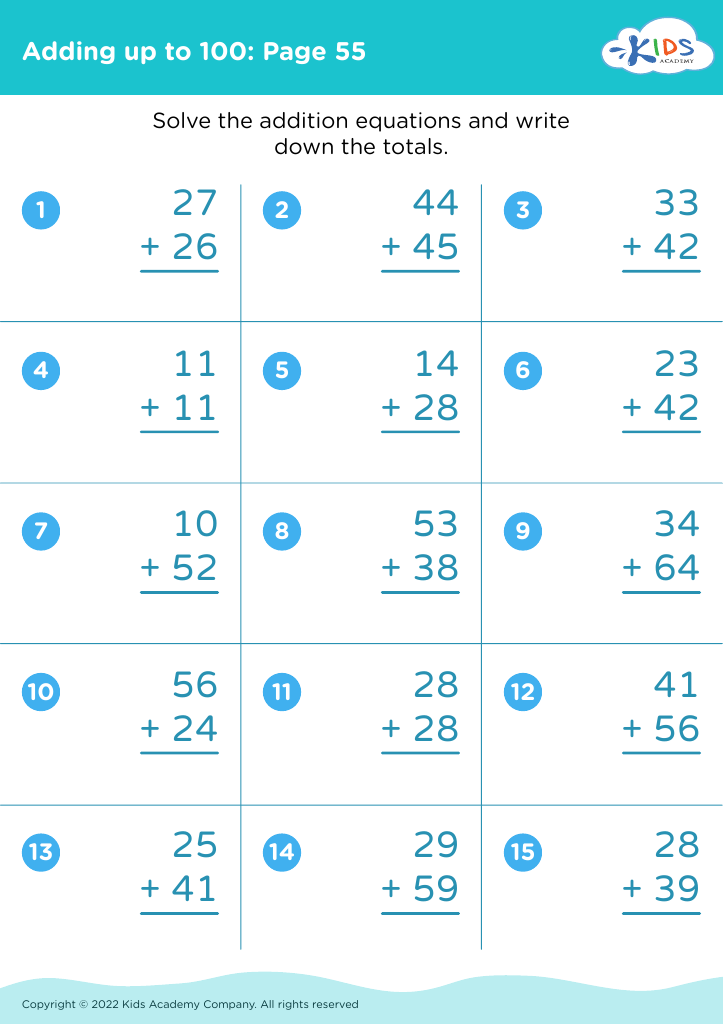
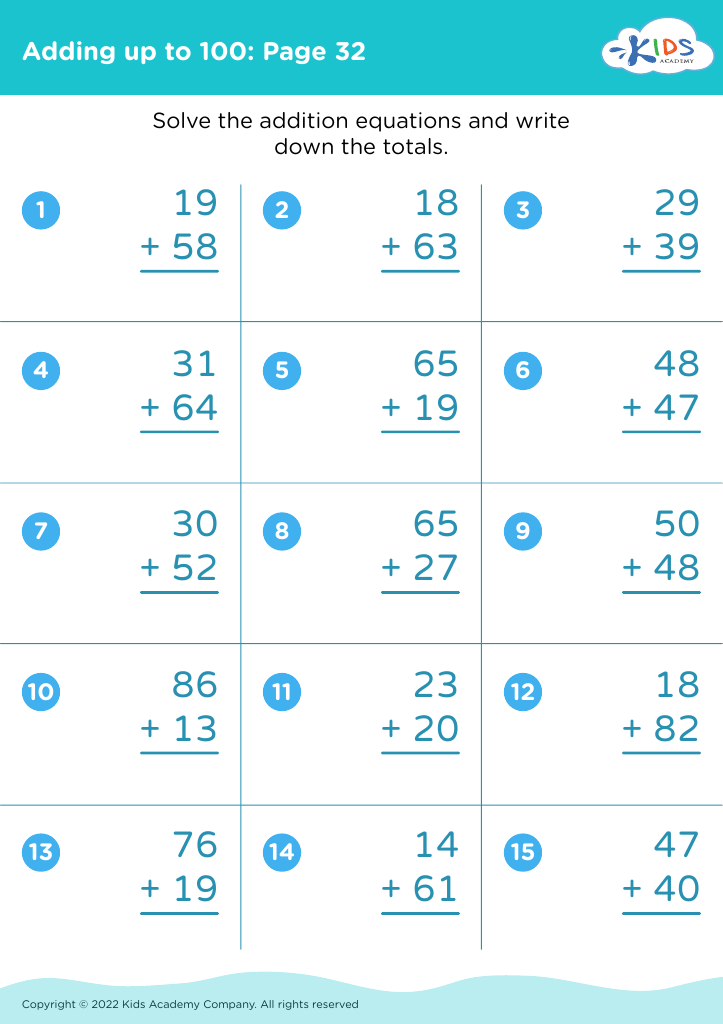
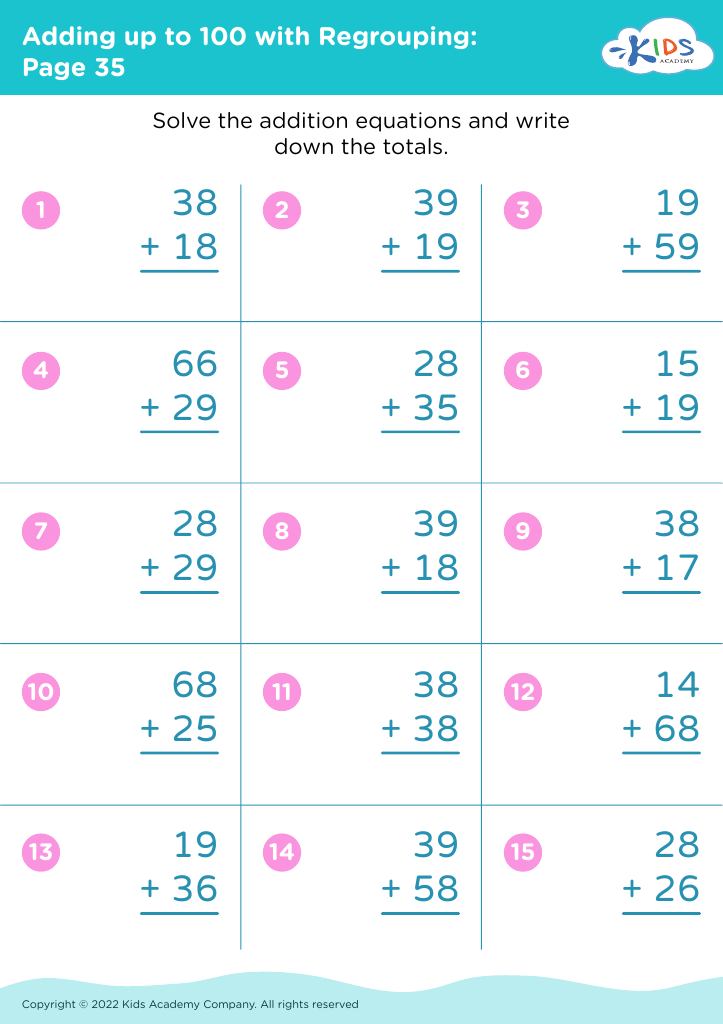
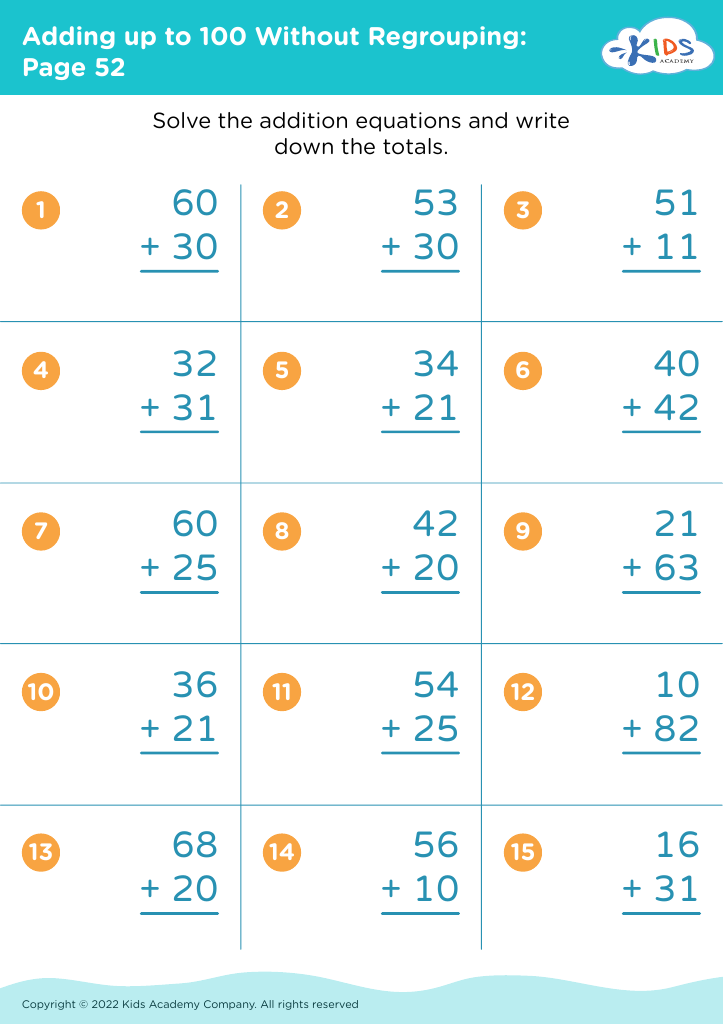






%20(1).jpg)
Numeracy skills, particularly the ability to add up to 100, are fundamental for children's cognitive development and daily functioning. Mastering these skills lays the foundation for future academic success in mathematics and other subjects. Parents and teachers should care about this aspect of numeracy because it enhances children's problem-solving abilities, promotes logical thinking, and develops essential life skills.
Adding up to 100 is not just a classroom exercise; it translates into real-life situations such as budgeting, shopping, and cooking. Proficiently handling numbers boosts children's confidence and independence, enabling them to navigate everyday tasks more effectively. Furthermore, when children understand numerical relationships and patterns, they are better equipped to tackle more complex mathematical concepts later in life, such as fractions, percentages, and algebra.
Additionally, modern education emphasizes the importance of critical thinking and real-world application. By prioritizing numeracy skills, parents and teachers can ensure children grow up with a strong mathematical foundation, preparing them for future challenges in an increasingly data-driven world. Collaborating in this endeavor fosters a supportive learning environment, contributes to emotional well-being, and ultimately plays a crucial role in a child's educational journey.








