Practice problem-solving Adding up to 100 Worksheets
3 filtered results
-
From - To
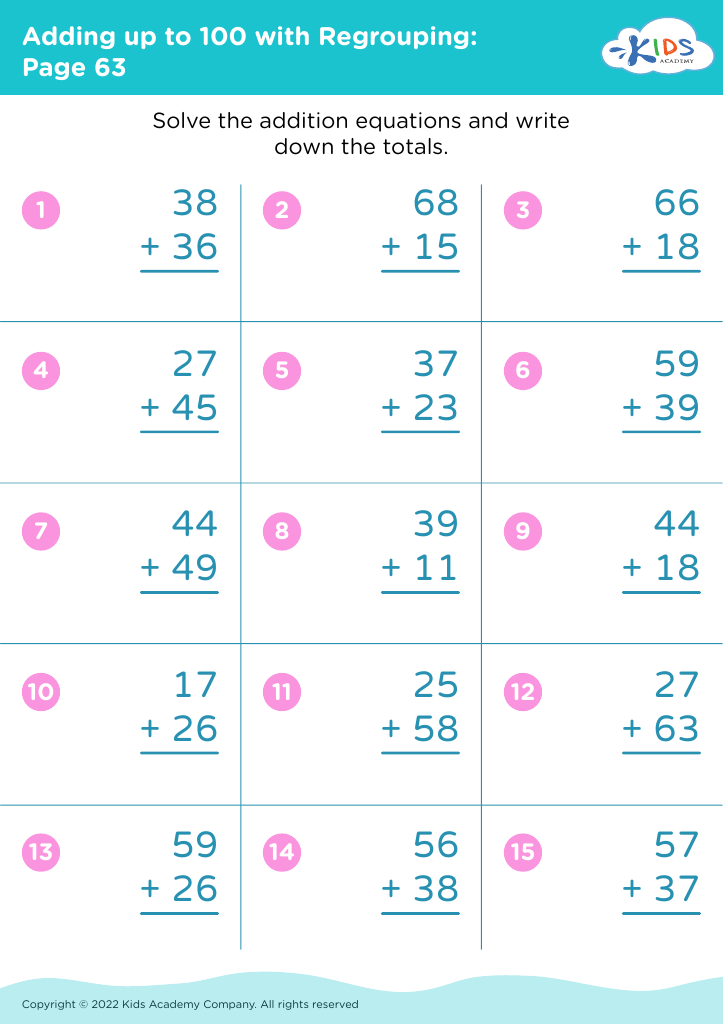
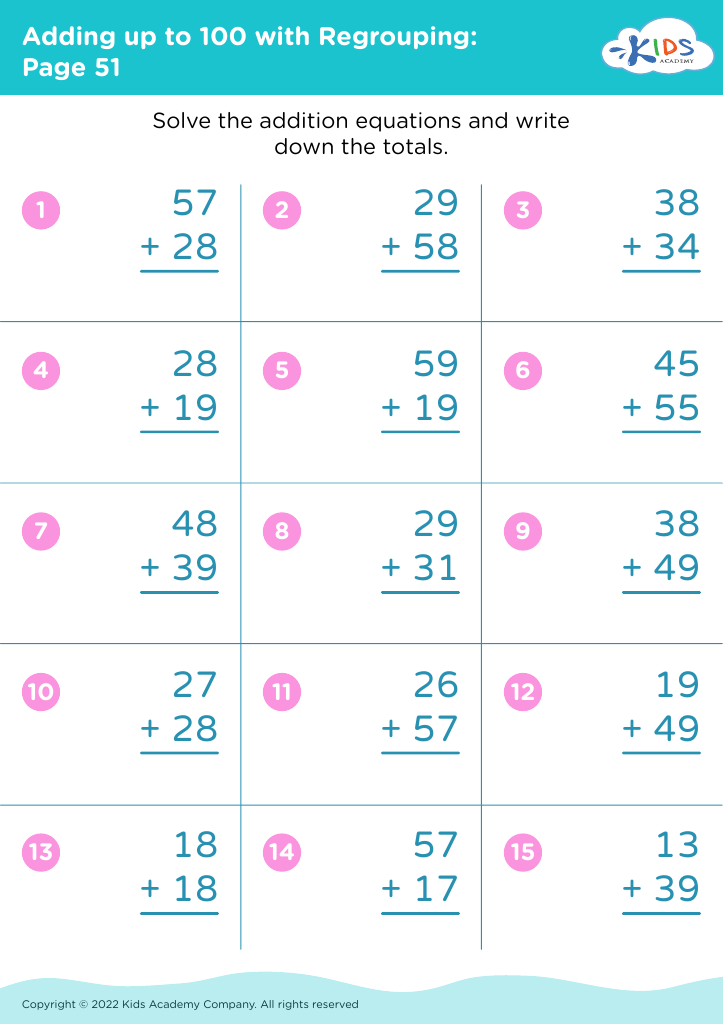
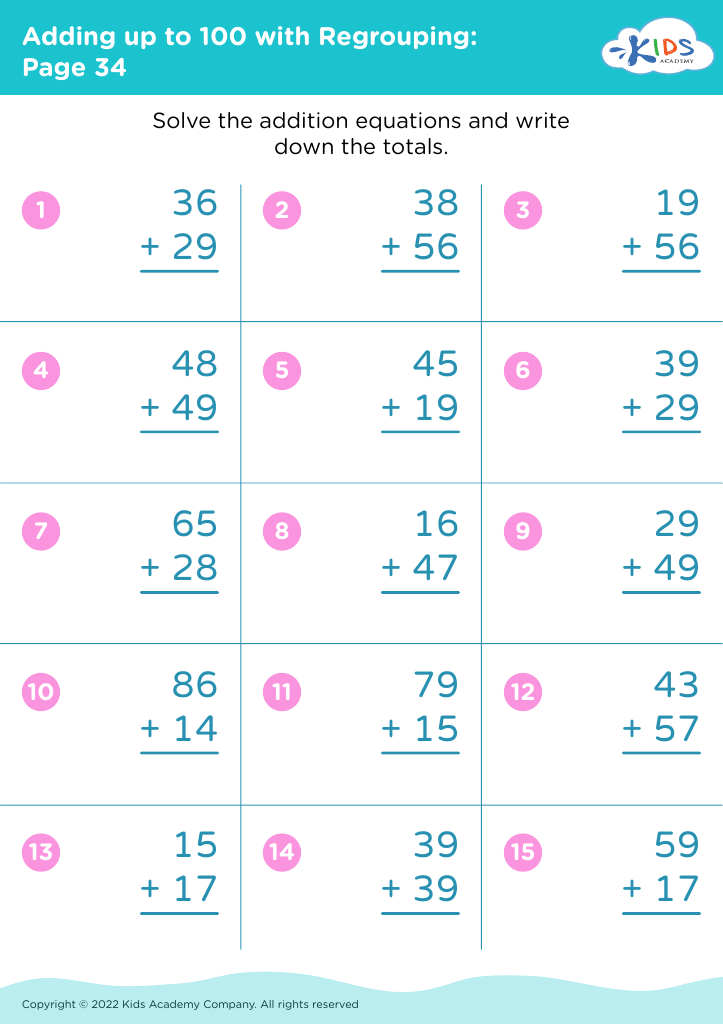
Discover our engaging "Practice Problem-Solving Adding Up to 100 Worksheets" designed to enhance your child's math skills! Perfect for young learners, these worksheets focus on developing addition skills while promoting critical thinking and problem-solving. Each activity encourages students to tackle real-world math scenarios, fostering their ability to compute sums up to 100. With a variety of exercises, students can practice independently, reinforcing their confidence and proficiency in arithmetic. Ideal for home or classroom use, these worksheets support early education curricula, making math fun and accessible. Start your child's journey to mathematical mastery today with our interactive resources!




%20(1).jpg)


Practice problem-solving, especially when it comes to adding up to 100, is a foundational skill that parents and teachers should prioritize in early education. This concept enhances children's numerical literacy and reinforces their understanding of basic arithmetic operations. By developing a solid grasp of numbers up to 100, children build confidence that extends beyond mathematics into critical thinking and reasoning in various aspects of life.
Moreover, this practice promotes strategic thinking as children learn to break down problems into smaller parts. For instance, understanding that 50 + 50 equals 100 fosters dual strategies, such as number combinations and the associative property, which can be applied in more complex mathematical concepts later on.
Additionally, it's a versatile skill that intertwines with other subjects, supporting overall cognitive development. For parents, engaging in activities like games or real-life scenarios enhances family bonding and makes learning a fun, interactive experience. For teachers, integrating problem-solving exercises encourages a collaborative environment where students can learn from one another. Ultimately, supporting children in mastering addition up to 100 lays the groundwork for future academic success and instills a love for learning and exploration in mathematics.








