Practicing multiplication Adding up to 100 Worksheets
4 filtered results
-
From - To
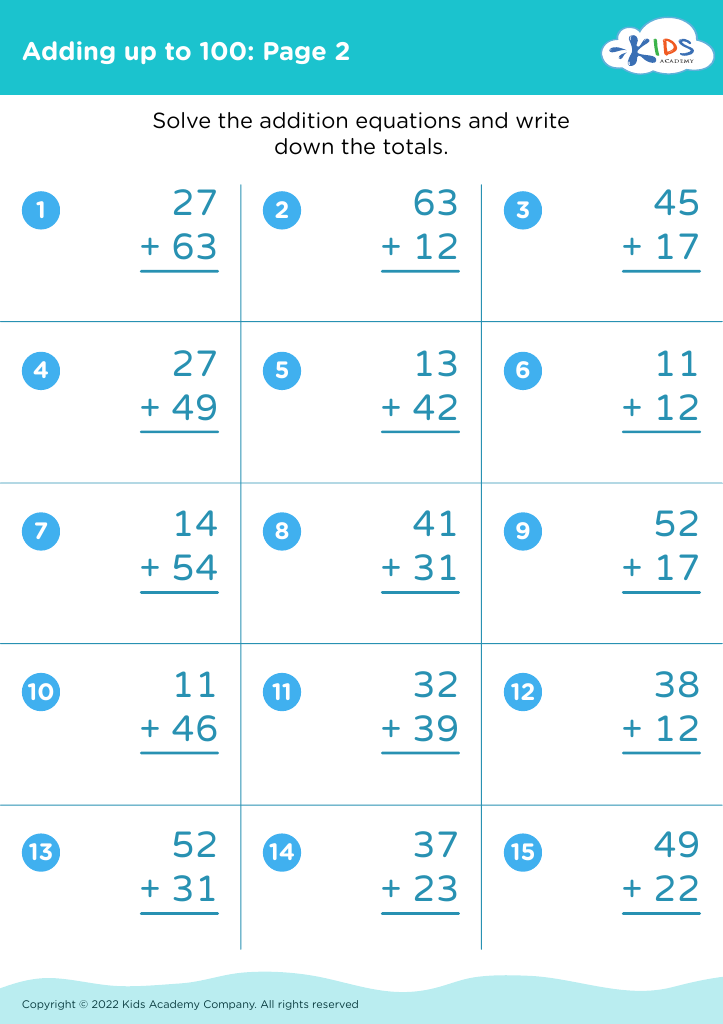
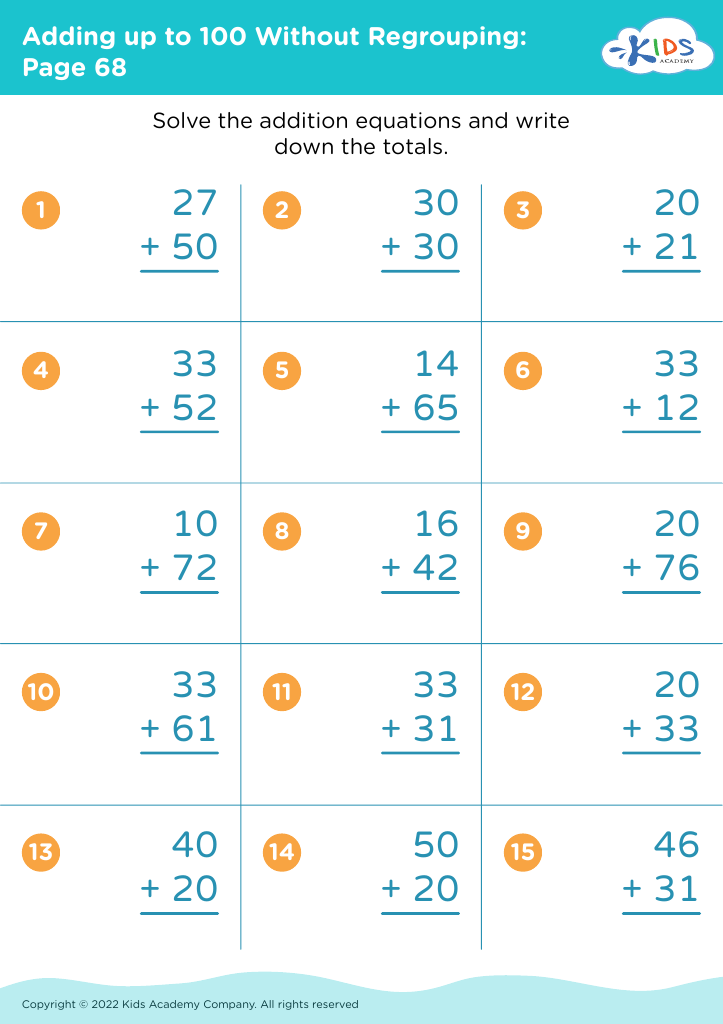
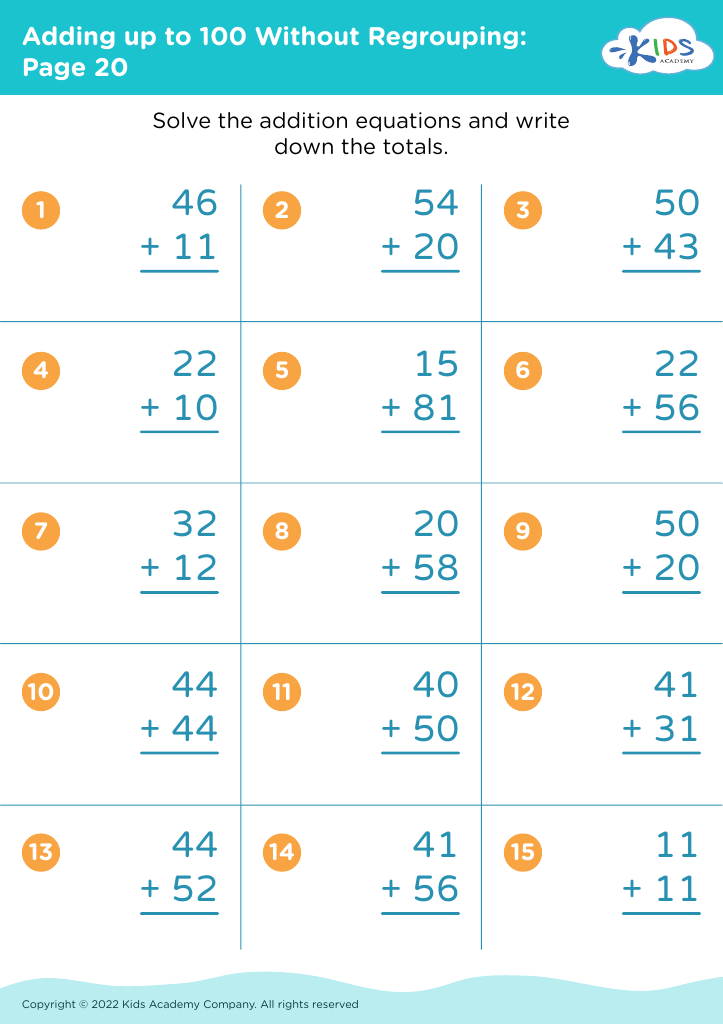
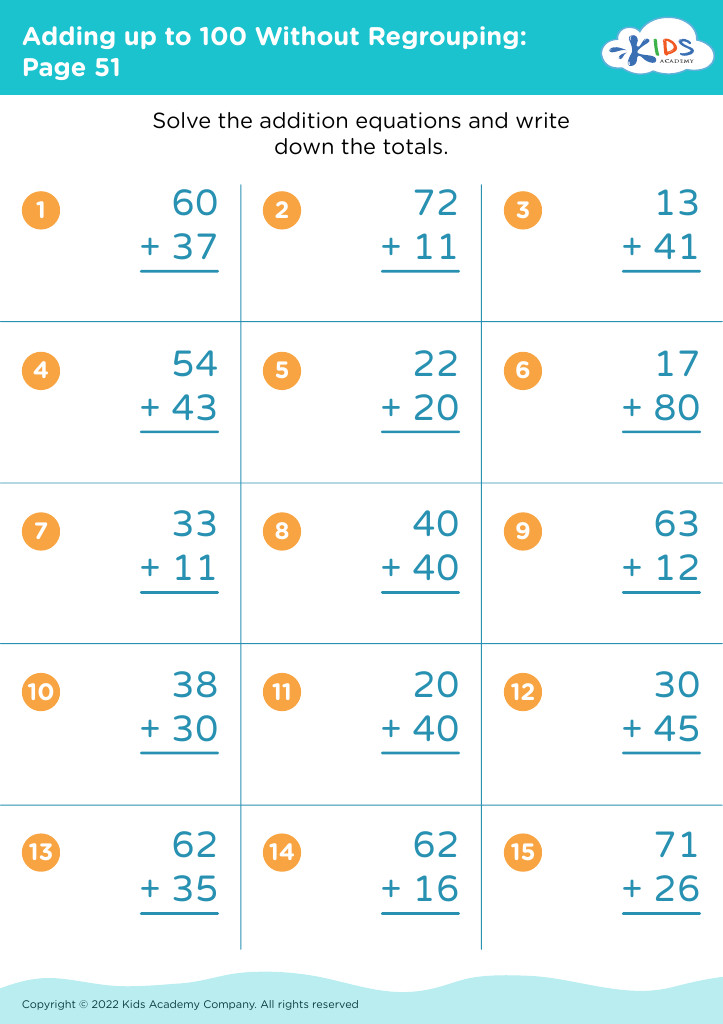
Enhance your students' math skills with our "Practicing Multiplication Adding up to 100 Worksheets"! These engaging printable resources are designed to boost multiplication proficiency while aiding addition skills up to 100. Perfect for early grade classrooms, each worksheet offers a variety of problems that promote critical thinking and reinforce key concepts. Fun and accessible, our worksheets cater to diverse learning styles, ensuring that all students grasp multiplication fundamentals. With clear instructions and vibrant visuals, learning math becomes a delightful experience. Empower your young mathematicians today by providing them with the tools they need to succeed. Explore our collection now!






%20(1).jpg)
Practicing multiplication, especially focusing on sums that add up to 100, is vital for foundational mathematical skills critical for early learners. When parents and teachers prioritize this practice, they enhance students' problem-solving abilities and number fluency. Understanding multiplication lays the groundwork for more complex mathematical concepts, such as division and fractions.
Additionally, mastering multiplication through gradual steps, such as aiming for sums of 100, ensures that children grasp the relationship between numbers and their operations. This practice helps build confidence as students can repeatedly apply strategies and see tangible progress. For children, understanding how numbers interact at an early age boosts their identification of patterns, which is integral in mathematics.
Moreover, practicing multiplication fosters logical thinking and enhances memory skills. Teachers and parents who engage in this practice create a supportive learning environment where children feel encouraged to explore and ask questions about math. As children gain competence in these early multiplication skills, they develop a solid foundation for future math courses and real-life applications, such as budgeting and planning. Investing time in these practices is essential for equipping children with the mathematical tools they need for academic success and lifelong learning.








