Problem-solving practice Adding up to 100 Worksheets
5 filtered results
-
From - To
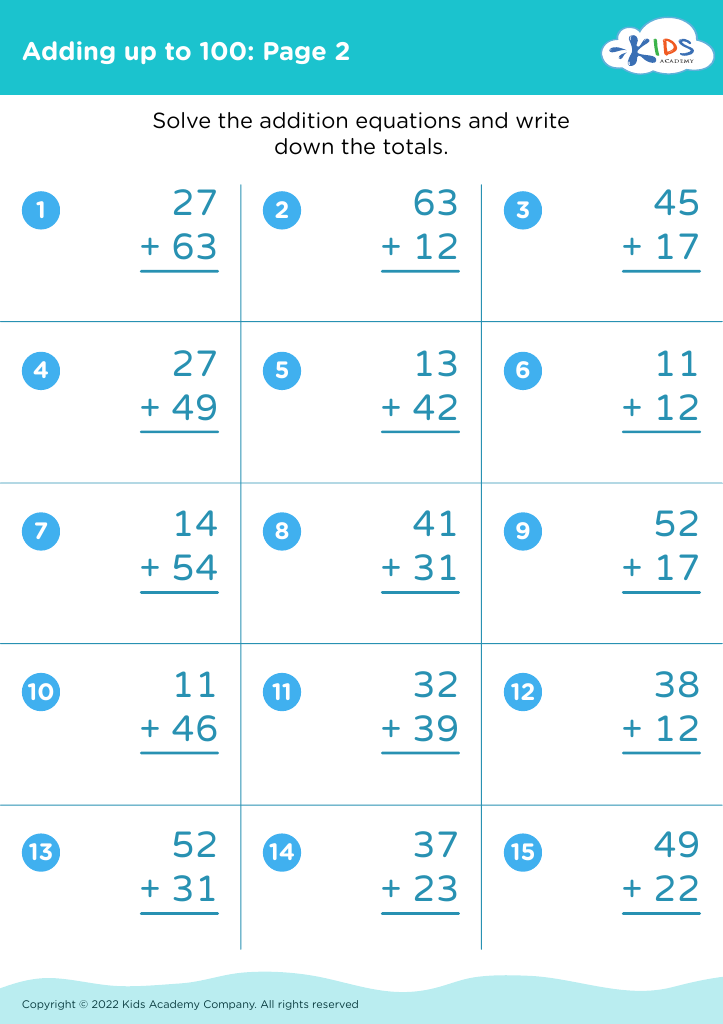
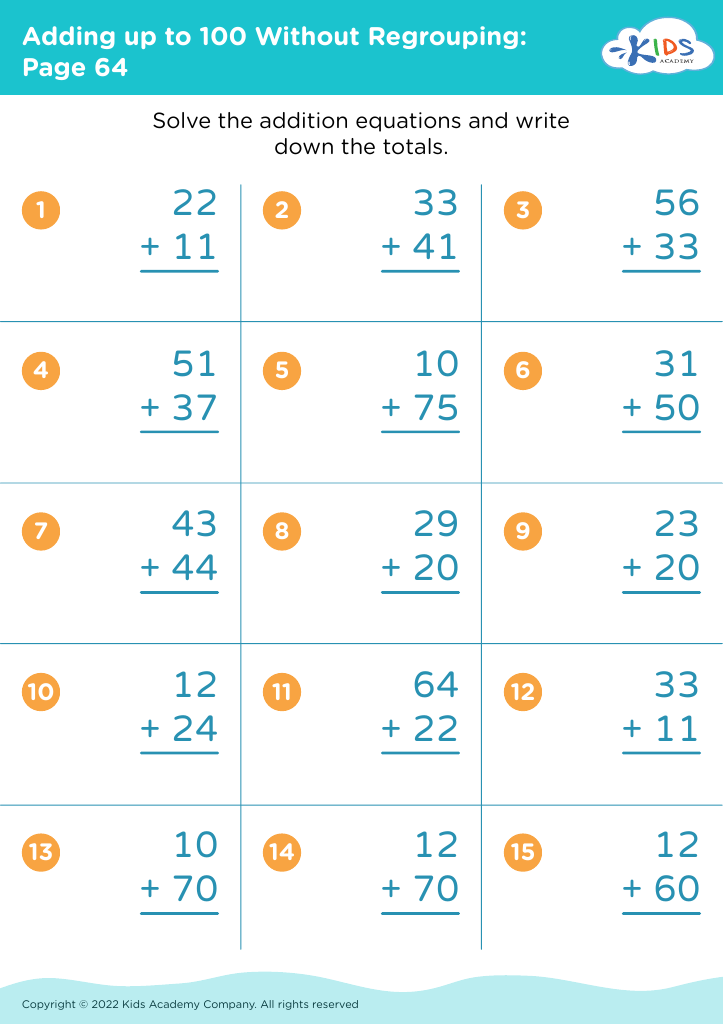
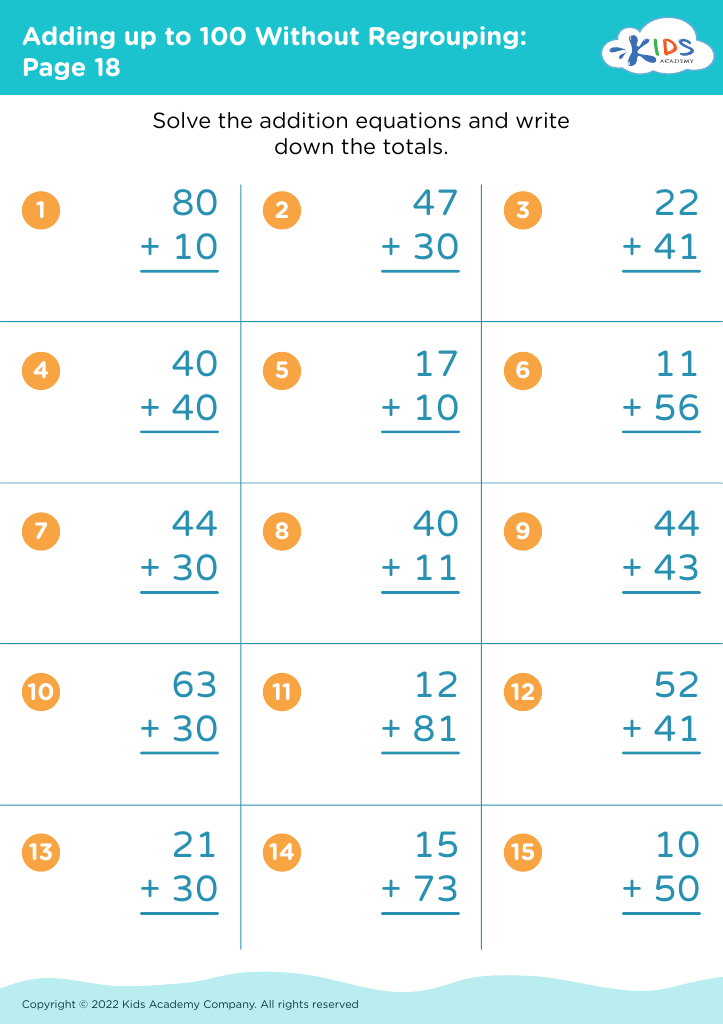
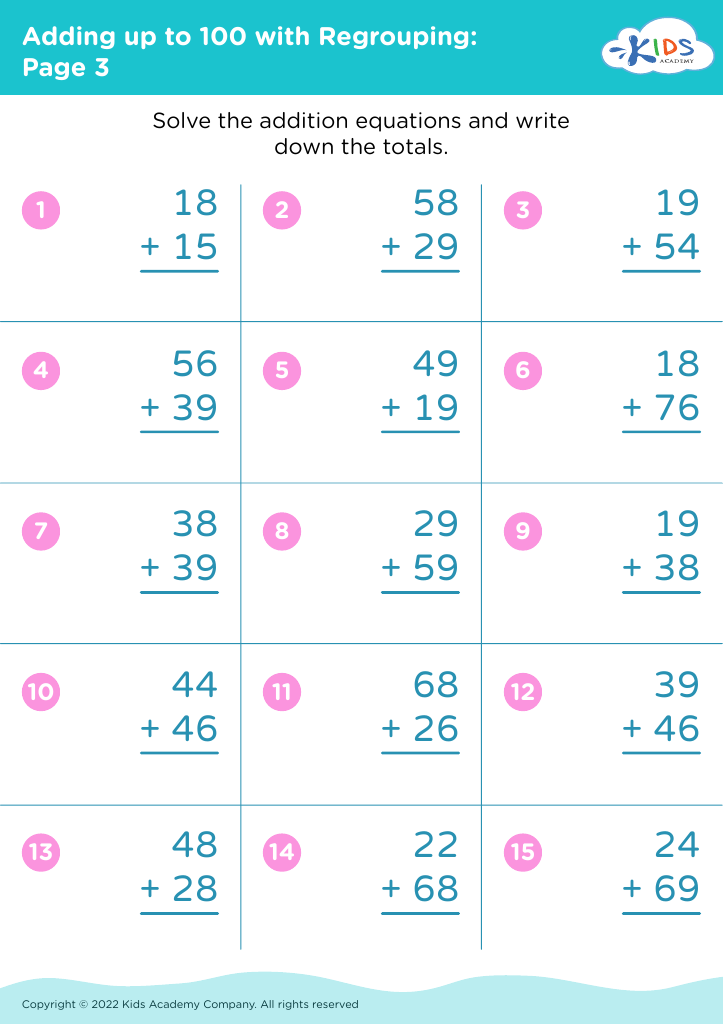
Discover our engaging "Problem-Solving Practice: Adding up to 100 Worksheets" designed to enhance your child's mathematical skills. These worksheets provide a fun and interactive way for students to master addition facts up to 100 while developing critical thinking and problem-solving abilities. Each worksheet features a variety of challenging exercises that help kids apply their math knowledge in different contexts. Perfect for both classroom use and home learning, these resources promote confidence and independence in young learners. Let your child experience the joy of math with our thoughtfully designed worksheets that make practicing addition a rewarding experience!
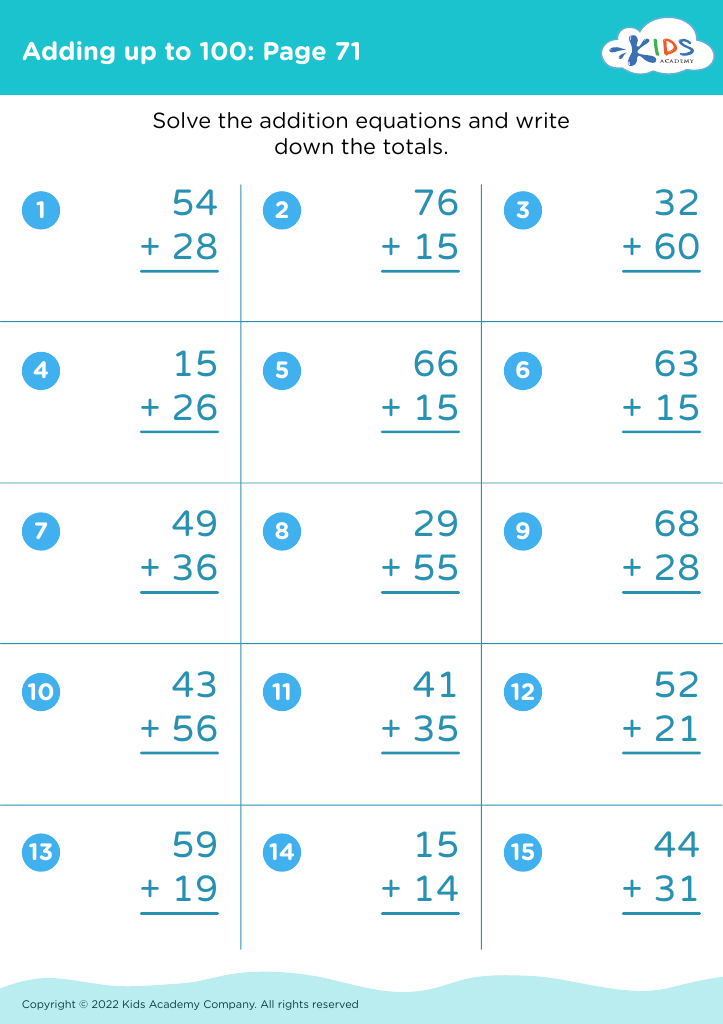


%20(1).jpg)




Problem-solving practice, particularly in addition to 100, is essential for young learners as it fosters critical thinking and cognitive development. Understanding how to combine numbers to reach a total of 100 equips children with foundational mathematical skills. It promotes mental math fluency, enabling students to perform calculations quickly and accurately without relying solely on calculators.
Moreover, this practice supports the development of perseverance and resilience when faced with challenges. Engaging in problem-solving requires children to explore various strategies, helping them to become flexible thinkers who can approach a problem from different angles. This skill translates beyond mathematics into real-life situations where decision-making and planning are necessary.
For teachers and parents, emphasizing this kind of practice builds a strong numerical foundation that boosts children's confidence in math. It prepares them for more complex concepts in the future, ensuring their academic success. Additionally, working on problem-solving together enhances the parent-child or teacher-student relationship, making learning a collaborative and enjoyable experience. In a society increasingly reliant on technology, instilling problem-solving skills early on is vital for fostering independent, confident learners who can navigate future challenges with ease.








