Recognizing Patterns Adding up to 100 Worksheets
5 filtered results
-
From - To
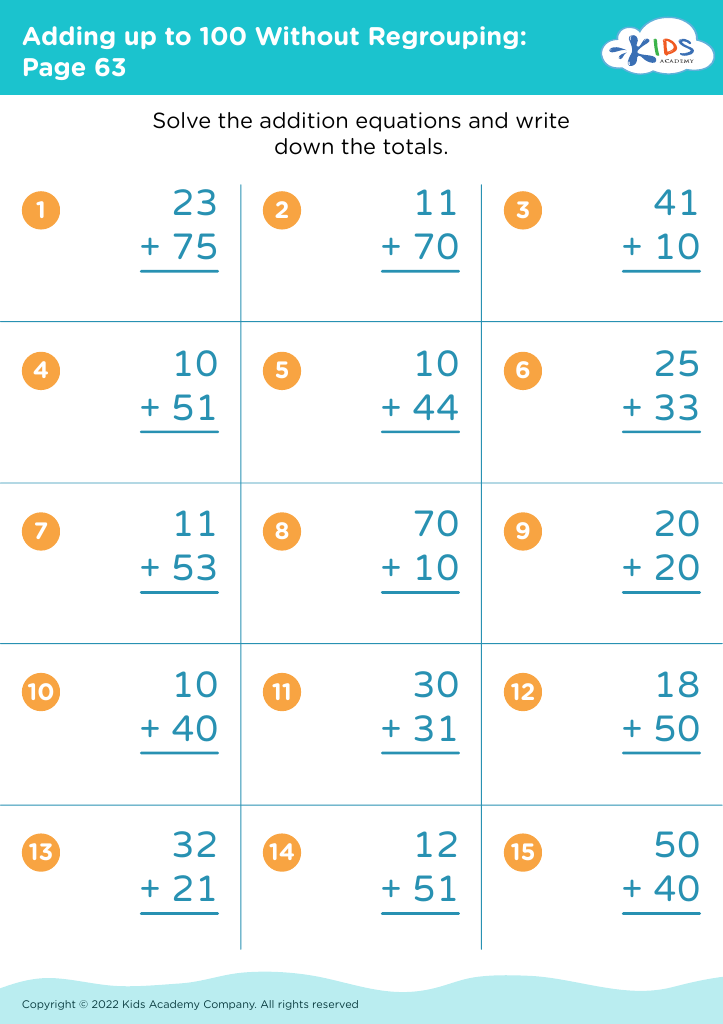
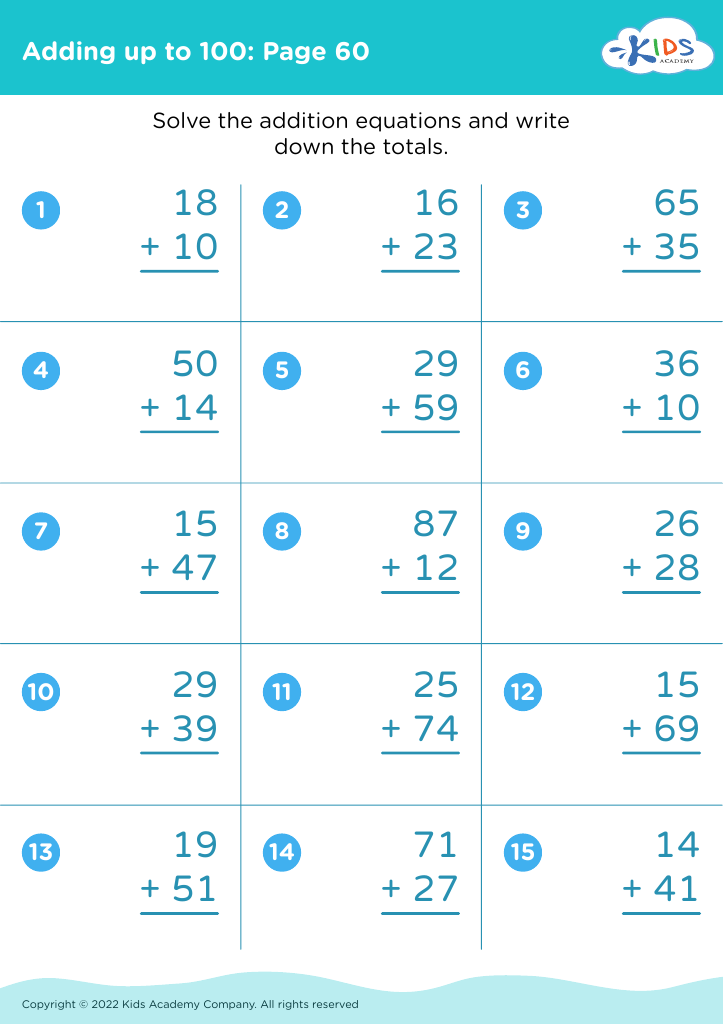
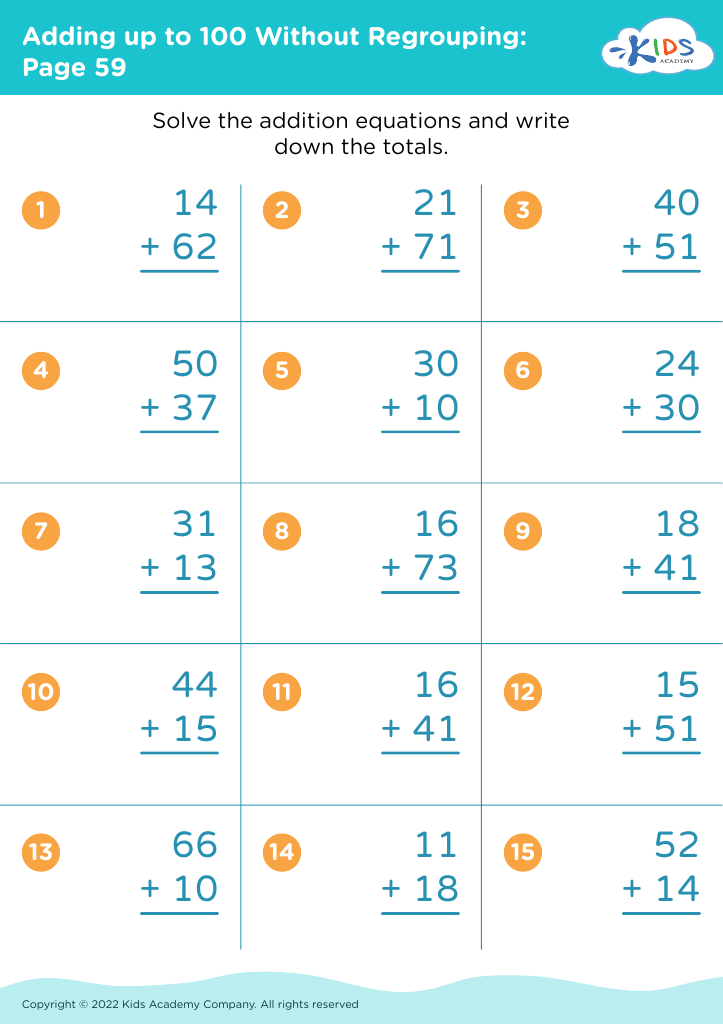
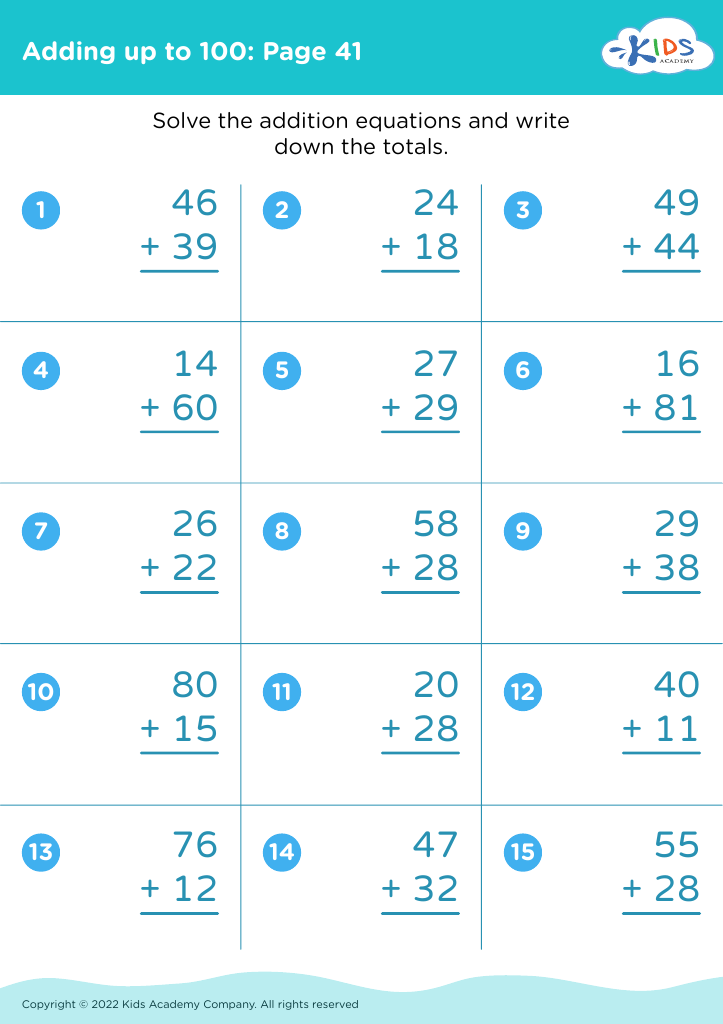
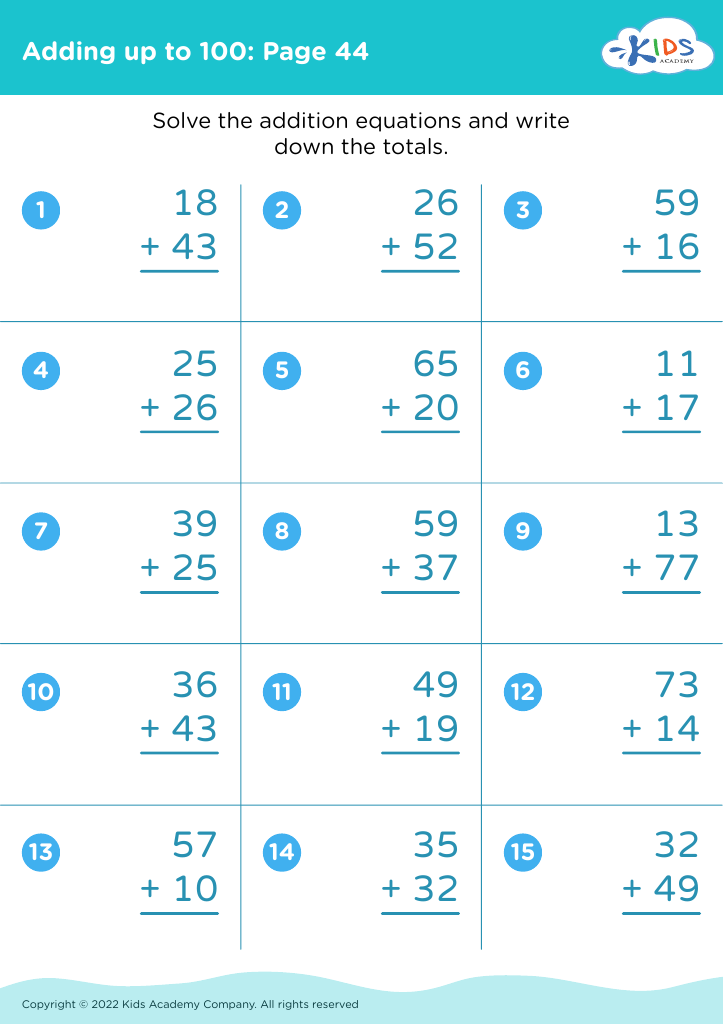
Unlock your child's potential with our "Recognizing Patterns Adding up to 100 Worksheets"! Designed for early learners, these engaging worksheets focus on helping kids identify and create number patterns that sum up to 100. With interactive exercises and colorful visuals, children will enjoy learning fundamental math skills while enhancing their problem-solving abilities. Perfect for in-class activities or home practice, these worksheets align with core math standards, ensuring a solid foundation in arithmetic. Dive into our expertly crafted resources and watch your child's confidence and understanding of math grow as they master patterns and sums up to 100.






%20(1).jpg)
Recognizing patterns that add up to 100 is fundamental for young learners, and both parents and teachers should prioritize this skill for several important reasons.
Firstly, understanding patterns in addition helps children develop essential mathematical fluency. It builds a solid foundation for more complex arithmetic concepts and boosts their confidence when tackling larger numbers. For instance, identifying that 25 and 75 make 100 can make it easier for them to work with problems like 250 + 750.
Secondly, the skill fosters critical thinking and problem-solving. By recognizing how different combinations of numbers can form 100, children learn to approach problems methodically and understand the relationships between numbers. This reinforces skills like decomposition and mental math strategies that are instrumental across all areas of math education.
Moreover, developing pattern recognition promotes cognitive abilities like memory and reasoning which are vital not only in math but also in everyday life. Whether calculating change, managing time, or solving puzzles, these skills enhance overall intellectual aptitude and adaptability.
Finally, recognizing and working with patterns encourages a positive attitude towards math. Early success with something as tangible and achievable as summing to 100 can set the stage for a lifelong appreciation and interest in the subject.
In summary, parents and teachers should care about recognizing patterns adding up to 100 because it builds critical early math skills, fosters problem-solving and cognitive development, and promotes a positive mathematical mindset.








