Understanding Sequences Adding up to 100 Worksheets
5 filtered results
-
From - To
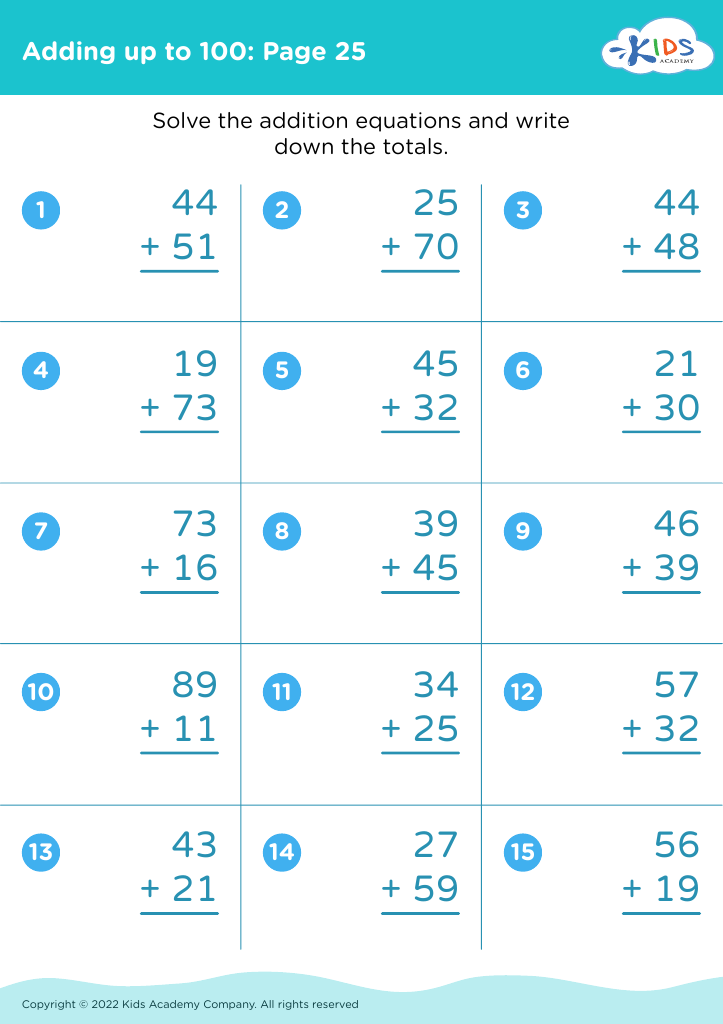
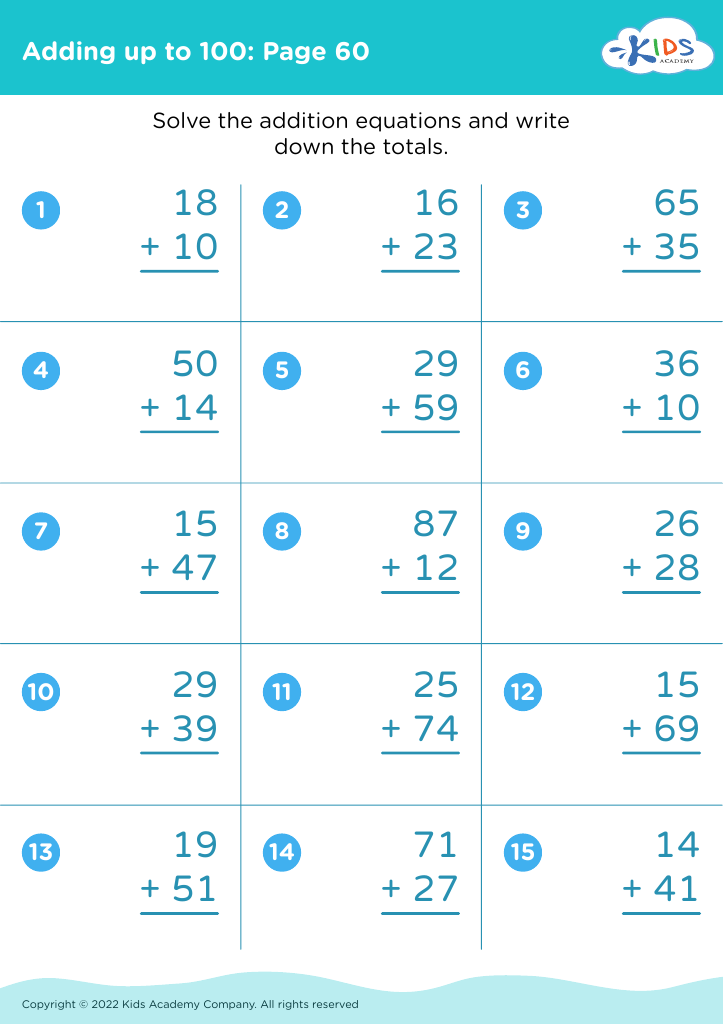
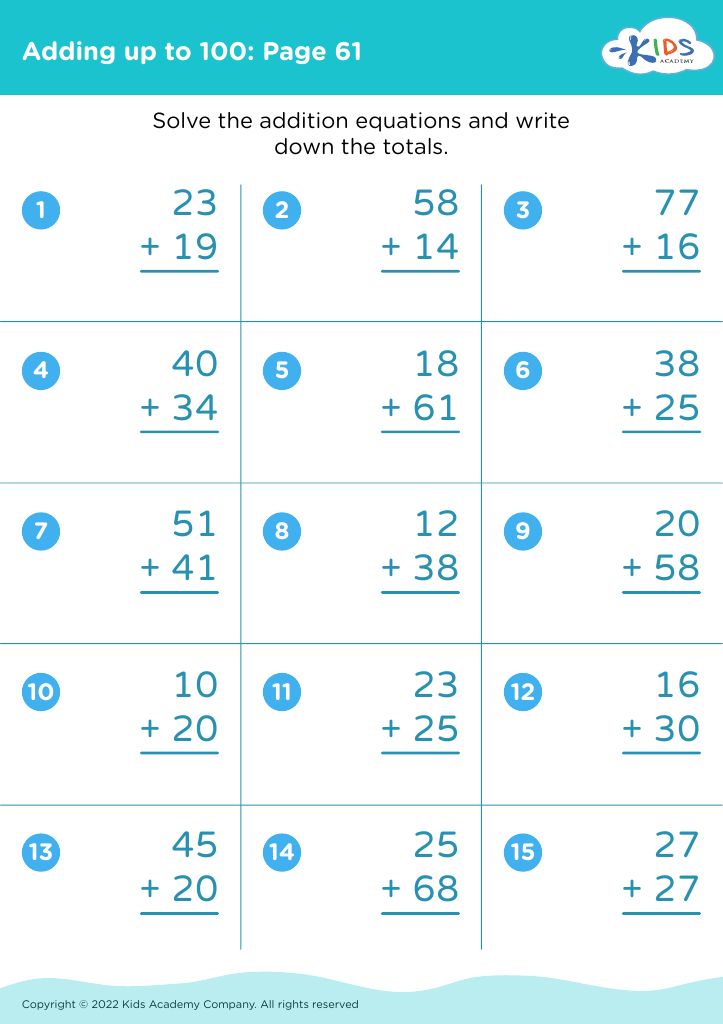
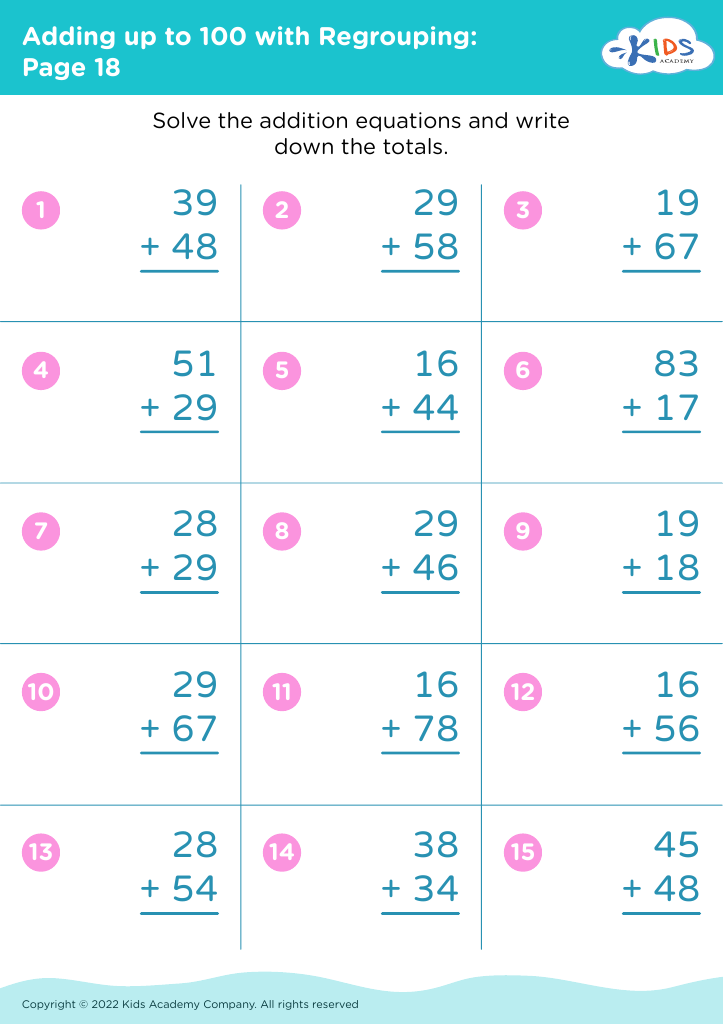
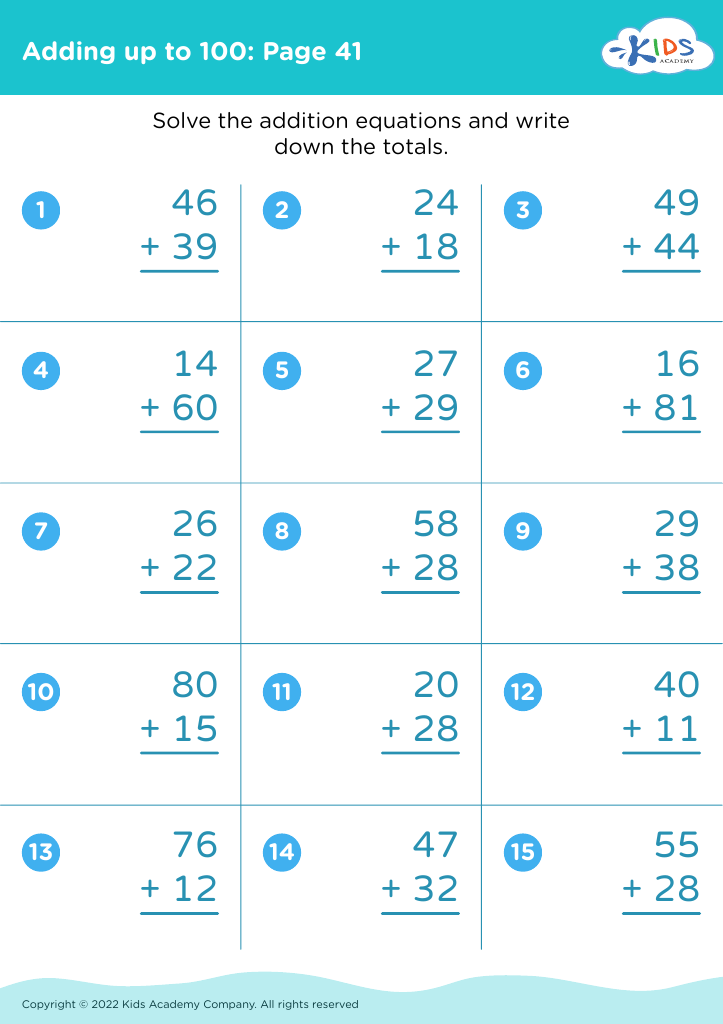
Explore our "Understanding Sequences Adding up to 100 Worksheets" to help your early learners master addition and sequencing skills. Designed for young minds, these engaging worksheets promote a solid grasp of number sequences while adding up to 100. Students will practice finding patterns, filling in blanks, and solving puzzles that enhance critical thinking and mathematical understanding. Easy to use at home or in the classroom, these worksheets cater to varied learning styles, ensuring all children develop confidence in their math abilities. With a fun approach to learning essential concepts, students will enjoy reinforcing their skills as they succeed in math!



%20(1).jpg)



Understanding sequences that add up to 100 is essential for early learners, forming a foundational skill in mathematics. First, recognizing patterns and sequencing enhances critical thinking and problem-solving abilities. It encourages students to see relationships between numbers, which is crucial in developing mathematical reasoning.
Moreover, building proficiency in sequences helps students grasp addition and subtraction concepts more phenomenally. When students can mentally manipulate numbers that sum to 100, they are better equipped to tackle more complex math problems, developing confidence in their skills. This understanding also lays groundwork for understanding more advanced numerical operations and concepts in future grades.
For parents and teachers, supporting children in mastering this skill promotes academic success and lays the groundwork for positive attitudes toward math. Early intervention in sequence understanding can ignite a lifelong passion for mathematics, reducing anxiety and fear often associated with the subject later on.
In addition, as these sequences often correlate with real-life situations, such as budgeting, telling time, and counting, parents and teachers can use this understanding to demonstrate practical applications, making learning more relatable and engaging for young students. Thus, prioritizing this skill is paramount for fostering enthusiastic, competent learners.








