Animal identification Adding Up to 5 Worksheets - Page 2
27 filtered results
-
From - To



.jpg)




Animal identification is crucial for both parents and teachers, particularly in fostering a sense of responsibility and compassion in young children. First, understanding different animal species and their characteristics enhances children's empathy towards living beings, encouraging them to appreciate biodiversity. Learning about animal identification can foster curiosity, leading to classroom discussions and projects that challenge students to explore the natural world.
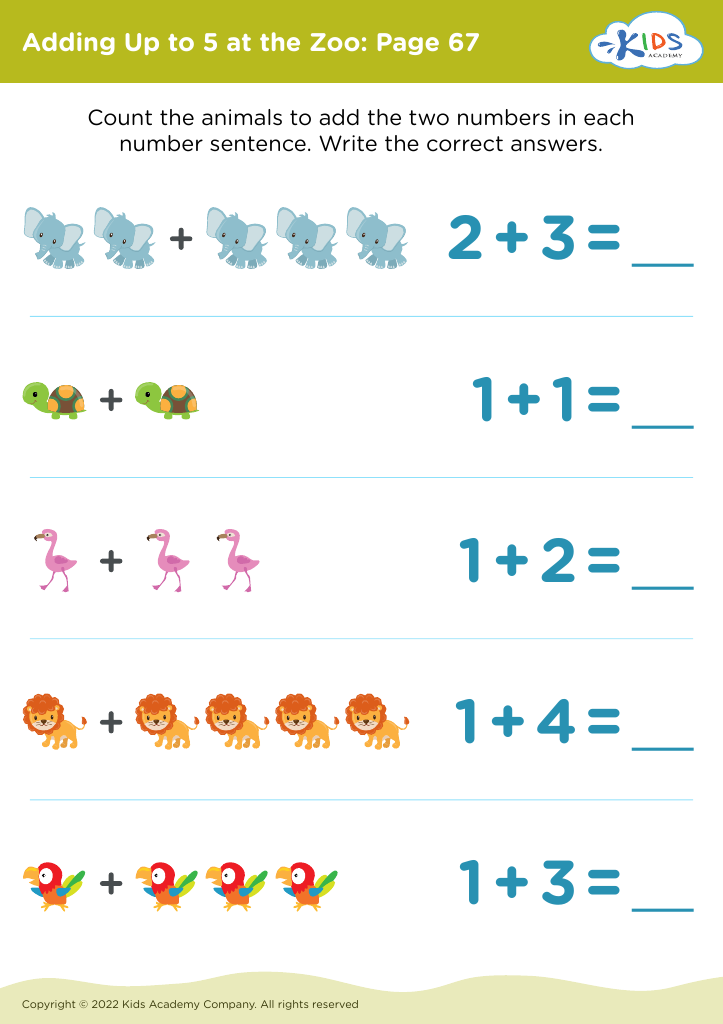
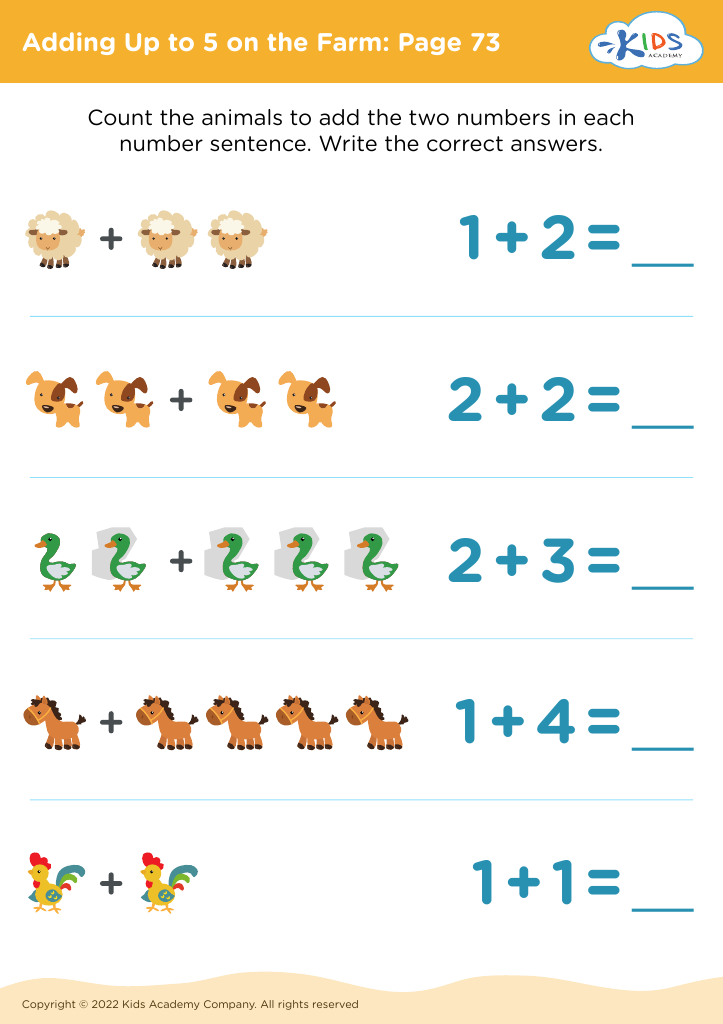
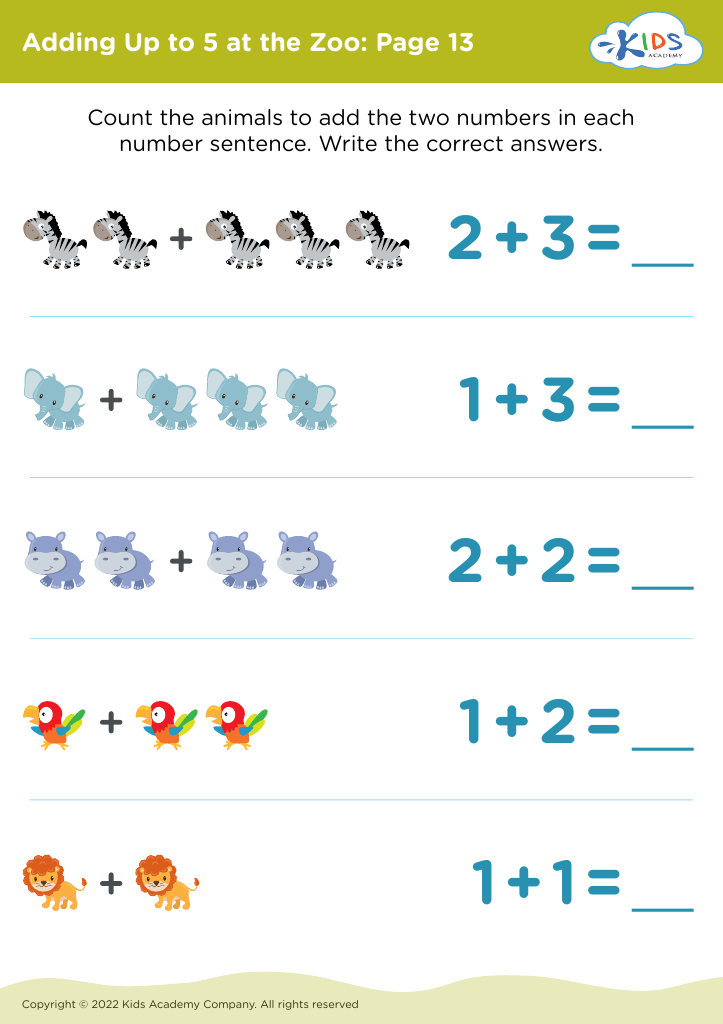
Furthermore, it lays the foundation for essential life skills, including categorization and critical thinking. Identifying animals using various tools or methods, such as visuals or charts, allows students to engage with their environment meaningfully. This skill is especially important as children begin to grasp concepts of addition and classification in math—attributes critical for successfully "adding up" different animal groups.
Moreover, educating young learners about animals can instill a sense of environmental stewardship. By understanding wildlife and domestic animals, children are more likely to develop a positive attitude towards wildlife conservation and animal welfare initiatives. Ultimately, integrating animal identification into early education can enrich children's lives with knowledge, empathy, and a deeper connection to their surroundings, benefiting their social-emotional development.








