Developing Concentration Adding Up to 5 Worksheets
5 filtered results
-
From - To
Enhance your child’s focus with our "Developing Concentration Adding Up to 5 Worksheets." These engaging activities are designed to boost math skills while sharpening attention spans. Each worksheet features fun and interactive exercises that challenge children to solve addition problems up to 5, reinforcing their arithmetic abilities and encouraging mindful practice. By integrating concentration-building strategies with early math learning, our worksheets provide a holistic approach to education. Ideal for preschool and early elementary students, these resources make learning enjoyable and effective. Download now to foster essential skills that will set the foundation for future academic success!
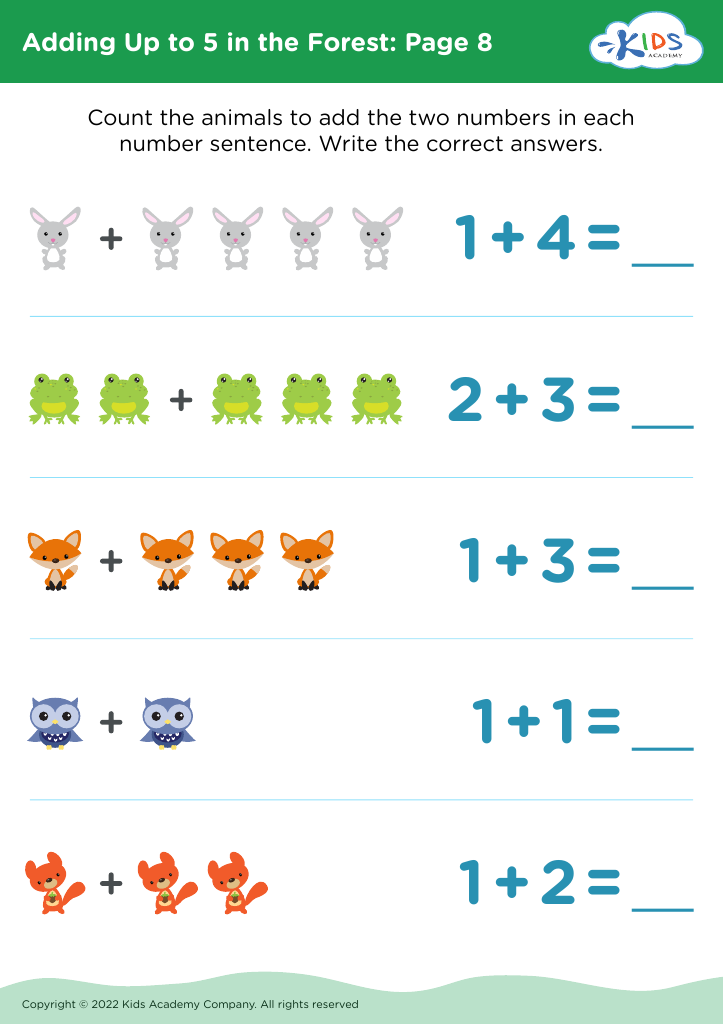
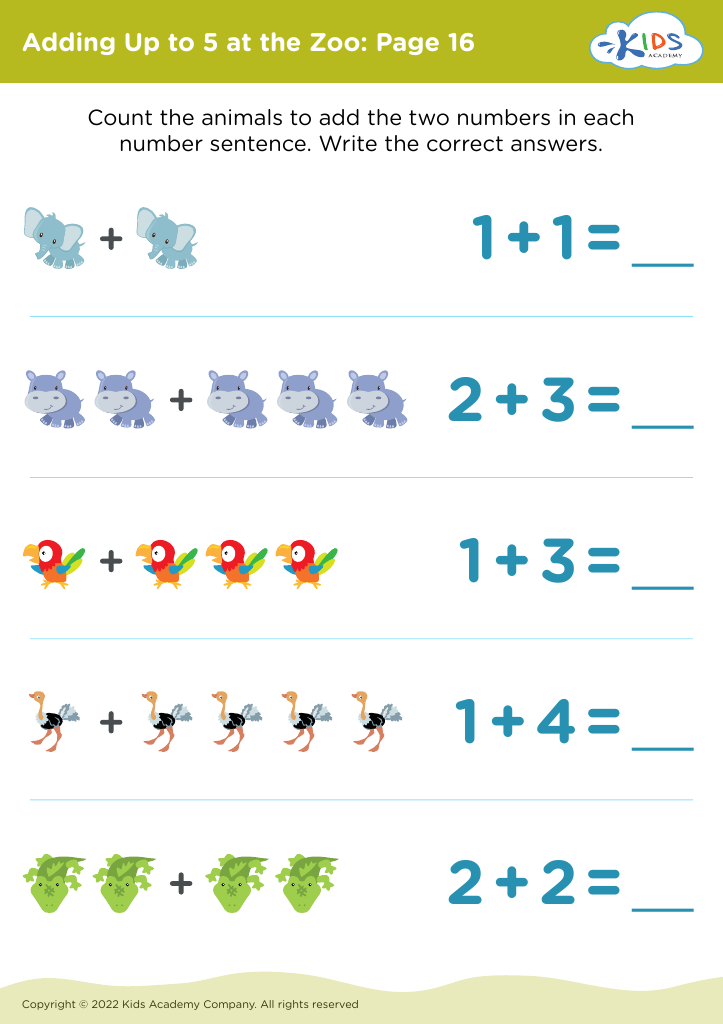
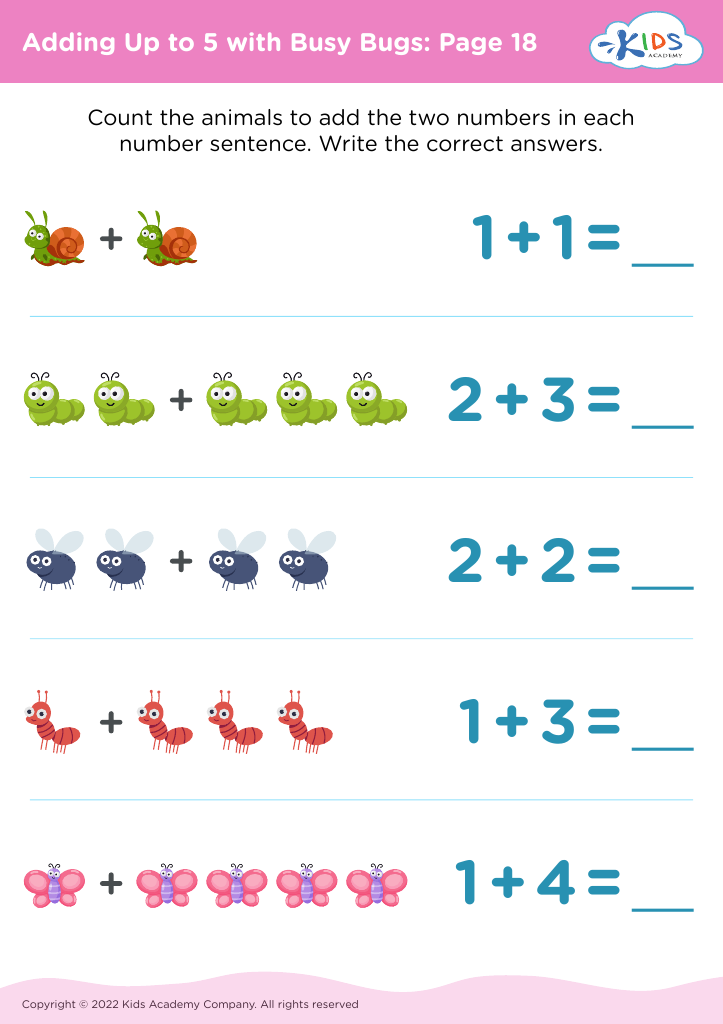
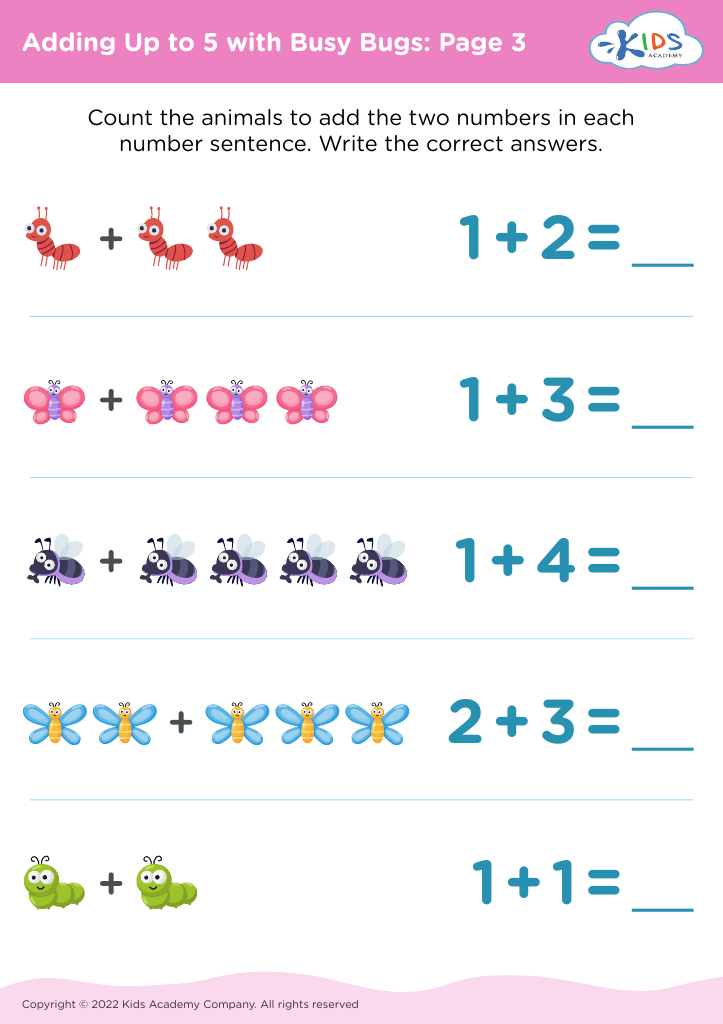
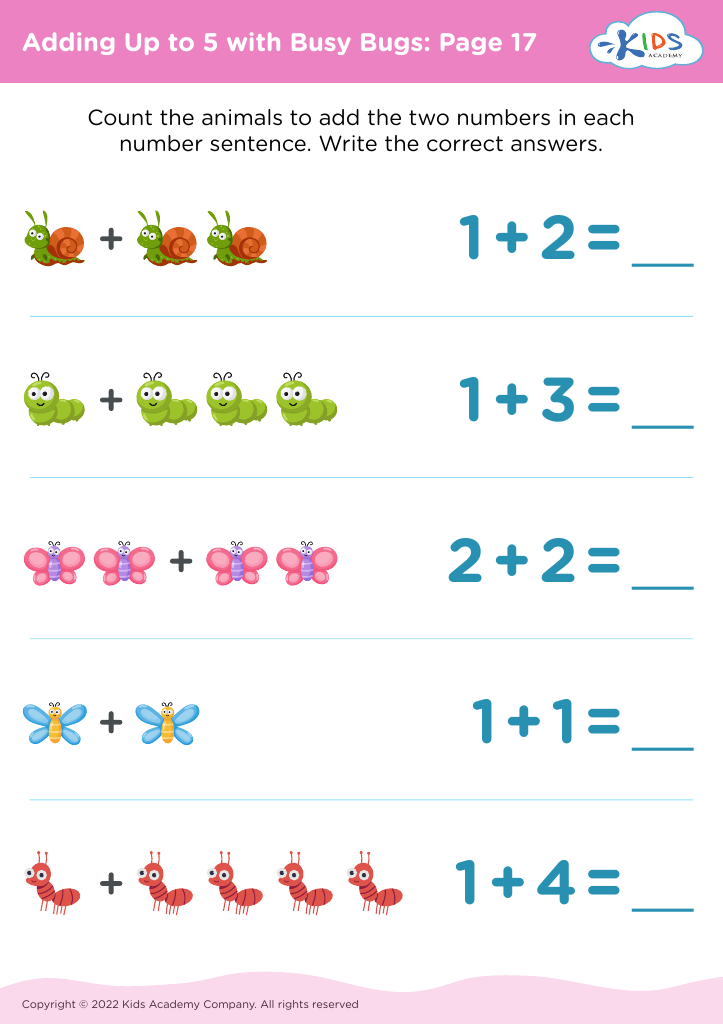








Developing concentration in young learners, particularly when adding up to 5, is vital for several reasons. First, concentration fosters better learning habits. When children focus on simple tasks like basic addition, they build a solid foundation for more complex mathematical concepts later. This foundational understanding enables them to approach math with confidence, reducing anxiety around numbers.
Additionally, honing concentration skills improves overall cognitive abilities. Children learn how to maintain attention, which is essential not only in math but across all subjects. Enhancing concentration helps cultivate critical thinking and problem-solving skills, important for the 21st-century learner.
Moreover, consistent practice of focused attention and numerical skills aids in emotional regulation. Children learn the value of patience and perseverance when working through problems, qualities they can apply to various aspects of their lives.
Finally, concentrating on foundational skills can closely link to academic performance. Teachers and parents who prioritize guiding their children through basic tasks like adding up to 5 not only help build stronger mathematicians but also instill life skills that transcend the classroom. In the long run, nurturing concentration sets students up for greater academic engagement and success.








