Problem-Solving Skills Adding Up to 5 Worksheets - Page 2
37 filtered results
-
From - To
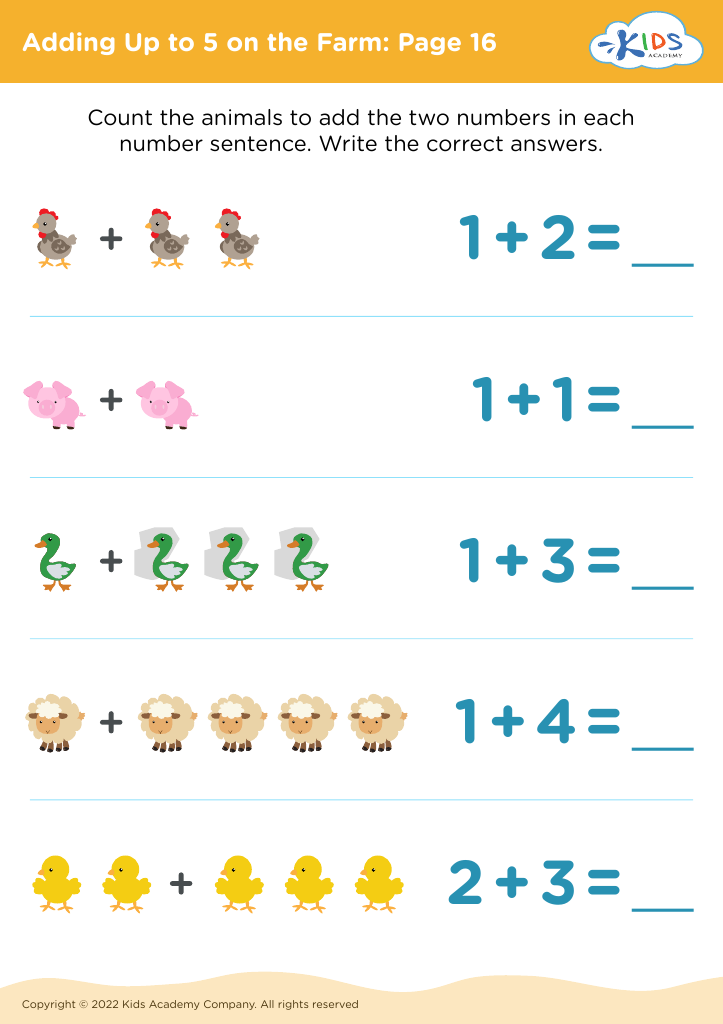
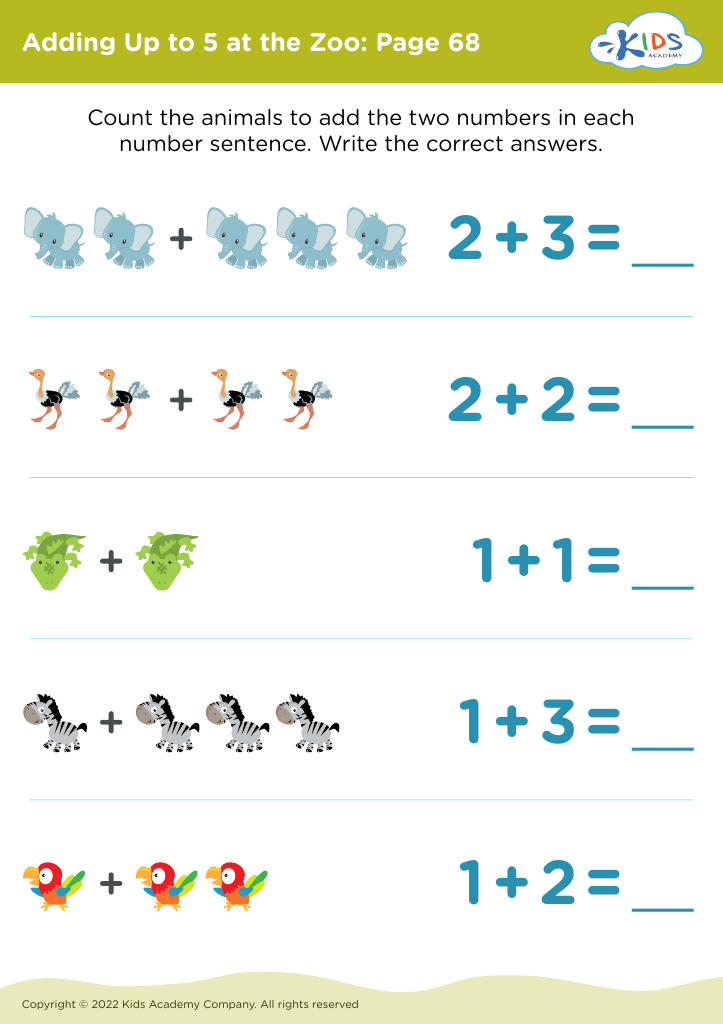
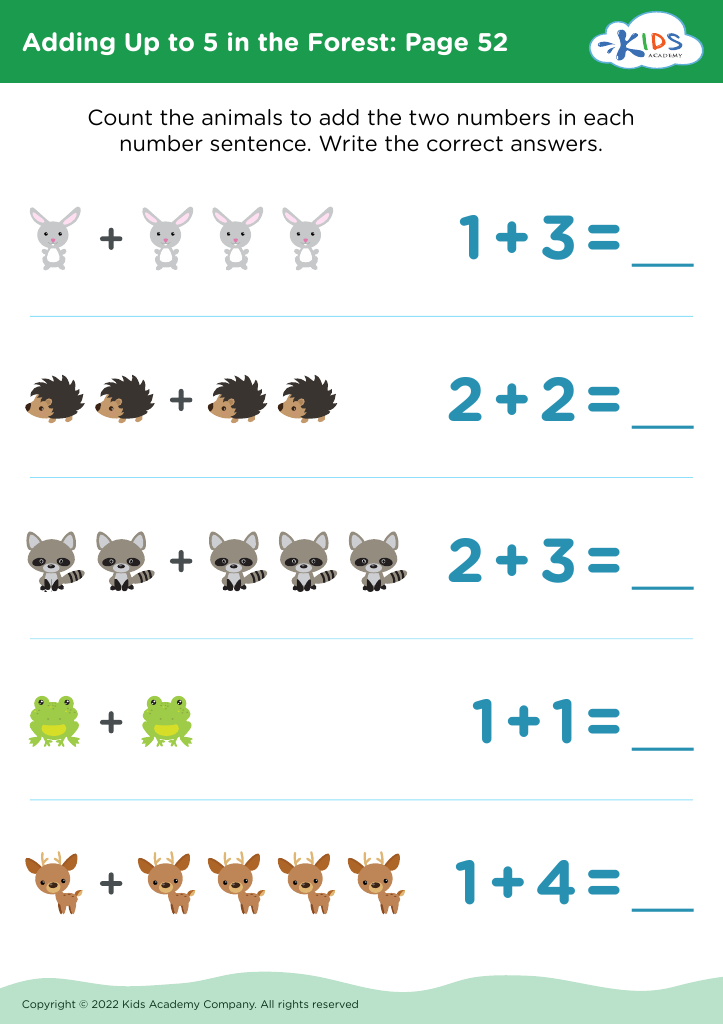
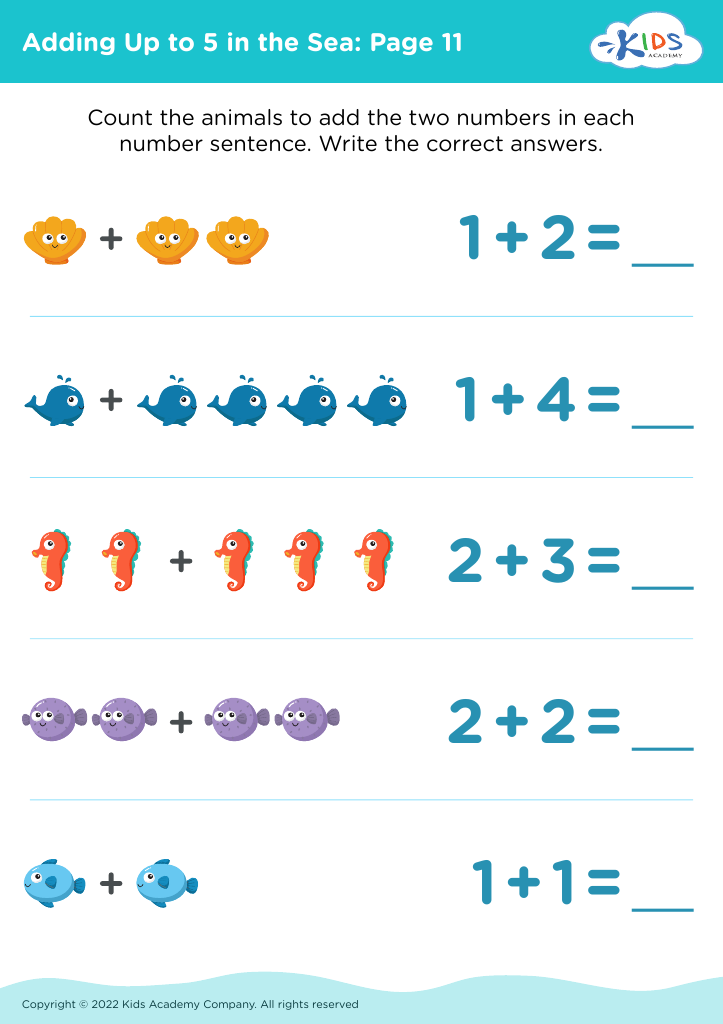
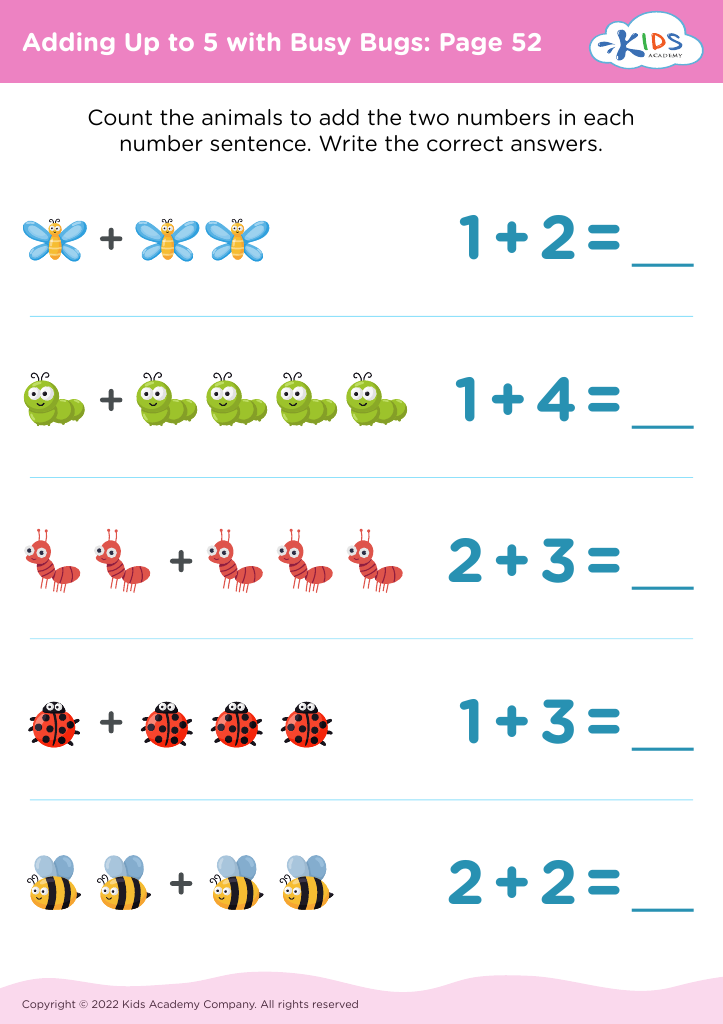







.jpg)
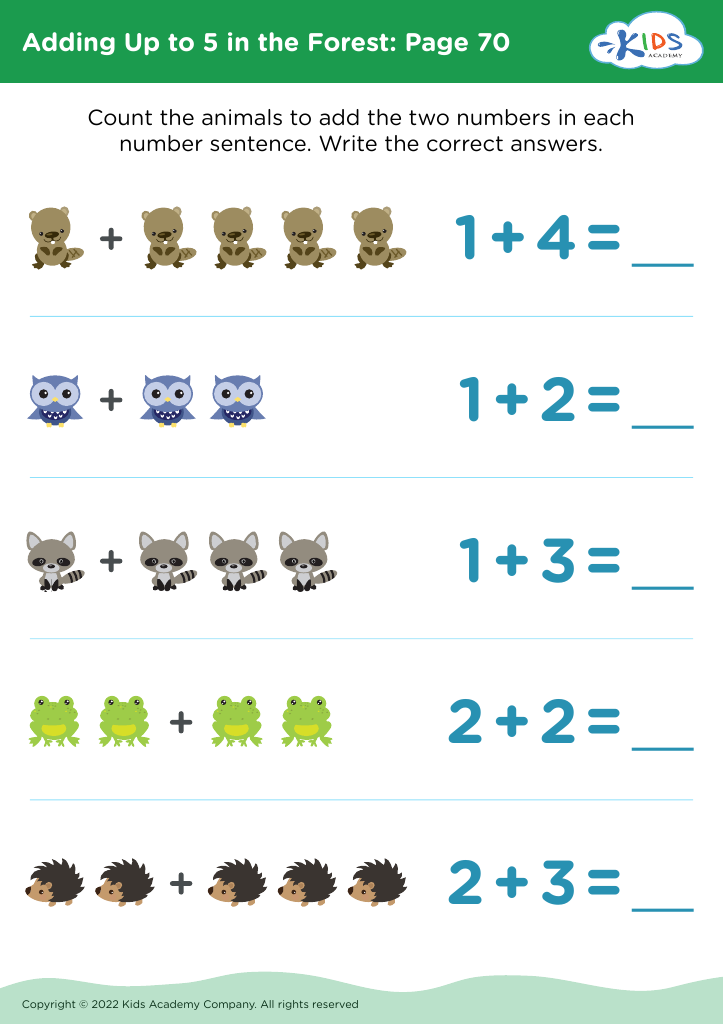
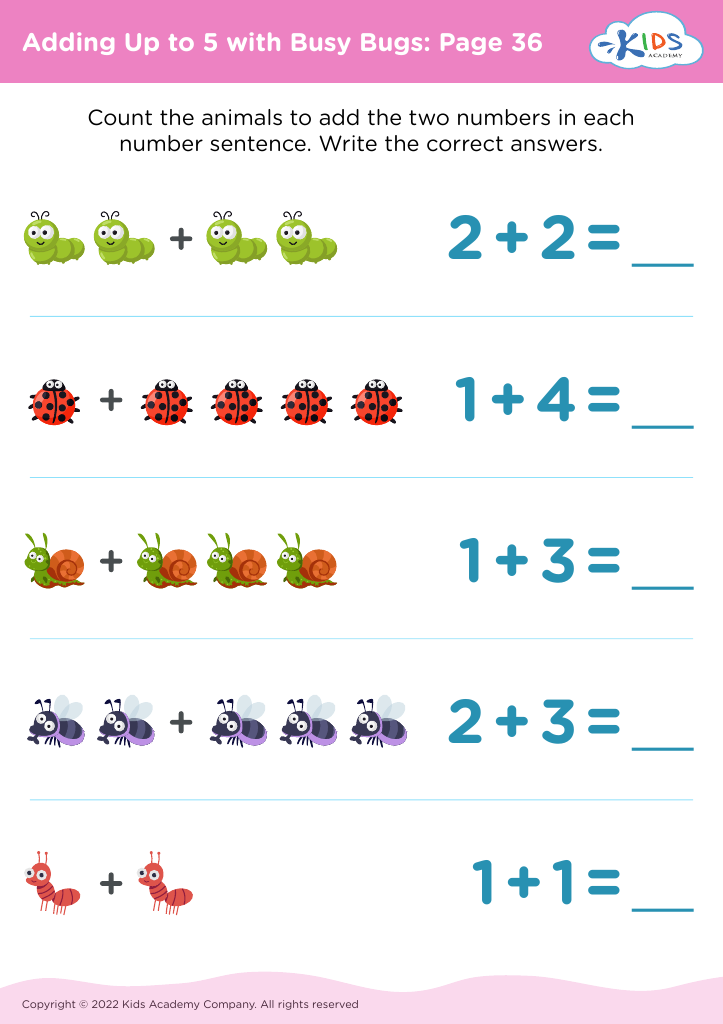
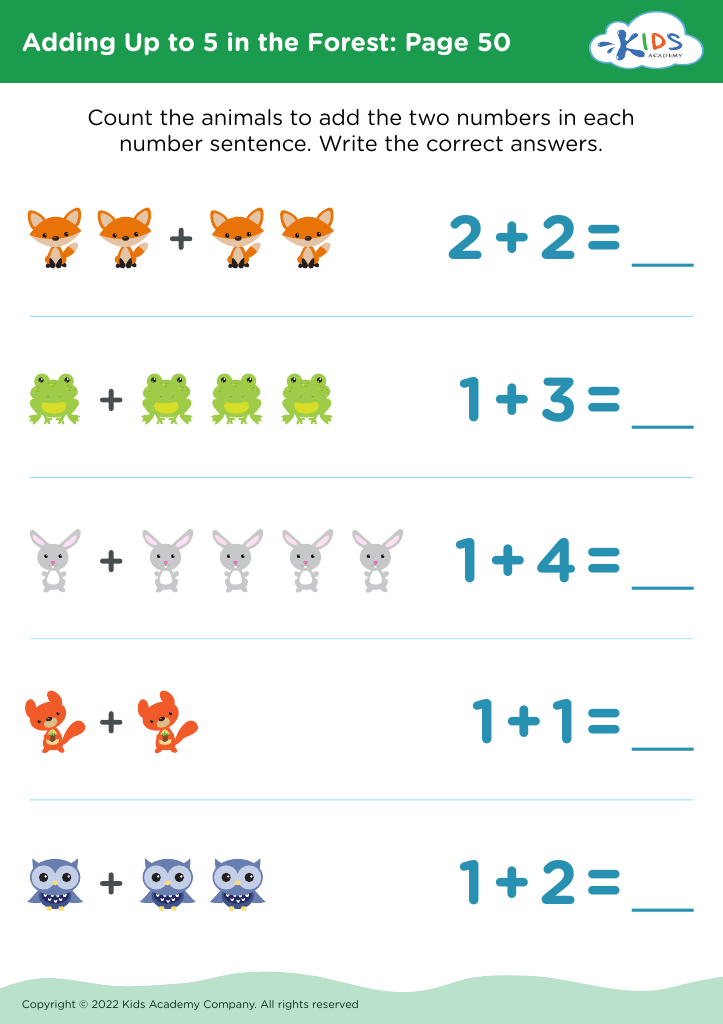
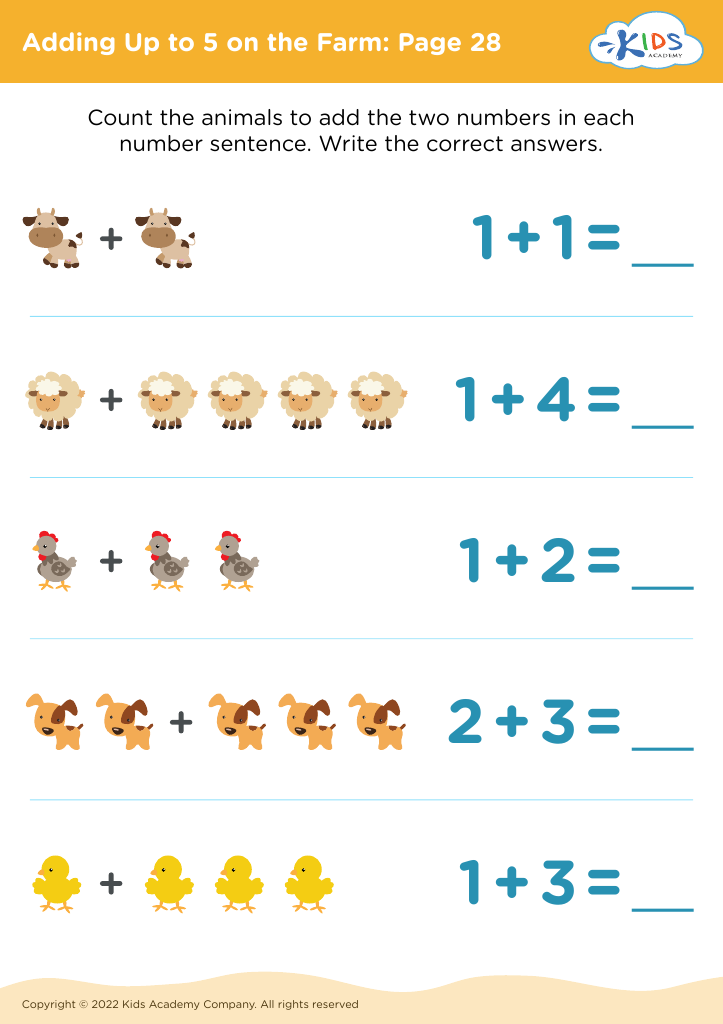
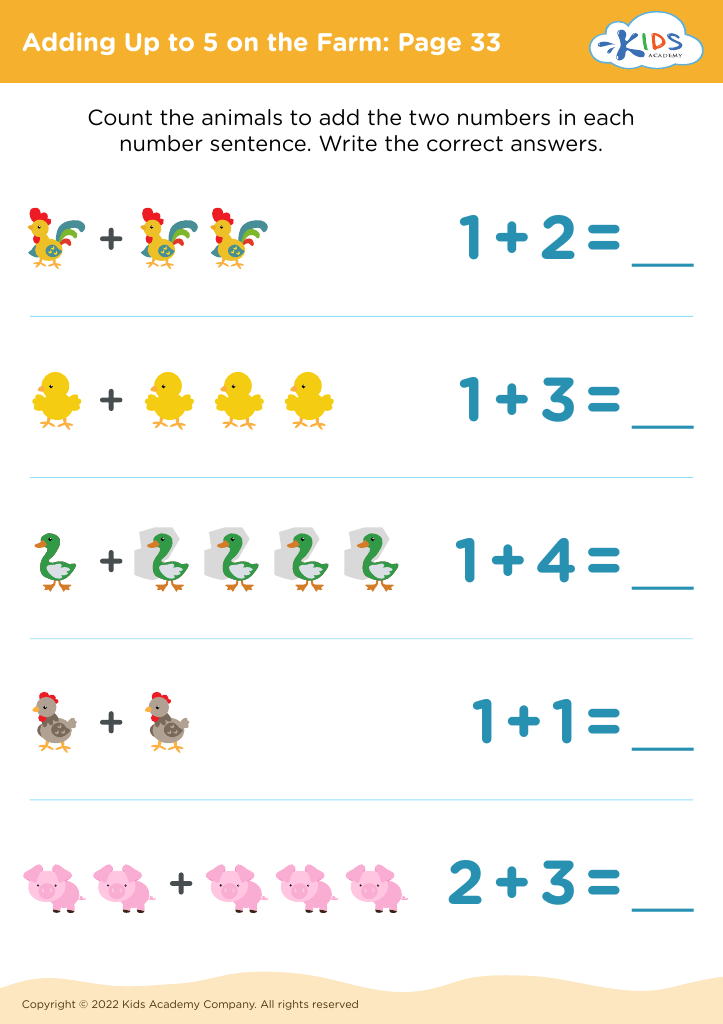
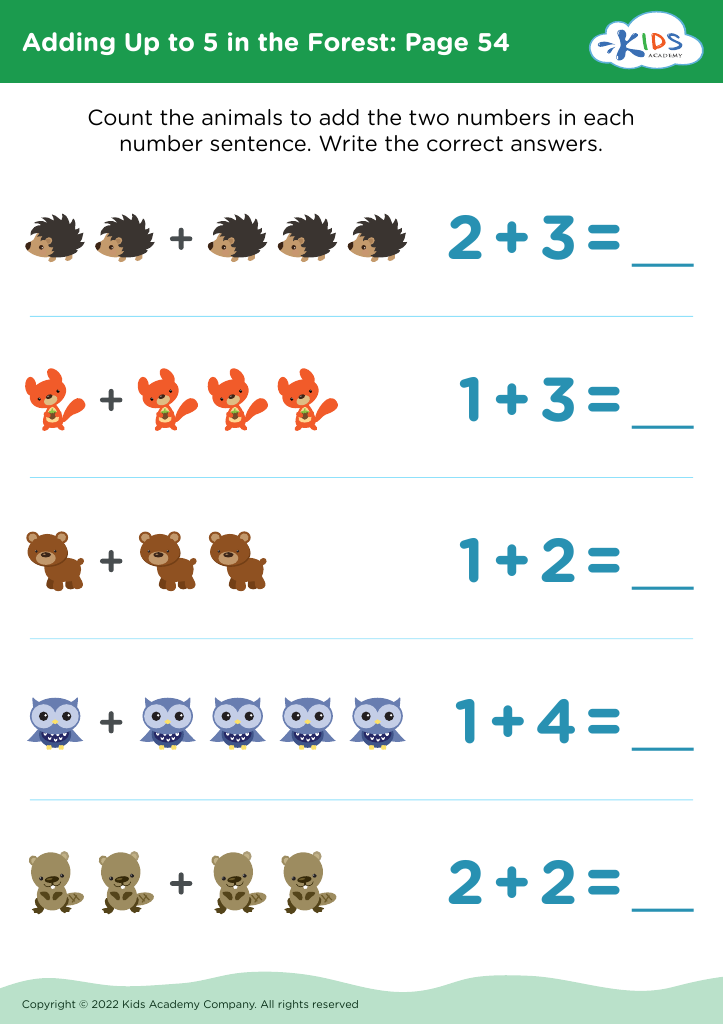
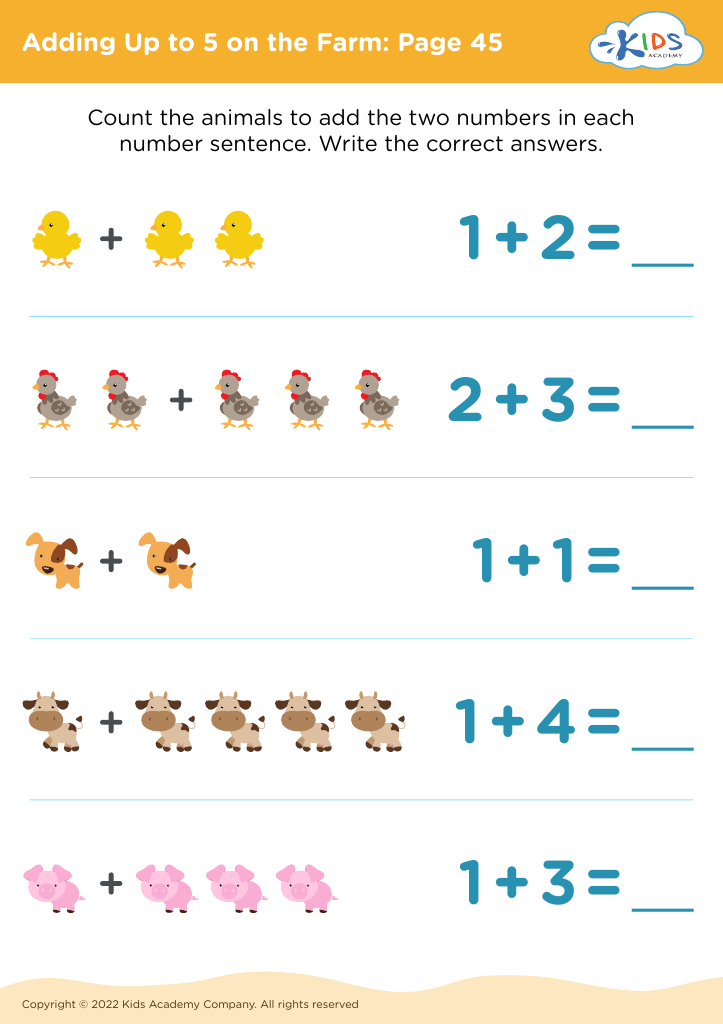
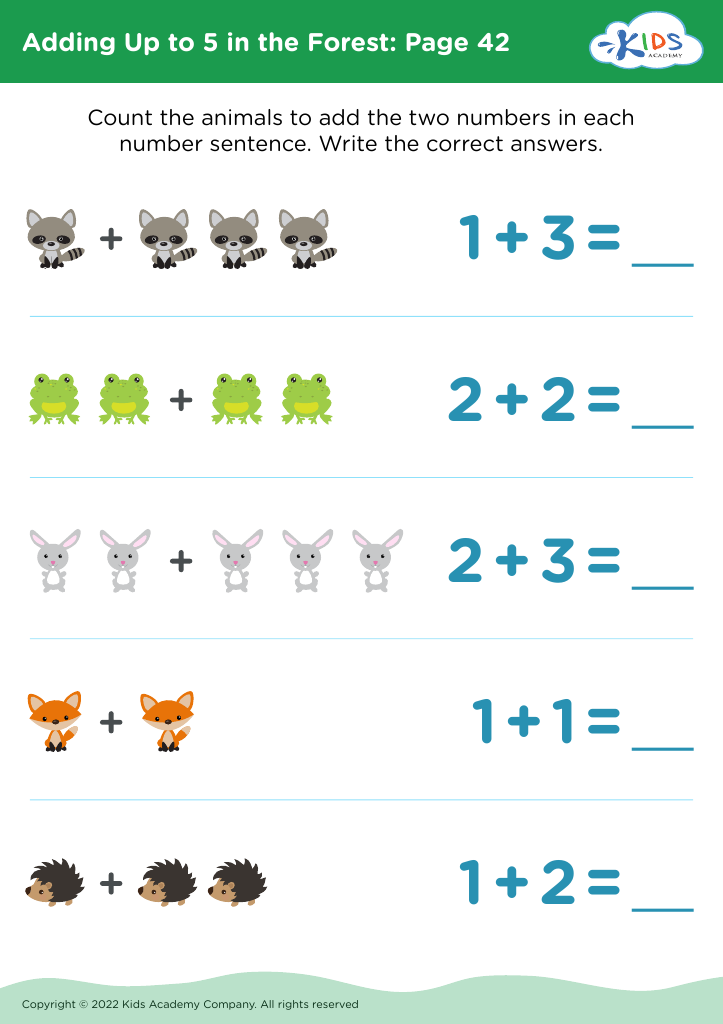
Parents and teachers should prioritize developing problem-solving skills in young learners, especially when it comes to basic math concepts like adding up to 5. These skills are foundational for cognitive development and mathematical literacy, which are critical for a child’s academic success. Problem-solving fosters critical thinking and creativity, enabling children to approach challenges with confidence and resilience.
Teaching children how to add up to 5 also helps them understand basic arithmetic, which is essential for more complex math concepts in the future. It lays the groundwork for understanding numbers, patterns, and relationships which are vital for everyday tasks, from budgeting allowances to measuring ingredients for cooking.
Additionally, engaging children in problem-solving activities can boost their social skills and collaboration when they work together on math games or group tasks. These experiences also promote positive attitudes toward learning, making them more likely to enjoy and persist in their education.
By focusing on problem-solving skills related to simple addition, parents and educators equip children with the tools to think critically and independently, paving the way for lifelong learning and success. This early investment in a child's problem-solving abilities can have beneficial ripple effects in various aspects of their lives.








