Filters

17 filtered results

Clear all filters
Favorites
With answer key
Interactive

17 filtered results

Difficulty Level

Grade


Explore our engaging "Understanding Quantity Adding Up to 5 Worksheets," designed to help young learners develop essential math skills. These worksheets focus on recognizing and manipulating quantities, making addition concepts more accessible. Through fun and age-appropriate activities, students will enhance their ability to visualize numbers and grasp the basics of addition while building a strong foundation for future math success. Perfect for preschool and early elementary grades, our resources encourage hands-on learning and critical thinking. Download our worksheets today to inspire your child’s journey in mastering quantities and making math an enjoyable and rewarding experience!
Check out this FREE Trial Lesson on Adding Up to 5!

Short and Long Vowel Sort

Favorites
With answer key
Interactive
  • Understanding quantity
  • Adding Up to 5
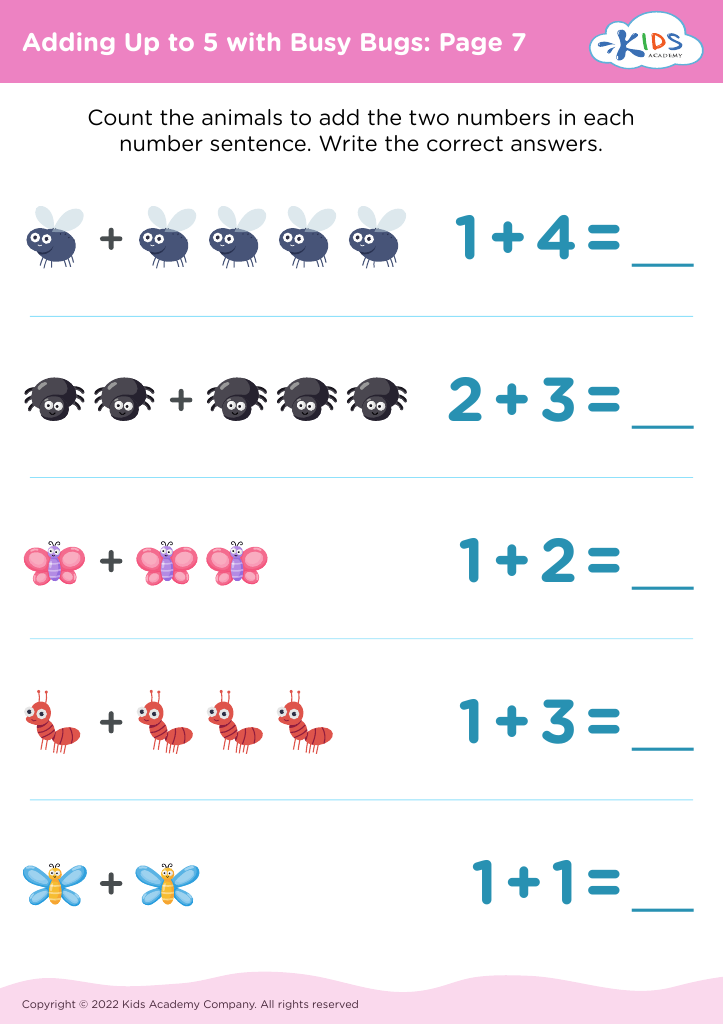
Adding Up to 5 with Busy Bugs: Page 7
Worksheet
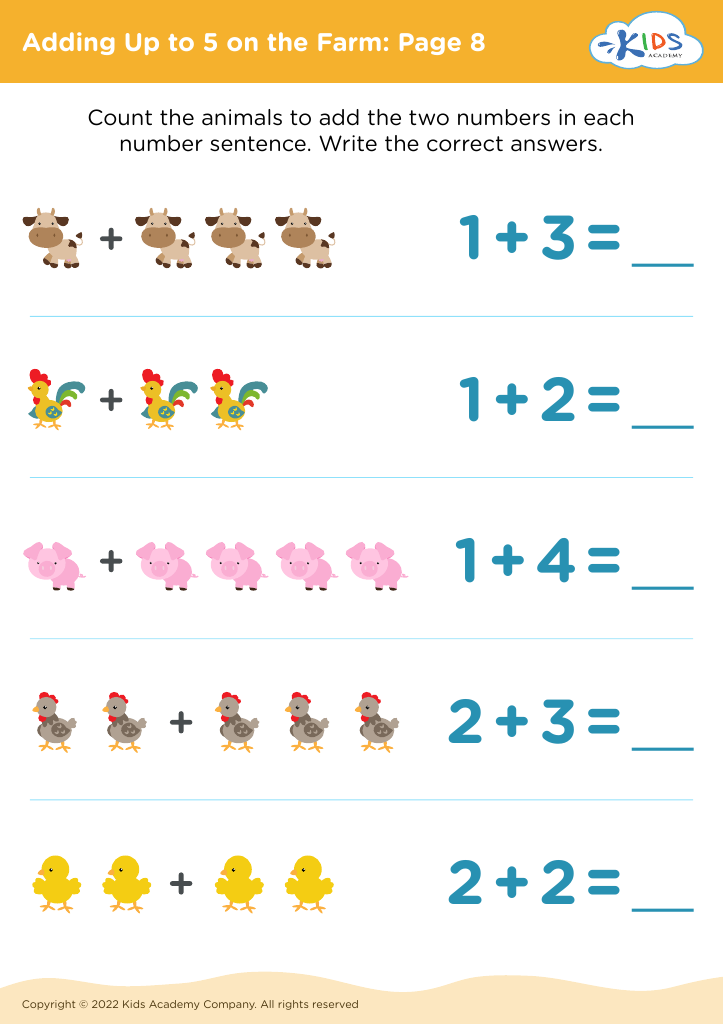
Adding Up to 5 on the Farm: Page 8
Worksheet
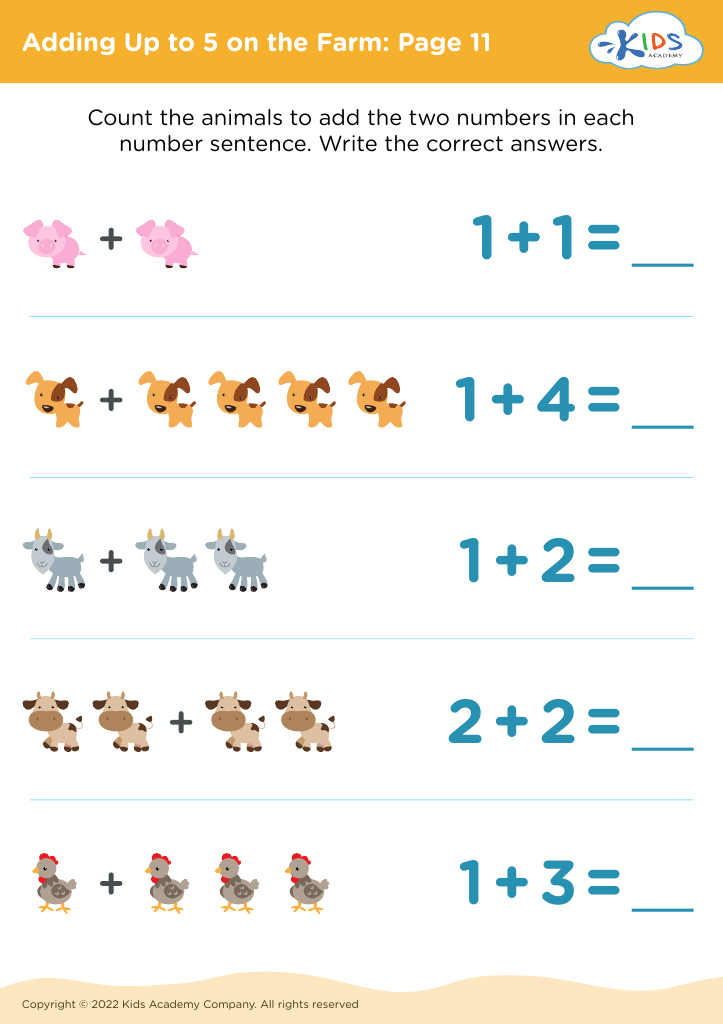
Adding Up to 5 on the Farm: Page 11
Worksheet
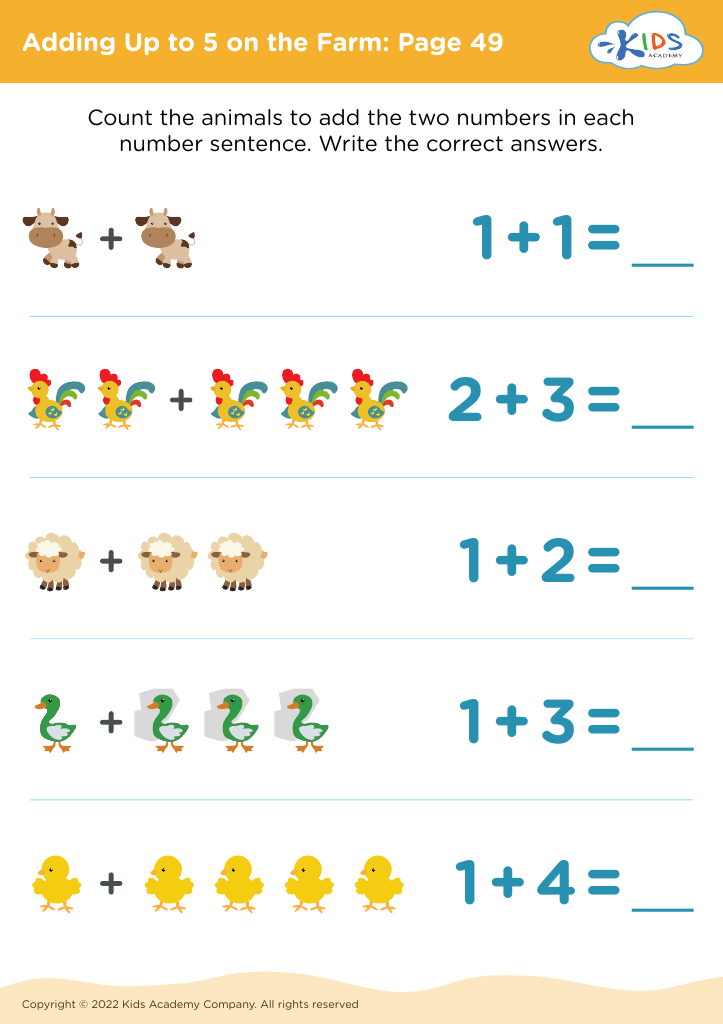
Adding Up to 5 on the Farm: Page 49
Worksheet
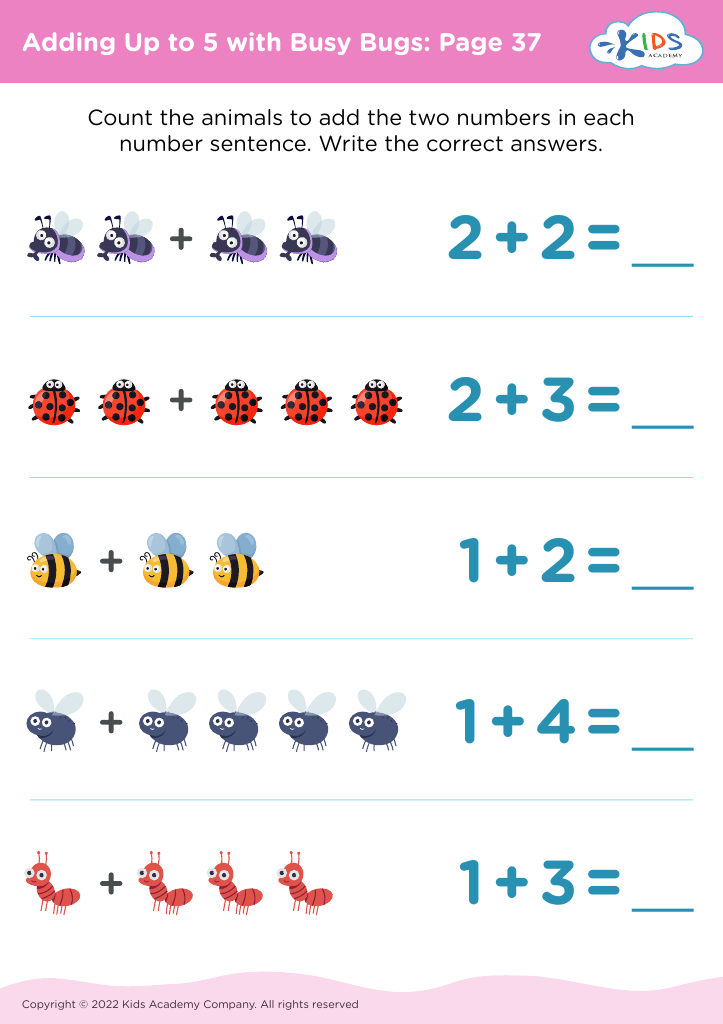
Adding Up to 5 with Busy Bugs: Page 37
Worksheet
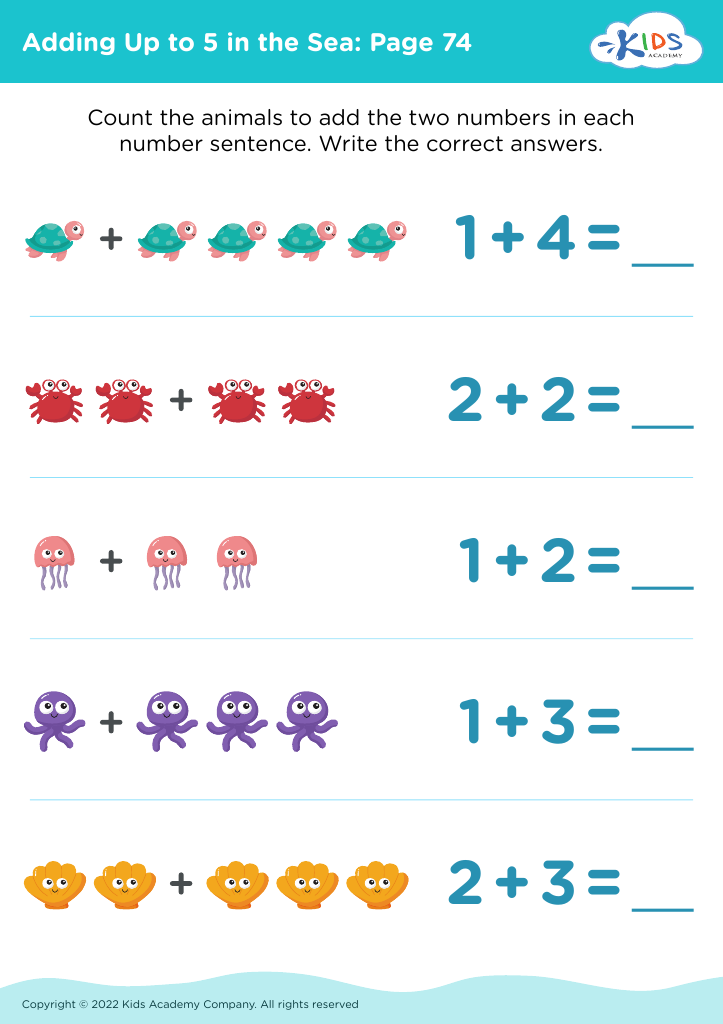
Adding Up to 5 in the Sea: Page 74
Worksheet
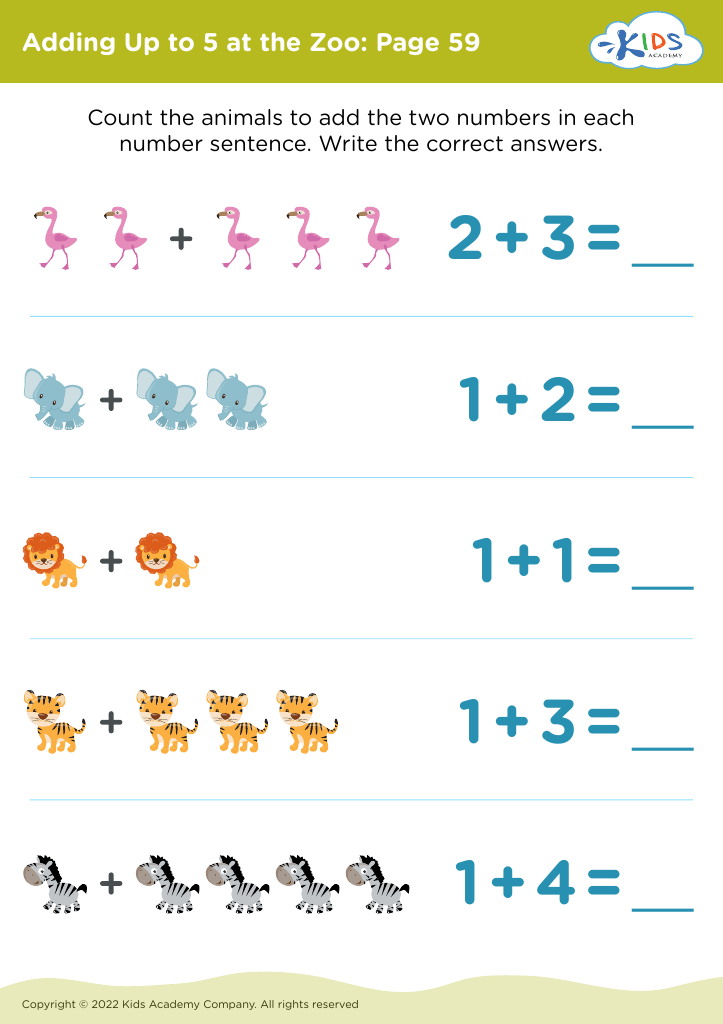
Adding Up to 5 at the Zoo: Page 59
Worksheet
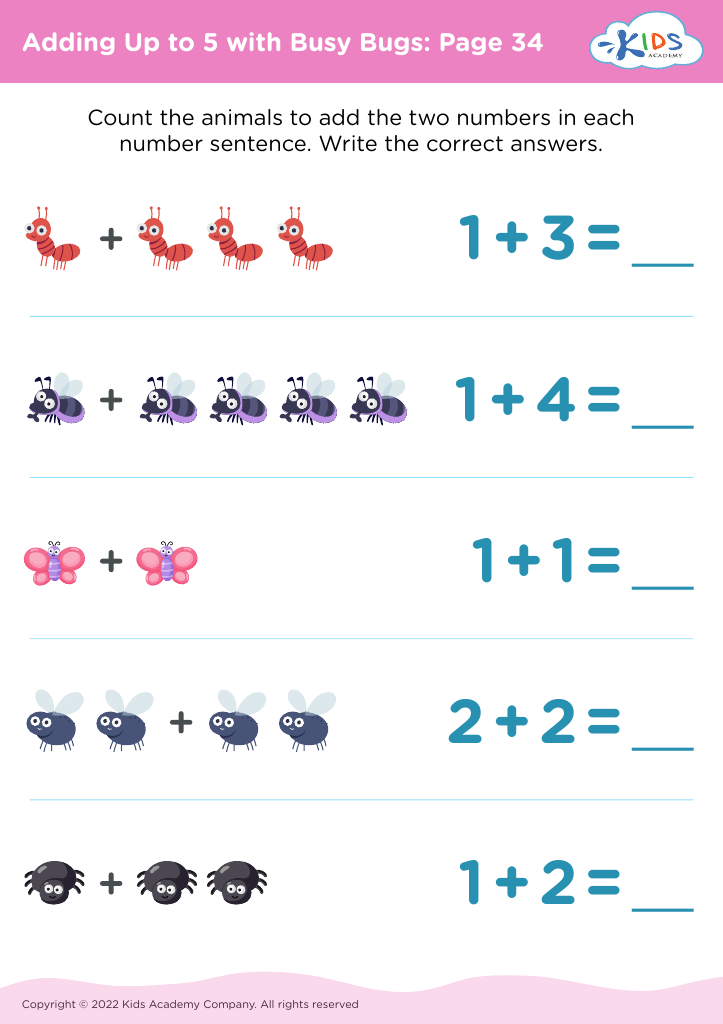
Adding Up to 5 with Busy Bugs: Page 34
Worksheet
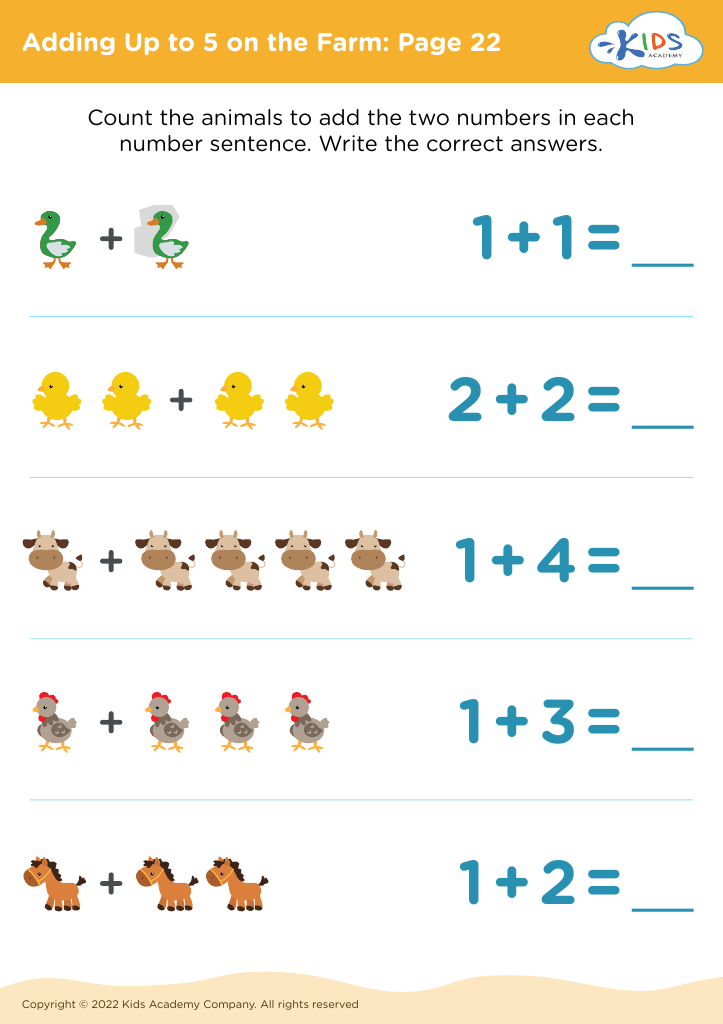
Adding Up to 5 on the Farm: Page 22
Worksheet
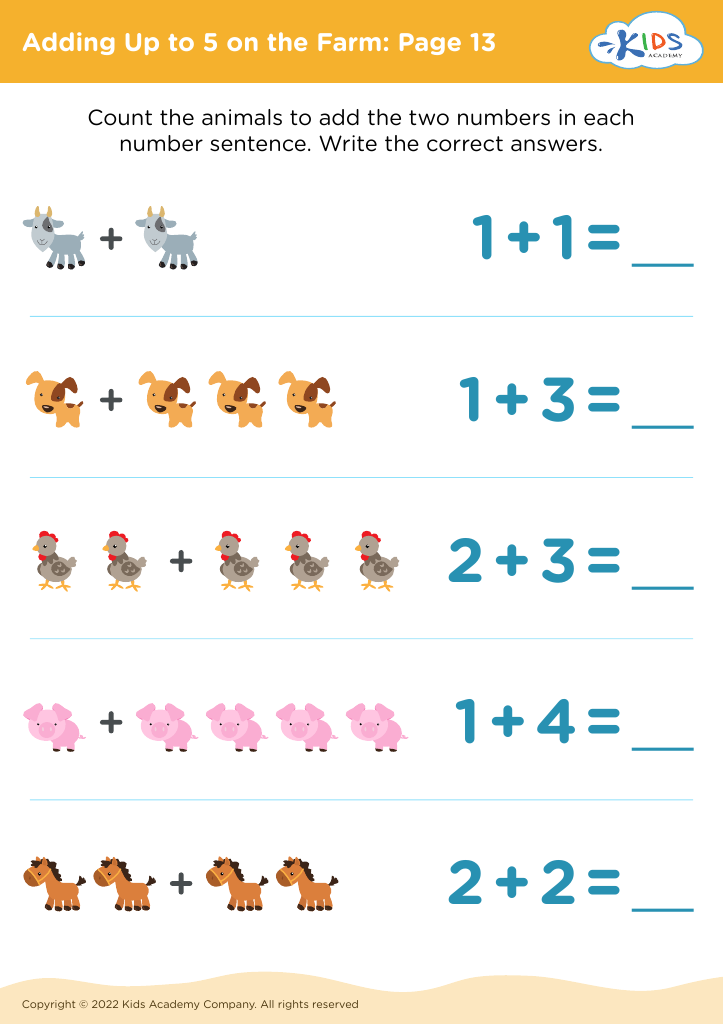
Adding Up to 5 on the Farm: Page 13
Worksheet
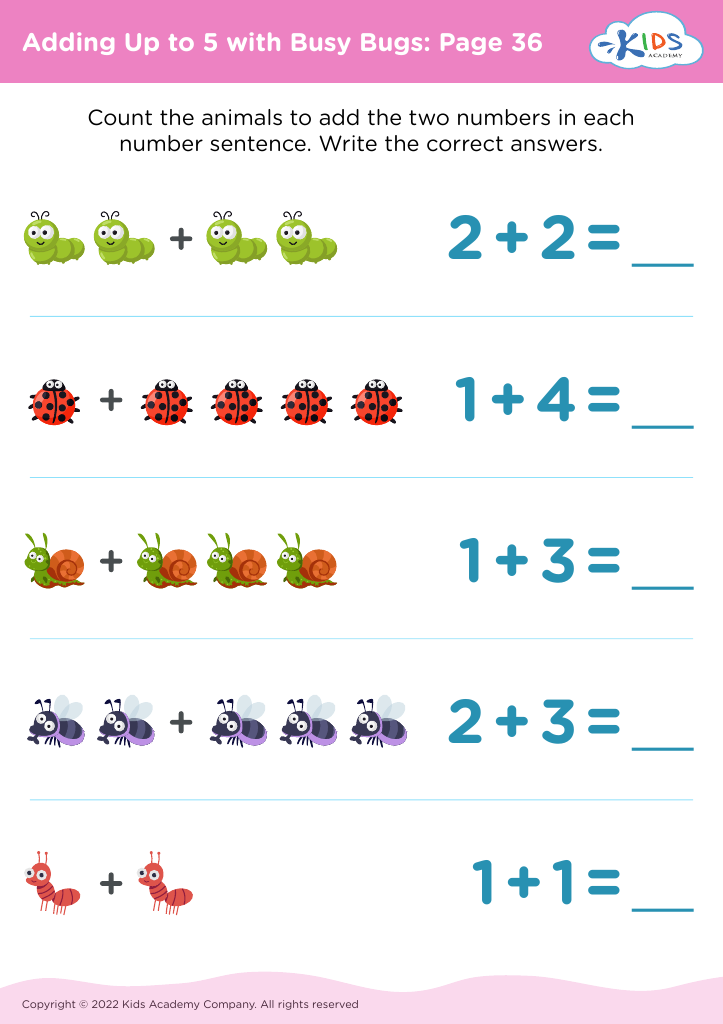
Adding Up to 5 with Busy Bugs: Page 36
Worksheet
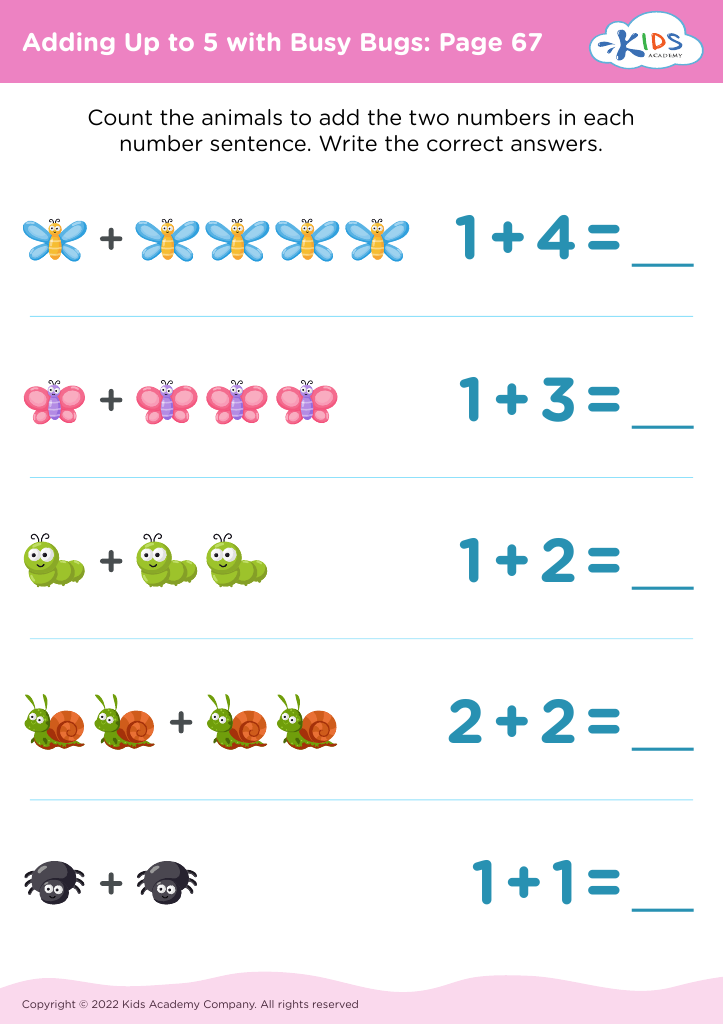
Adding Up to 5 with Busy Bugs: Page 67
Worksheet
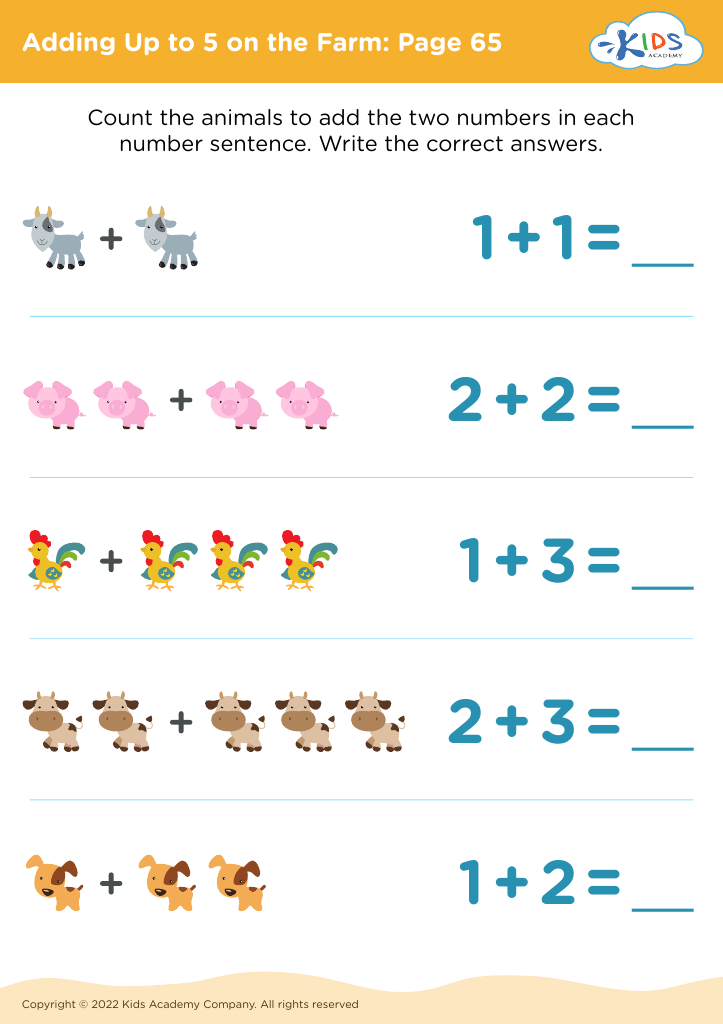
Adding Up to 5 on the Farm: Page 65
Worksheet
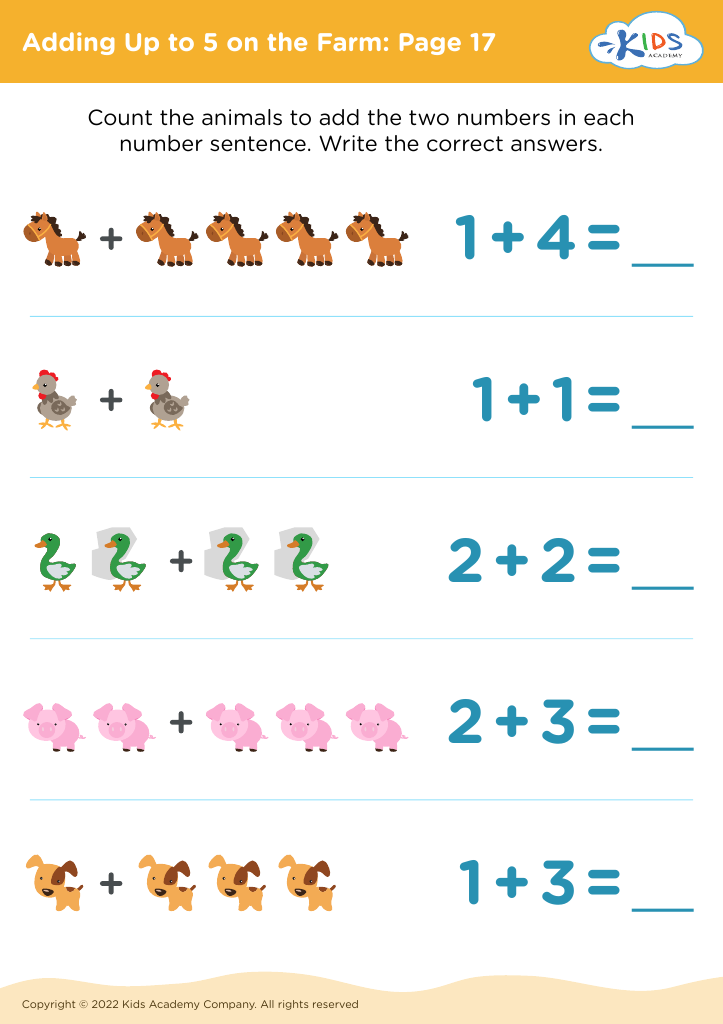
Adding Up to 5 on the Farm: Page 17
Worksheet
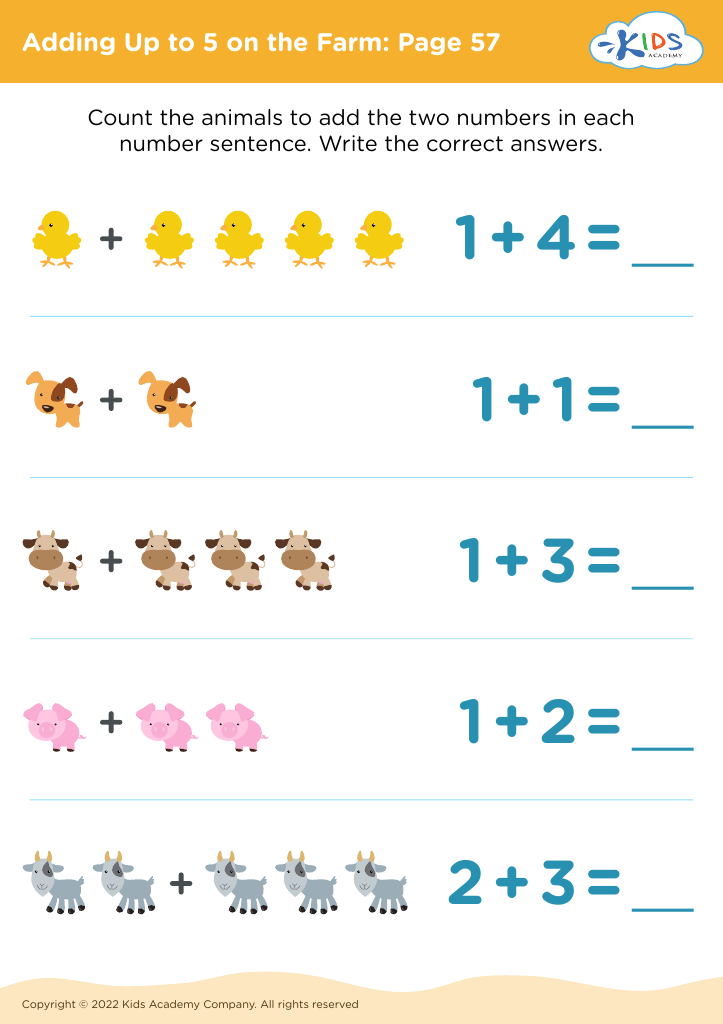
Adding Up to 5 on the Farm: Page 57
Worksheet
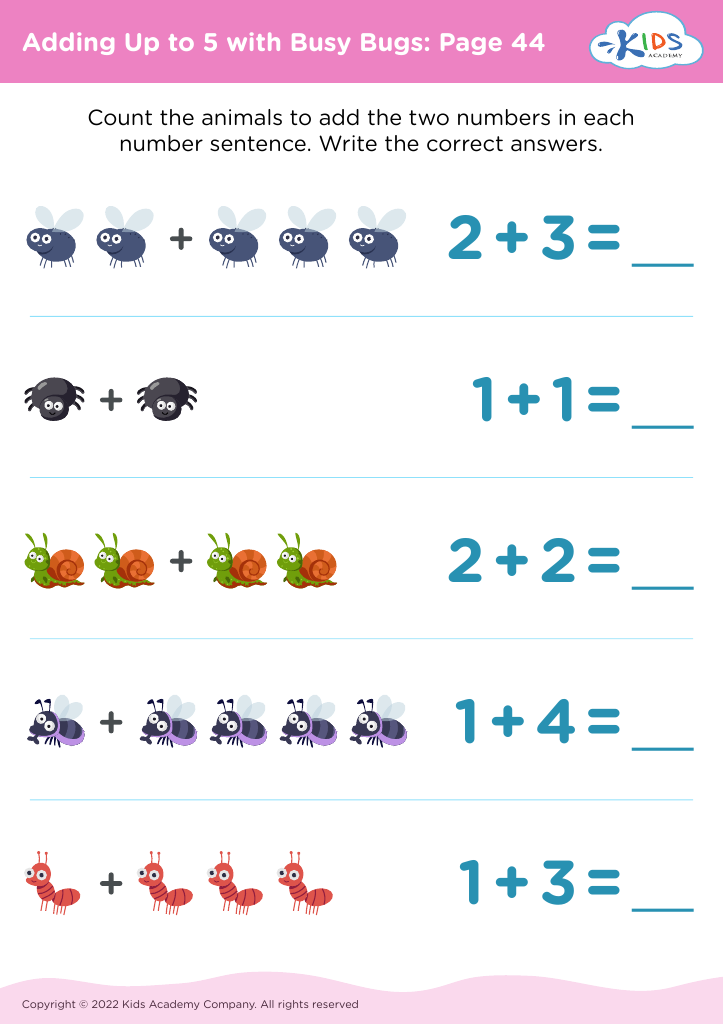
Adding Up to 5 with Busy Bugs: Page 44
Worksheet
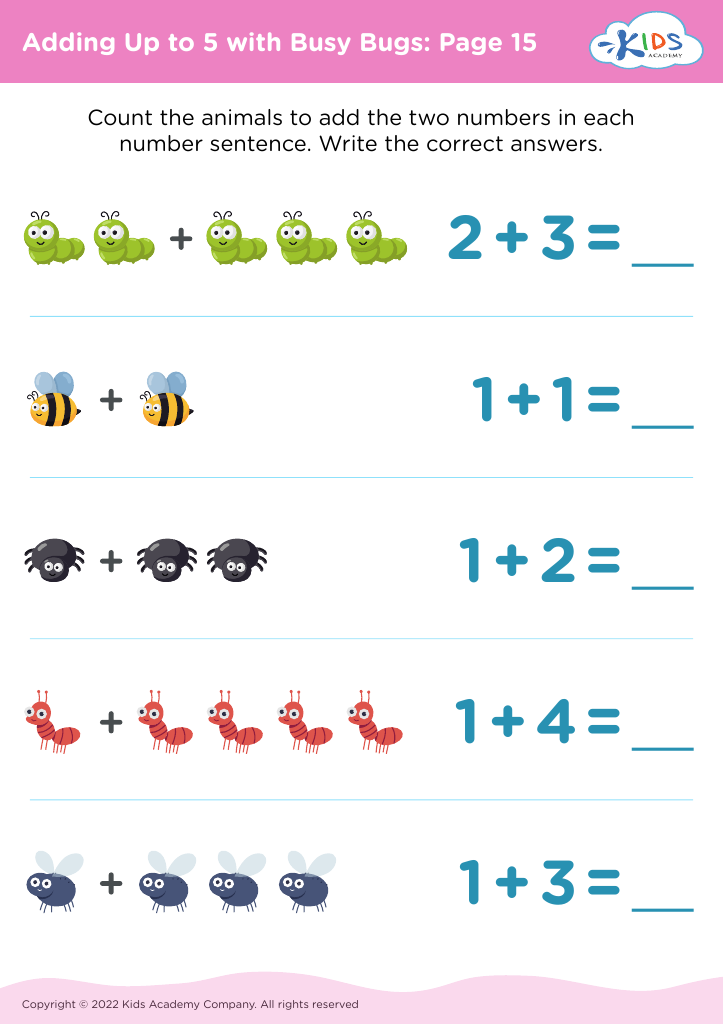
Adding Up to 5 with Busy Bugs: Page 15
Worksheet


Understanding quantity and the concept of adding up to 5 is crucial for early learners, as it serves as the foundation for more advanced mathematical skills. When children grasp the idea of quantity, they begin to make connections between numbers and their practical applications in everyday life. For instance, recognizing that 2 and 3 make a total of 5 illustrates basic addition and lays groundwork for problem-solving skills necessary in future mathematics.

Moreover, learning to add up to 5 develops cognitive skills such as critical thinking and logical reasoning. It helps foster children's ability to categorize, compare, and manipulate numbers. This understanding also aids in cultivating confidence in their mathematical abilities, setting the tone for a positive attitude towards learning math in general.

From a developmental perspective, this stage supports fine motor skills through counting activities, enhancing children's overall coordination. As families or educators engage children in activities that reinforce these concepts, they help promote a strong number sense, which is vital for success in subsequent learning phases. Encouraging support within the school and home environments can produce lasting benefits in a child's academic journey, fostering a love for learning and empowering them as capable problem solvers.