Filters

14 filtered results

Clear all filters
Favorites
With answer key
Interactive

14 filtered results

Difficulty Level

Grade


Subject

    Welcome to our comprehensive collection of "Number Recognition Adding up to 50 with Regrouping Worksheets"! Designed to boost early math skills, these worksheets help young learners master the art of adding numbers up to 50 while reinforcing number recognition. Through engaging exercises and colorful visuals, students will practice attentive counting, accurate addition, and essential regrouping strategies. Perfect for both classroom and home use, this resource ensures that kids build a strong foundation in basic arithmetic. Ideal for teachers, parents, and tutors seeking effective tools to enhance children's numeric fluency and confidence in math. Start the journey towards math mastery today!
    Check out this FREE Trial Lesson on Adding up to 50 with Regrouping!

    T

    Favorites
    With answer key
    Interactive
    • Number Recognition
    • Adding up to 50 with Regrouping
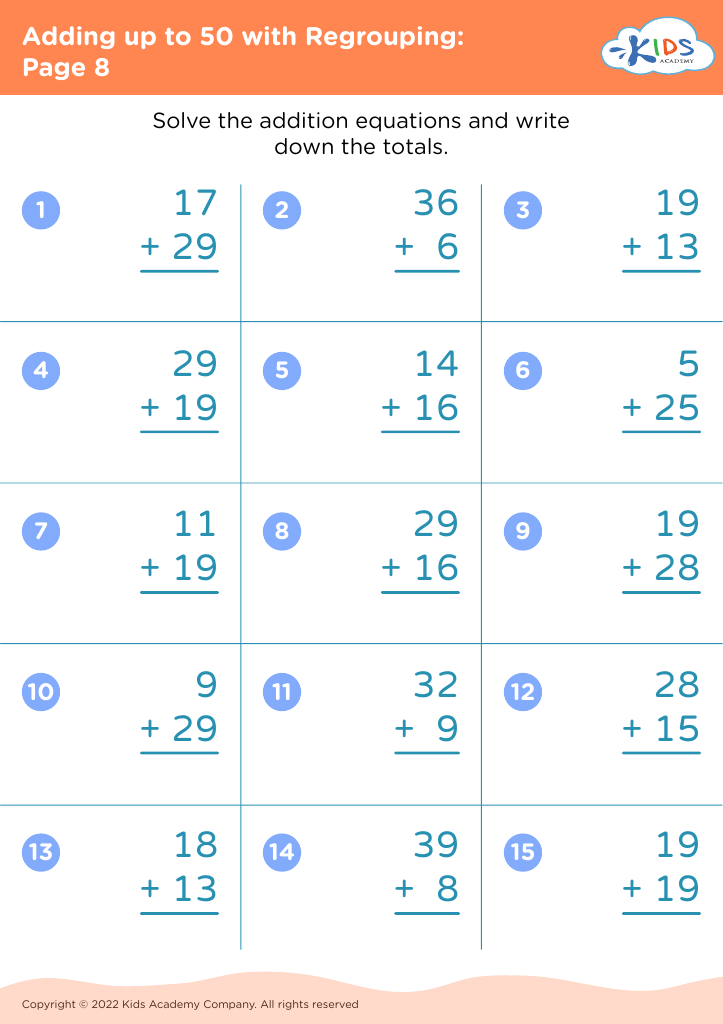
    Adding up to 50 with Regrouping: Page 8
    Adding up to 50 with Regrouping: Page 8
    Adding up to 50 with Regrouping: Page 8
    Worksheet
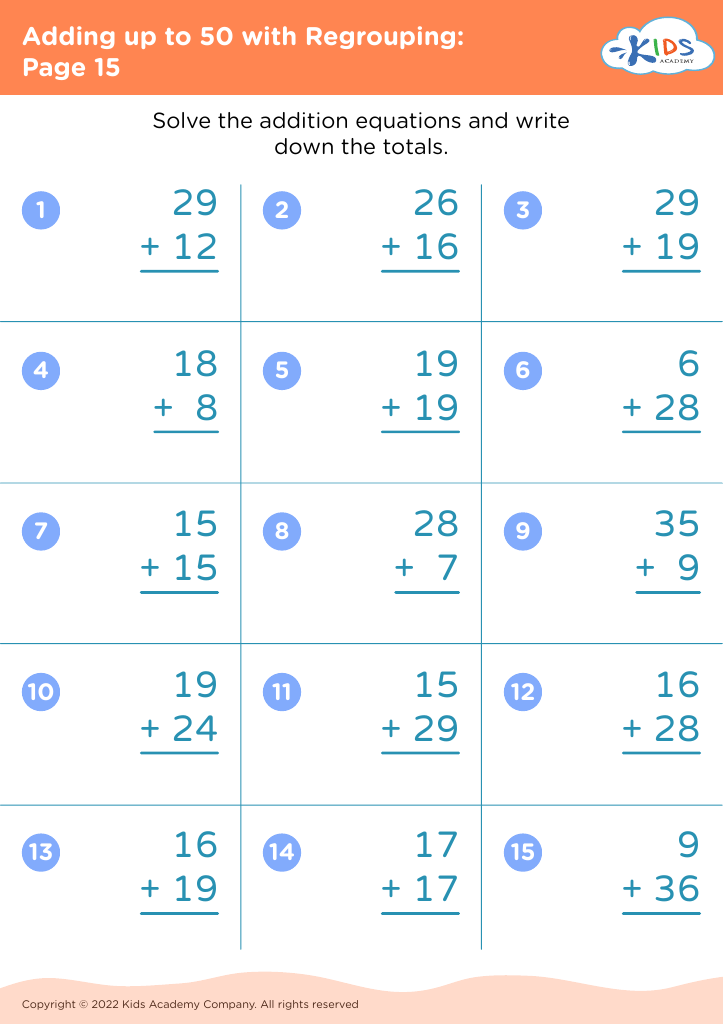
    Adding up to 50 with Regrouping: Page 15
    Adding up to 50 with Regrouping: Page 15
    Adding up to 50 with Regrouping: Page 15
    Worksheet
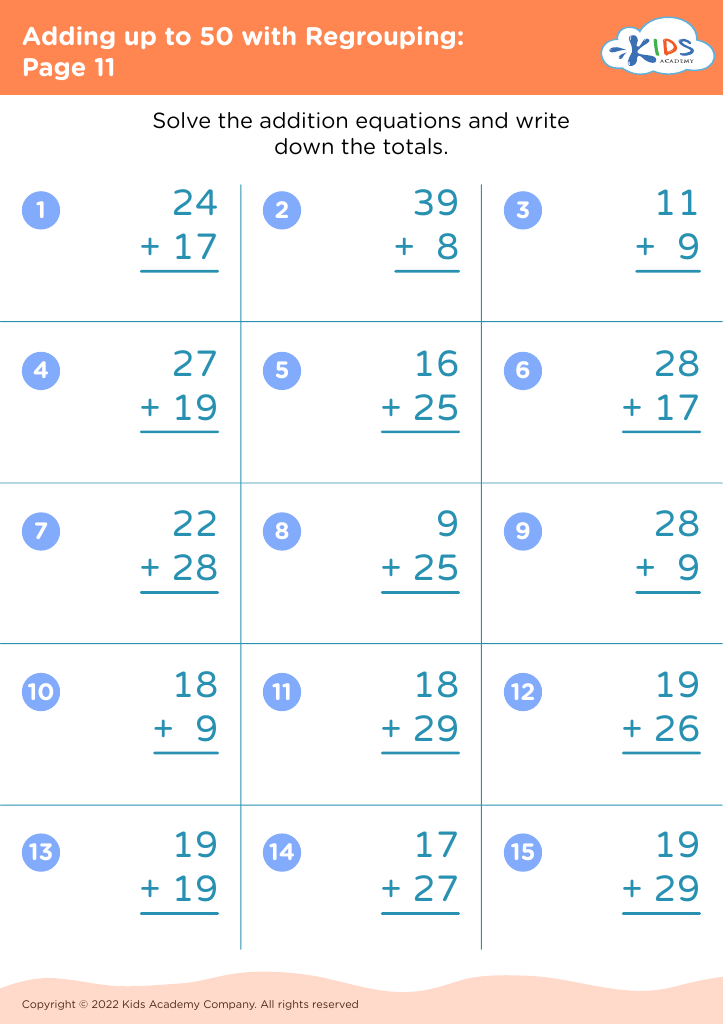
    Adding up to 50 with Regrouping: Page 11
    Adding up to 50 with Regrouping: Page 11
    Adding up to 50 with Regrouping: Page 11
    Worksheet
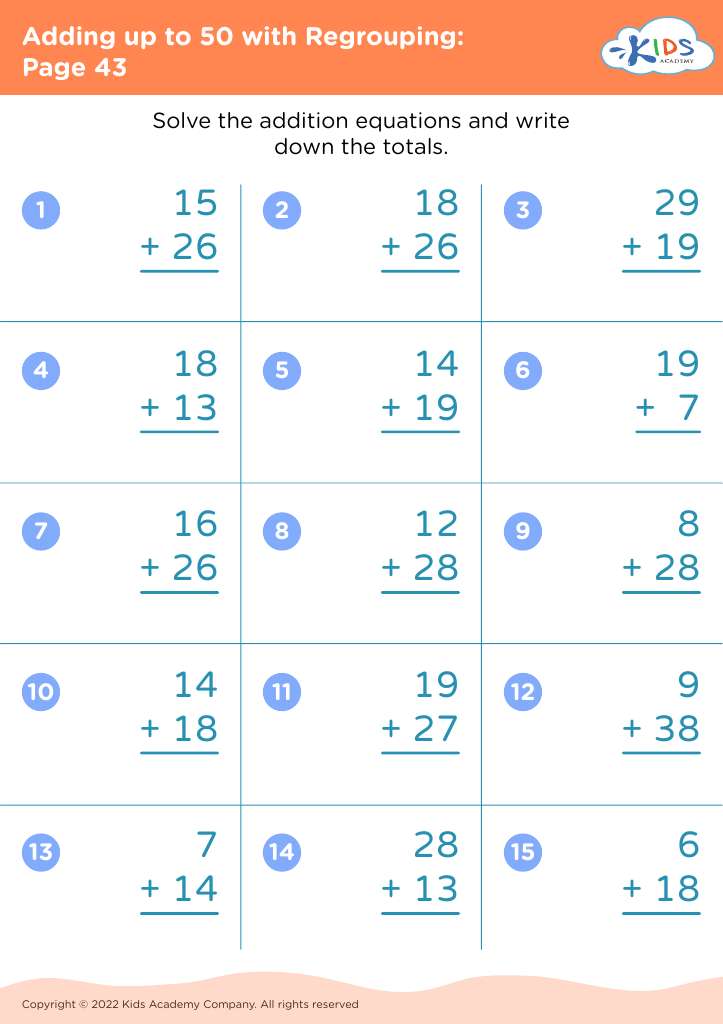
    Adding up to 50 with Regrouping: Page 43
    Adding up to 50 with Regrouping: Page 43
    Adding up to 50 with Regrouping: Page 43
    Worksheet
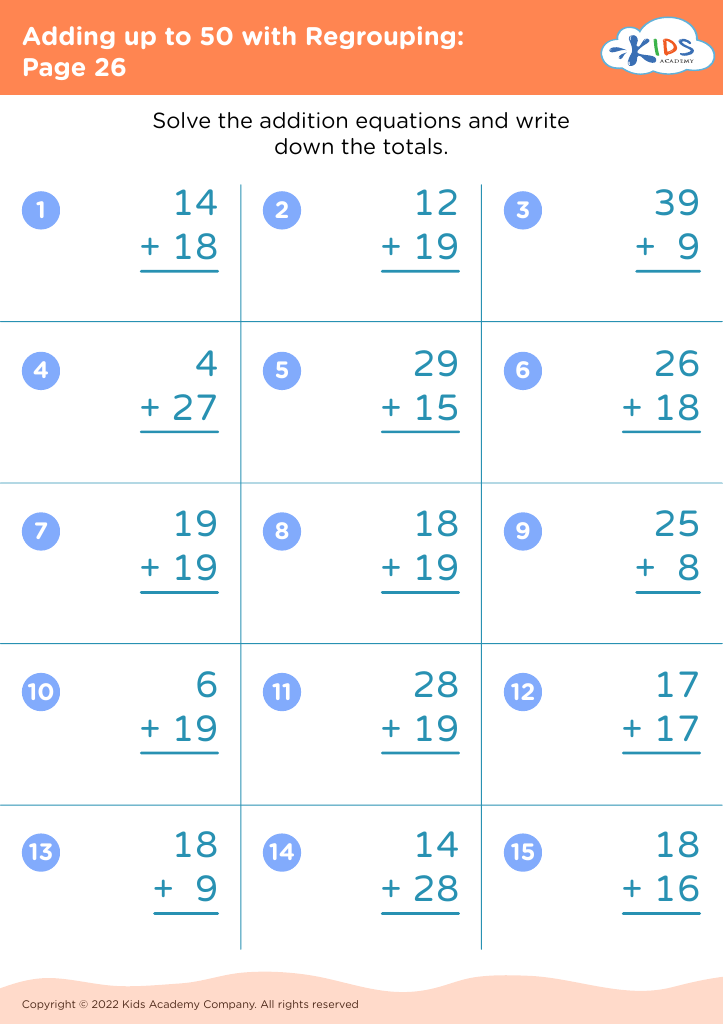
    Adding up to 50 with Regrouping: Page 26
    Adding up to 50 with Regrouping: Page 26
    Adding up to 50 with Regrouping: Page 26
    Worksheet
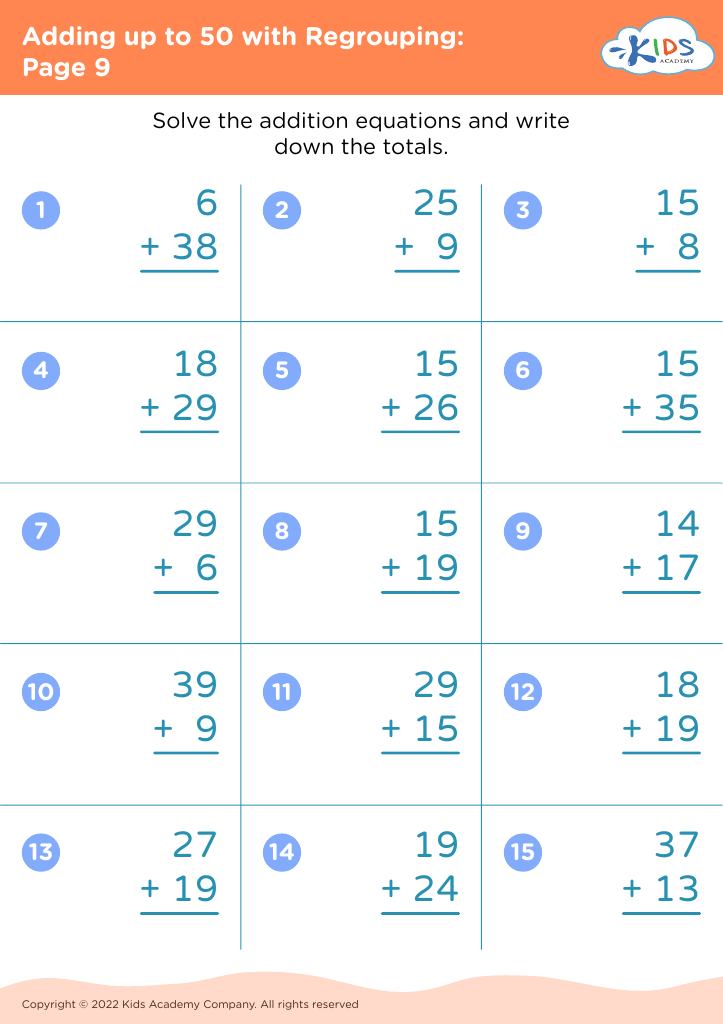
    Adding up to 50 with Regrouping: Page 9
    Adding up to 50 with Regrouping: Page 9
    Adding up to 50 with Regrouping: Page 9
    Worksheet
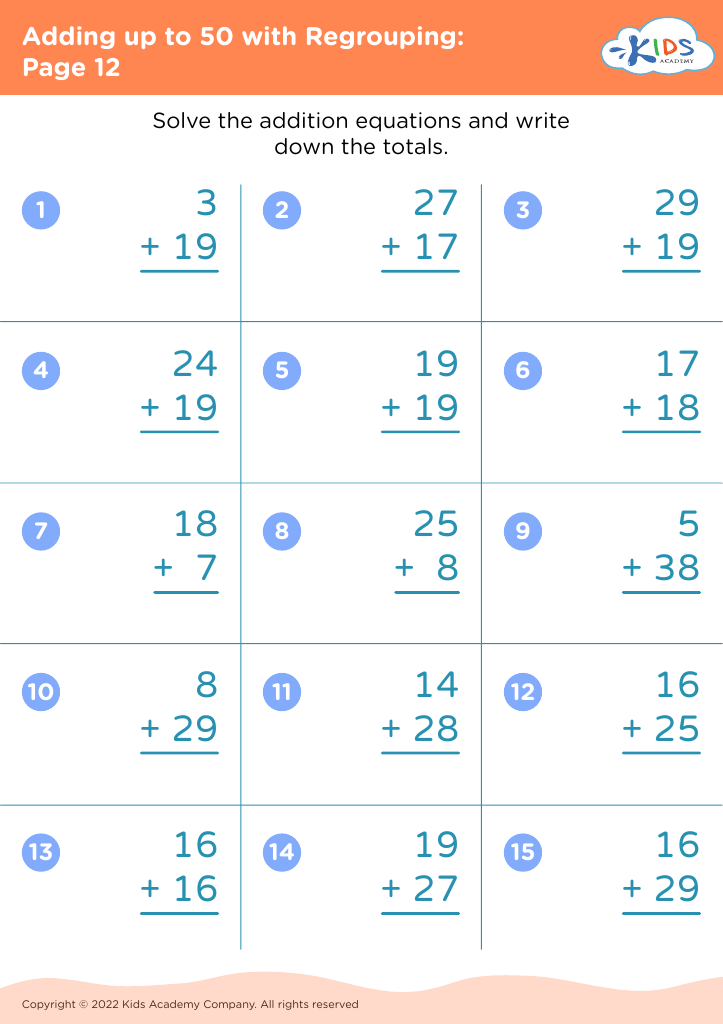
    Adding up to 50 with Regrouping: Page 12
    Adding up to 50 with Regrouping: Page 12
    Adding up to 50 with Regrouping: Page 12
    Worksheet
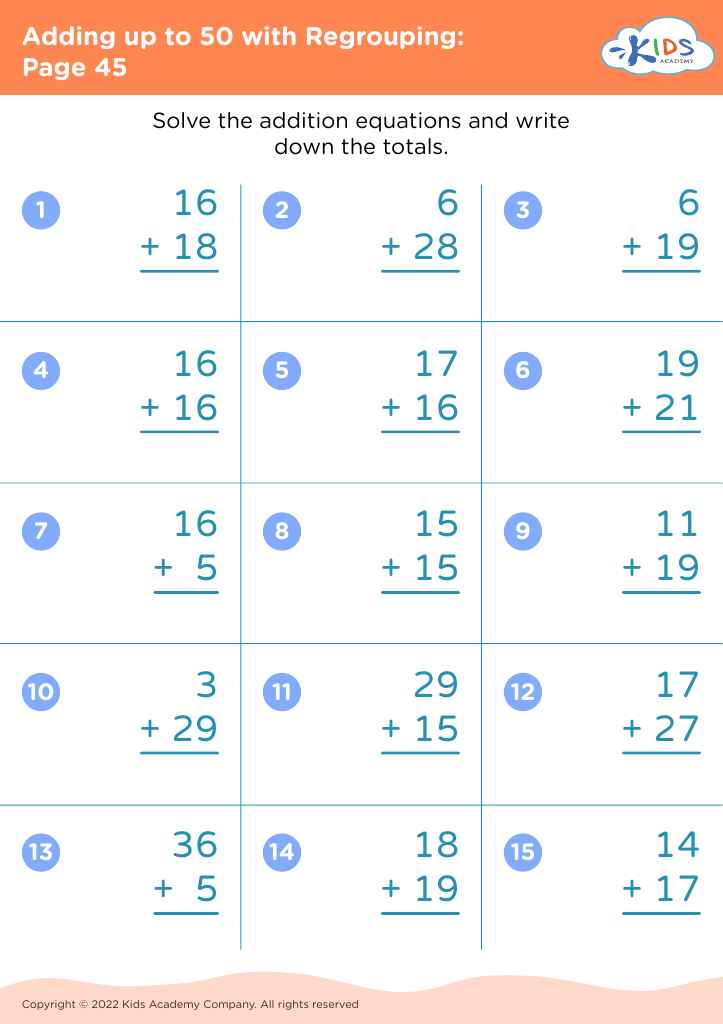
    Adding up to 50 with Regrouping: Page 45
    Adding up to 50 with Regrouping: Page 45
    Adding up to 50 with Regrouping: Page 45
    Worksheet
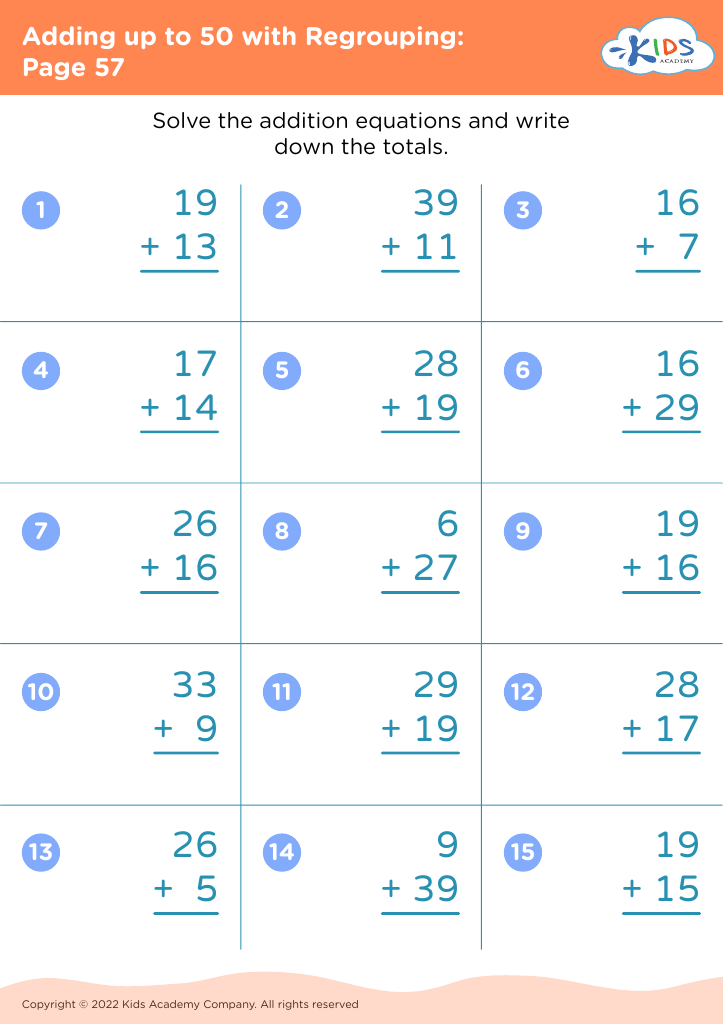
    Adding up to 50 with Regrouping: Page 57
    Adding up to 50 with Regrouping: Page 57
    Adding up to 50 with Regrouping: Page 57
    Worksheet
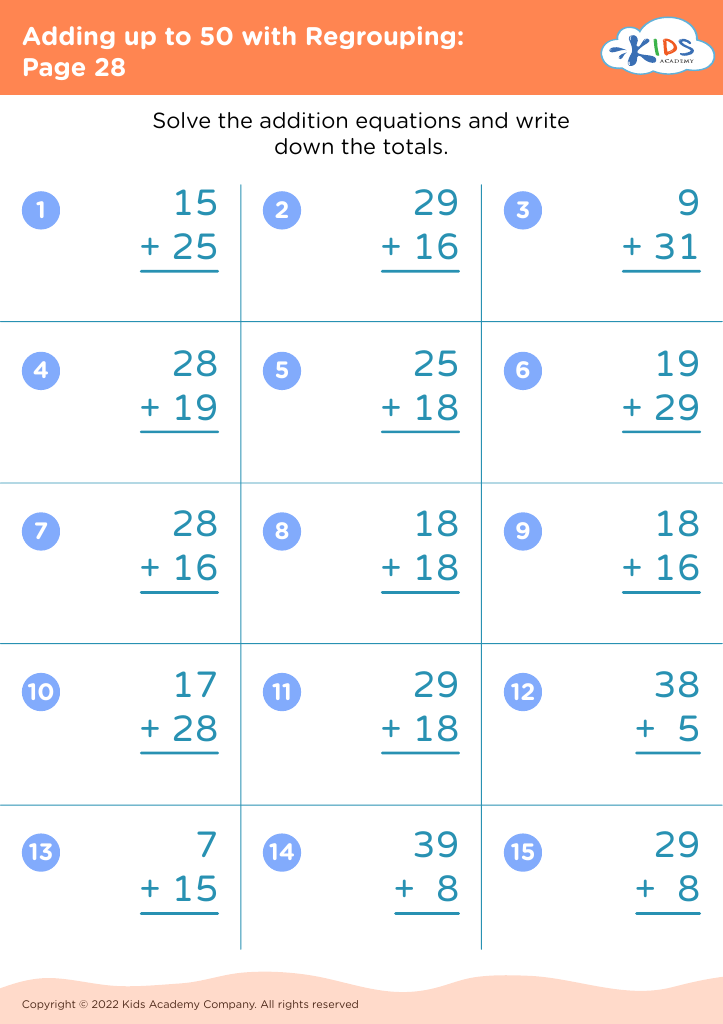
    Adding up to 50 with Regrouping: Page 28
    Adding up to 50 with Regrouping: Page 28
    Adding up to 50 with Regrouping: Page 28
    Worksheet
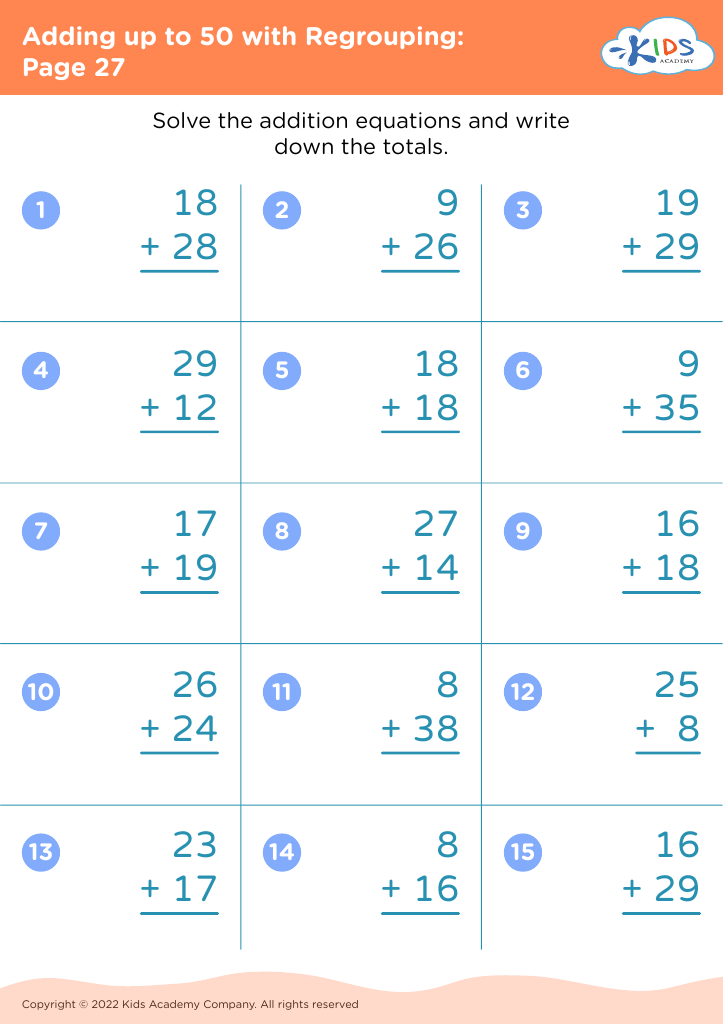
    Adding up to 50 with Regrouping: Page 27
    Adding up to 50 with Regrouping: Page 27
    Adding up to 50 with Regrouping: Page 27
    Worksheet
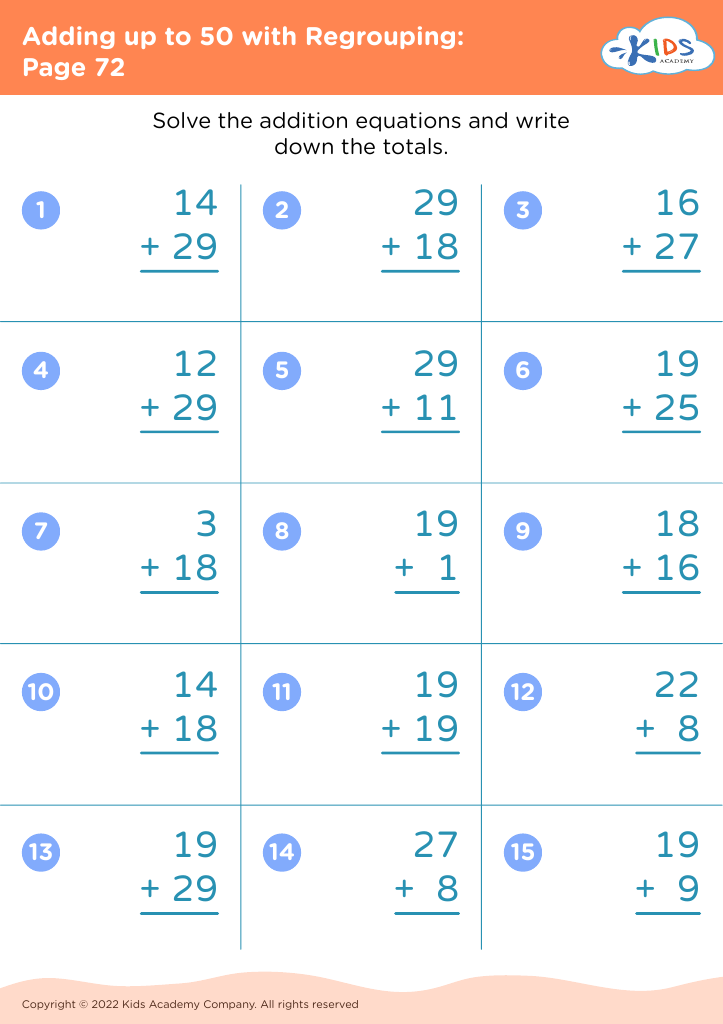
    Adding up to 50 with Regrouping: Page 72
    Adding up to 50 with Regrouping: Page 72
    Adding up to 50 with Regrouping: Page 72
    Worksheet
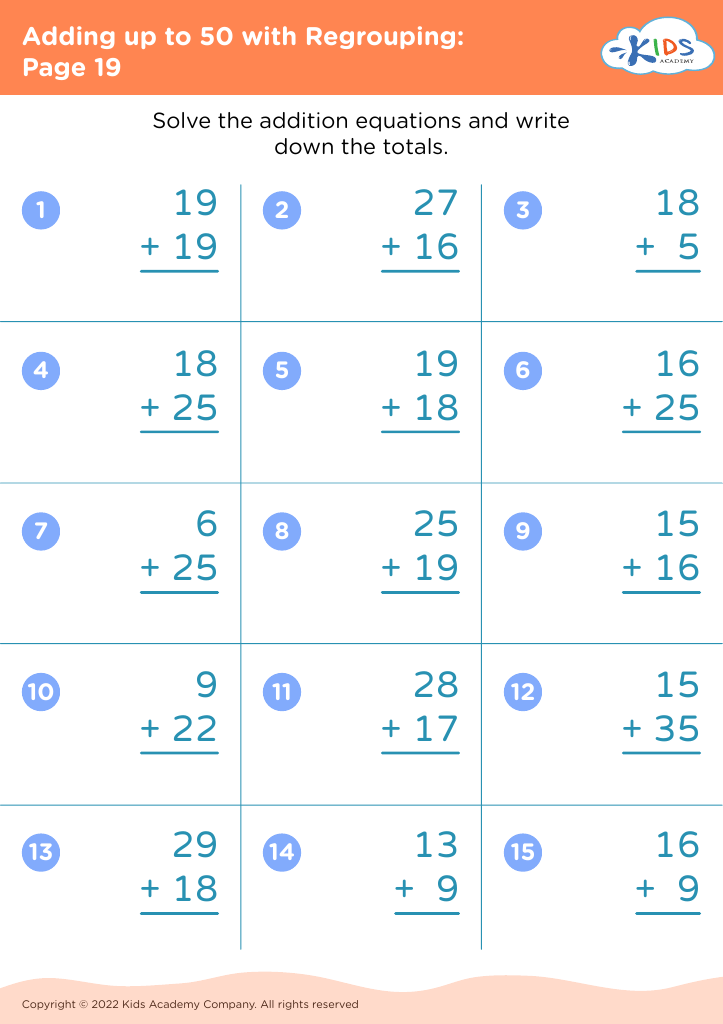
    Adding up to 50 with Regrouping: Page 19
    Adding up to 50 with Regrouping: Page 19
    Adding up to 50 with Regrouping: Page 19
    Worksheet
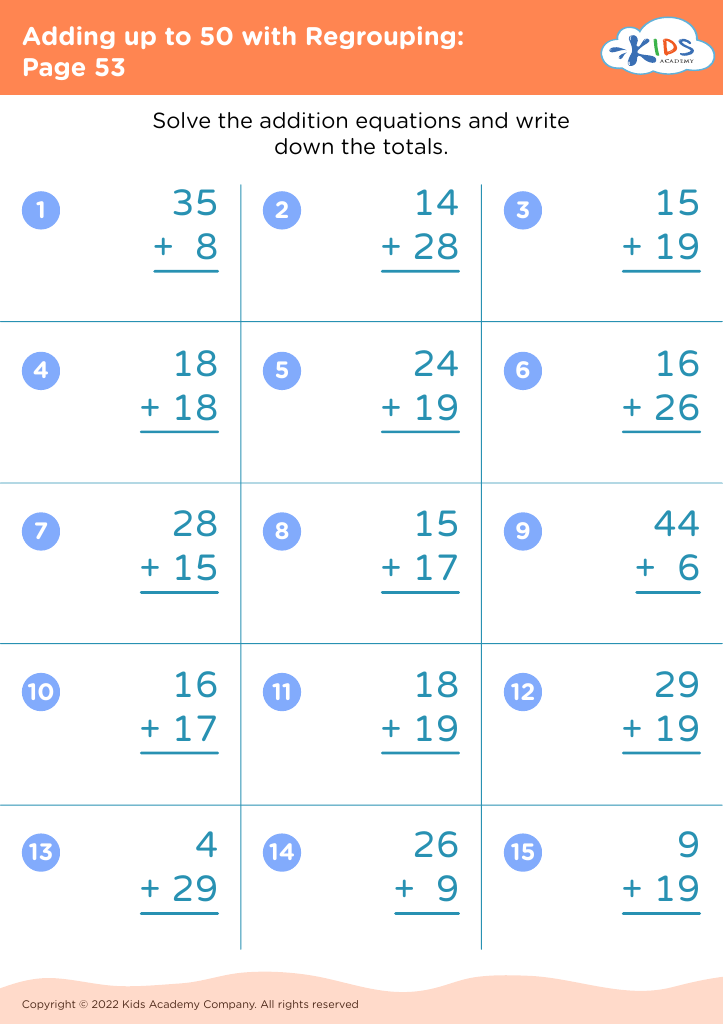
    Adding up to 50 with Regrouping: Page 53
    Adding up to 50 with Regrouping: Page 53
    Adding up to 50 with Regrouping: Page 53
    Worksheet


    Understanding number recognition and the ability to add up to 50 with regrouping is fundamental for young children’s mathematical development. Number recognition is the ability to accurately identify and name numbers, which is crucial for everyday tasks and builds a strong foundation for more advanced math concepts. Failure to recognize numbers early on can impact a child's confidence and competence in math, leading to difficulties in school and potentially in life skills like managing finances.

    Adding with regrouping teaches children important numerical relationships and operations, enhancing their comprehension of base-ten systems. Regrouping, also known as carrying, requires a child to shift focus from simple addition to understanding how numbers interrelate, particularly how ten units can form one ten. This process deepens their comprehension of place value—where each digit’s position in a number determines its value.

    For both parents and teachers, emphasizing these skills is crucial. It promotes logical thinking, precision, and problem-solving abilities. Engaging in regular practice helps solidify these basic skills, setting a foundation for future success not only in mathematics but also in critical thinking and analytical areas. Early mastery in these critical concepts equips children with the tools for enhanced academic performance and everyday decision-making.