Develop critical thinking Adding up to 50 Worksheets
3 filtered results
-
From - To
Enhance your child’s problem-solving abilities with our "Develop Critical Thinking Adding up to 50 Worksheets." Perfect for young learners, these engaging and interactive math exercises promote critical thinking while practicing addition within 50. Each worksheet features a variety of witty problems designed to challenge and excite young minds, fostering analytical thinking and improving numerical skills. Boost your child's confidence and academic performance through fun, thought-provoking activities that turn math practice into a rewarding experience. Download now and join countless parents and educators who trust Kids Academy to support their child's educational journey.
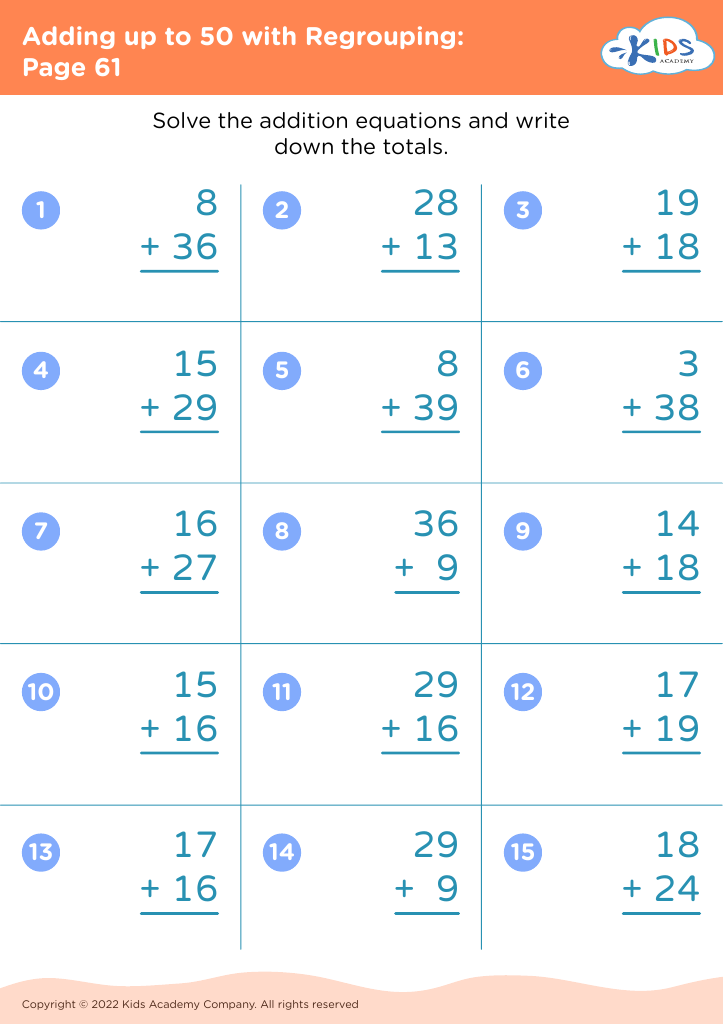
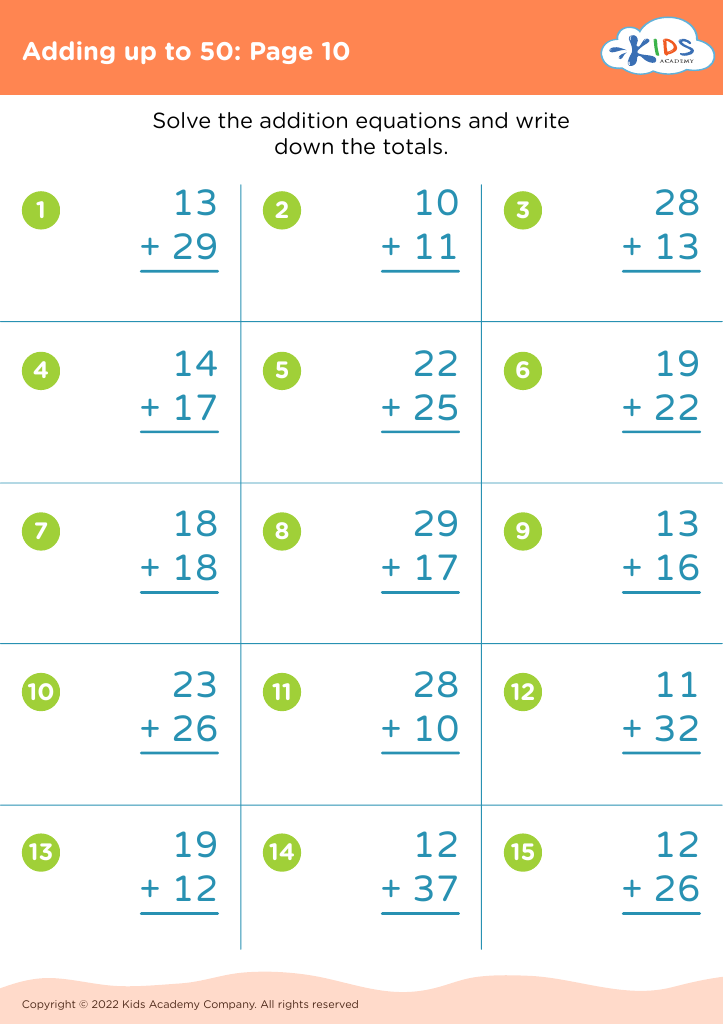
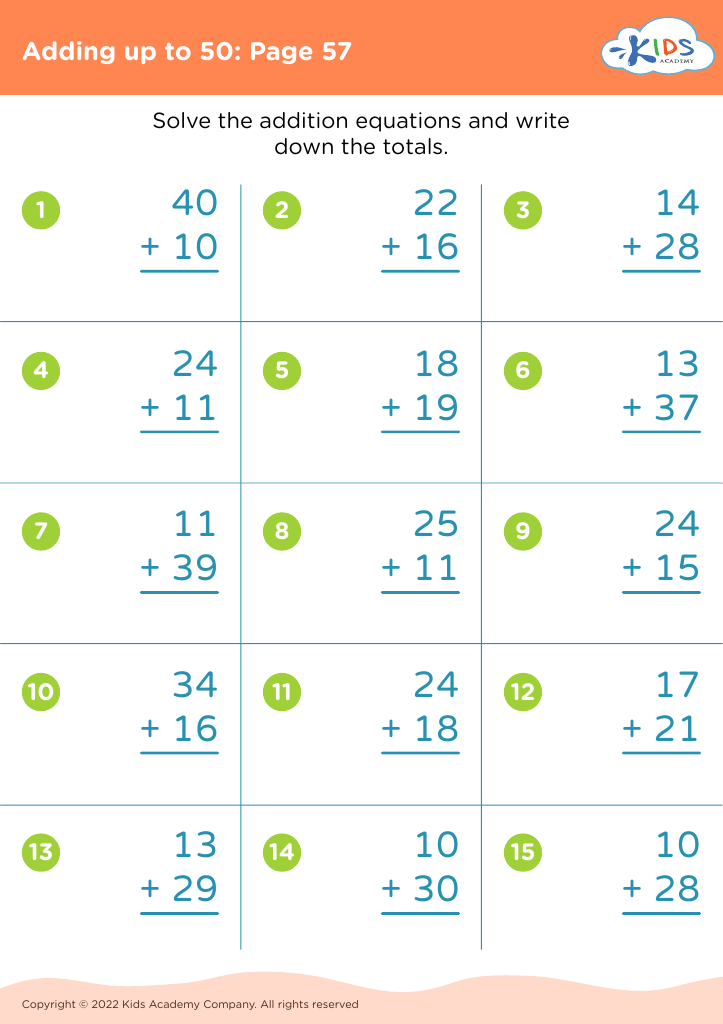




Parents and teachers should prioritize developing critical thinking in children, especially when adding numbers up to 50, as it builds the foundational skills necessary for their academic and personal growth. Critical thinking involves analyzing information, solving problems, making informed decisions, and reasoning logically—all of which are vital in mathematics and real-life situations.
When children learn to add numbers up to 50 through critical thinking, they go beyond rote memorization. They understand the 'why' and 'how' behind the mathematical processes, which deepens their comprehension and boosts their confidence. This method promotes mental flexibility, allowing kids to approach a problem from different angles, fostering creativity and adaptability.
Furthermore, early exposure to critical thinking aids in developing lifelong learning habits. Children equipped with these skills are better able to tackle complex challenges, make well-reasoned decisions, and adapt to new situations across various subjects. Parents and teachers who encourage this approach nurture curious, independent, and resilient learners.
In essence, focusing on critical thinking when teaching addition enhances cognitive abilities, encourages independent problem-solving, and prepares children for future academic endeavors and everyday challenges. It’s an investment that yields lasting benefits, ensuring children develop into thoughtful, capable individuals.








