Recognizing Patterns Adding up to 50 Worksheets
7 filtered results
-
From - To
Discover our "Recognizing Patterns Adding Up to 50 Worksheets" crafted for early grade learners! These engaging and hands-on worksheets are designed to help young students identify and understand numerical patterns while enhancing their addition skills up to 50. Through interactive exercises, children will explore sequences, visualize patterns, and develop critical thinking abilities essential for mastering math concepts. Our worksheets are perfect for both classroom and home learning environments, promoting independent practice alongside fun learning experiences. Empower your child to build a strong mathematical foundation with our user-friendly resources that make recognizing patterns an enjoyable adventure!
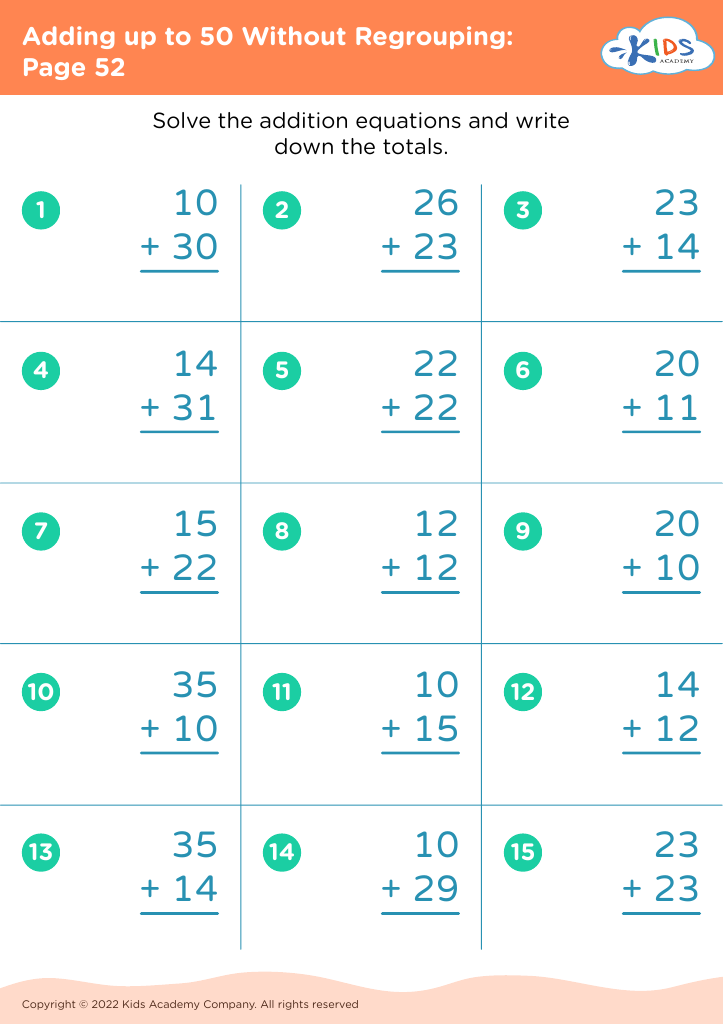
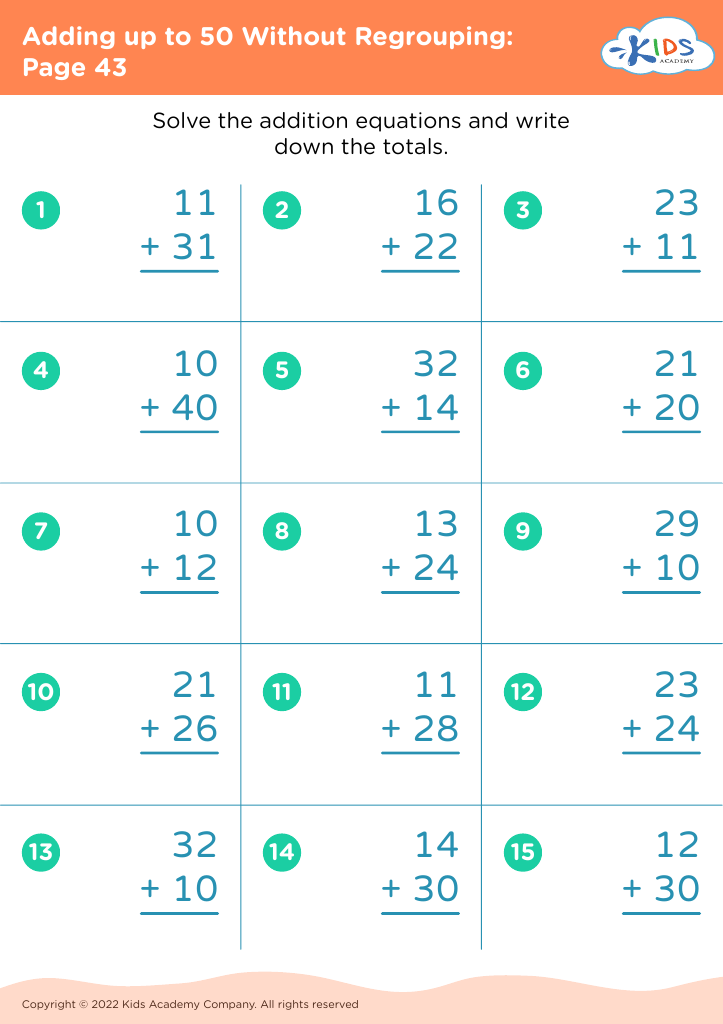
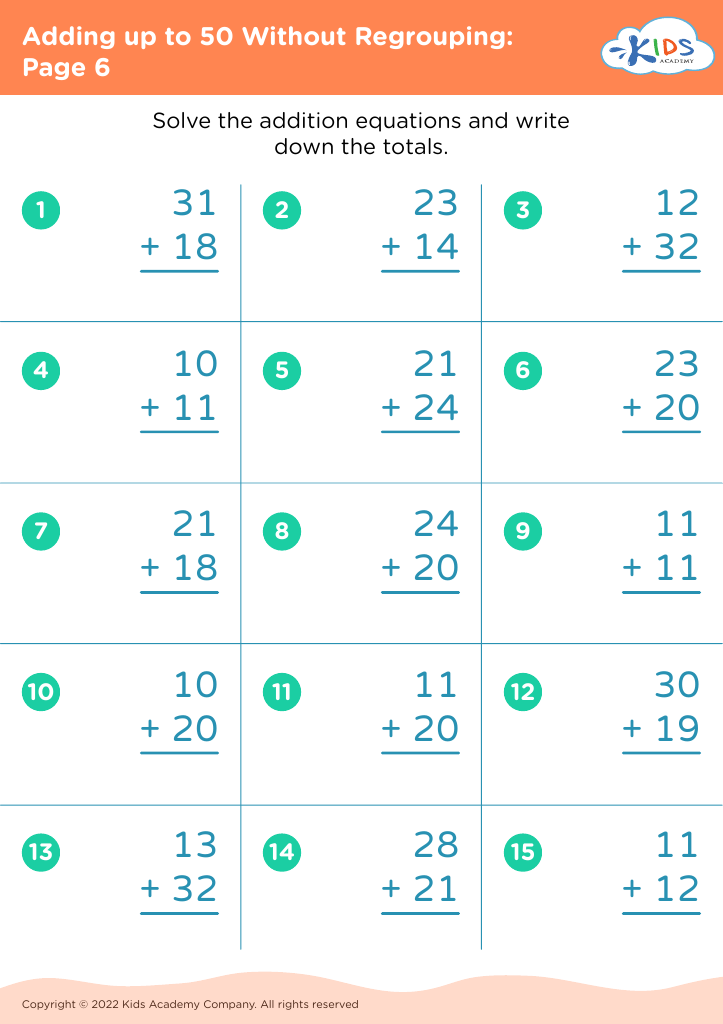
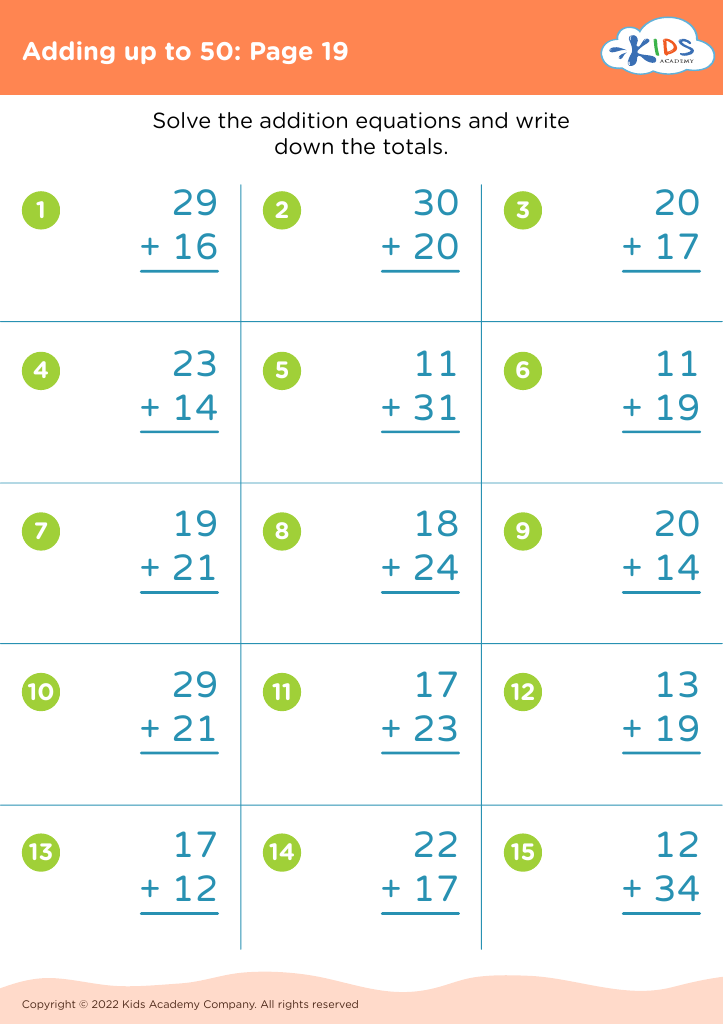
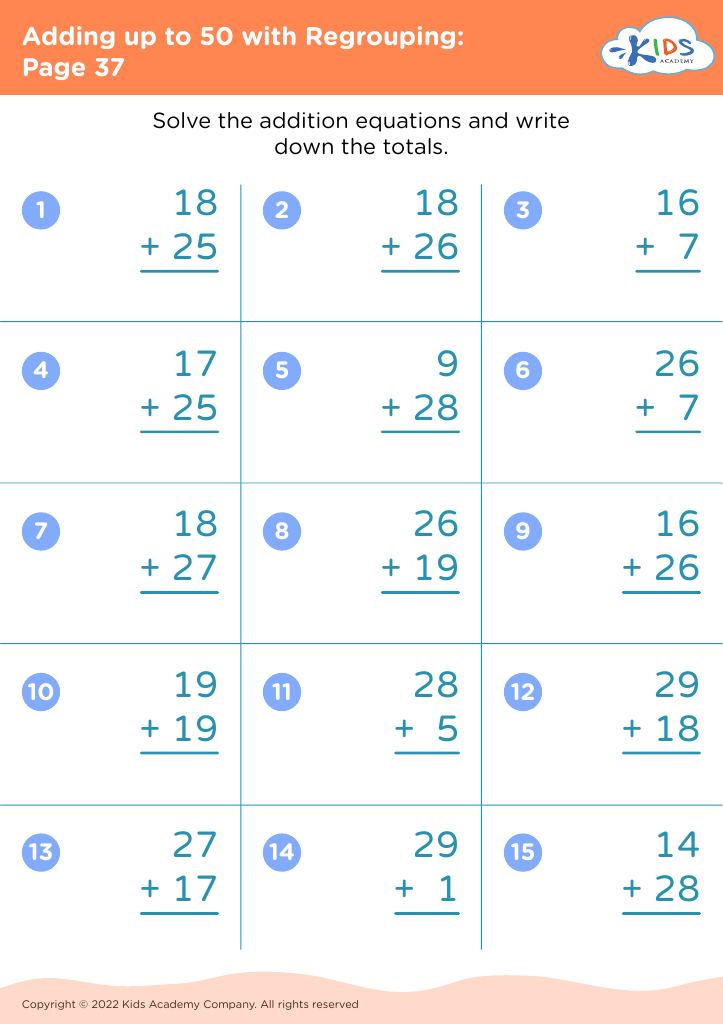
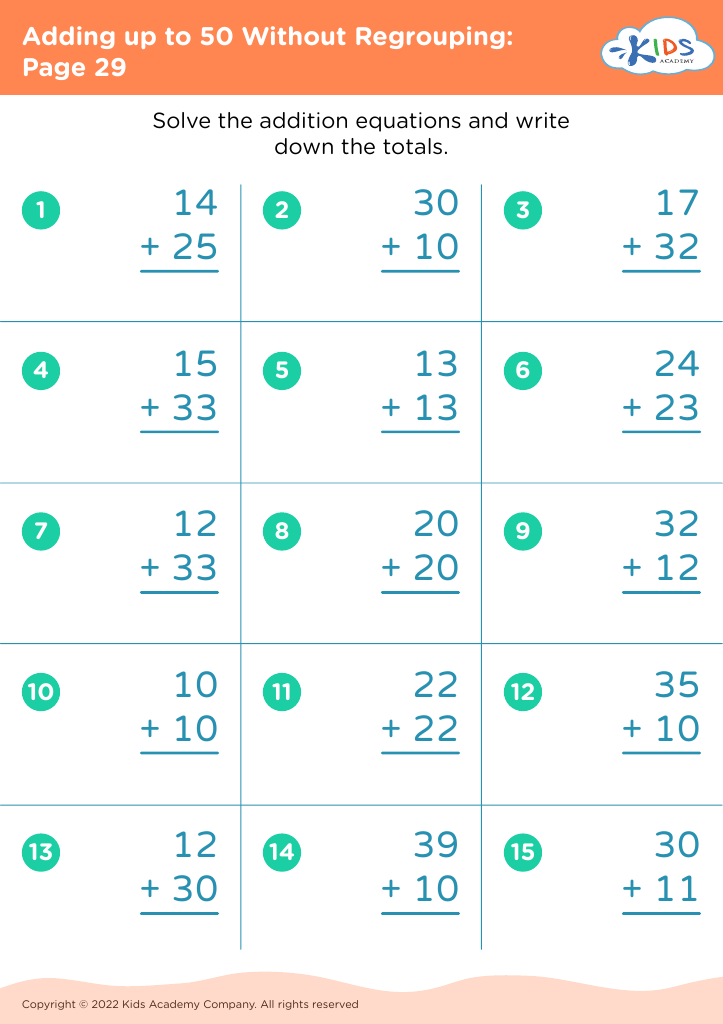
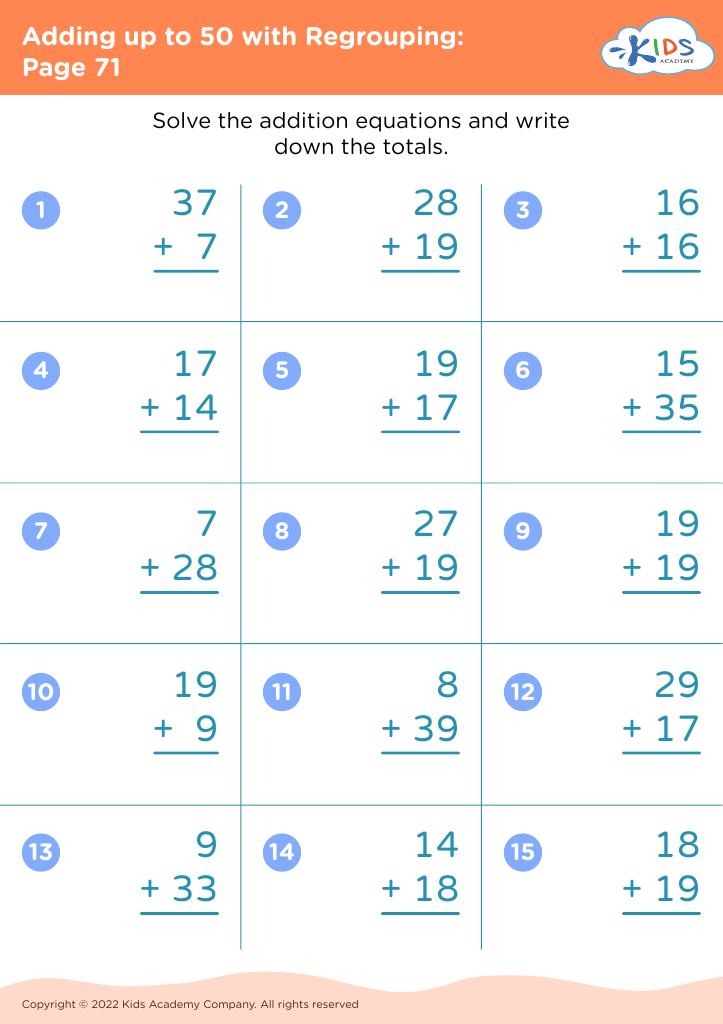




Recognizing patterns and understanding the concept of addition up to 50 is crucial for children's mathematical development. For parents and teachers, fostering this skill lays the groundwork for several essential competencies. Patterns serve as foundational tools in recognizing relationships between numbers, enhancing children's problem-solving abilities and critical thinking.
When students learn to identify patterns, such as even and odd numbers or sequences (like counting by twos or fives), they gain a more profound understanding of the number system. This comprehension is vital for performing calculations and solving more complex math problems. As students explore adding numbers to reach a total of 50, they build confidence in their computational skills, which is necessary for future mathematical success.
Moreover, recognizing patterns in numbers aids in memory retention. Children will more easily recall addition facts and apply them when computations become necessary in real-life situations, such as budgeting or measuring. Encouraging students to explore patterns helps instill resilience, as they learn to approach challenges systematically. Thus, parents and teachers should prioritize teaching these essential skills, as they provide a solid mathematical foundation and cultivate a love for learning in area mathematics.








