Understand fractions Adding up to 50 Worksheets
9 filtered results
-
From - To
Welcome to our "Understand Fractions Adding Up to 50" worksheets! Designed for early learners, these engaging resources help young students grasp the concept of fractions in the context of addition. By exploring various exercises that combine fractions up to a sum of 50, children will build their confidence in math while developing critical problem-solving skills. Our worksheets are visually appealing and tailored to different learning styles, ensuring every child can thrive. With clear instructions and a focus on real-life applications, these activities make learning fractions fun and approachable. Perfect for classroom use or at-home practice, let’s enhance your student’s math journey today!
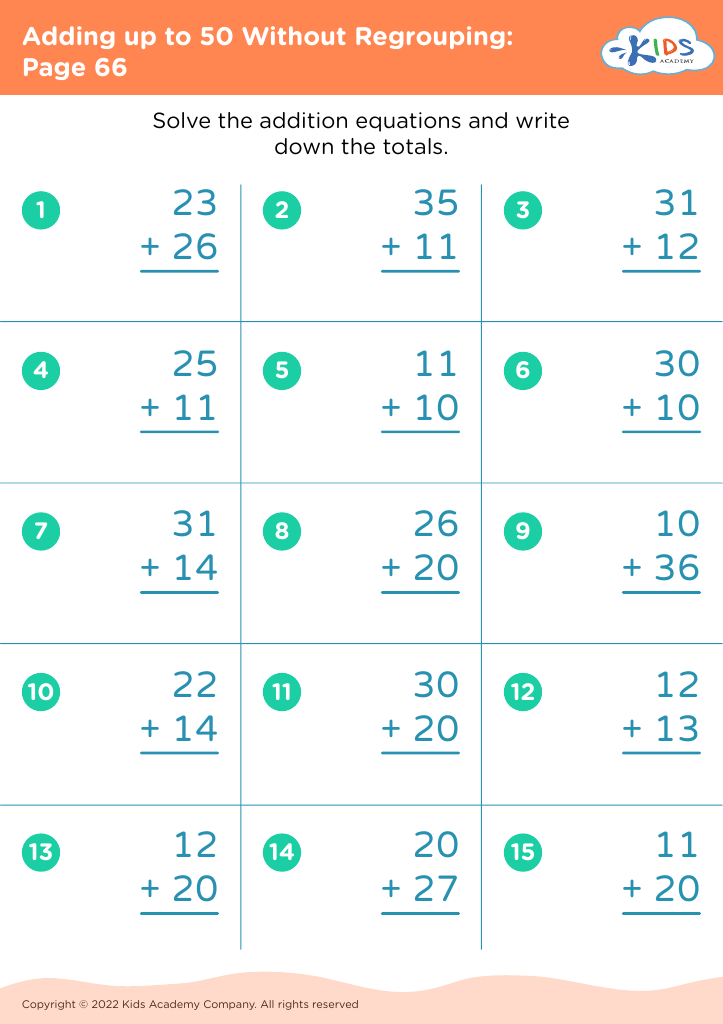
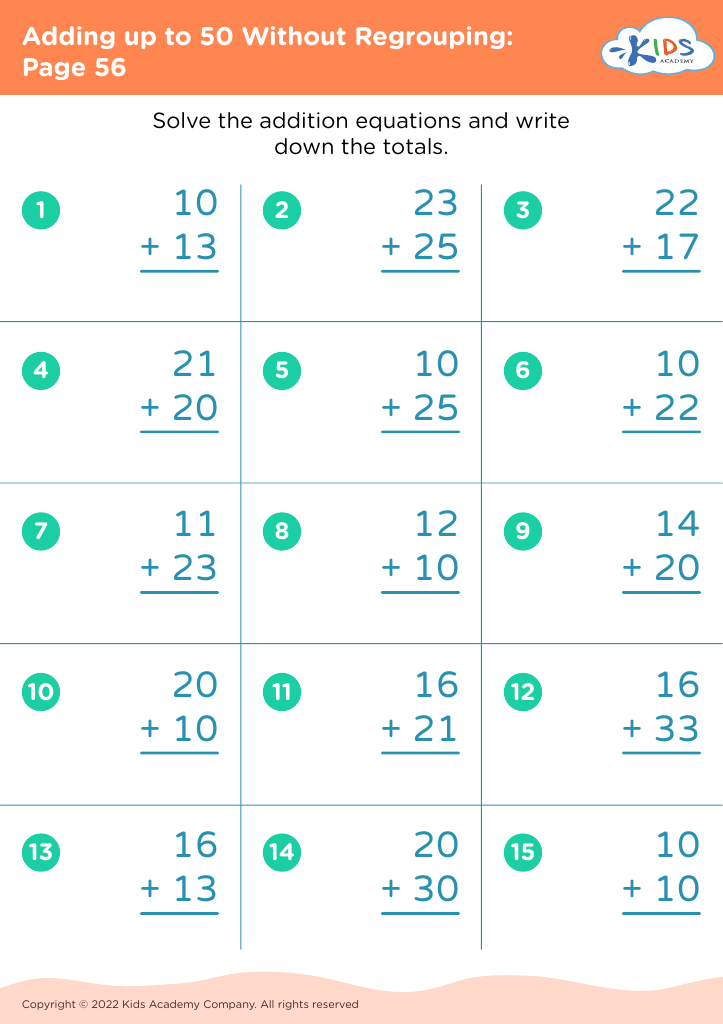
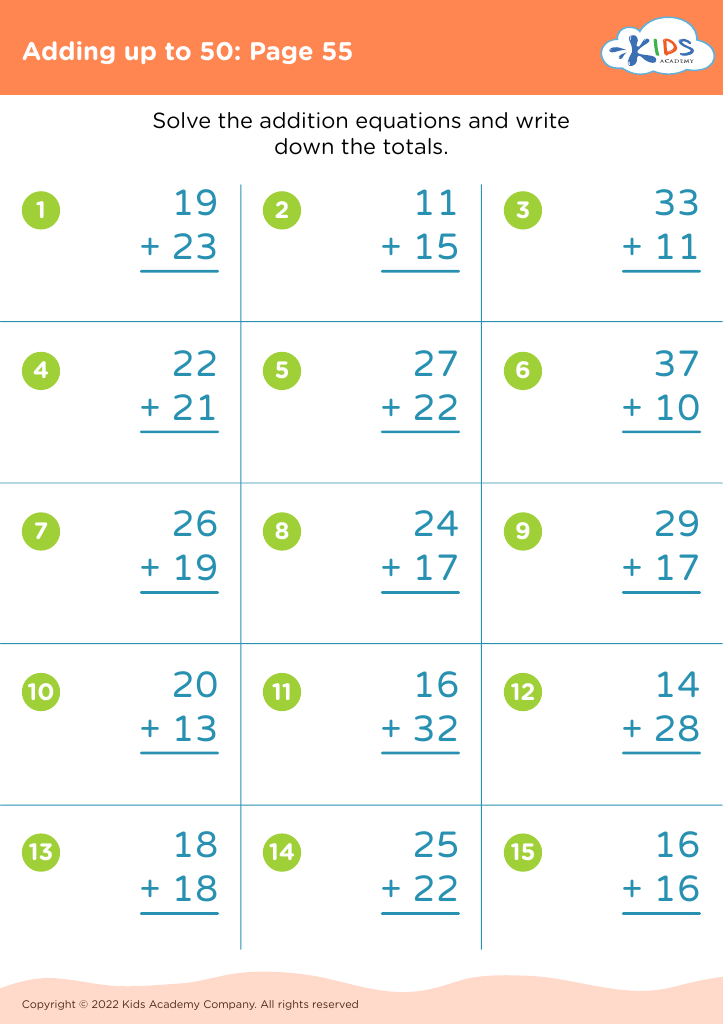
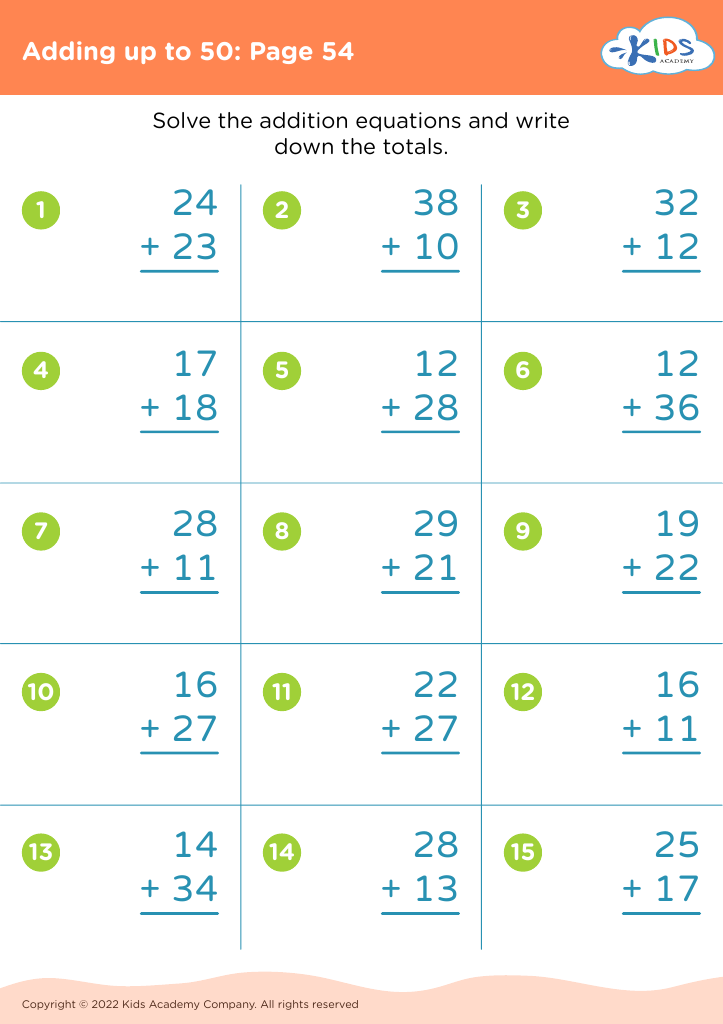
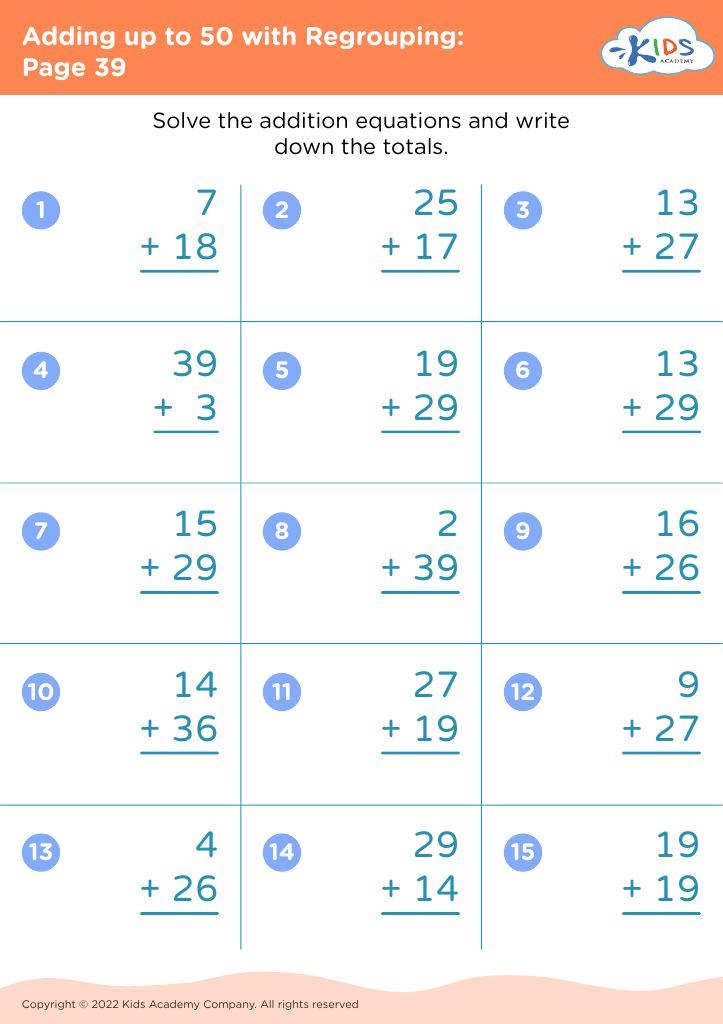
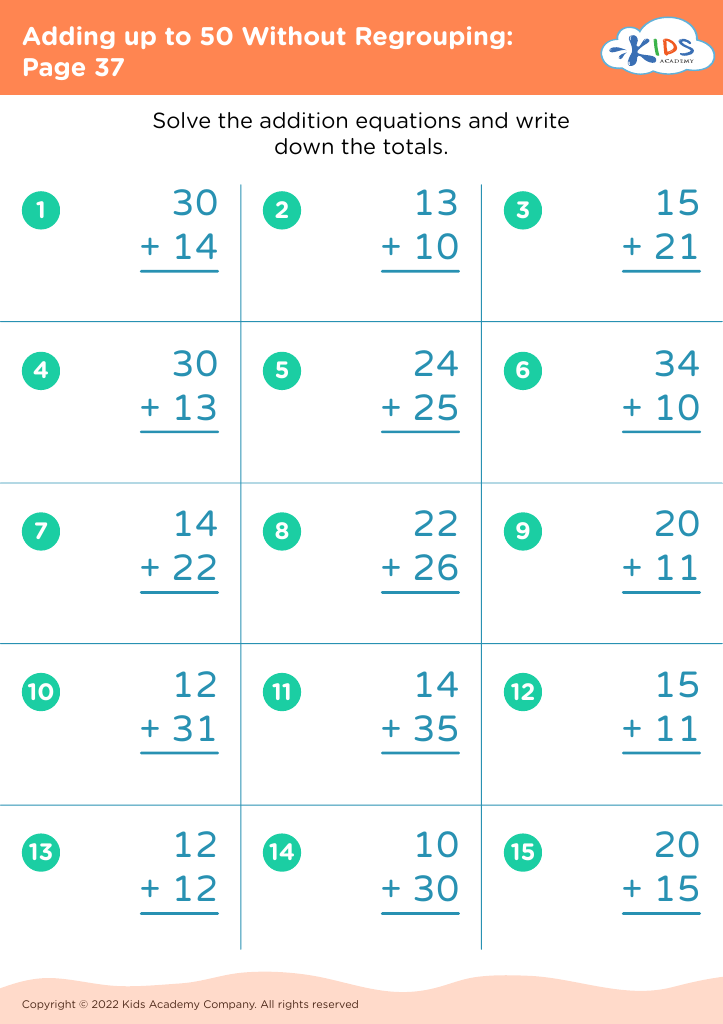
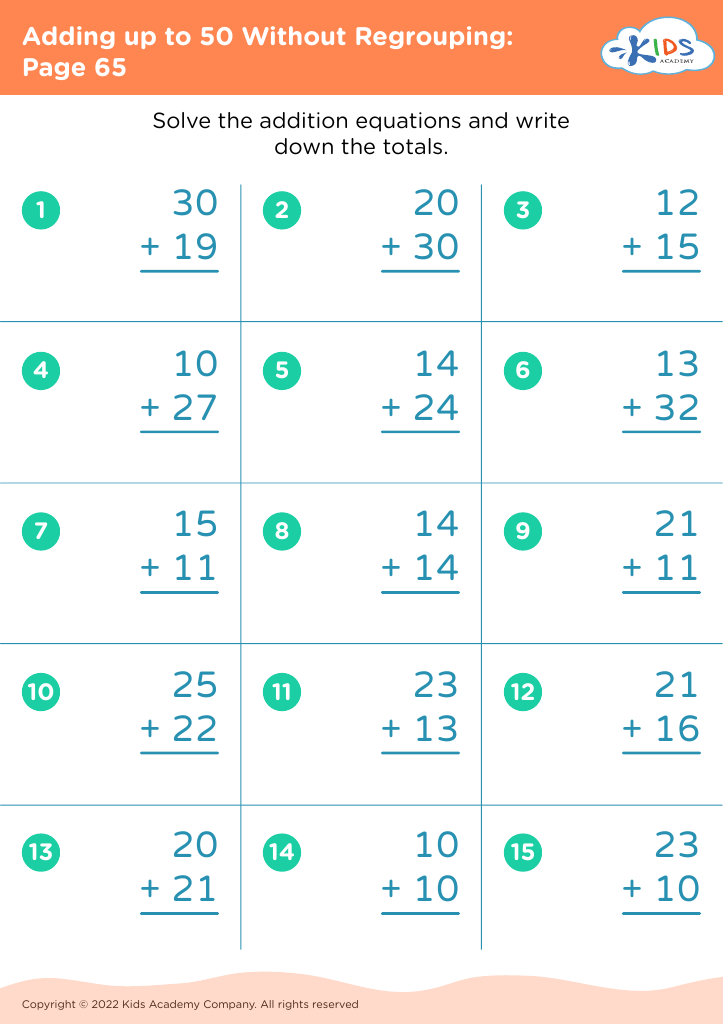
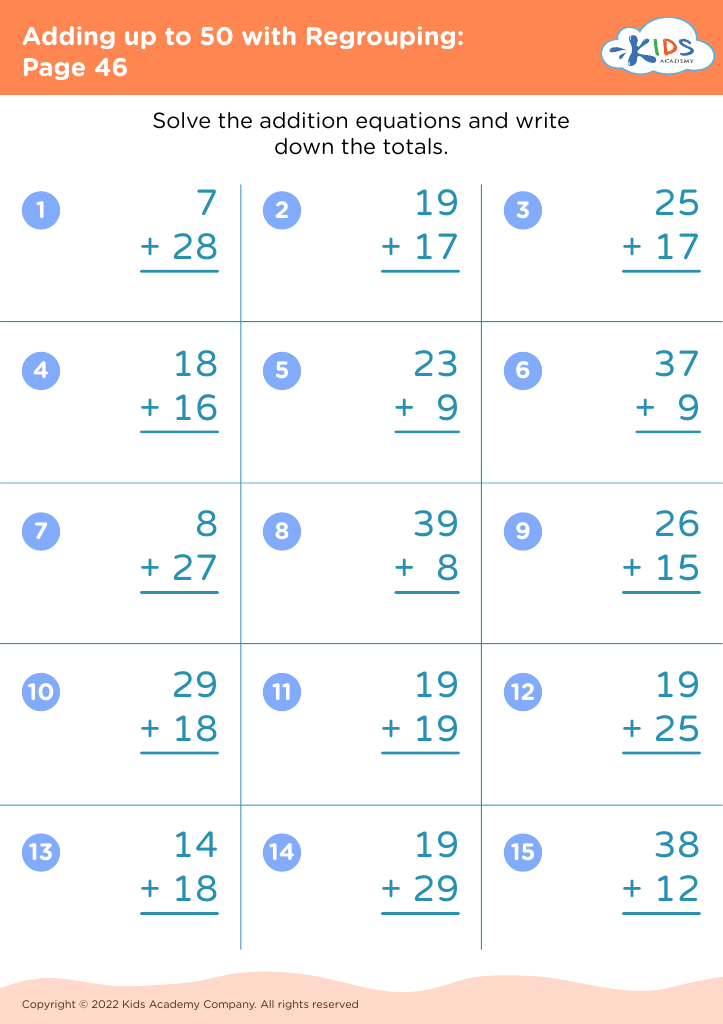
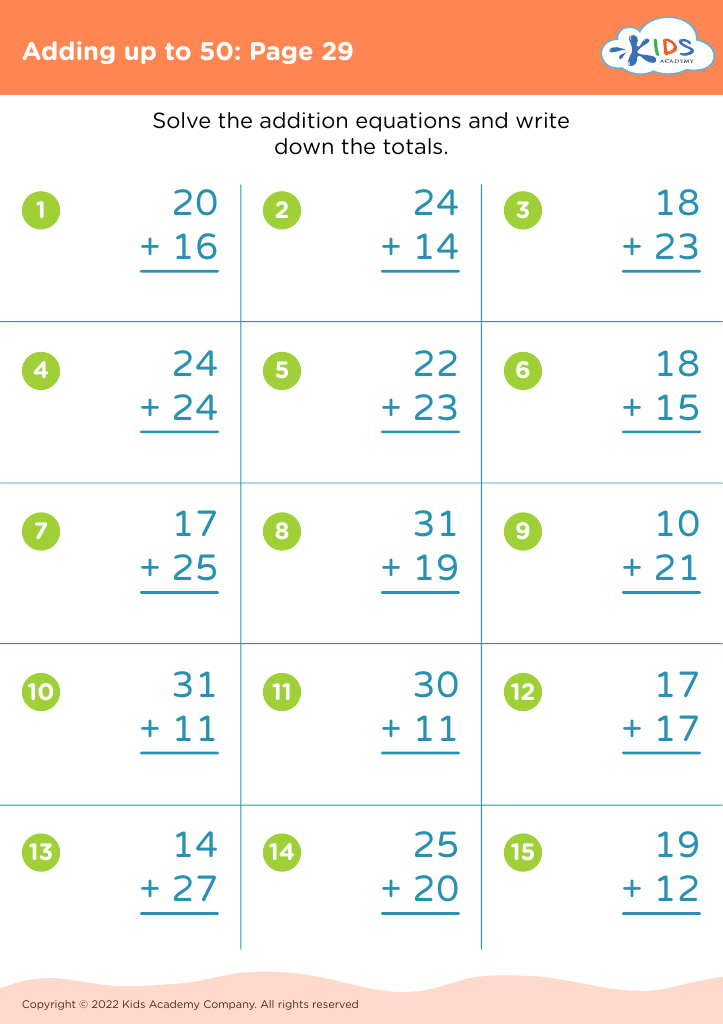




Understanding fractions, especially when adding up to 50, is crucial for early grade students as it lays the foundation for their mathematical skills and real-world applications. Parents and teachers should care about this concept because fractions are a fundamental part of the curriculum and daily life.
First, mastering fractions helps develop critical thinking skills. It teaches students to analyze problems, make connections between numbers, and comprehend how parts relate to a whole. Such comprehension is vital when they encounter more complex mathematical tasks later in their education.
Additionally, they begin to encounter fractions in real-life situations, such as cooking, sharing, or understanding money. When students add fractions with outcomes that total 50, they can better understand quantities and proportions, which enhances their ability to make informed decisions based on measurements.
Lastly, reinforcing these concepts at home or in the classroom promotes confidence and encourages a positive attitude toward math. Early mastery of fractions equips students with essential tools that evolve as they advance in their academic journey, ultimately supporting their overall success in math and beyond. Therefore, investing time in teaching and understanding fractions serves long-term benefits for both parents and teachers.








