Understanding multiplication Adding up to 50 Worksheets
5 filtered results
-
From - To
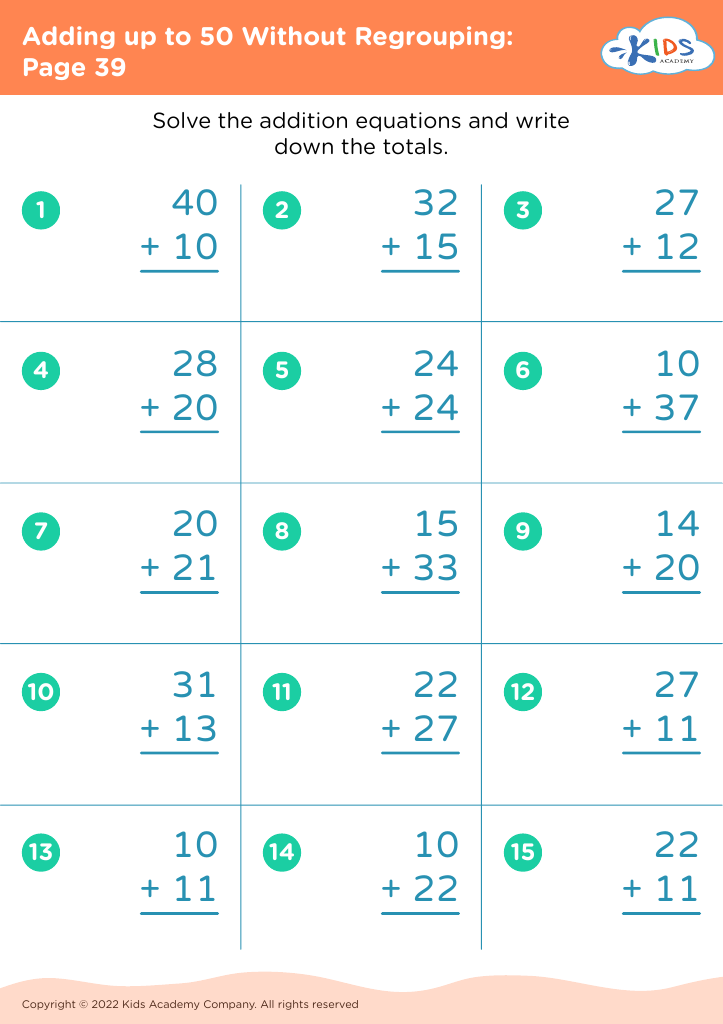
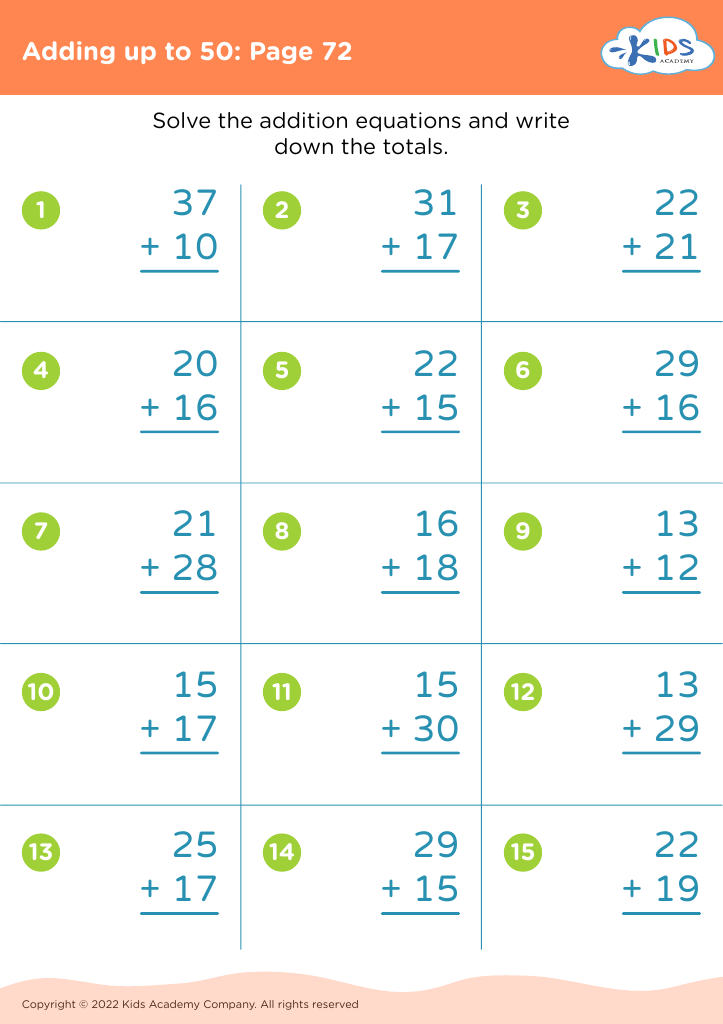
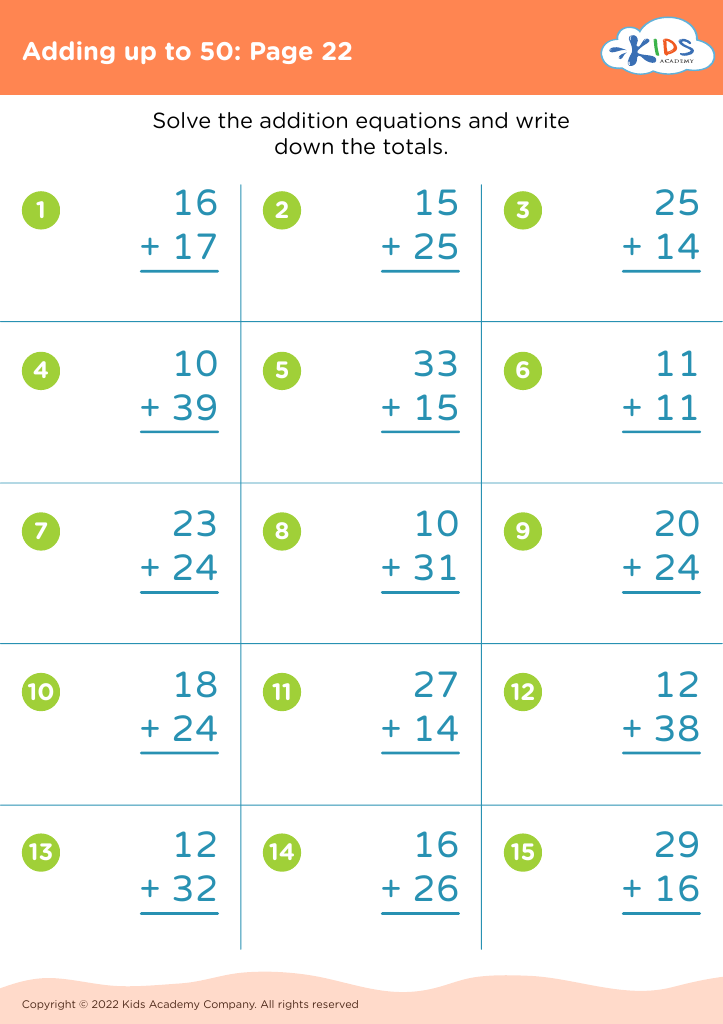
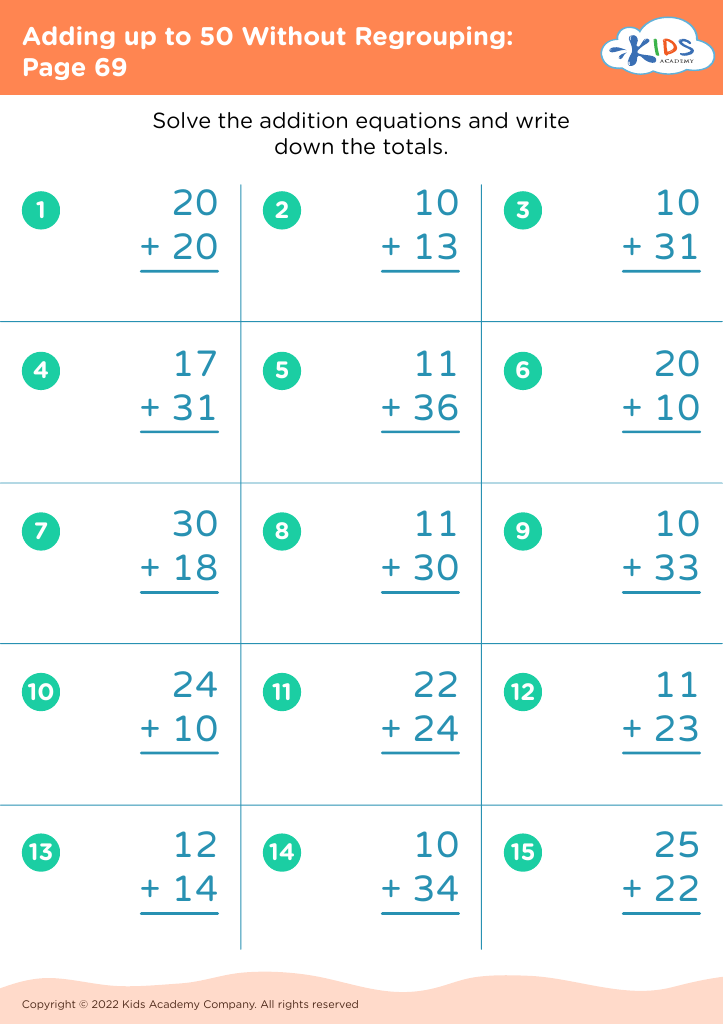
Enhance your child's math skills with our "Understanding Multiplication Adding Up to 50 Worksheets." Designed for early learners, these engaging worksheets make mastering multiplication intuitive and fun. As students explore the relationship between addition and multiplication, they’ll develop a strong foundational understanding of how these operations connect, specifically focusing on sums that add up to 50. Each worksheet offers varied exercises that encourage critical thinking and reinforce learning through practical application. Perfect for classroom use or home practice, these resources will boost not only mathematical proficiency but also confidence in young mathematicians. Empower your child's math journey today!
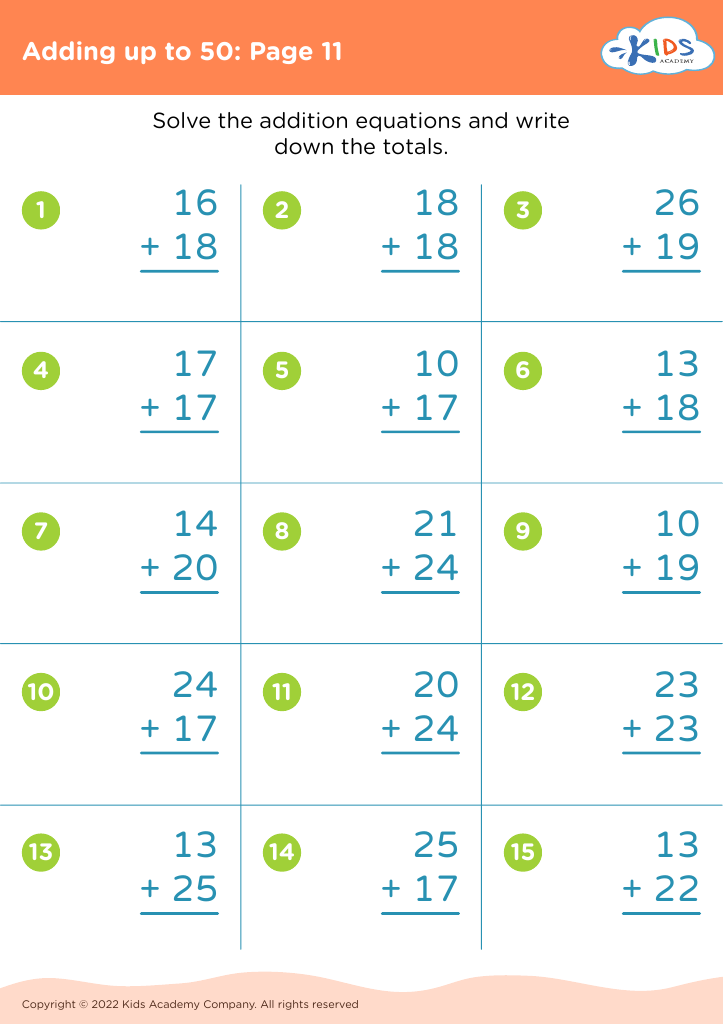




Understanding multiplication is crucial for students, as it serves as a foundation for more advanced mathematical concepts. When parents and teachers emphasize the importance of mastering multiplication, particularly in relation to adding up to 50, they are equipping students with vital skills for problem-solving and critical thinking.
Firstly, multiplication helps students understand groups of numbers, enhancing their ability to manipulate figures in everyday scenarios. For example, if a child grasps how to multiply, they can easily calculate scenarios involving groups, such as sharing snacks among friends or determining total costs when shopping. This practical application fosters a positive attitude toward math as a useful tool rather than just a classroom subject.
Moreover, connecting multiplication to adding up to 50 can aid in comprehension and foster numeracy. Multiplication tables manifest in different contexts, making complex problems more manageable. Teachers can also use this concept to highlight how multiplication and addition are related, showing students the reversible nature of operations.
Ultimately, encouraging a solid understanding of multiplication enriches a child's mathematical toolkit, allowing for greater confidence as they progress through their education and face more complex challenges. Engaged parents and attentive teachers can support this foundational skill, laying the groundwork for lifelong learning.








