Understanding symmetry Adding up to 50 Worksheets
9 filtered results
-
From - To
Unlock the world of symmetry and addition with our "Understanding Symmetry Adding up to 50 Worksheets". Designed for young learners, these engaging worksheets merge the beauty of symmetrical design with the challenge of addition. By exploring patterns and doubling numbers, children strengthen their math skills while discovering the concept of balance in shapes and figures. Perfect for classroom use or at-home practice, these printable activities make complex math concepts fun and accessible. Start boosting your child's confidence and academic performance with these expertly crafted educational resources, and watch them excel in both symmetry and addition!
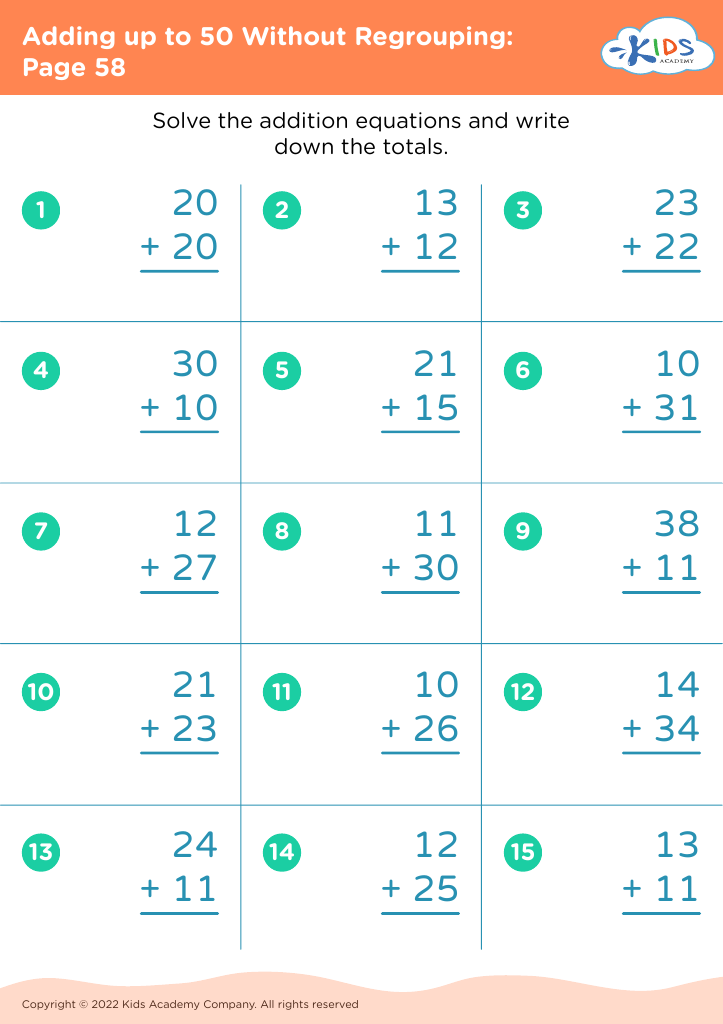
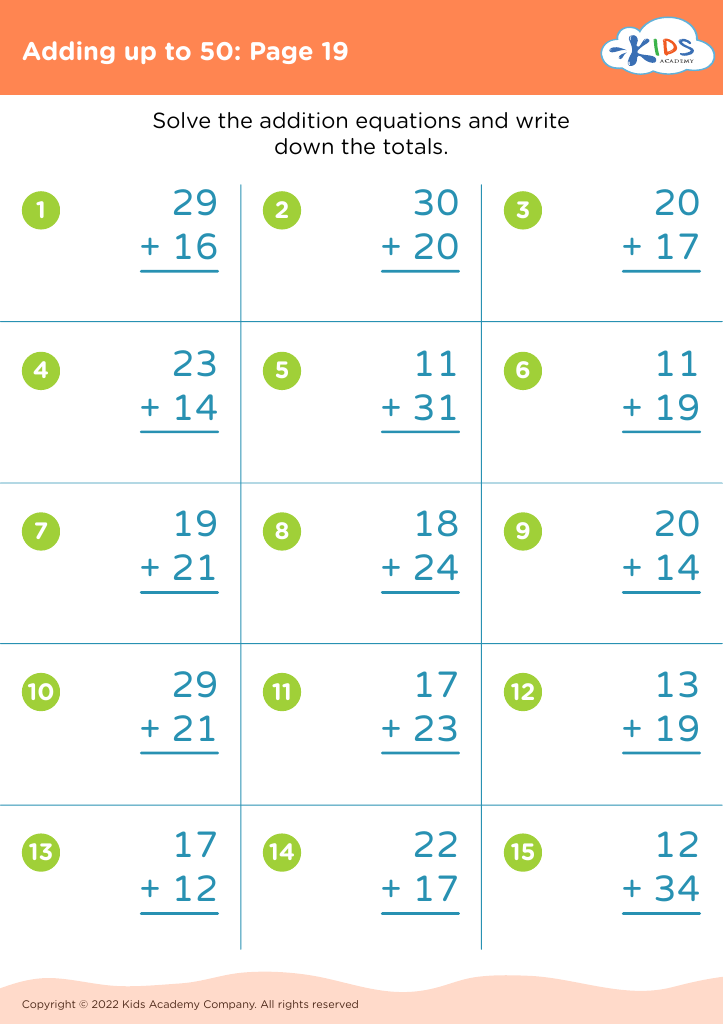
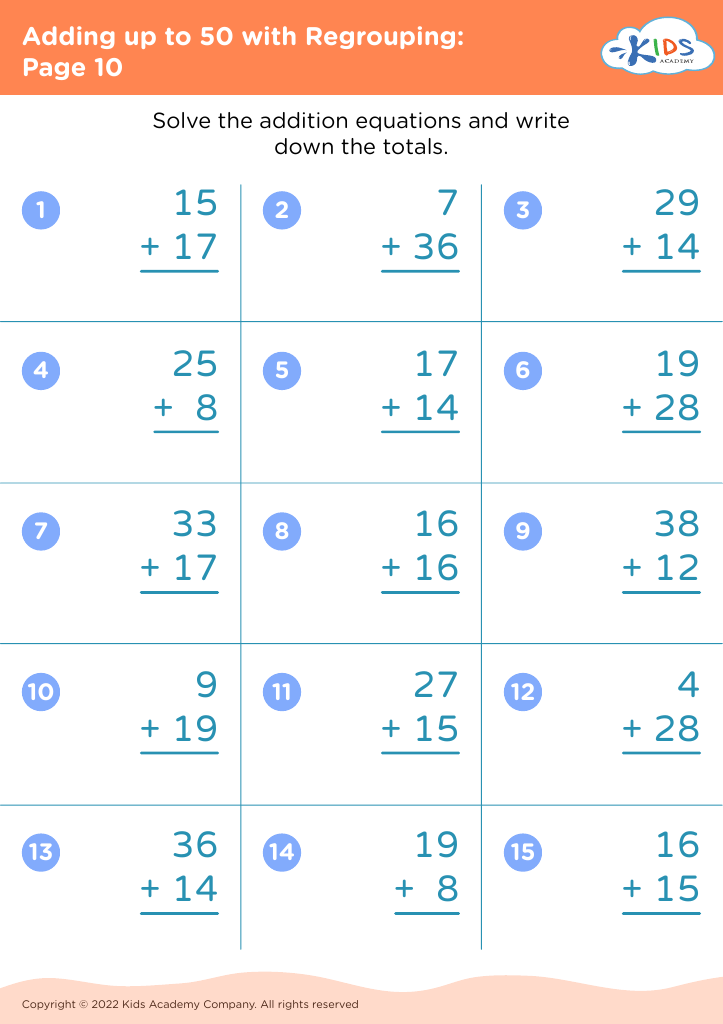
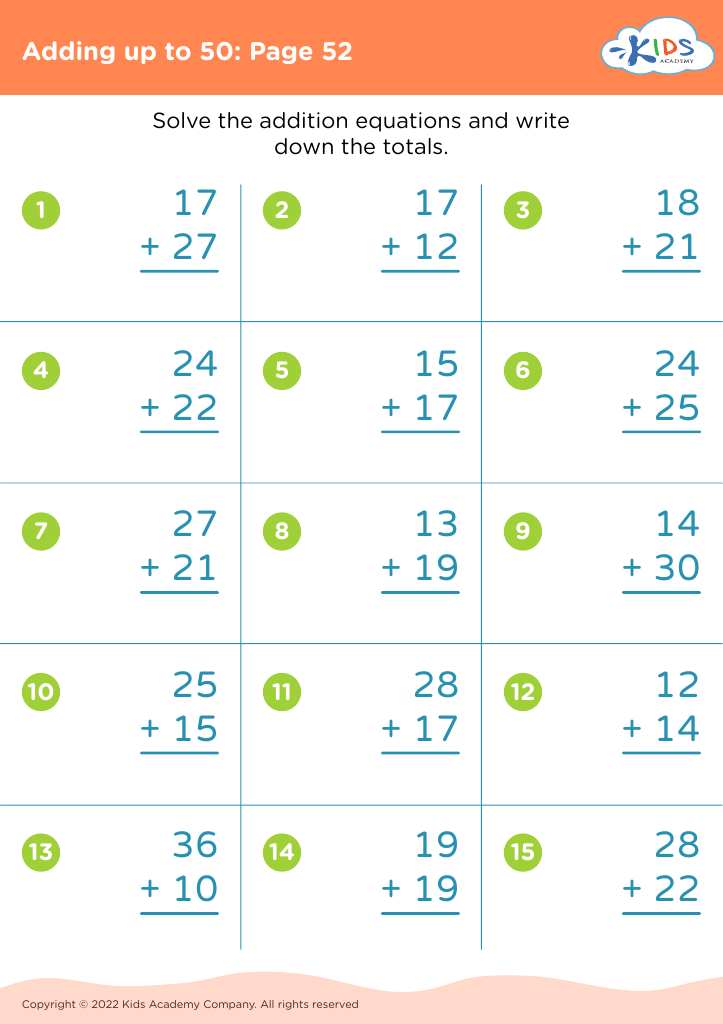
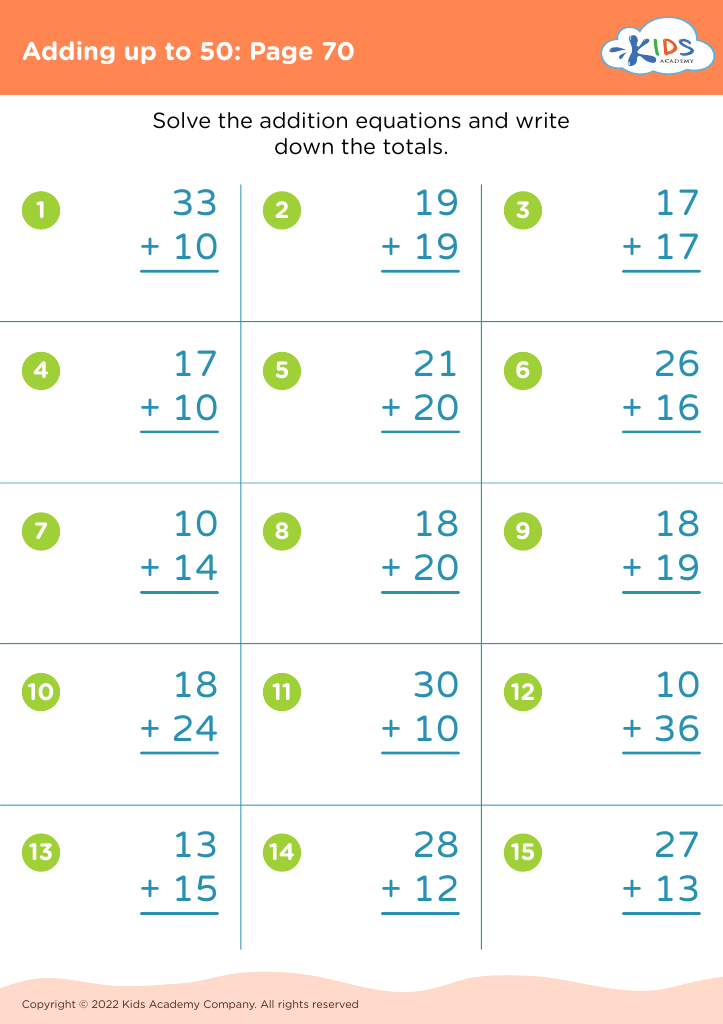
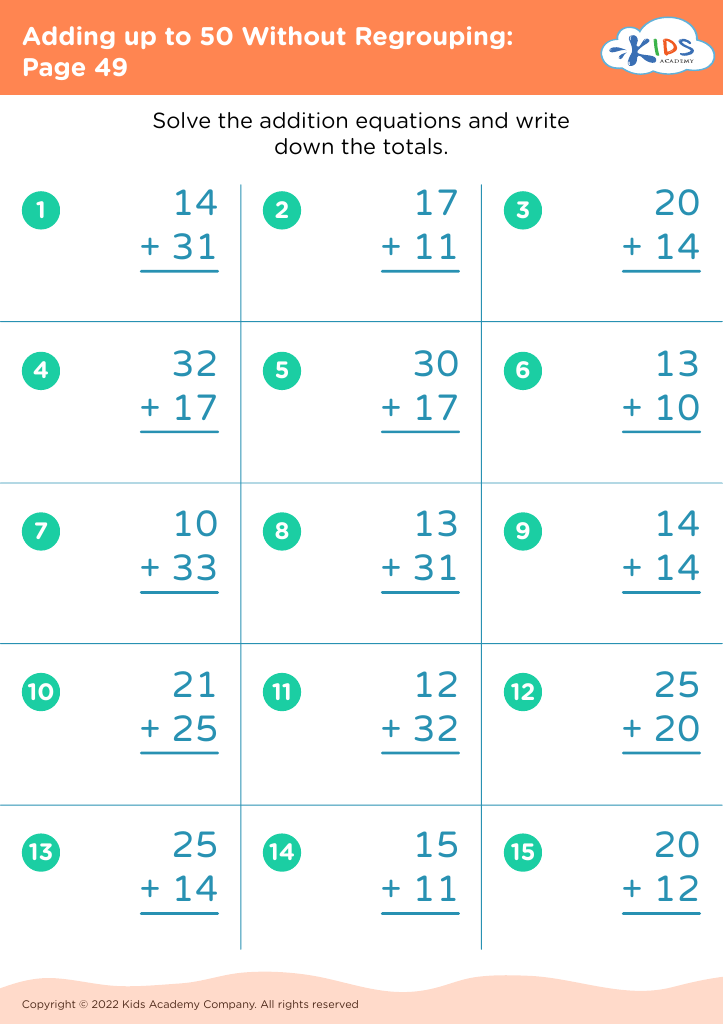
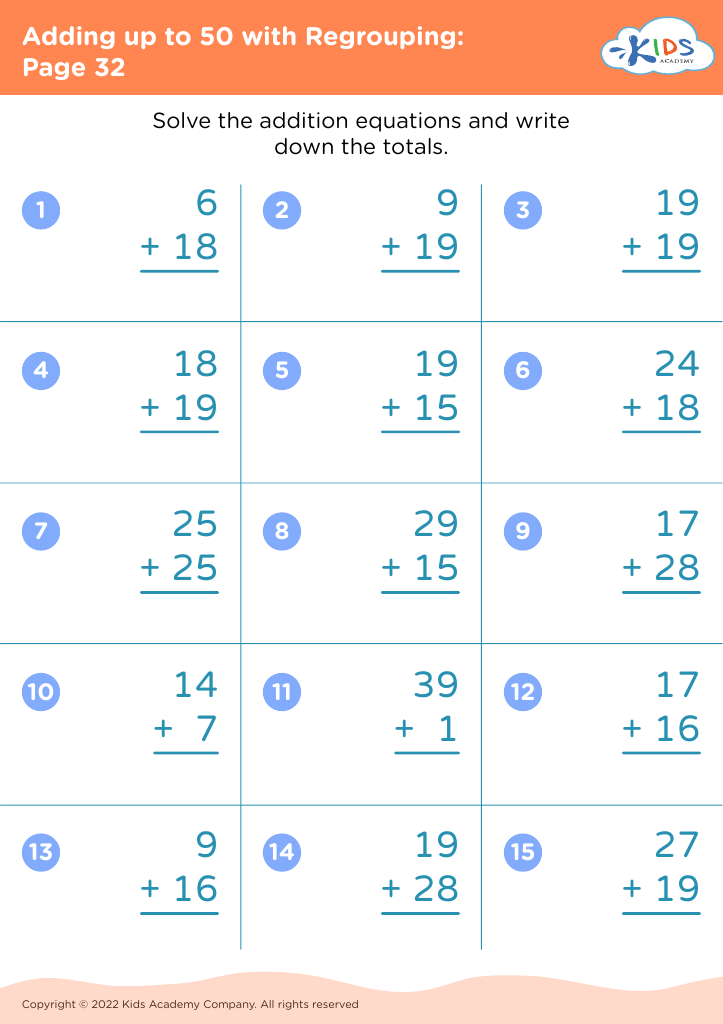
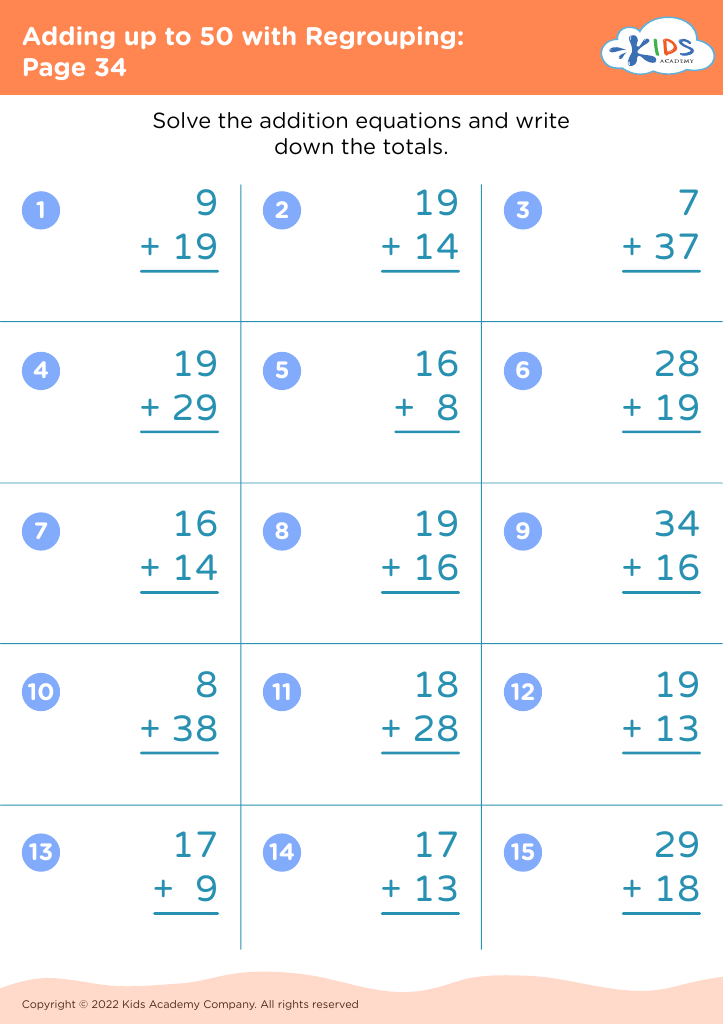
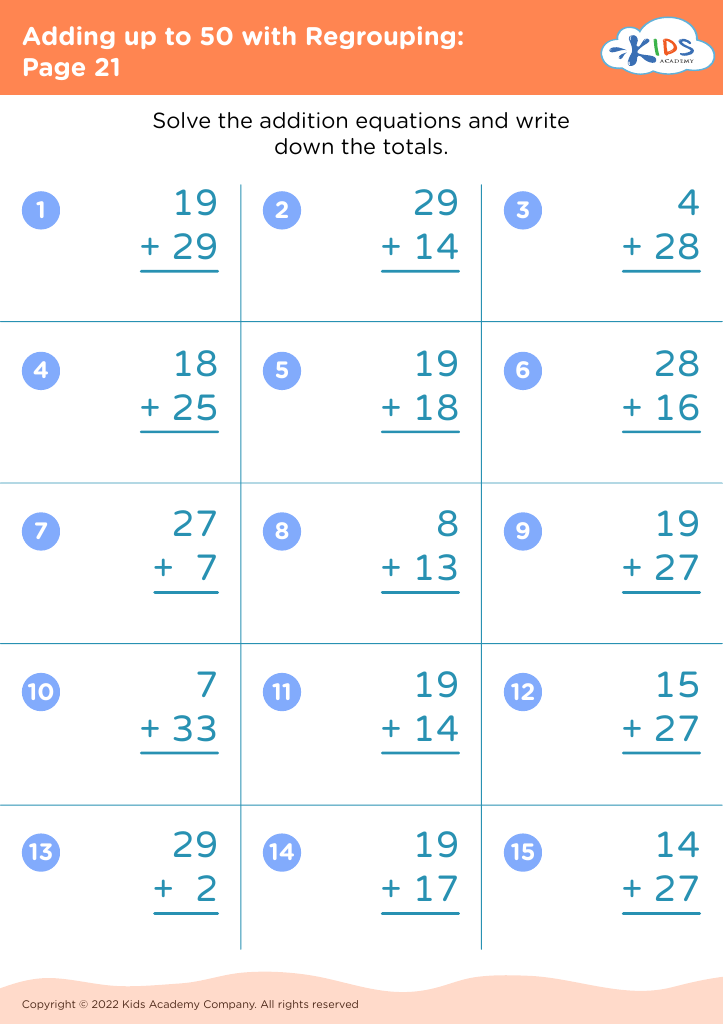




Understanding symmetry and practicing addition facts up to 50 are fundamental skills that play crucial roles in a child's mathematical development, which is why parents and teachers should care deeply about these areas.
Symmetry introduces children to foundational concepts in geometry. It boosts pattern recognition and spatial reasoning, which are skills applicable in various real-world contexts from art to engineering. Moreover, recognizing symmetry contributes to visual awareness and aesthetic appreciation, promoting creativity and problem-solving abilities in young learners. Symmetrical understanding helps children discern balance and order in their surroundings, which instrinsically nurtures both their analytical and creative thinking.
Addition up to 50 lays the groundwork for all future arithmetic and more complex mathematics. Mastering sums within this range solidifies number sense, helping children understand relationships between numbers, the concept of grouping, and the principle of place value. This competency serves as a building block for executing mental math quickly and accurately, a critical skill needed in everyday activities and further academic pursuits. Discovering different ways to make a sum nurtures flexibility in mathematical thinking and instills confidence in young learners.
Together, proficiency in these areas equips children with essential cognitive tools, setting a strong foundation for higher-order mathematical learning and strategic thinking essential for future academic success and daily life management.








