Addition of fractions Addition & Subtraction Worksheets
3 filtered results
-
From - To
Enhance your child's math skills with our Addition of Fractions worksheets! Perfect for young learners, these engaging worksheets simplify the concept of adding fractions, making it accessible and fun. Each printable is designed to foster a deeper understanding of fractions by providing step-by-step instructions and plenty of practice opportunities. With a mix of problems that gradually increase in difficulty, kids can build their confidence while mastering essential math skills. Ideal for both classroom and home use, these worksheets are a fantastic resource for educators and parents aiming to support their child’s learning journey in a structured and effective manner.
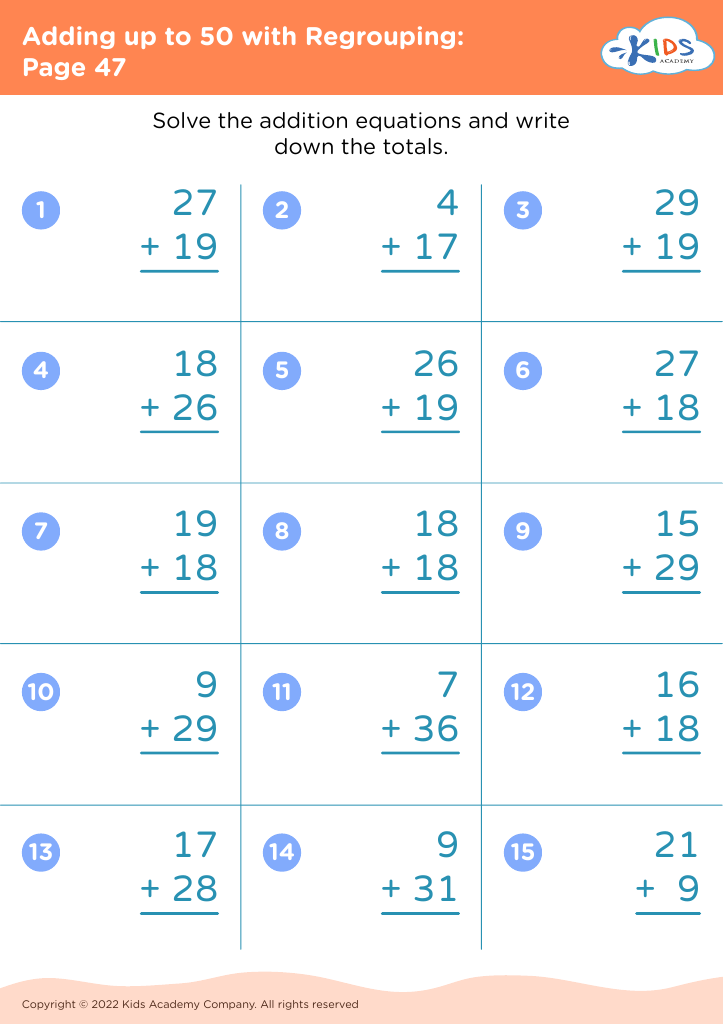
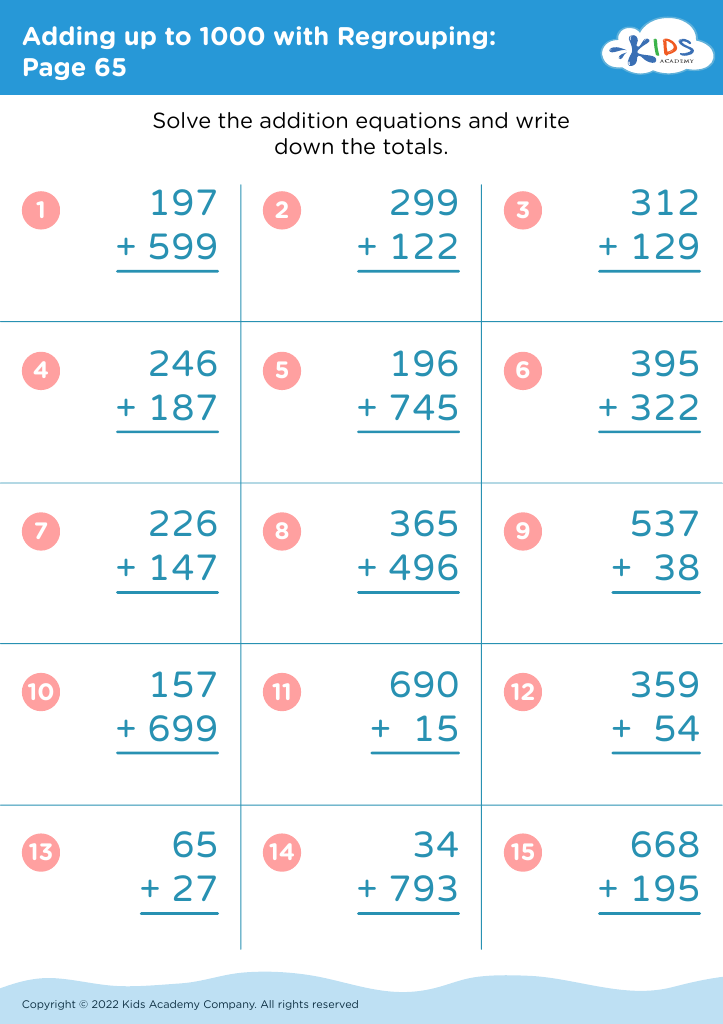
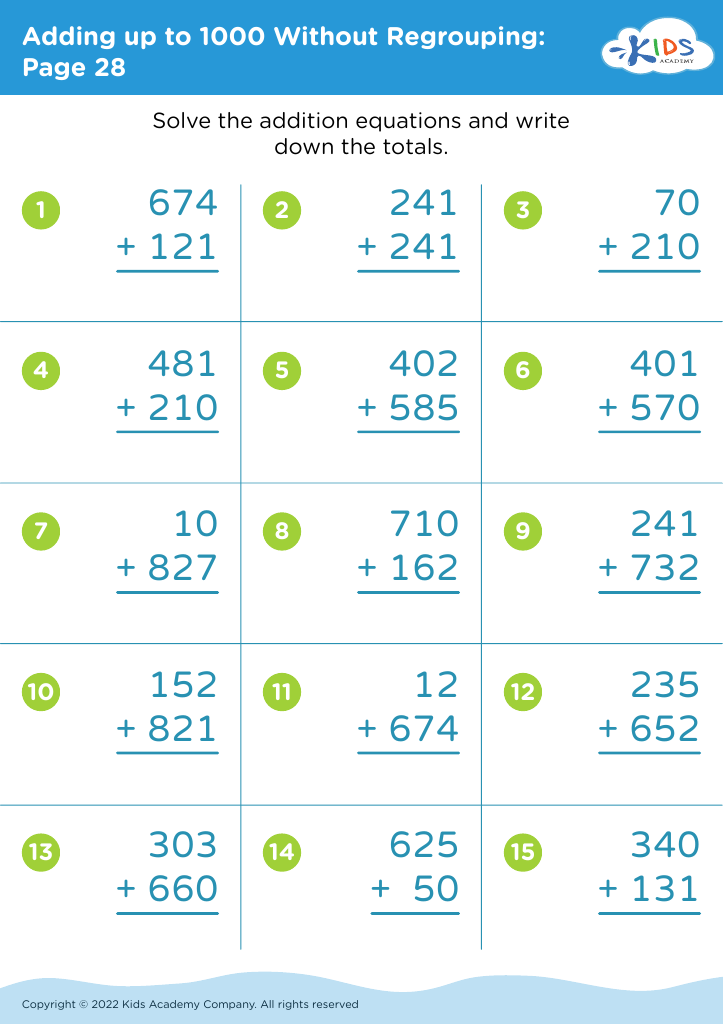








Understanding how to add and subtract fractions is crucial for developing strong mathematical skills in children. It forms a foundation for more advanced concepts they will encounter in higher grades, such as algebra and calculus. When students grasp fraction operations early, they build confidence and a positive attitude toward math, which can enhance their overall academic performance.
For parents, assisting their children in mastering these skills allows for meaningful involvement in their education, fostering a supportive learning environment at home. It ensures that children are adequately prepared for school assessments and daily life situations, such as cooking or budgeting, where fractions are frequently used.
Teachers should prioritize fraction operations to create a robust mathematical base for their students. Educators who emphasize proper techniques and conceptual understanding help students avoid confusion later on. By using visual aids and real-life examples, teachers can make learning fractions more engaging and relatable, addressing diverse learning styles in their classrooms.
In summary, comprehension and proficiency in adding and subtracting fractions are not just academic requirements; they are essential life skills. Both parents and teachers play critical roles in ensuring that children master these foundational concepts, providing them with the tools they need for future success in mathematics and beyond.








