Basic math learning Addition & Subtraction Worksheets
3 filtered results
-
From - To
Enhance your child's math skills with our Basic Math Learning Addition & Subtraction Worksheets! Perfect for early learners, these engaging and fun worksheets help kids grasp fundamental addition and subtraction concepts, laying a strong foundation for future math success. Designed by educational experts, our worksheets provide exciting activities that promote hands-on learning and critical thinking. From simple number sums to beginner-friendly word problems, our resources are crafted to cater to various learning styles. Visit us now and watch as your child’s confidence in solving math problems blossoms, setting them on a path of continuous academic achievement!
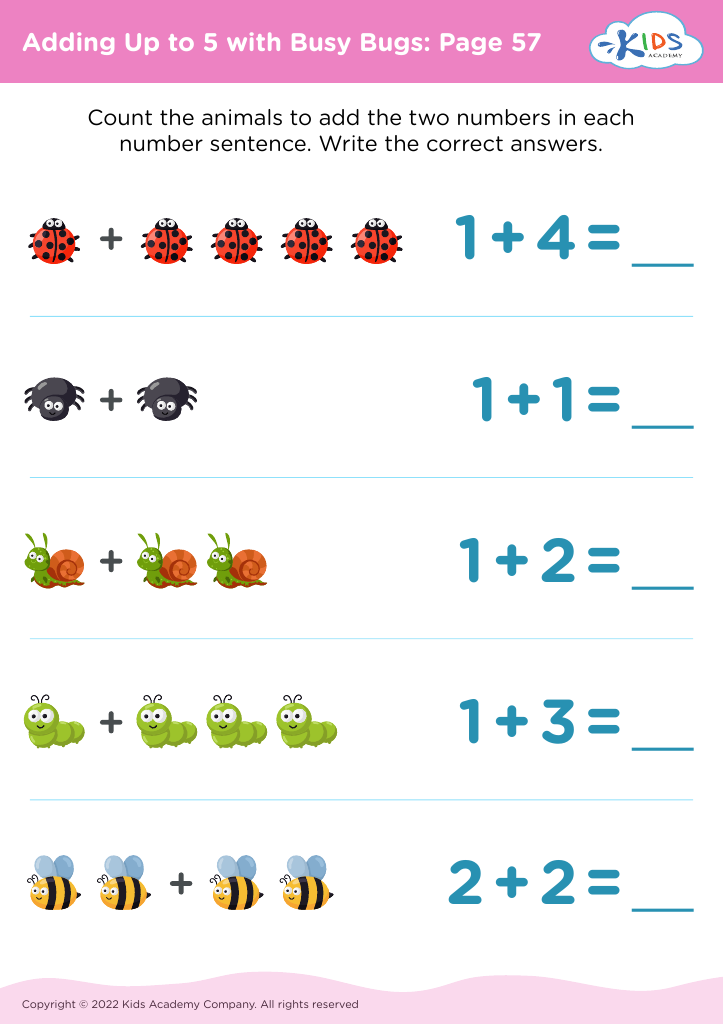
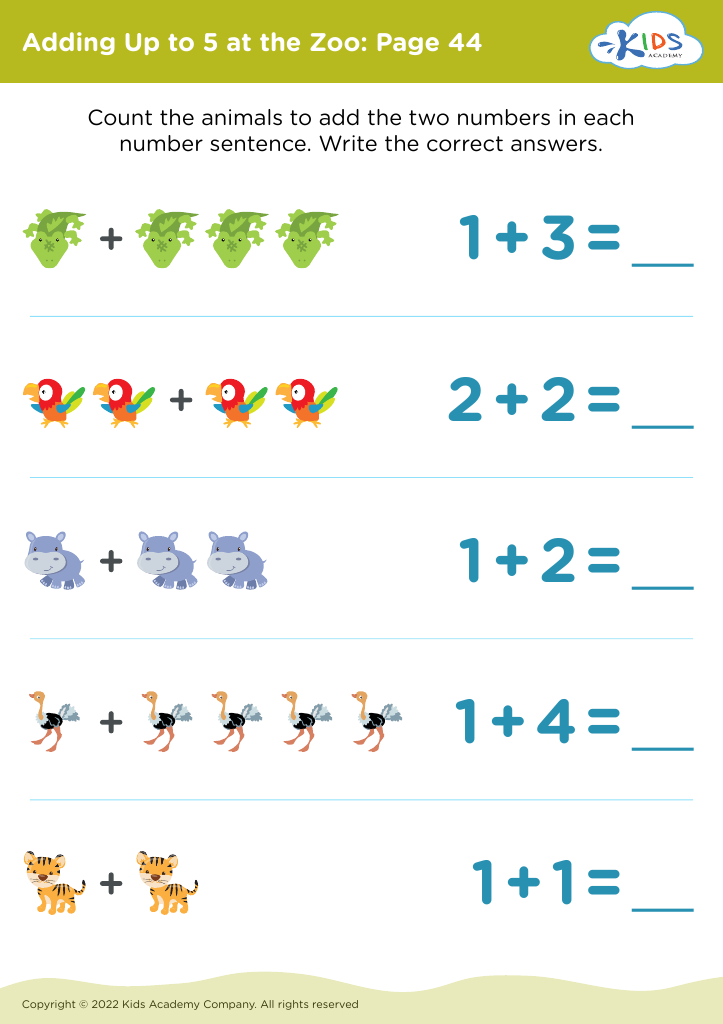
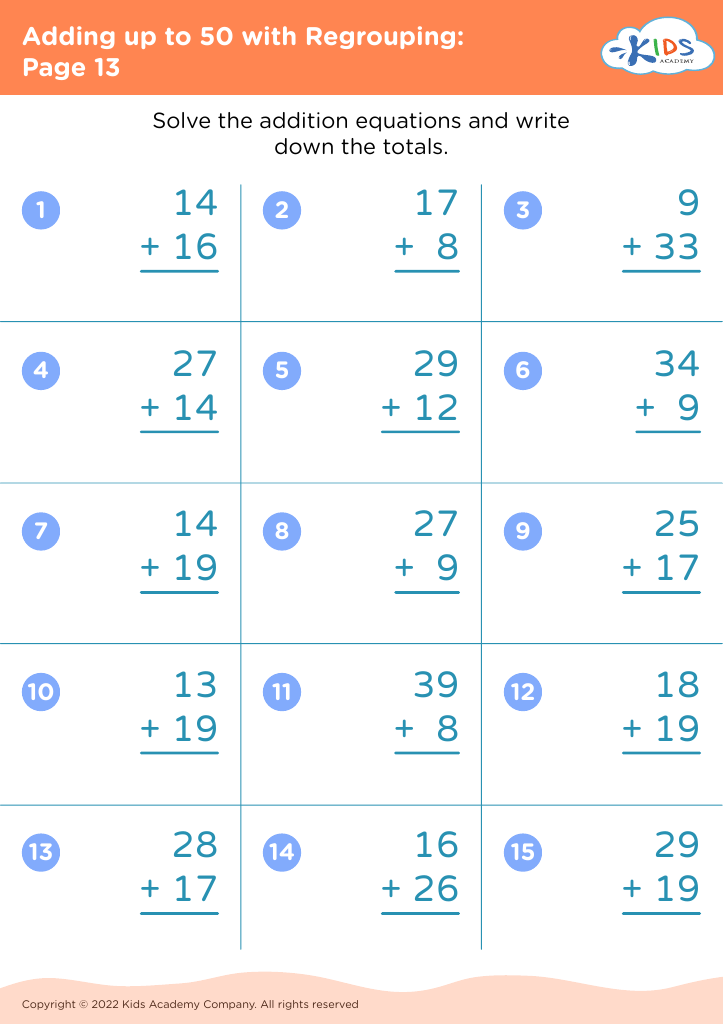








Basic math learning, including addition and subtraction, is foundational to a child’s academic success and everyday life skills. For parents and teachers, investing time and effort into ensuring children understand these concepts is critical.
Learning addition and subtraction establishes a strong numerical basis upon which more complex mathematical concepts are built. Without a solid grasp of these basic operations, children may struggle with future math topics, such as multiplication, division, fractions, and problem-solving techniques. This foundational knowledge is not only crucial for advanced math but also for science, technology, engineering, and even day-to-day tasks such as managing money or measuring ingredients in a recipe.
Furthermore, proficiency in addition and subtraction boosts children's cognitive development, enhancing their ability to reason, concentrate, and solve problems. These skills are transferable to other areas of learning and life, promoting overall academic excellence and effective decision-making.
In addition to intellectual growth, mastering these basic math skills underpins a child’s confidence and fosters a positive mindset towards learning. Children who feel capable in their math skills are more likely to approach challenging subjects with a growth mindset, leading to enduring academic perseverance.
Ultimately, emphasizing basic math education in early grades is an investment in a child’s holistic development, setting them on a path to future success and a well-rounded skill set.








