
Color differentiation Addition & Subtraction Worksheets
3 filtered results
Difficulty Level
Grade
Age
-
From - To
Subject
Activity
Standards
Discover our engaging "Color Differentiation Addition & Subtraction Worksheets," designed to enhance young learners' math skills while fostering creativity. These worksheets not only focus on essential addition and subtraction concepts but also emphasize color recognition and differentiation, making learning interactive and enjoyable. Each activity encourages students to use color coding to solve problems, reinforcing their understanding of numbers in a fun way. Ideal for early grade classrooms, these worksheets support diverse learning styles and help children develop confidence in their math abilities. Bring excitement to learning math with our color-focused approach, perfect for home or classroom use!
Favorites
With answer key
Interactive
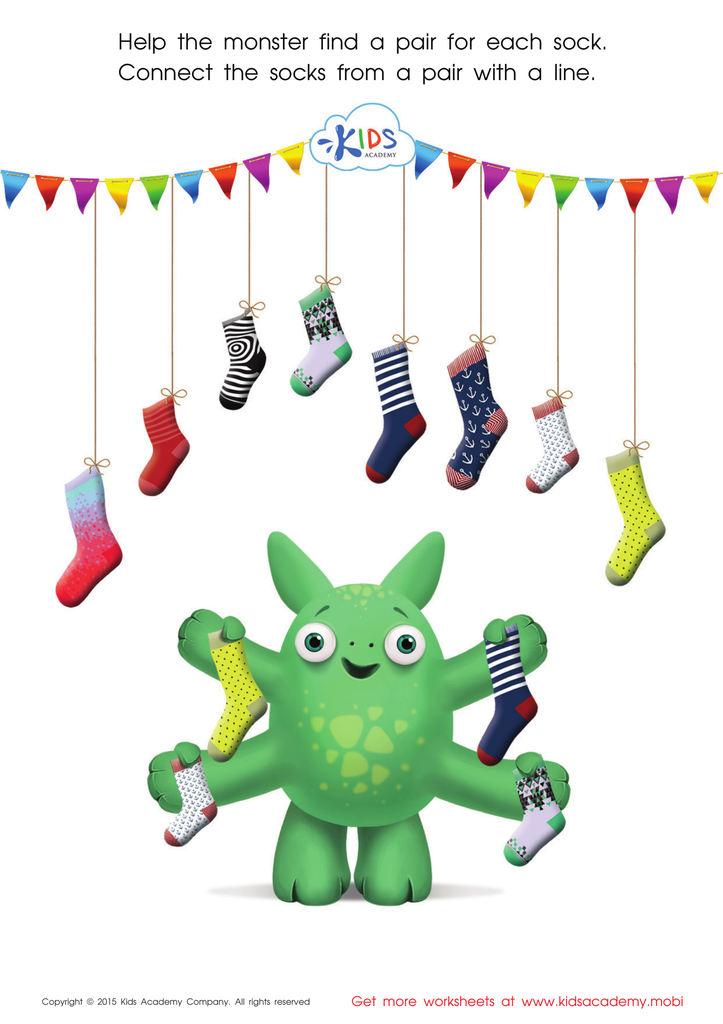
Math Matching Pairs Game: Monsterв's Socks Worksheet
Let your child learn, concentrate and practice sorting skills with this fun kindergarten worksheet. Matching polka dots, anchors, geo shapes and stripes on Monster's socks will help improve fine motor skills. Download and print this free worksheet and several others on different topics.
Math Matching Pairs Game: Monsterв's Socks Worksheet
Worksheet
Join Kids Academy for Free
Who is primarily going to use this learning content?








Color differentiation in addition and subtraction is a vital educational tool, especially for young learners. Using colors in these fundamental math concepts aids in cognitive processing and enhances engagement. When colors are associated with specific numbers or operations, children can more easily visualize relationships between numbers. This method helps to simplify abstract concepts, making them more tangible and relatable.
Parents and teachers should care about this approach because it addresses diverse learning styles. Kinesthetic and visual learners, in particular, benefit significantly from color-coded materials that transform equations into engaging activities. This can reduce anxiety around math by framing it in a more fun and accessible way.
In addition, color differentiation can foster a deeper understanding of math processes. For example, using different colors for addition and subtraction can help children clearly distinguish between operations, preventing common mistakes. It can promote critical thinking as children build their own mental strategies for solving problems.
By incorporating color into math instruction, caregivers and educators not only enhance comprehension but also encourage a positive attitude toward math. This lays a strong foundation for future mathematical learning, ultimately contributing to better academic outcomes and a lifelong appreciation for the subject.








