Check out this FREE Trial Lesson on Addition & Subtraction!

D

Favorites
With answer key
Interactive
  • Comparing Fractions
  • Addition & Subtraction
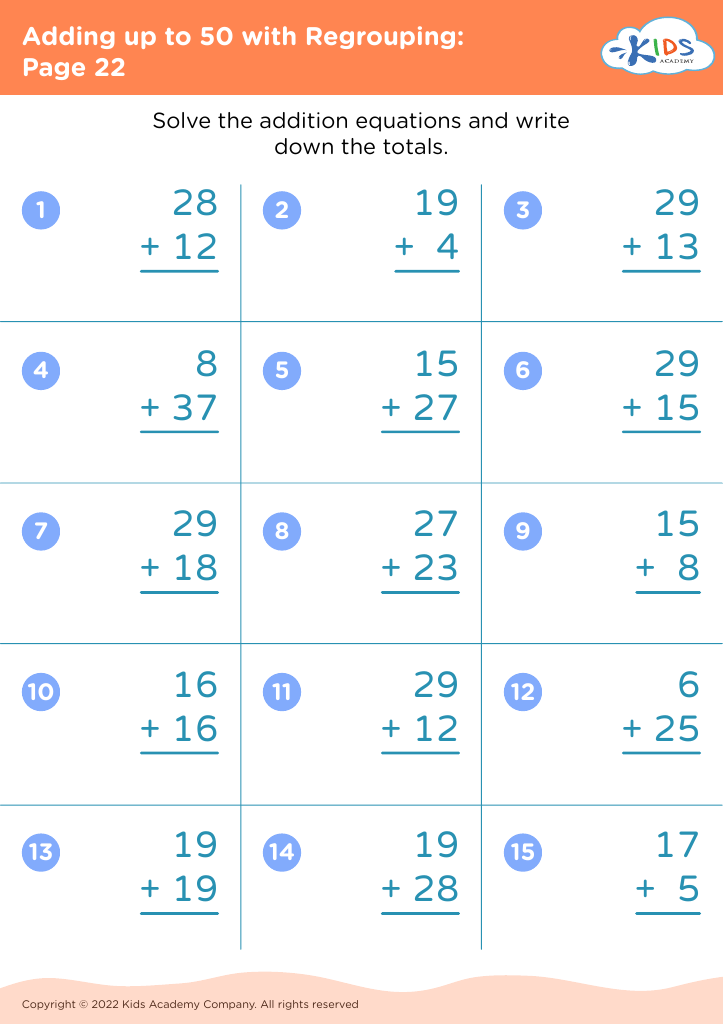
Adding up to 50 with Regrouping: Page 22
Worksheet
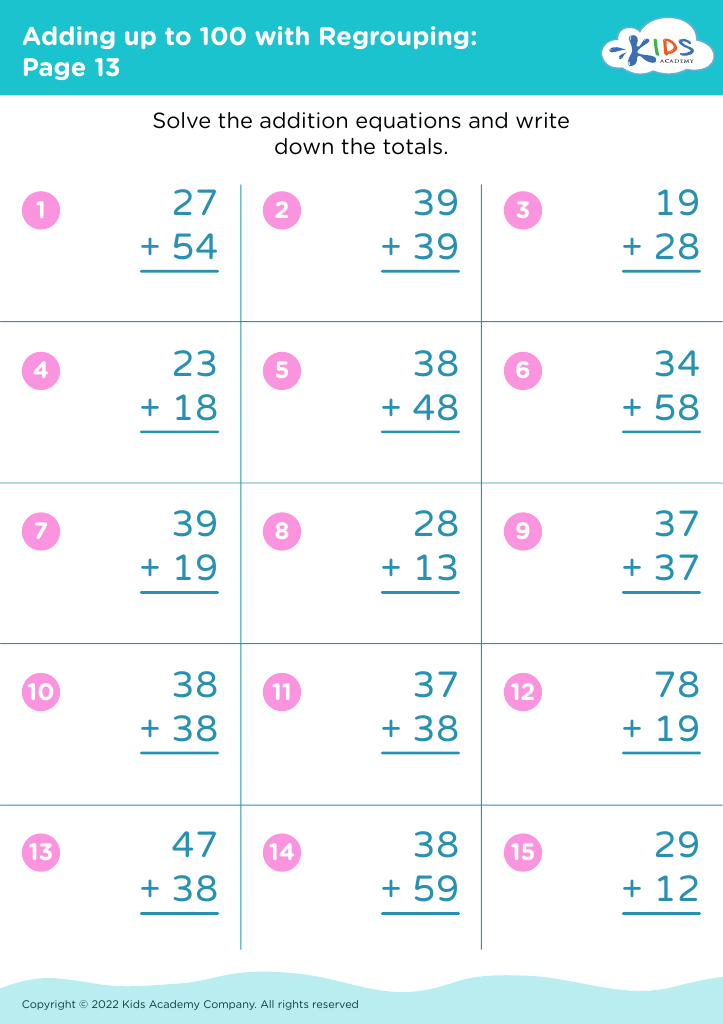
Adding up to 100 with Regrouping: Page 13
Worksheet
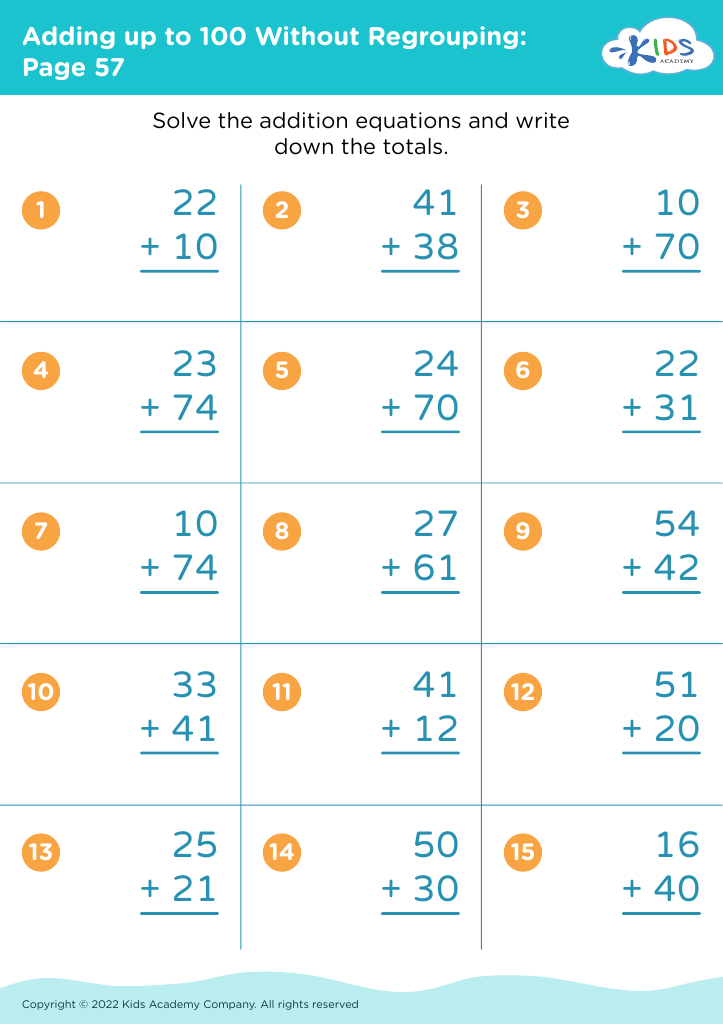
Adding up to 100 Without Regrouping: Page 57
Worksheet
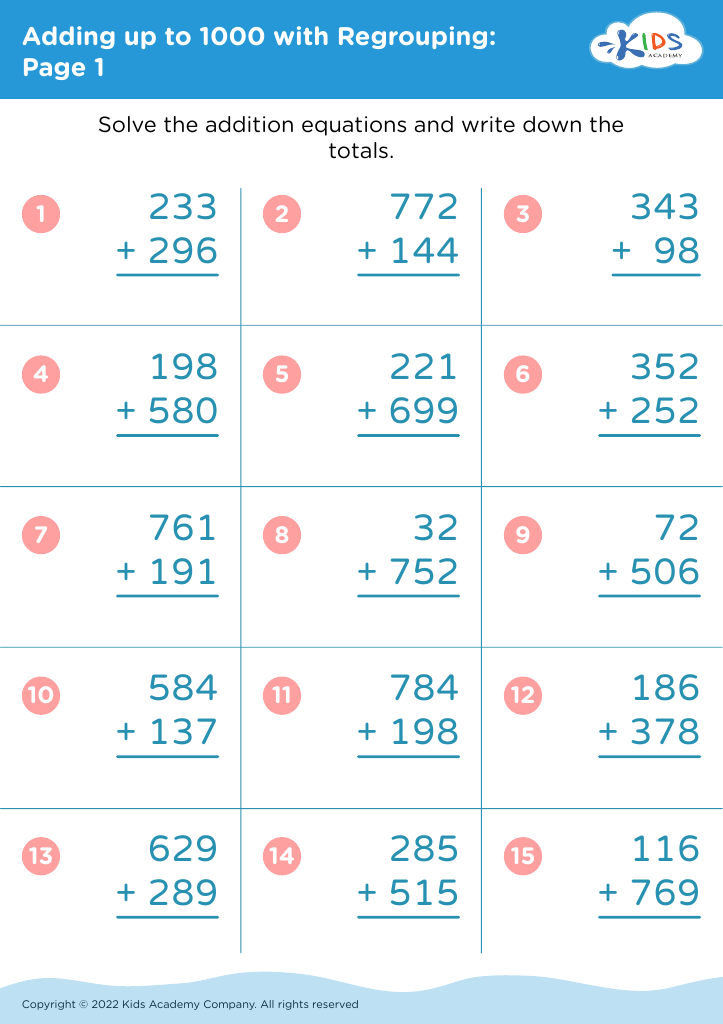
Adding up to 1000 with Regrouping: Page 1
Worksheet
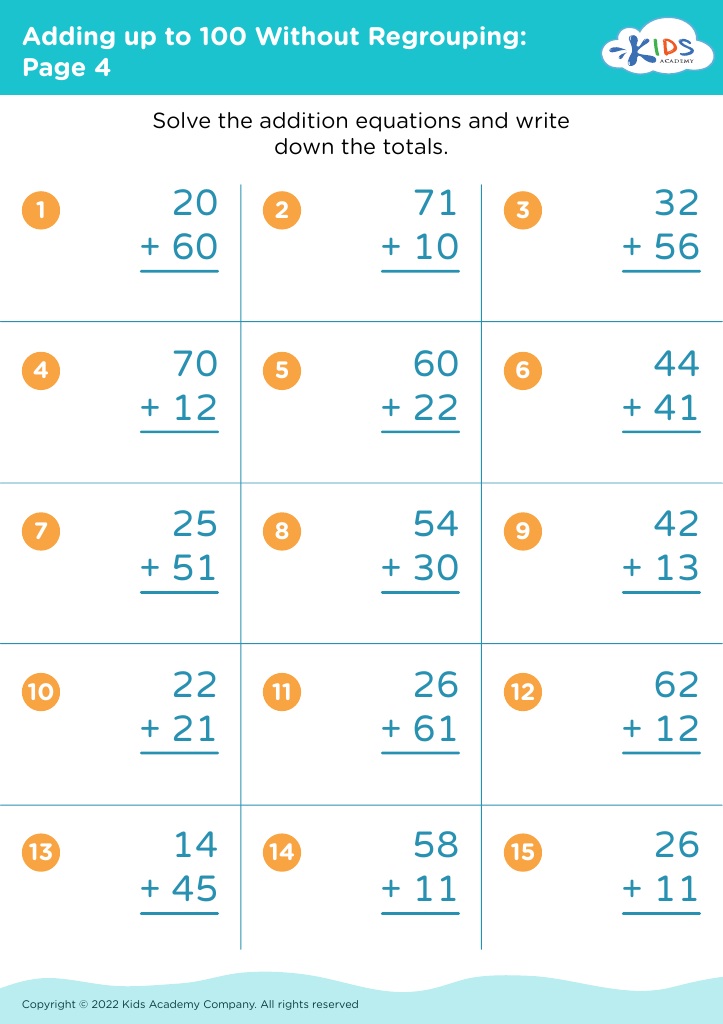
Adding up to 100 Without Regrouping: Page 4
Worksheet
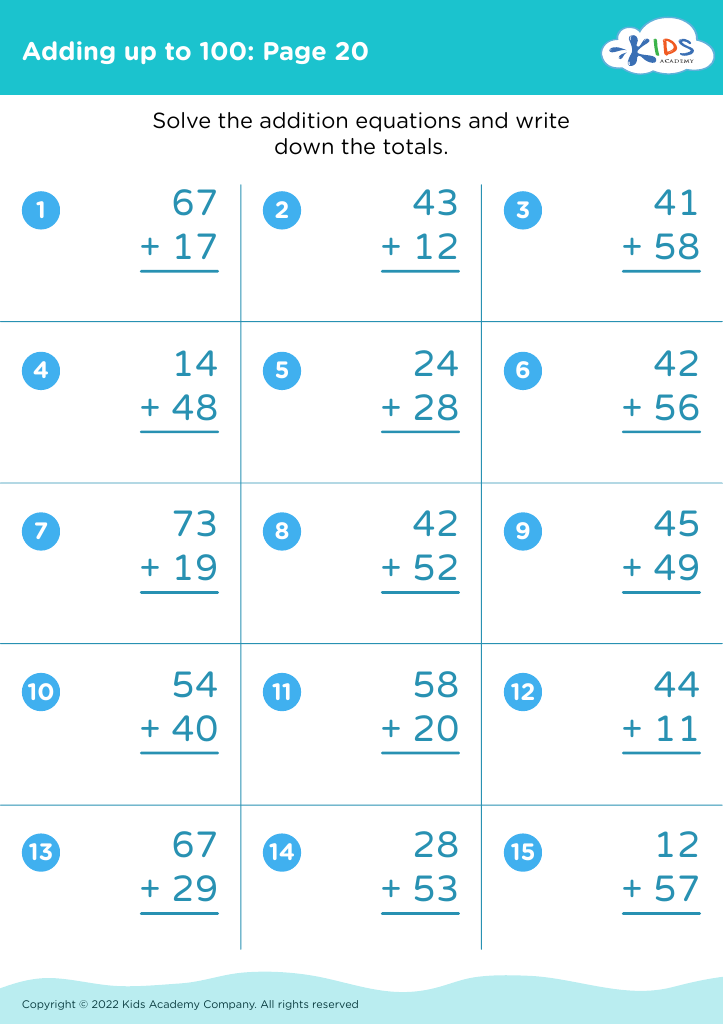
Adding up to 100: Page 20

Adding up to 100: Page 20

Adding up to 100: Page 20
Worksheet
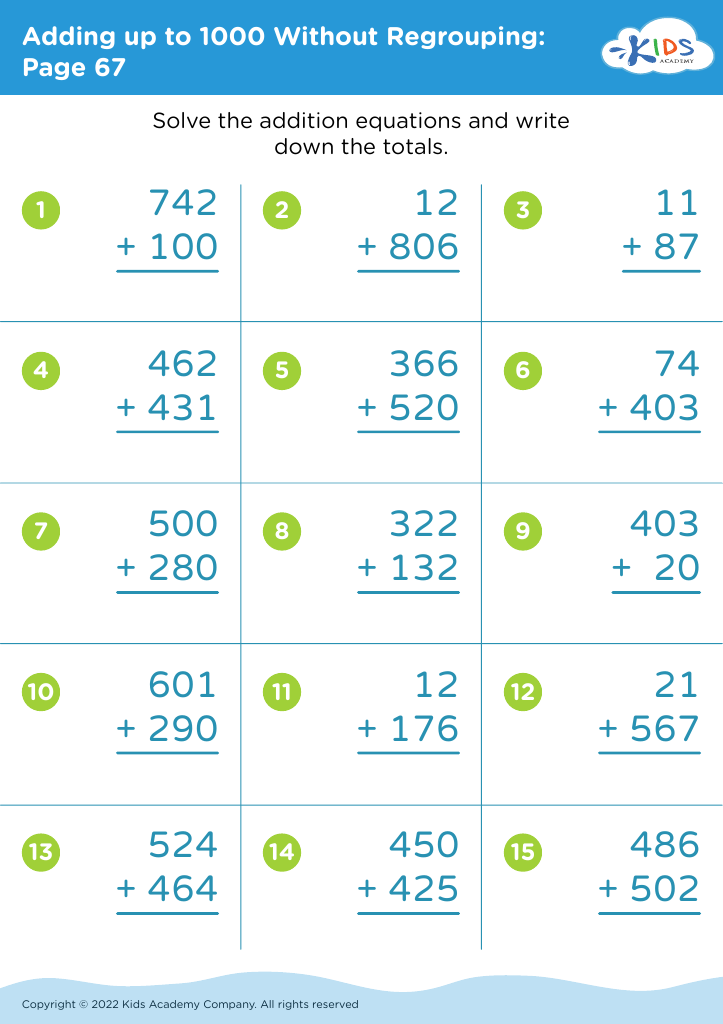
Adding up to 1000 Without Regrouping: Page 67
Worksheet
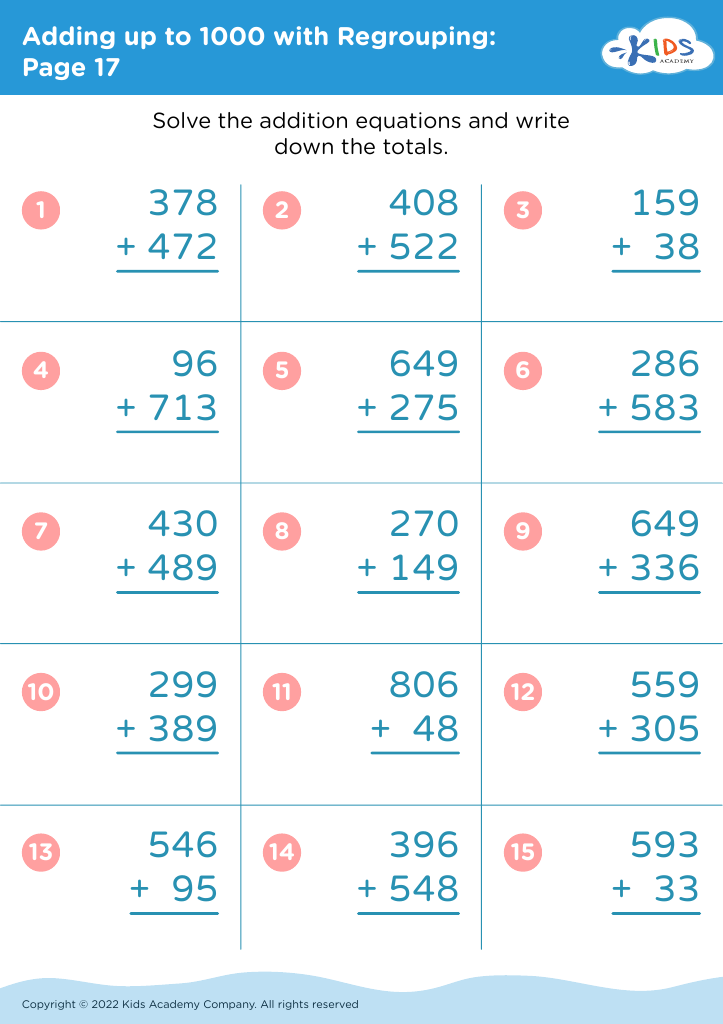
Adding up to 1000 with Regrouping: Page 17
Worksheet
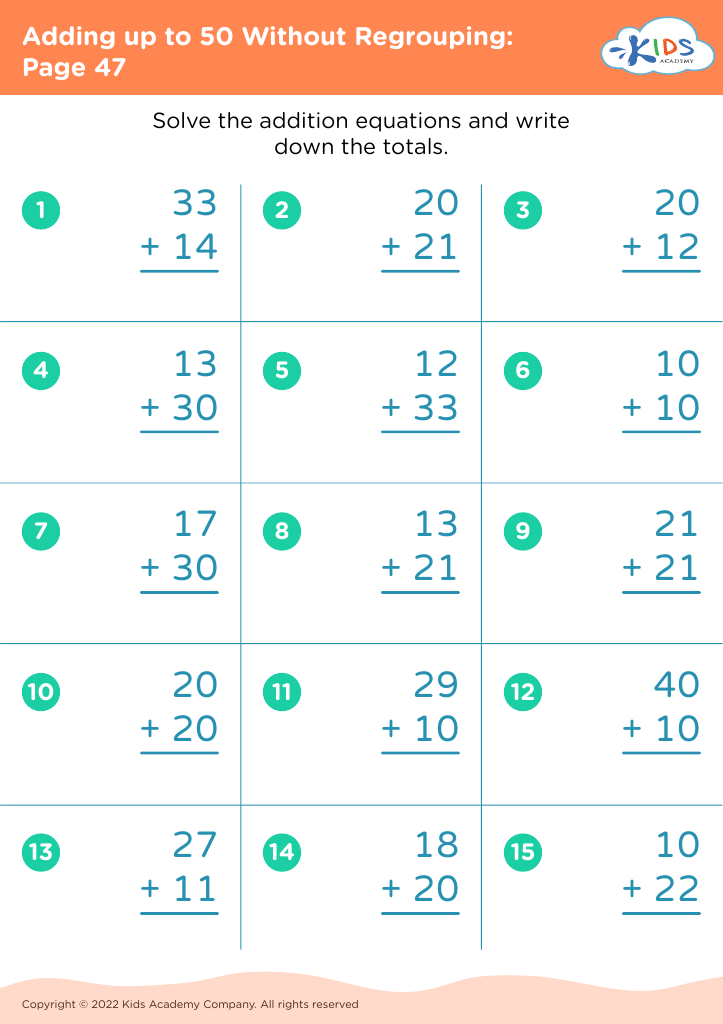
Adding up to 50 Without Regrouping: Page 47
Worksheet
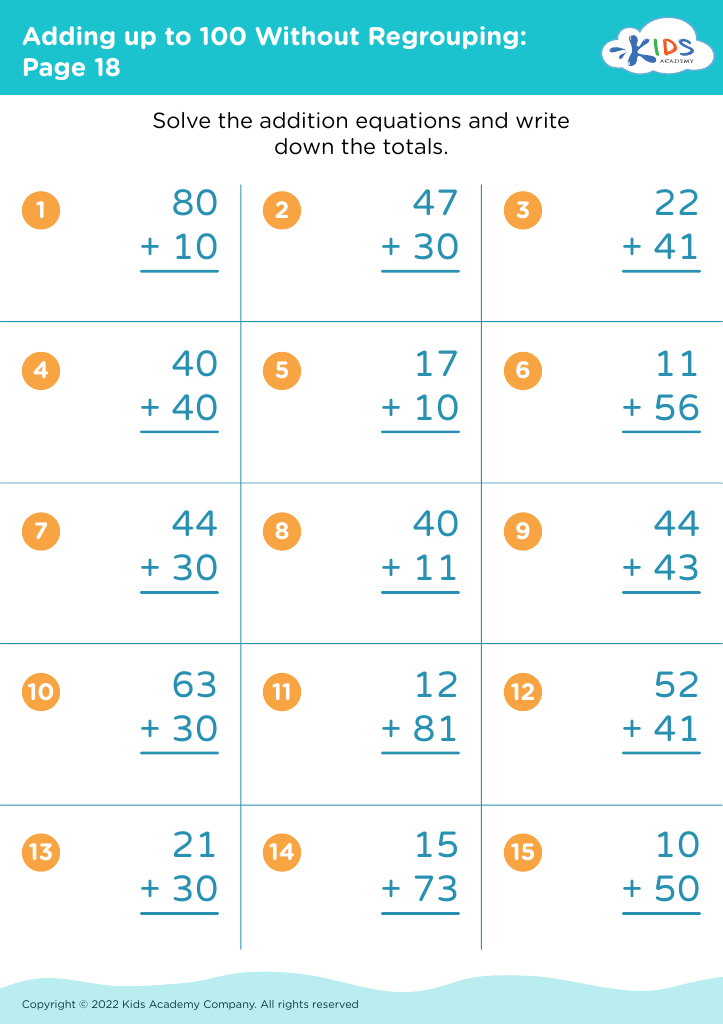
Adding up to 100 Without Regrouping: Page 18
Worksheet
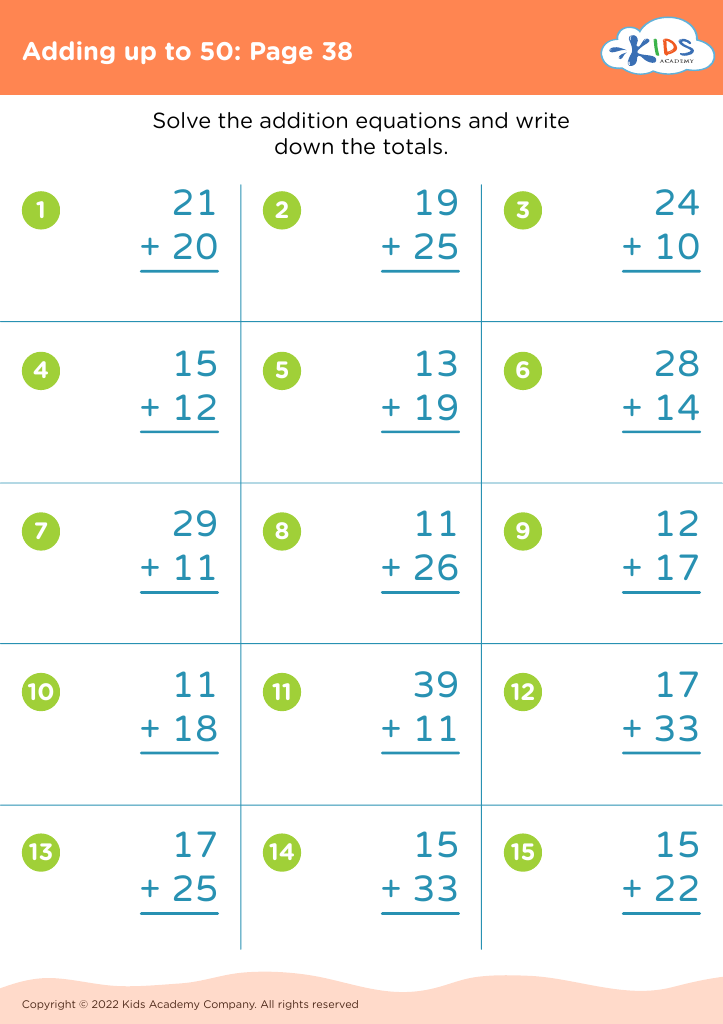
Adding up to 50: Page 38

Adding up to 50: Page 38

Adding up to 50: Page 38
Worksheet
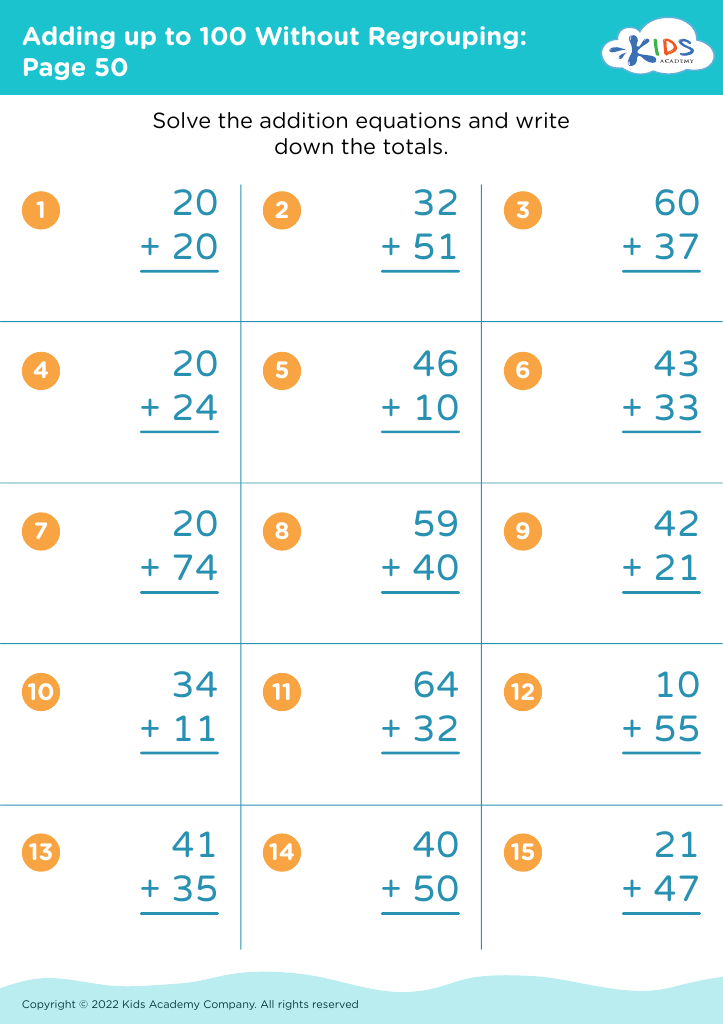
Adding up to 100 Without Regrouping: Page 50
Worksheet
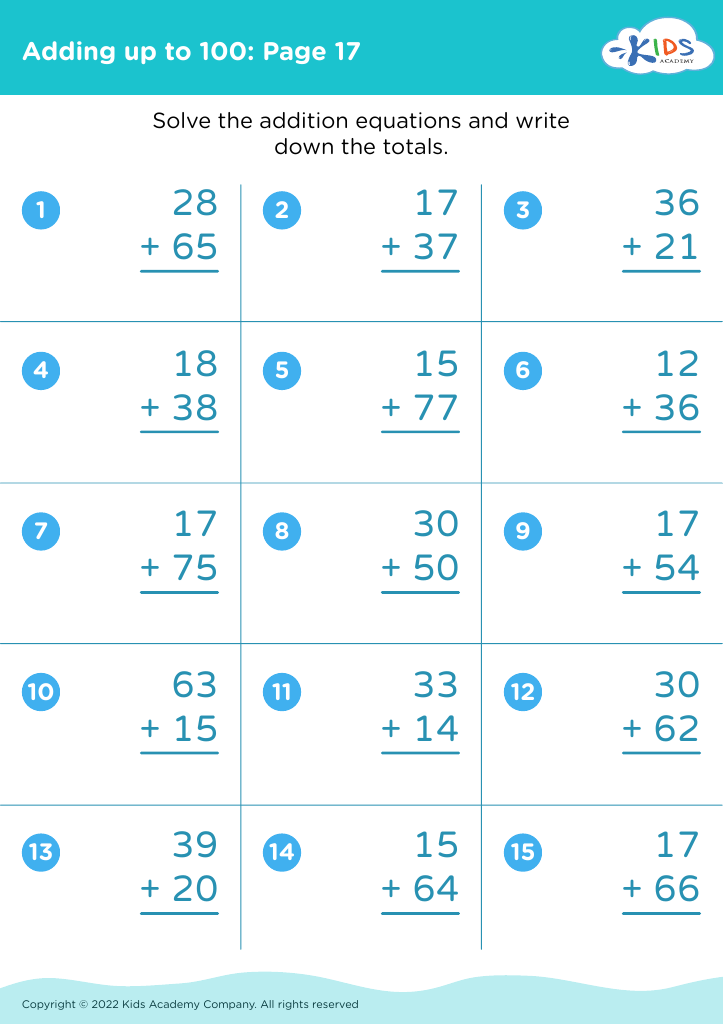
Adding up to 100: Page 17

Adding up to 100: Page 17

Adding up to 100: Page 17
Worksheet
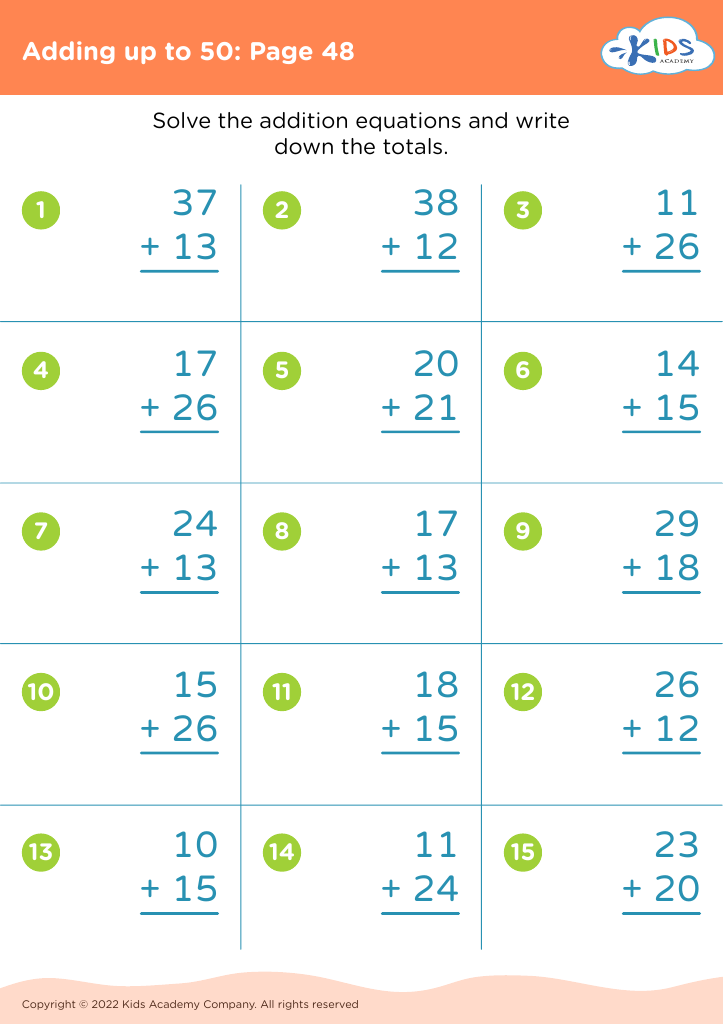
Adding up to 50: Page 48

Adding up to 50: Page 48

Adding up to 50: Page 48
Worksheet
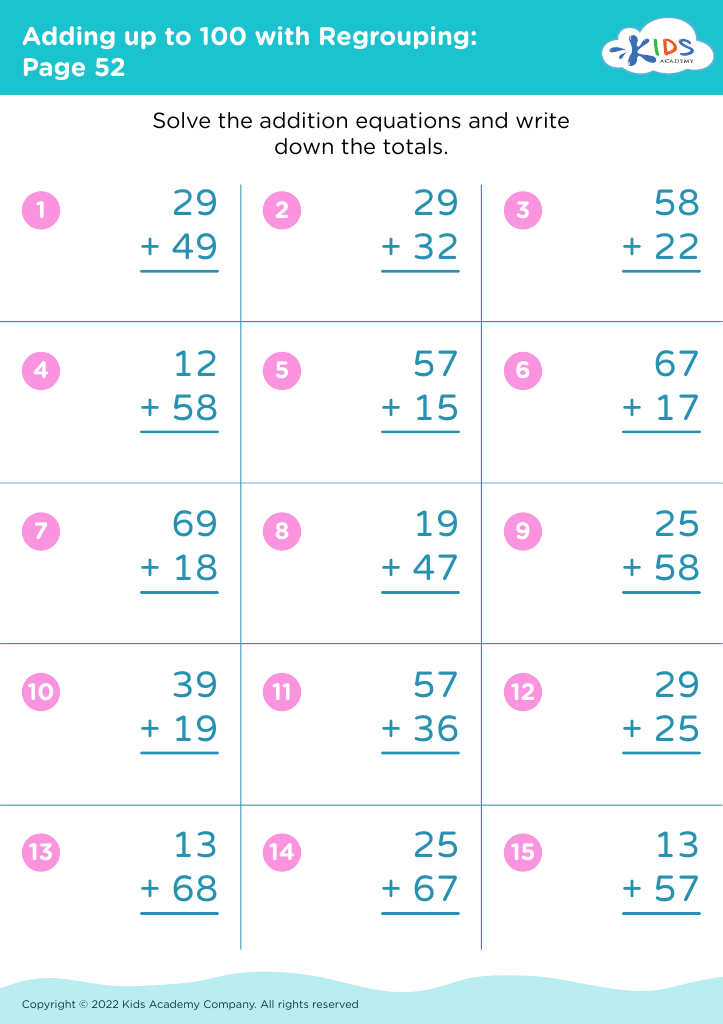
Adding up to 100 with Regrouping: Page 52
Worksheet
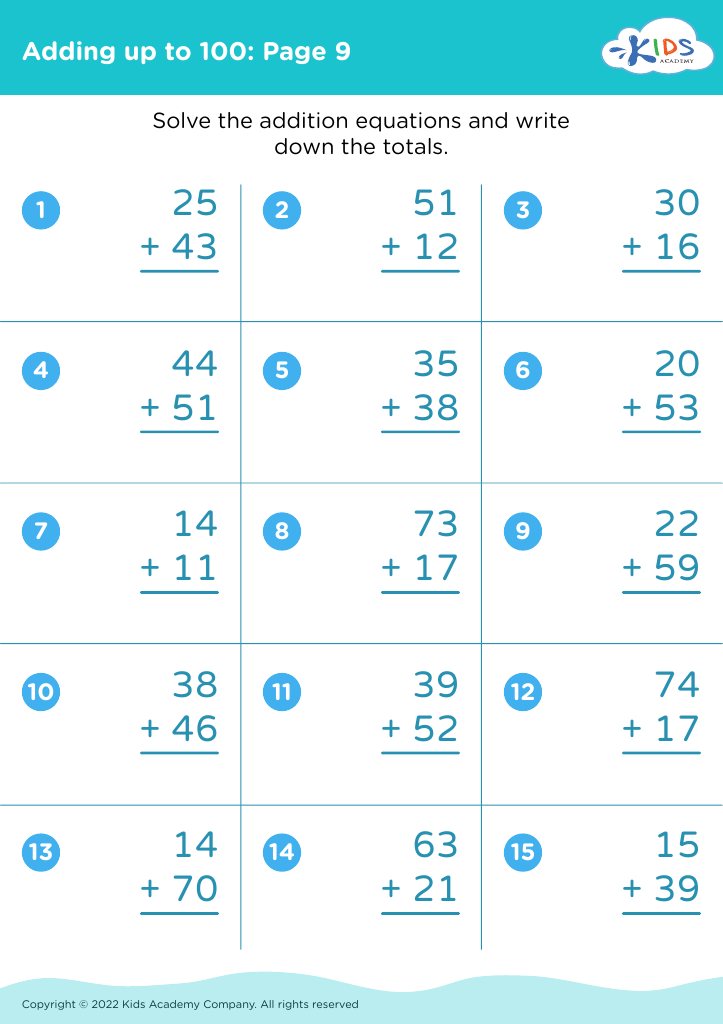
Adding up to 100: Page 9

Adding up to 100: Page 9

Adding up to 100: Page 9
Worksheet
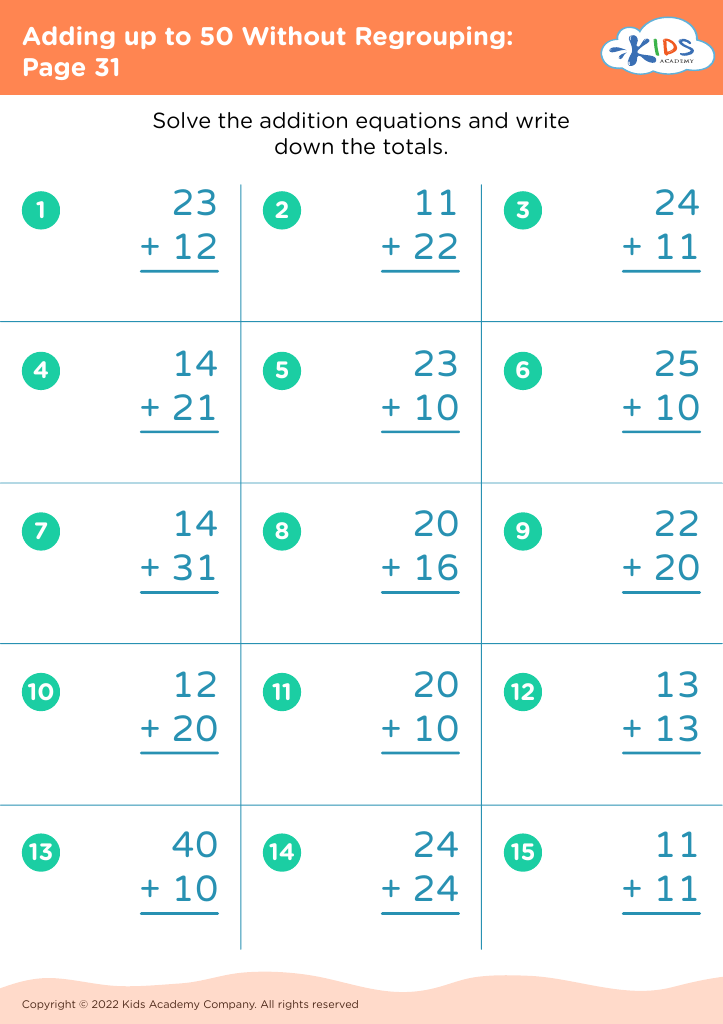
Adding up to 50 Without Regrouping: Page 31
Worksheet
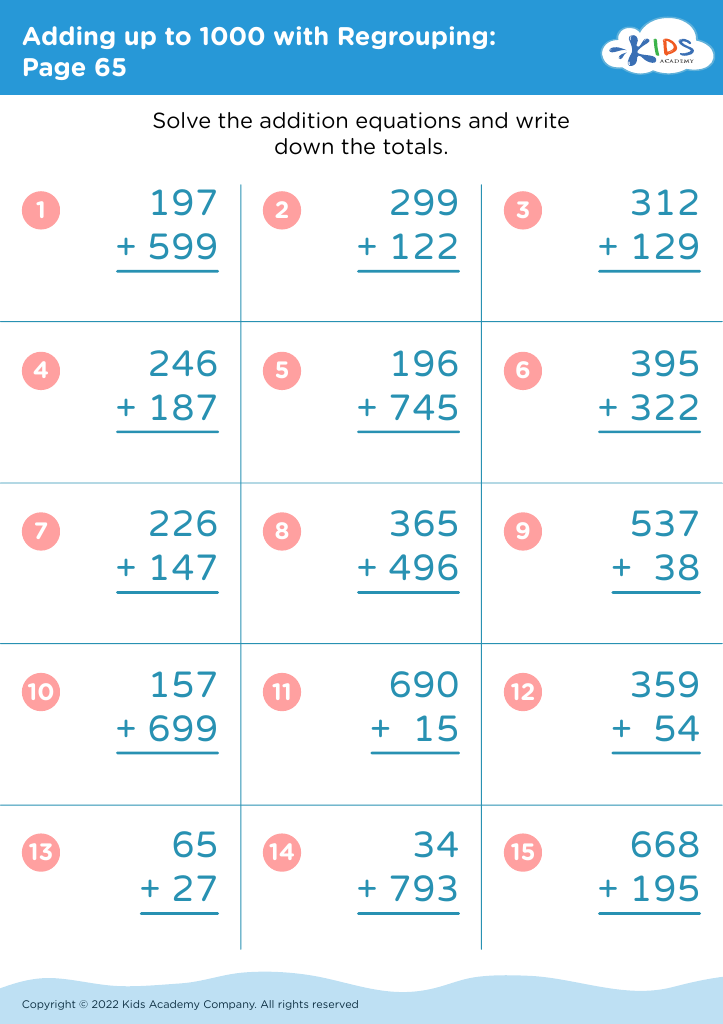
Adding up to 1000 with Regrouping: Page 65
Worksheet
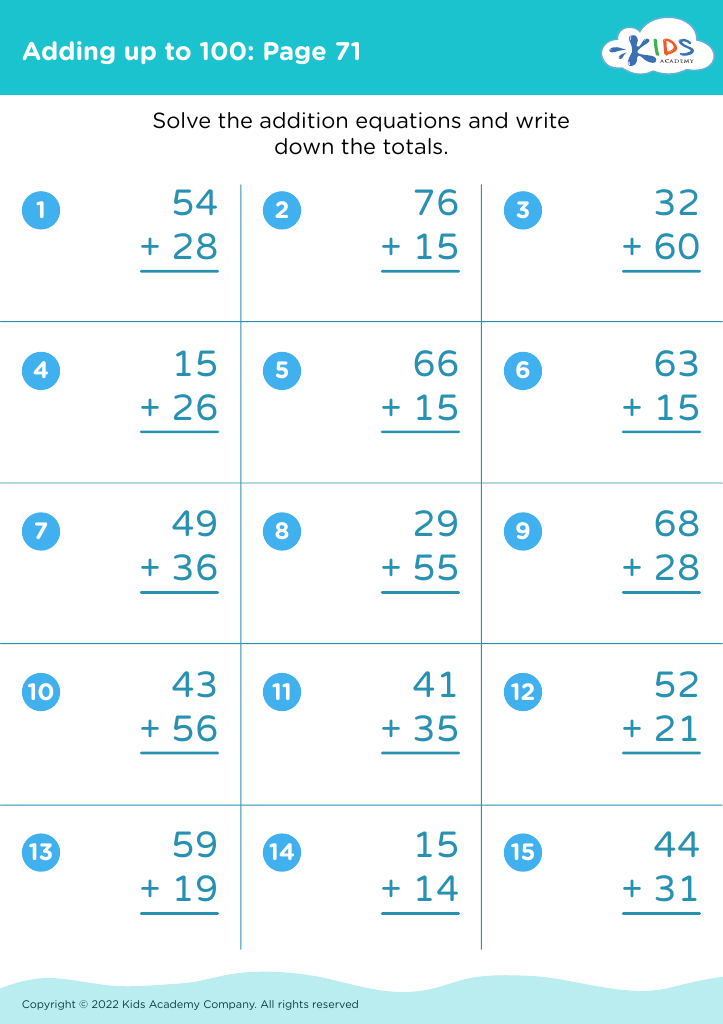
Adding up to 100: Page 71

Adding up to 100: Page 71

Adding up to 100: Page 71
Worksheet
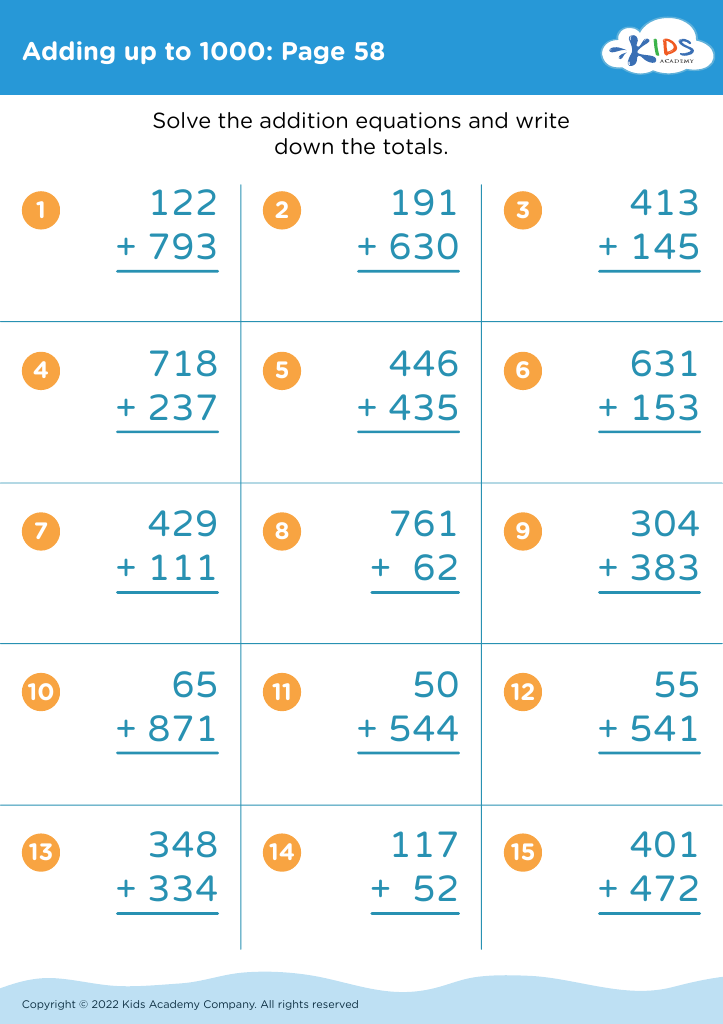
Adding up to 1000: Page 58

Adding up to 1000: Page 58

Adding up to 1000: Page 58
Worksheet
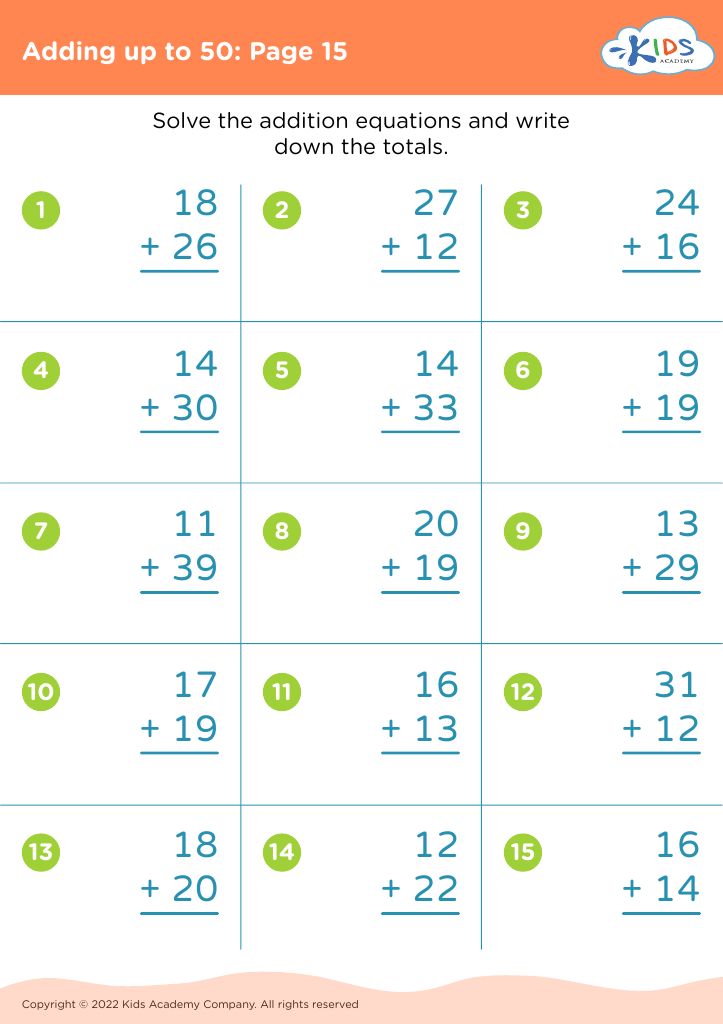
Adding up to 50: Page 15

Adding up to 50: Page 15

Adding up to 50: Page 15
Worksheet
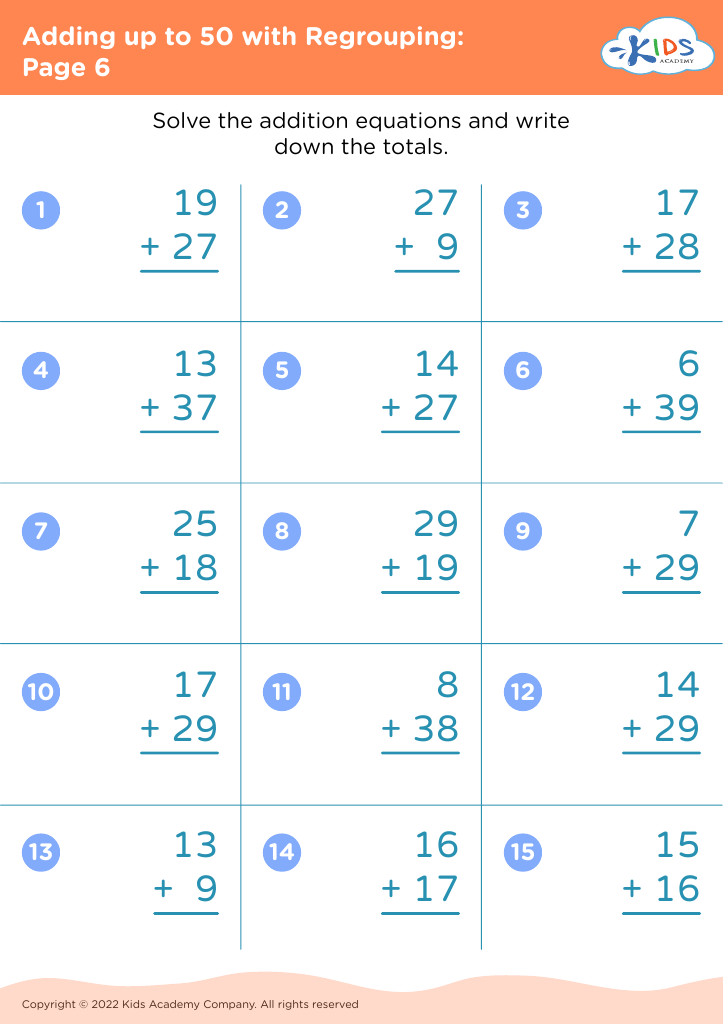
Adding up to 50 with Regrouping: Page 6
Worksheet
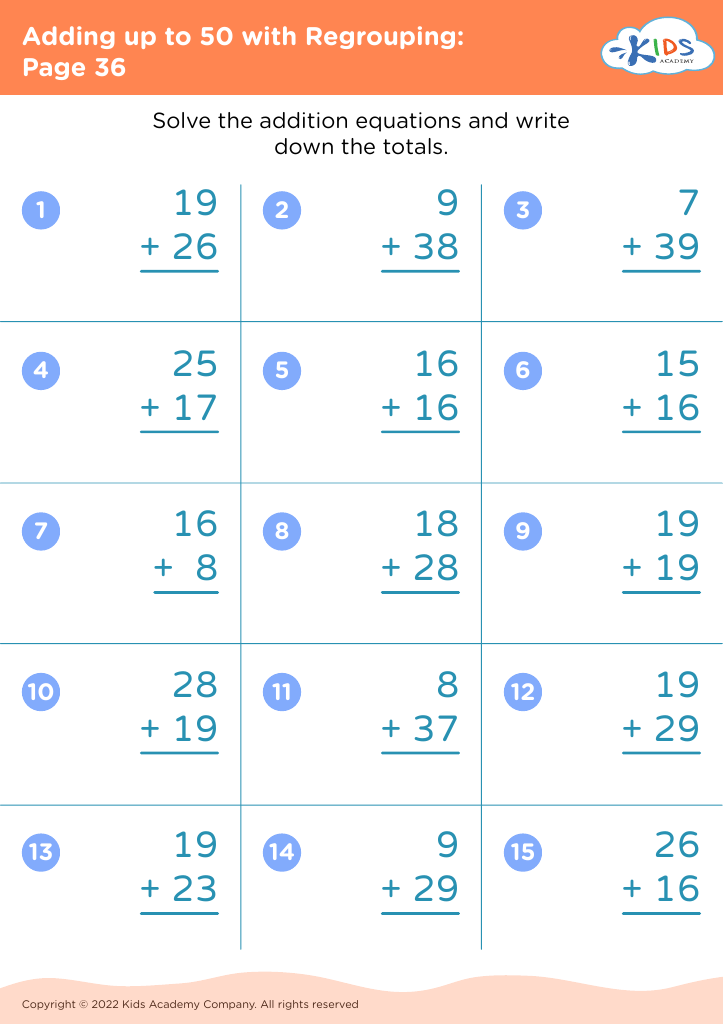
Adding up to 50 with Regrouping: Page 36
Worksheet
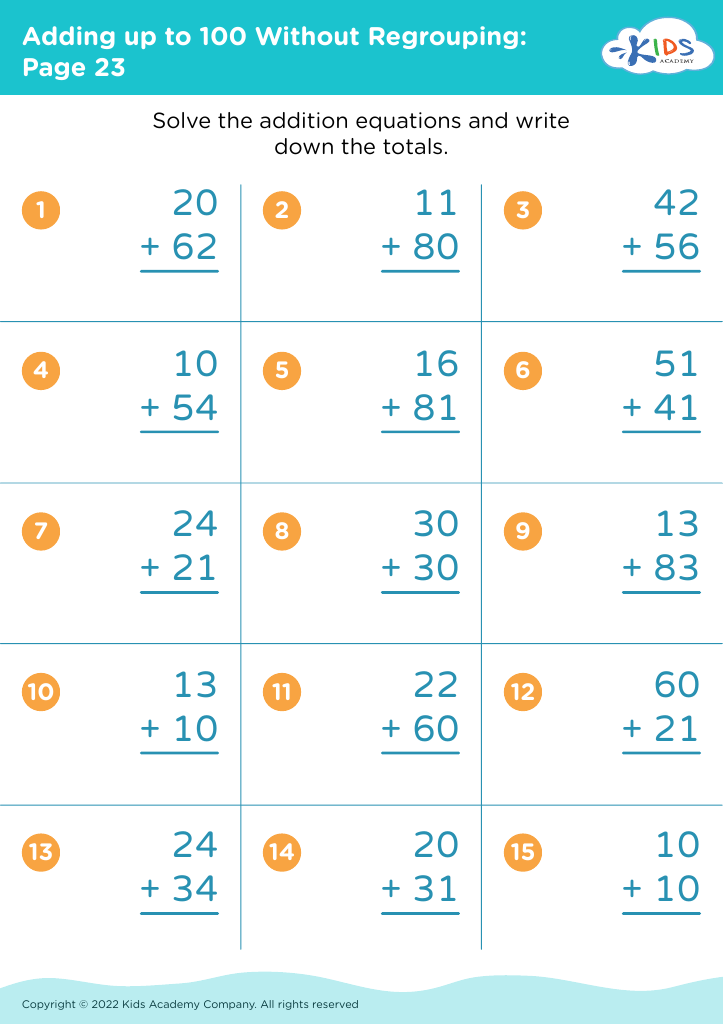
Adding up to 100 Without Regrouping: Page 23
Worksheet


Parents and teachers should prioritize understanding comparing fractions addition and subtraction because these mathematical concepts form the foundation for more advanced math skills. Mastering these skills helps students develop critical thinking and problem-solving abilities.

First, fractions are prevalent in everyday life—whether cooking, budgeting, or measuring—making it crucial for students to confidently manipulate them. Comparing fractions lays the groundwork for understanding more complex operations, such as finding a common denominator or working with equivalent fractions.

Furthermore, mastery in adding and subtracting fractions fosters mathematical fluency, allowing students to tackle word problems and apply what they've learned to real-world situations. When children grasp these concepts, they gain the confidence to tackle higher-level mathematics in later grades.

Additionally, understanding there are various methods to compare and compute with fractions—even if they don't yield the same results—promotes resilience and adaptability in problem-solving. It's also important for parents and teachers to collaborate in regularly reinforcing these skills through games, storytelling, or practical applications at home and in the classroom. This not only enhances students’ learning experience but also strengthens their mathematical foundation for future academic success.