Fine Motor Skills (coloring) Addition & Subtraction Worksheets
6 filtered results
-
From - To
Introduce a fun and educational way to enhance your child's math abilities with our Fine Motor Skills (coloring) Addition & Subtraction Worksheets. These engaging printables combine basic arithmetic practice with vibrant coloring activities, designed to captivate young minds while refining their motor skills. Your student will develop essential mathematics and coordination abilities simultaneously, transforming learning into an enjoyable experience. Perfect for early graders, these worksheets support numeracy fluency and dexterity through creative, hands-on interaction. Give your child a head start in their academic journey with our thoughtfully crafted resources that promote both cognitive and physical growth. Explore and download now!
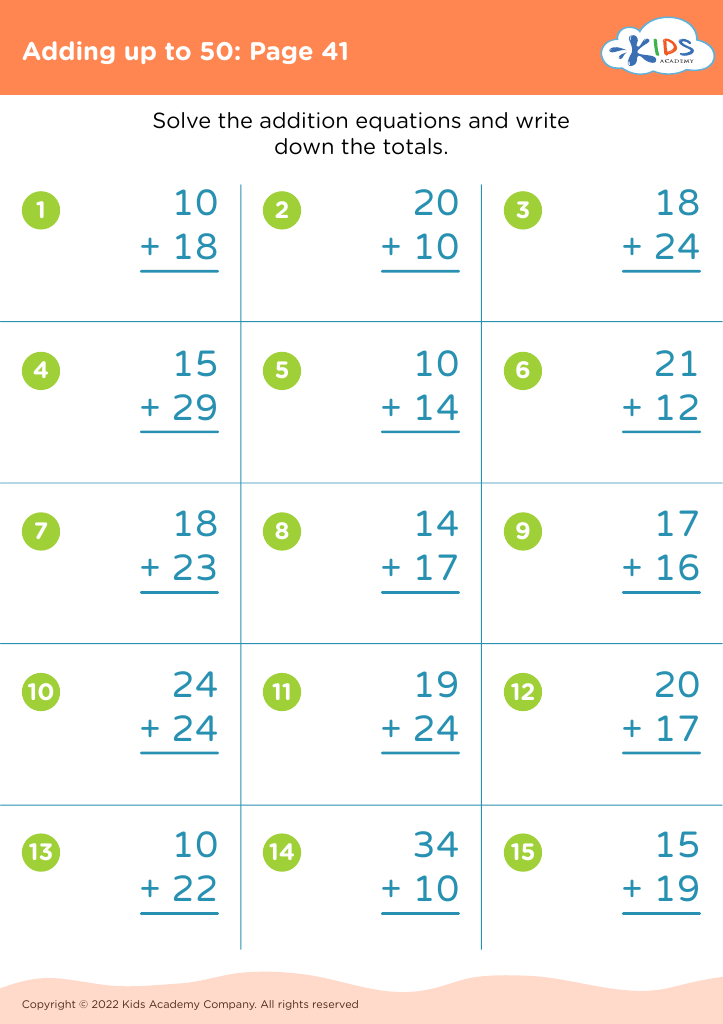
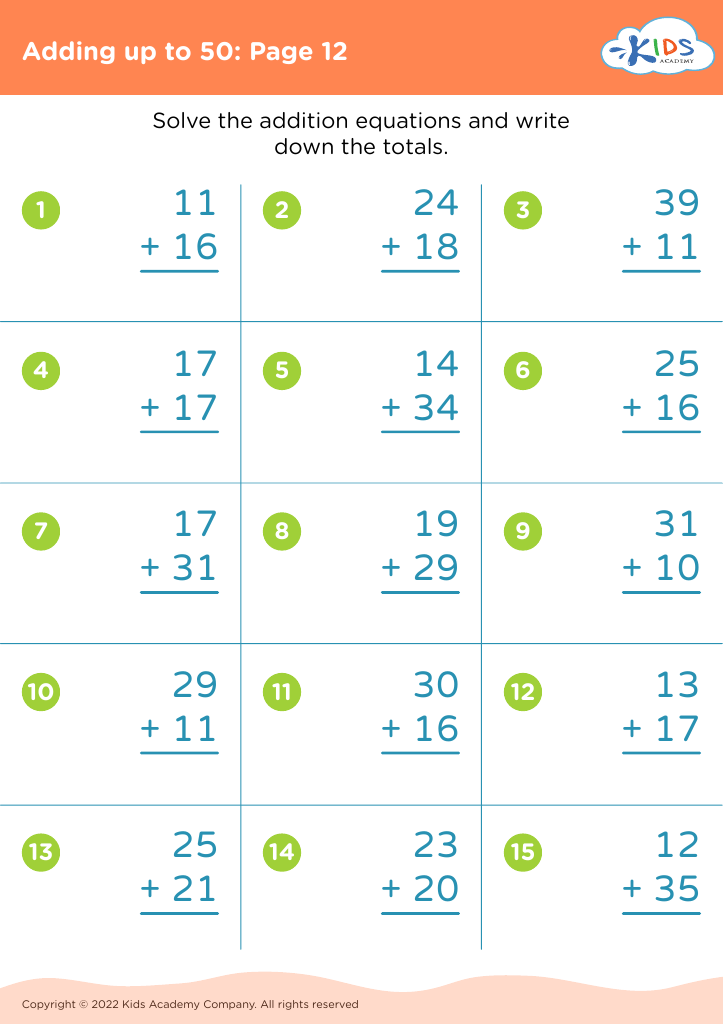
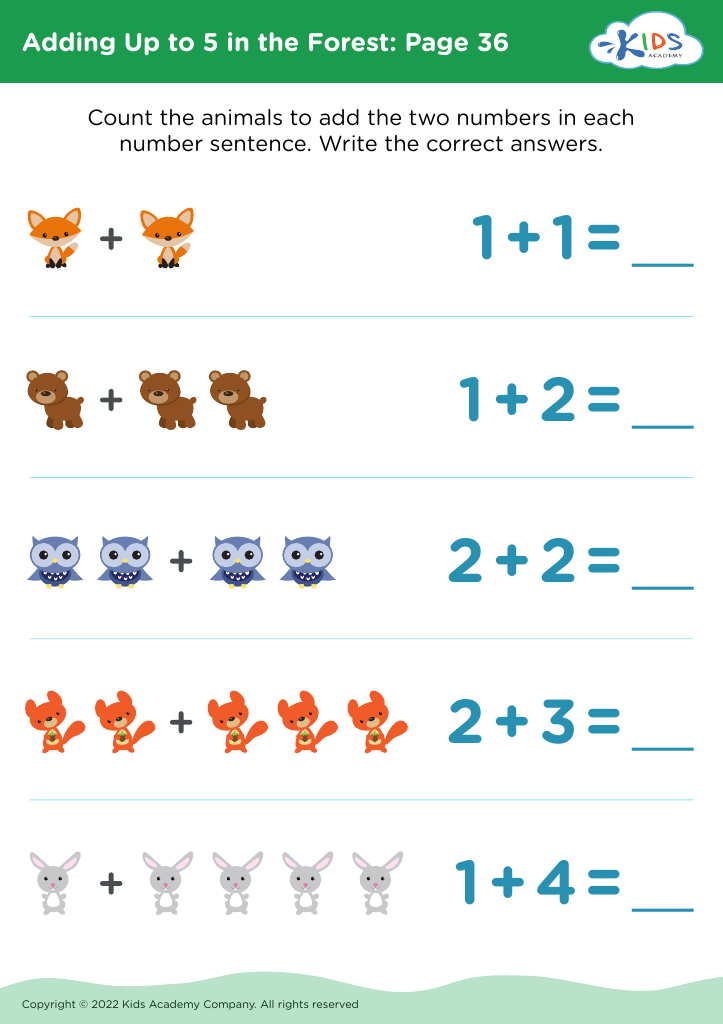
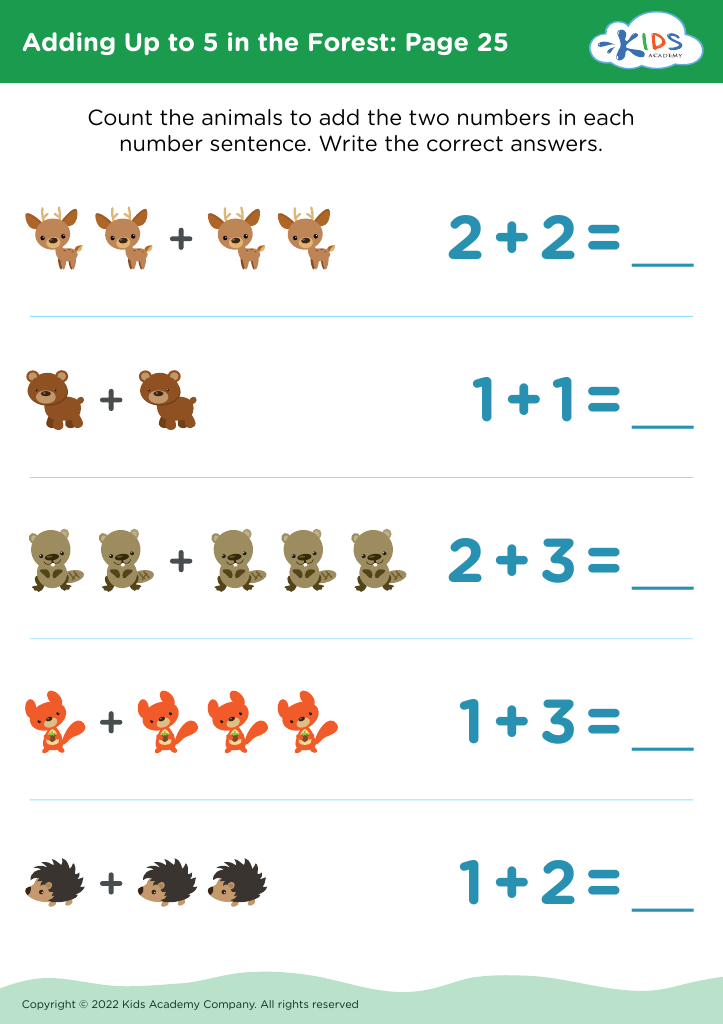
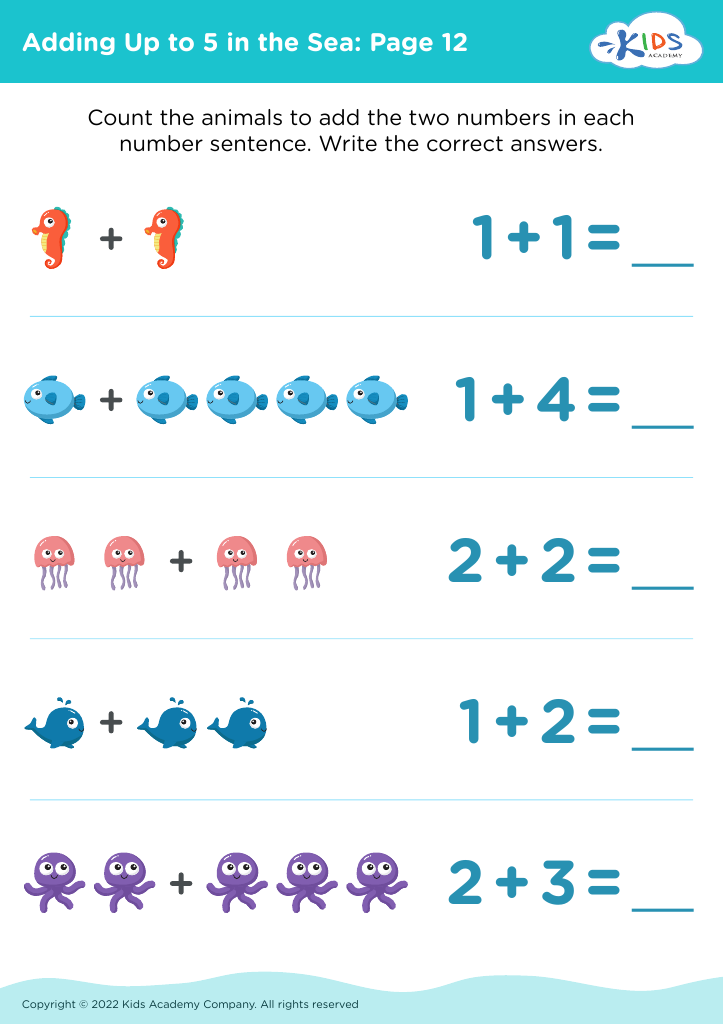
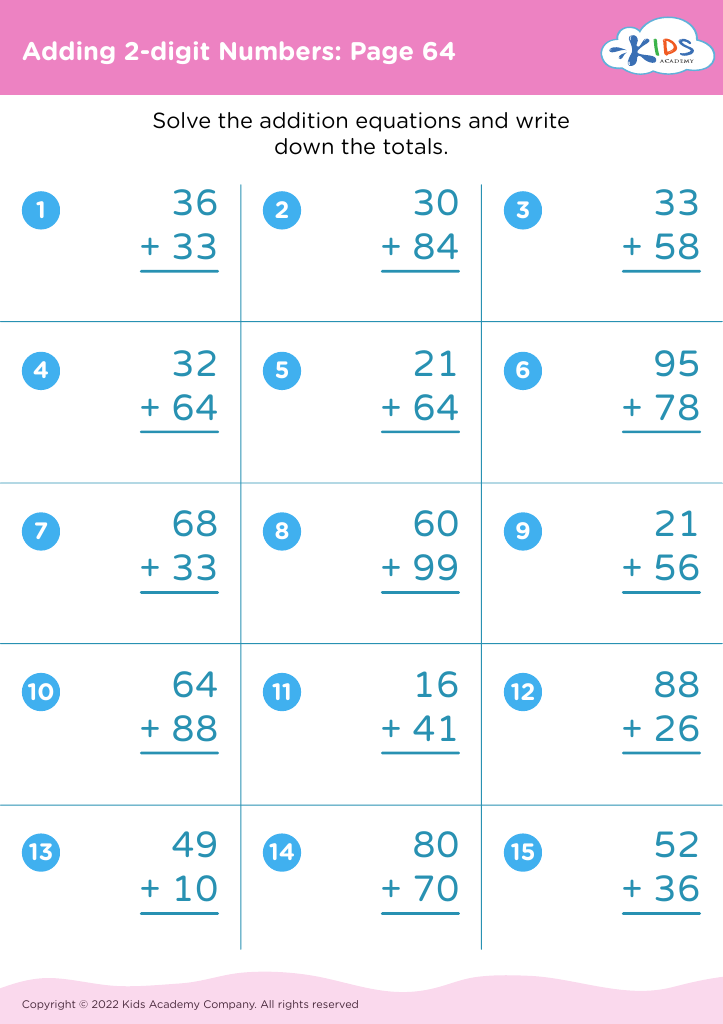








Parents and teachers should care about fine motor skills, particularly in the context of coloring and arithmetic activities like addition and subtraction, because these skills are vital for children's overall development and future academic success. Fine motor skills involve the coordination of small muscles, particularly those in the hands and fingers, which are essential for tasks such as writing, buttoning clothes, and tying shoes.
Coloring helps to refine these movements, enhancing a child’s ability to control and use a pencil effectively. When children engage in coloring activities regularly, they strengthen the hand muscles necessary for writing, enabling them to form letters and numbers with greater precision and legibility.
Additionally, incorporating addition and subtraction exercises into activities like coloring books or worksheets fosters both cognitive and motor skill development. Arithmetic focuses the mind, teaches problem-solving, and enhances concentration.
When children practice these skills together, they are better prepared for the structured learning environments of higher grades. Improved fine motor skills lead to better handwriting, which is crucial for note-taking and completing assignments effectively. Positive experiences with early arithmetic lay the foundation for more complex mathematical thinking later on. Therefore, supporting children's development in these areas not only nurtures their current abilities but also sets the stage for future academic achievements and everyday tasks.








