Our "Fine Motor Skills (Writing Numbers) Addition & Subtraction Worksheets" are specially designed to boost your child’s math abilities while enhancing writing skills. These worksheets feature fun, engaging activities that help children practice writing numbers accurately, promoting fine motor coordination. Ideal for early learners, these educational resources develop essential addition and subtraction skills through tracing, coloring, and number formation exercises. Perfect for at-home practice or classroom use, these worksheets ensure a solid foundation in math fundamentals while encouraging meticulous handwriting. Help your child succeed academically with our innovative, skill-building worksheets.
Check out this FREE Trial Lesson on Addition & Subtraction!

Match Exactly the Same

Favorites
With answer key
Interactive
  • Fine motor skills (writing numbers)
  • Addition & Subtraction
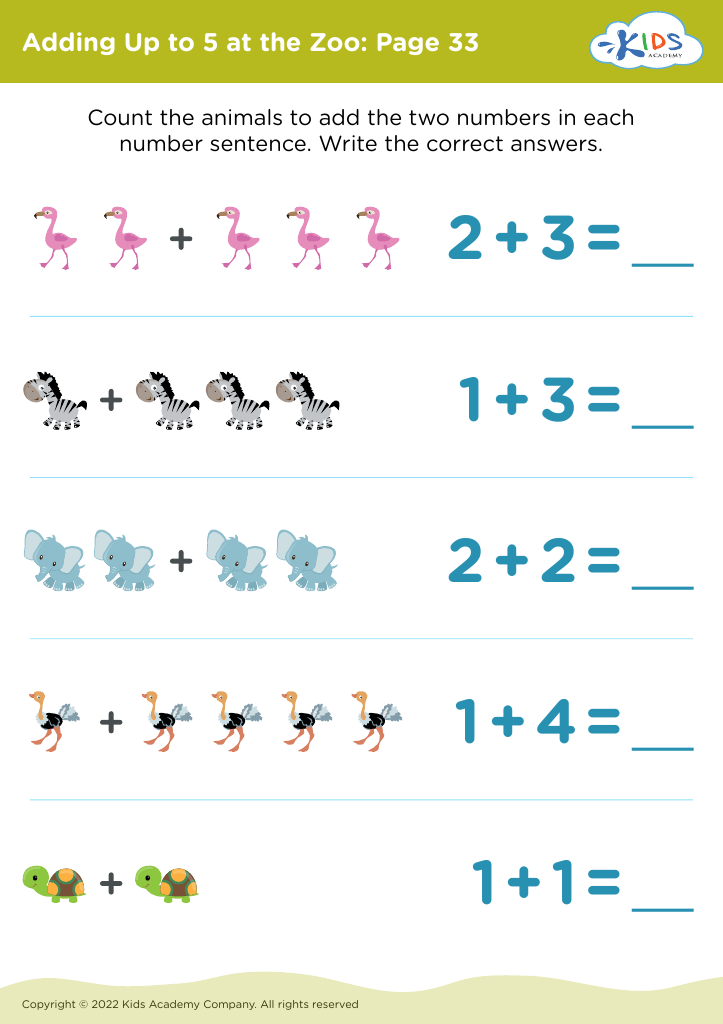
Adding Up to 5 at the Zoo: Page 33
Worksheet
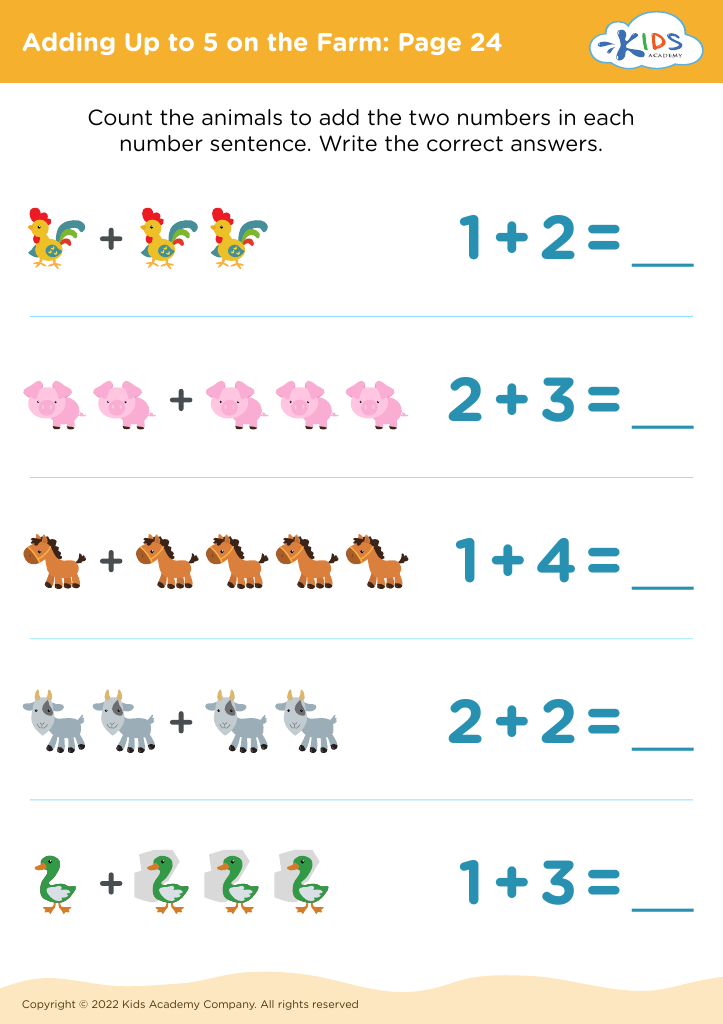
Adding Up to 5 on the Farm: Page 24
Worksheet
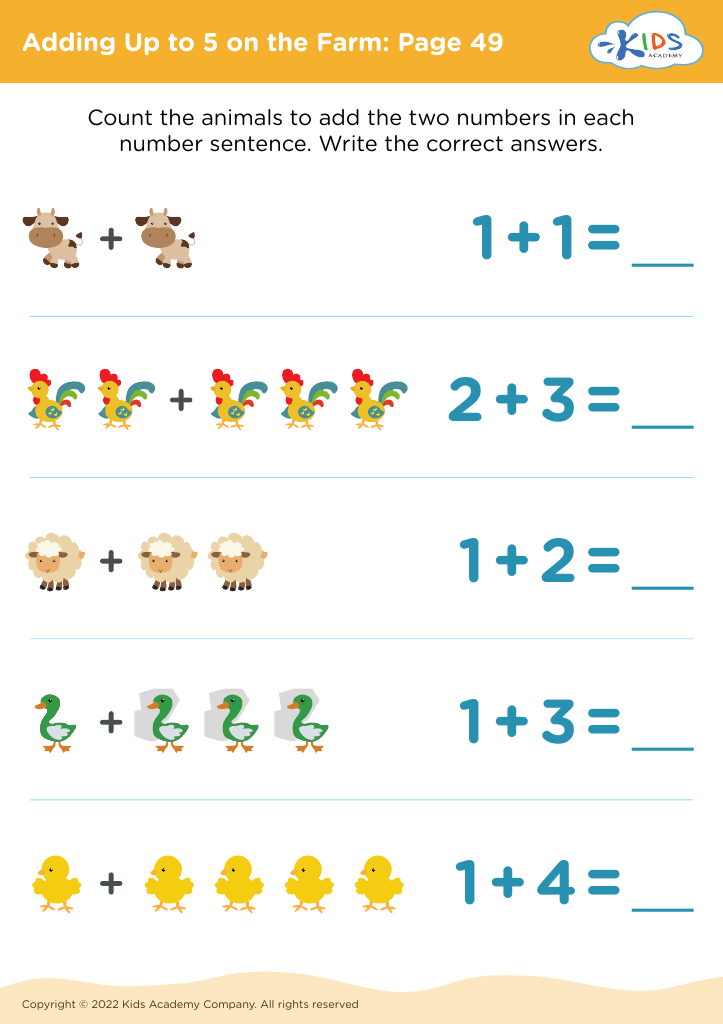
Adding Up to 5 on the Farm: Page 49
Worksheet
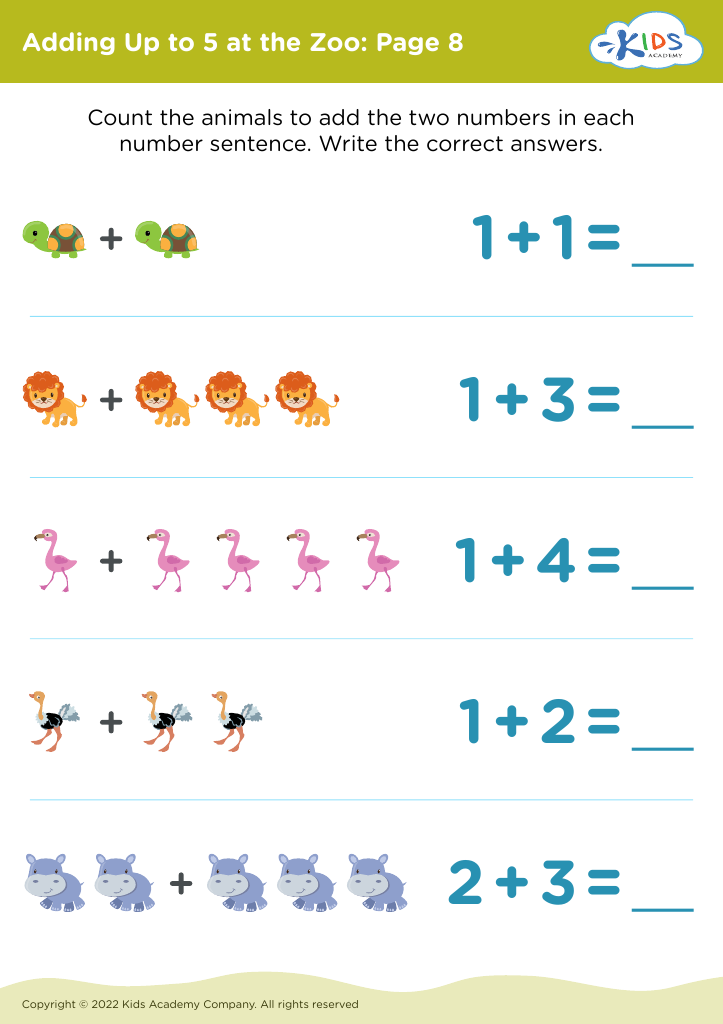
Adding Up to 5 at the Zoo: Page 8

Adding Up to 5 at the Zoo: Page 8

Adding Up to 5 at the Zoo: Page 8
Worksheet
Simple Addition PDF Worksheet

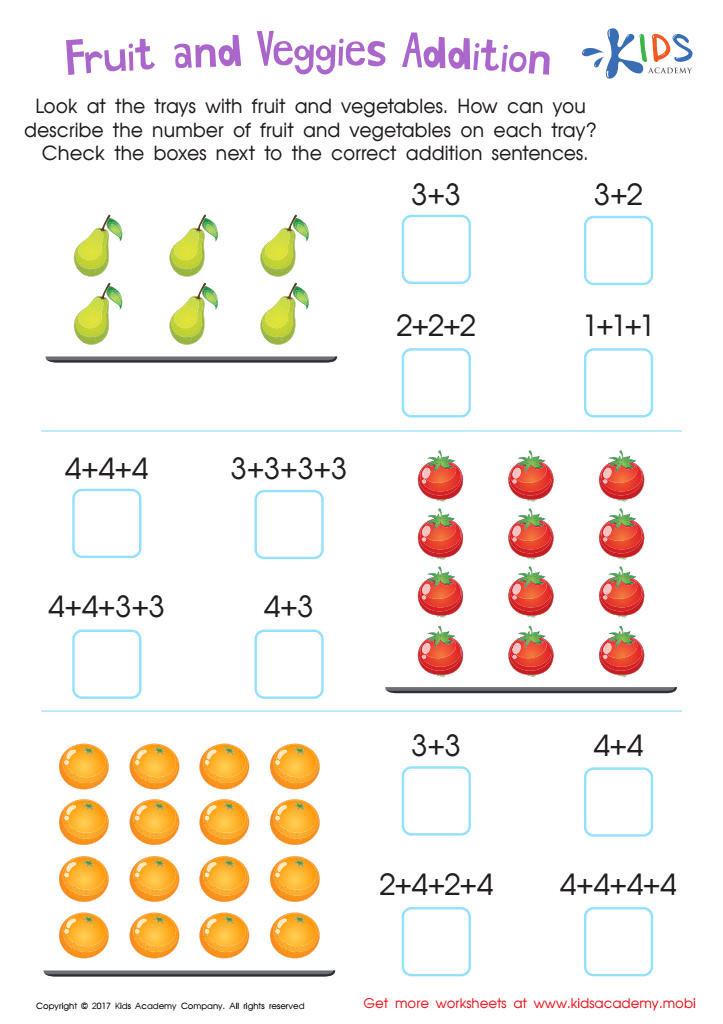
Fruit and Veggies Worksheet

It promotes problem-solving and analytical skills as kids match pictures to correct addition sentences. Help your child go beyond simple addition with this PDF worksheet!
Fruit and Veggies Worksheet
Worksheet
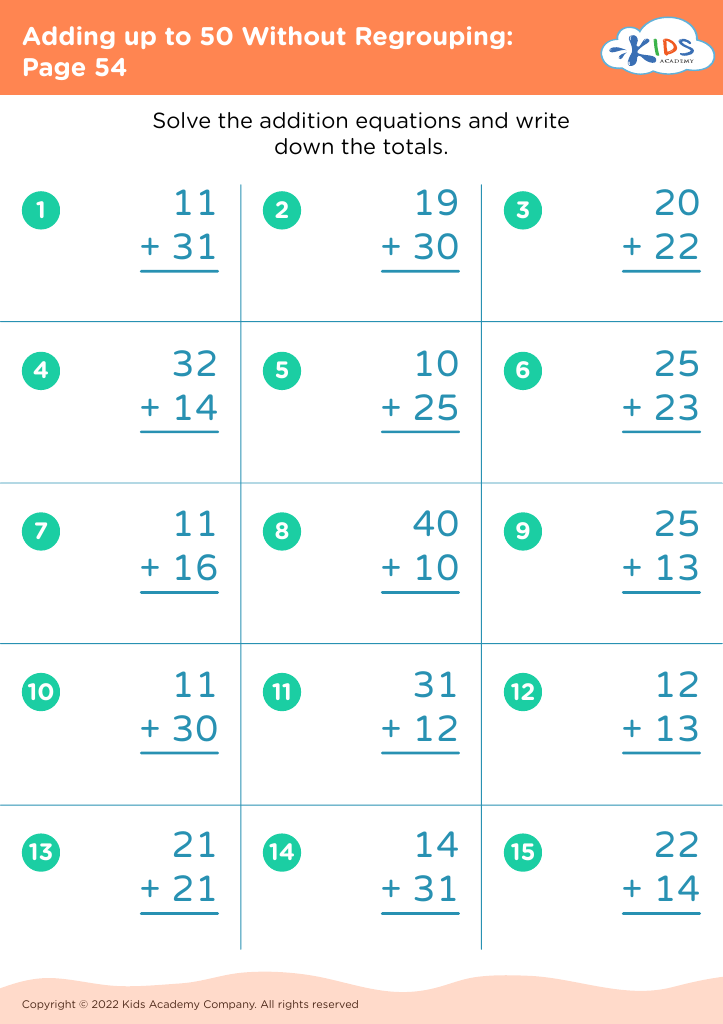
Adding up to 50 Without Regrouping: Page 54
Worksheet
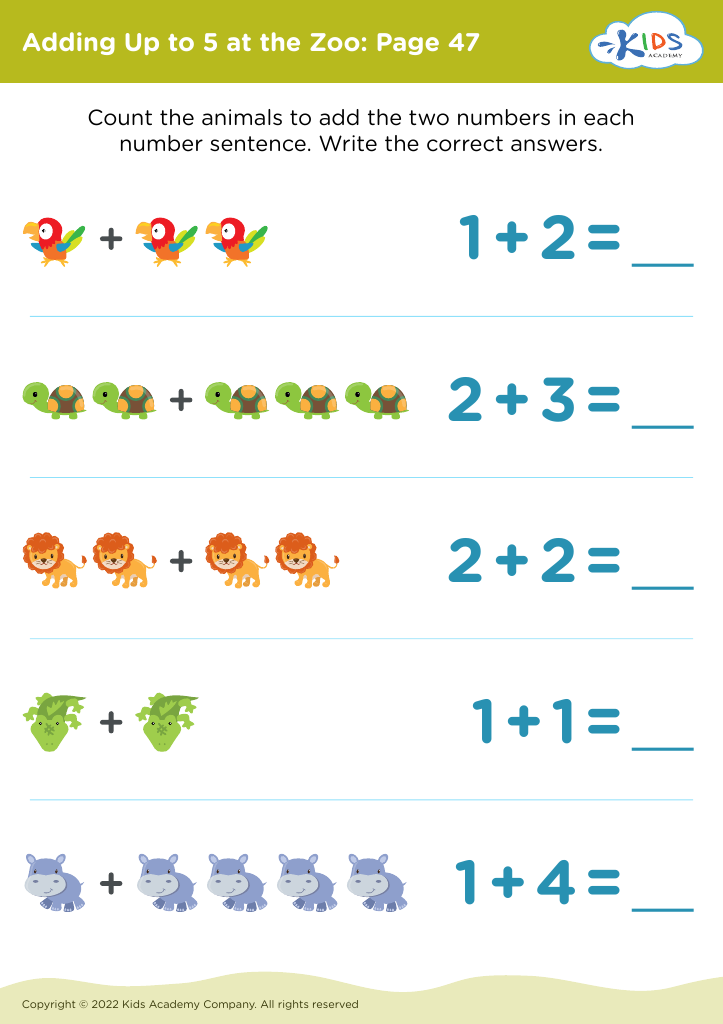
Adding Up to 5 at the Zoo: Page 47
Worksheet
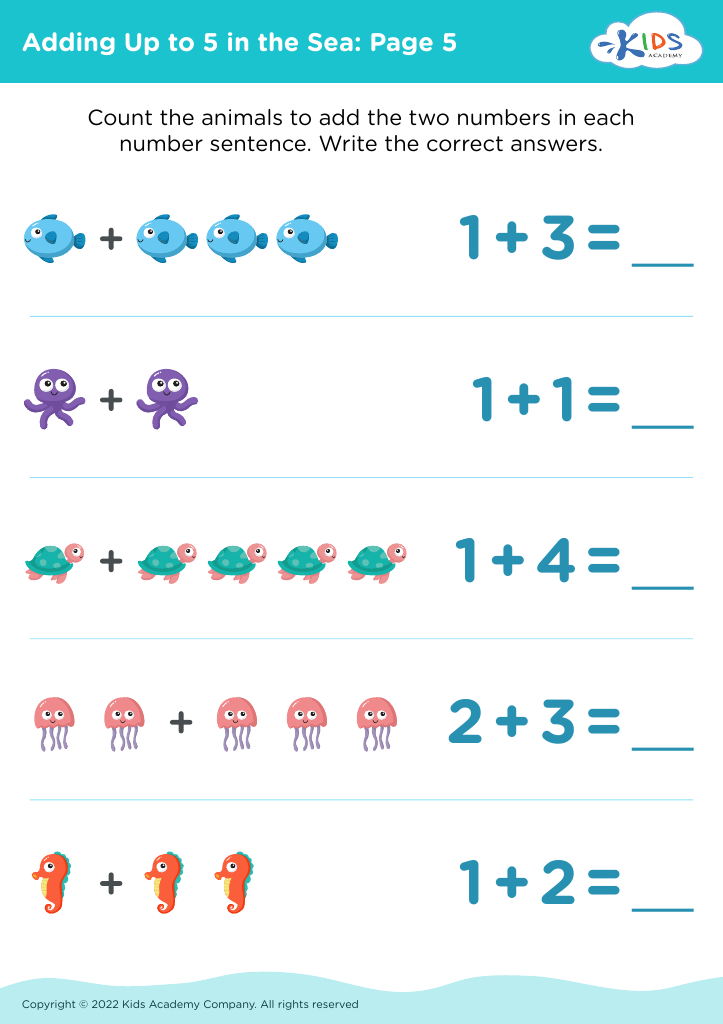
Adding Up to 5 in the Sea: Page 5

Adding Up to 5 in the Sea: Page 5

Adding Up to 5 in the Sea: Page 5
Worksheet
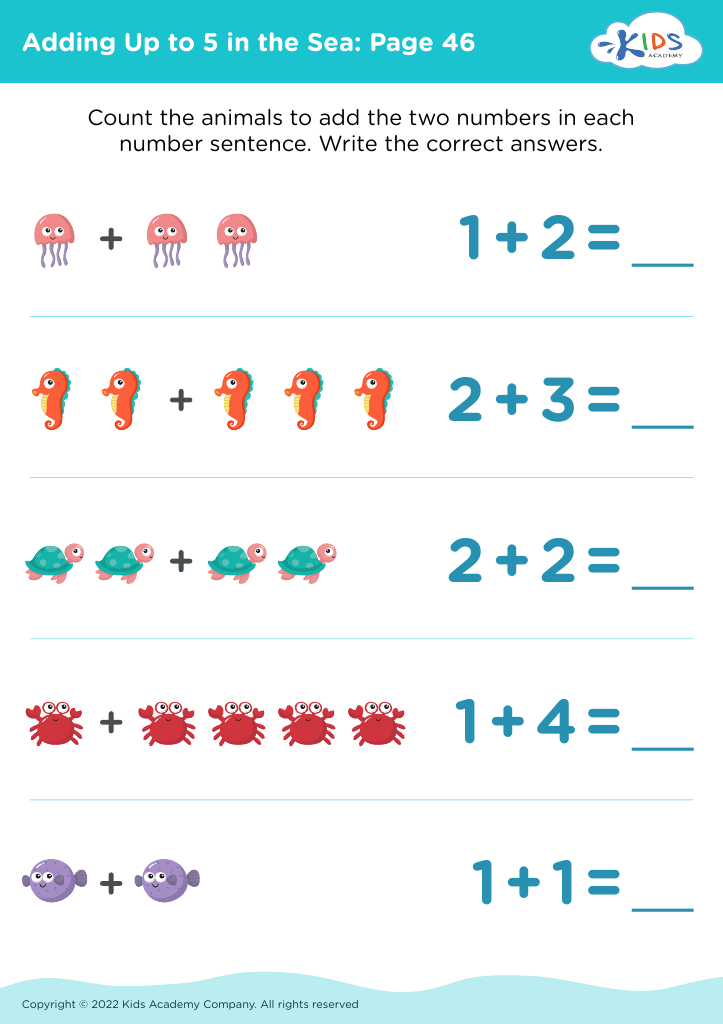
Adding Up to 5 in the Sea: Page 46
Worksheet
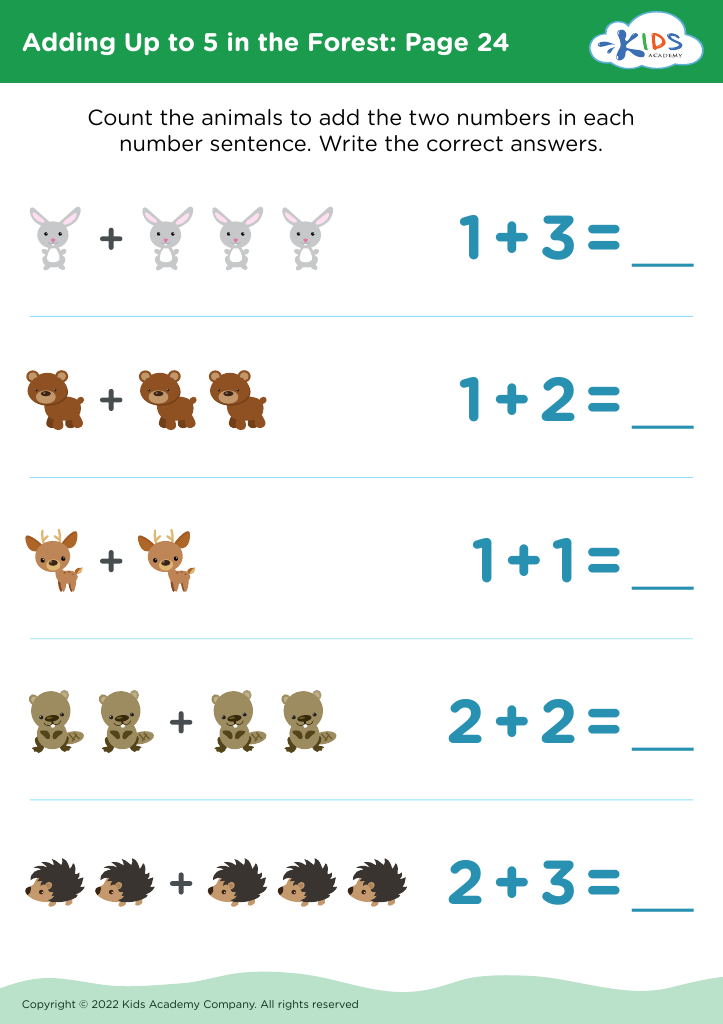
Adding Up to 5 in the Forest: Page 24
Worksheet
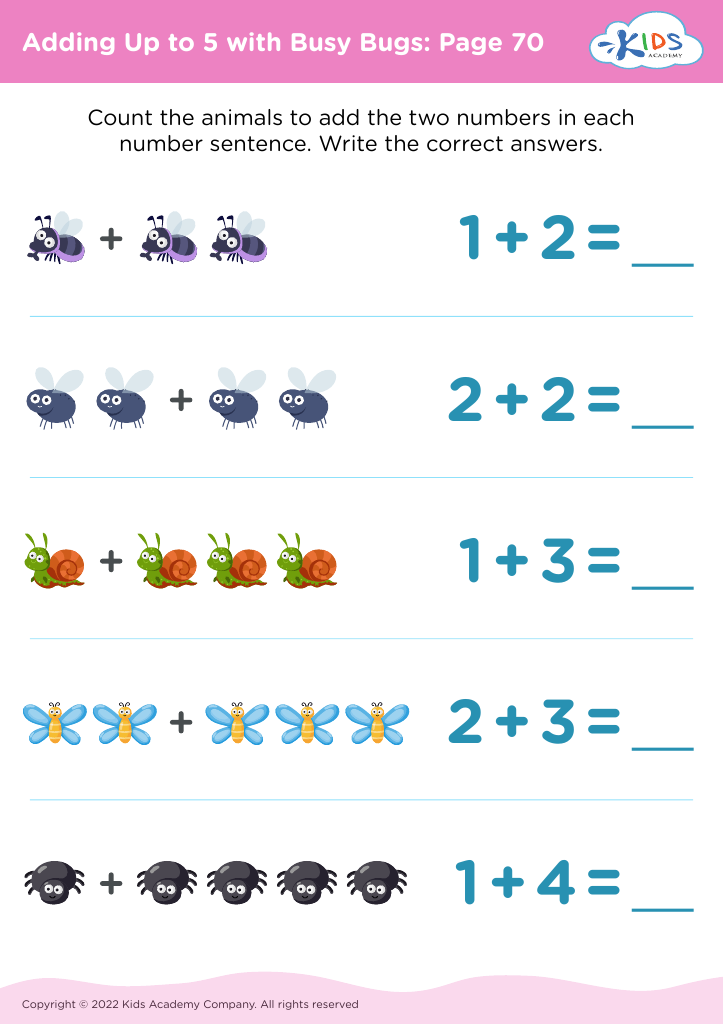
Adding Up to 5 with Busy Bugs: Page 70
Worksheet
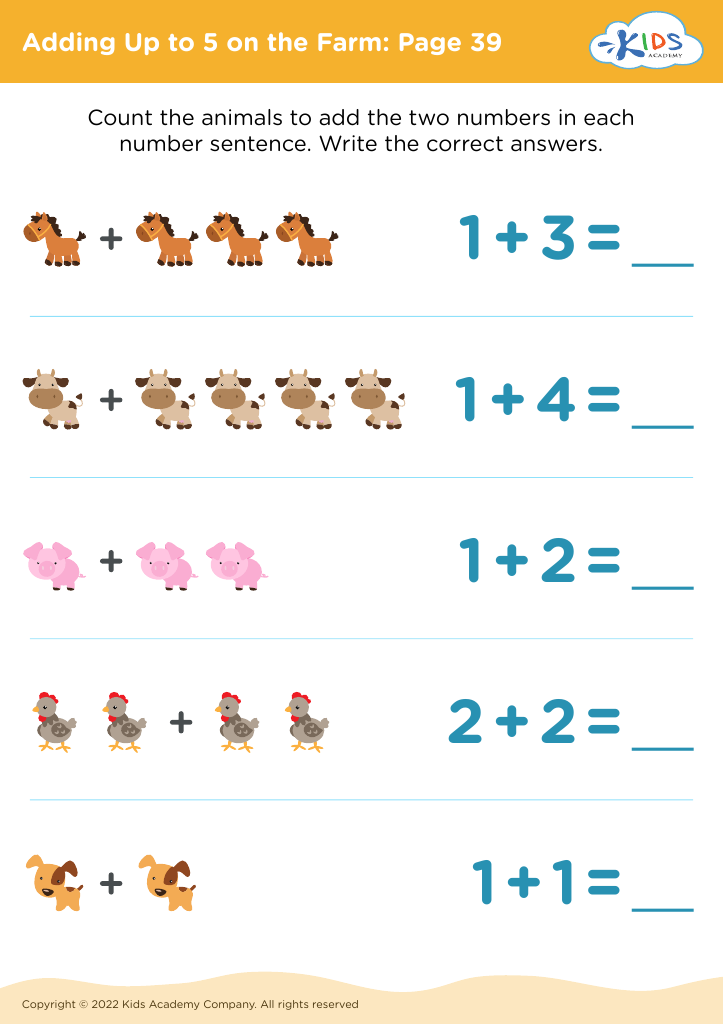
Adding Up to 5 on the Farm: Page 39
Worksheet
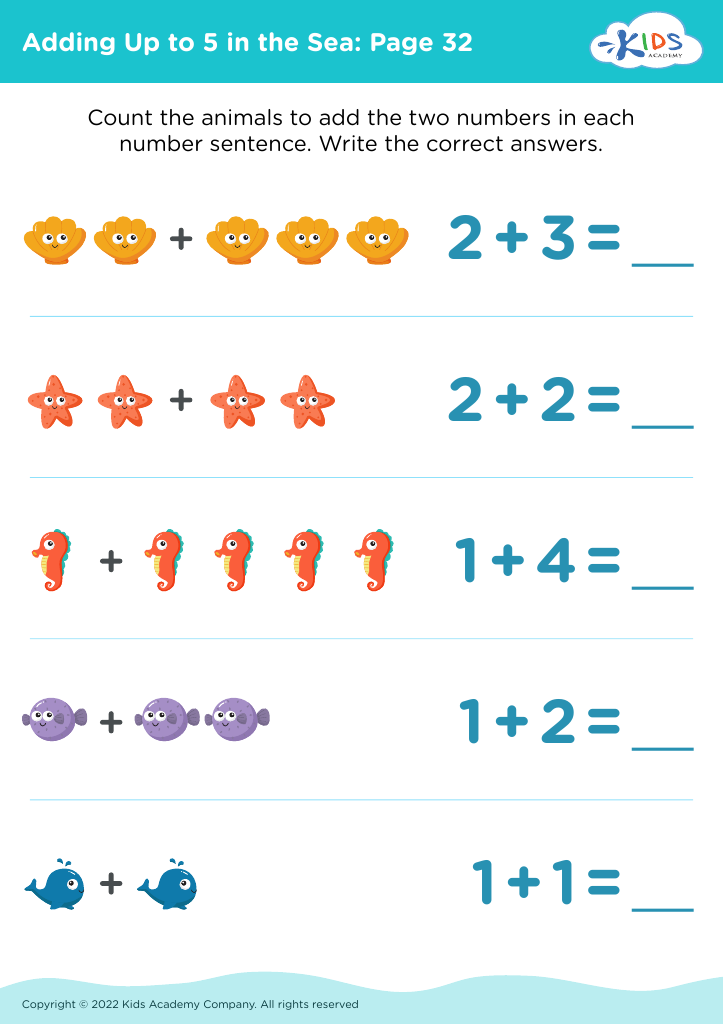
Adding Up to 5 in the Sea: Page 32
Worksheet
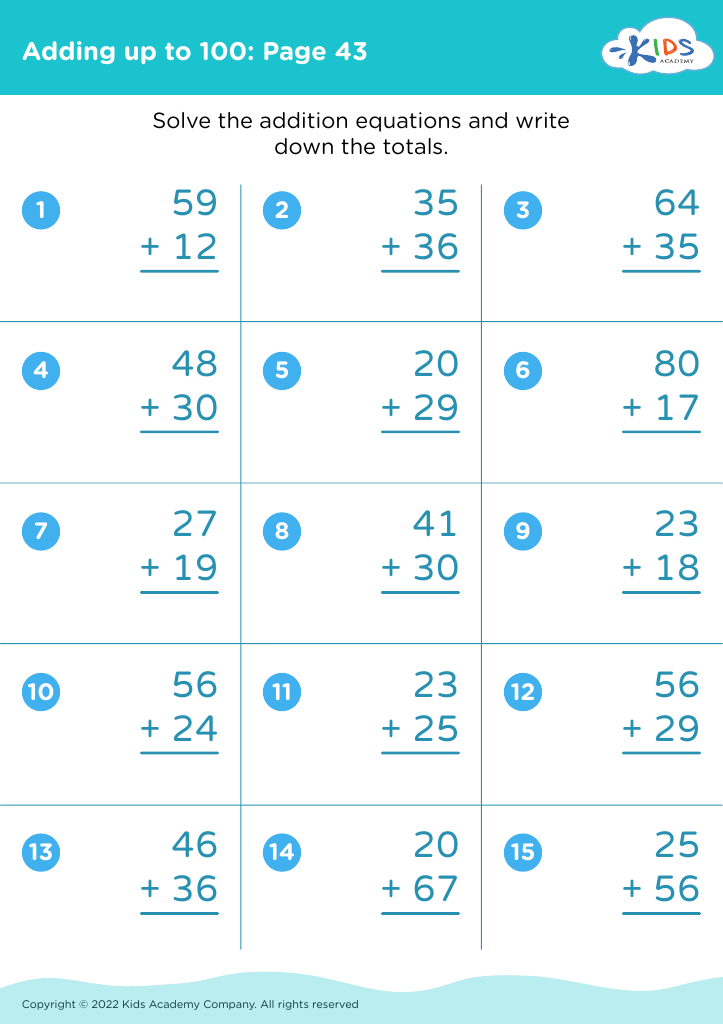
Adding up to 100: Page 43

Adding up to 100: Page 43

Adding up to 100: Page 43
Worksheet
Adding Instruments with Addison Worksheet
Adding Instruments with Addison Worksheet

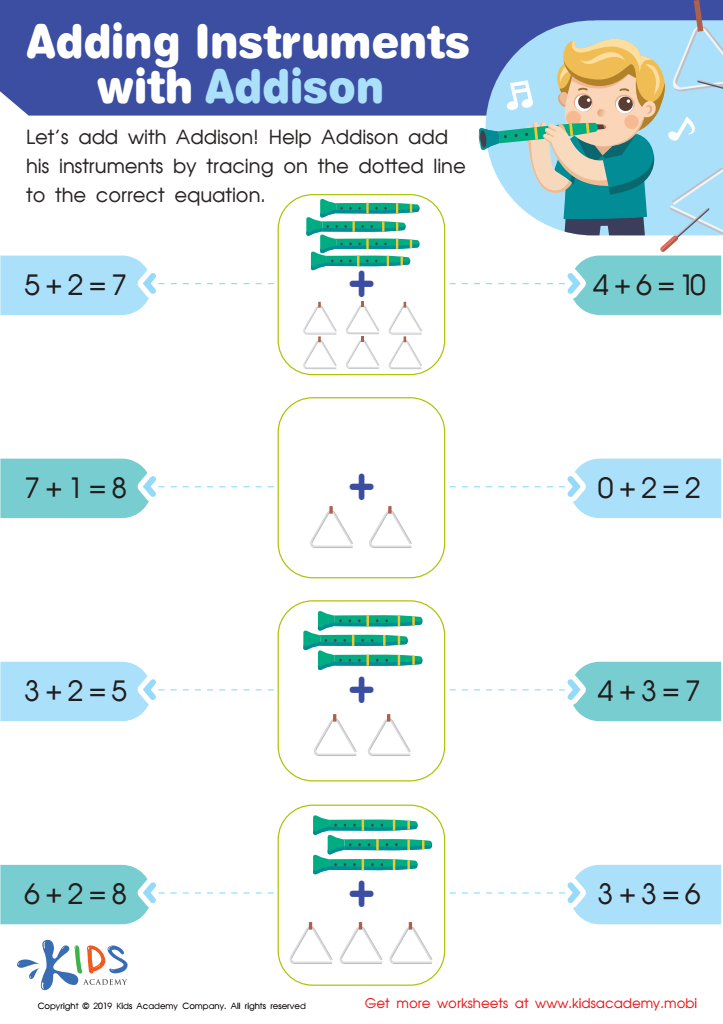
Your math stars will enjoy assisting Addison as he adds his instruments. This worksheet has 10 basic addition problems with pictures of instruments to aid children. They match the pics and sentences, then connect them to the correct problem using the lines. A fun way to learn and practice addition!
Adding Instruments with Addison Worksheet

Worksheet
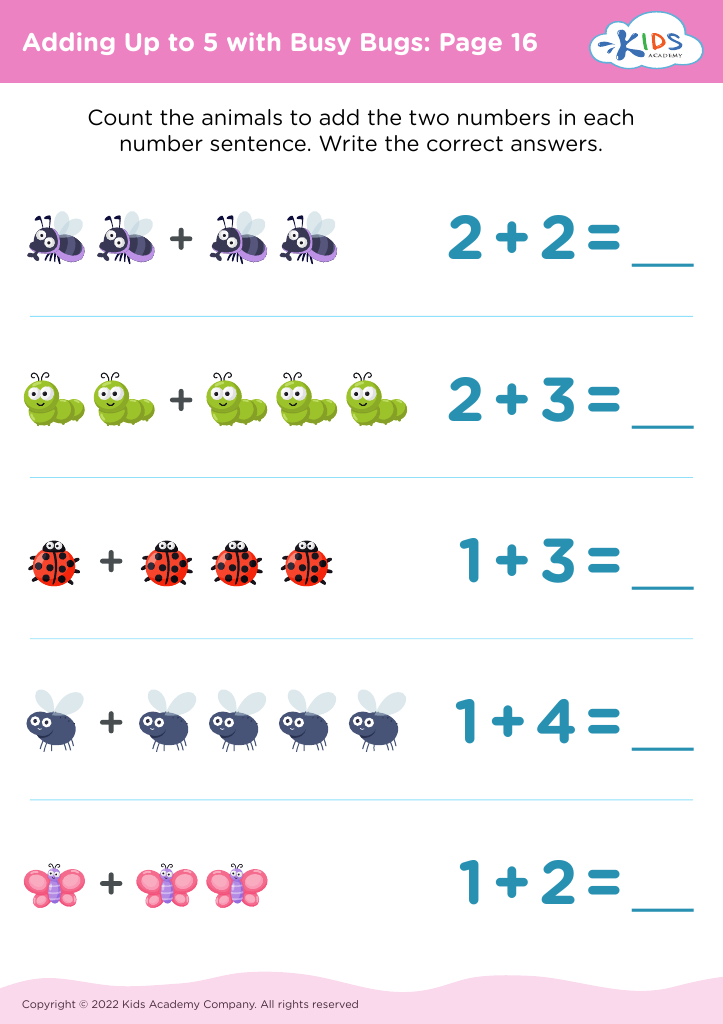
Adding Up to 5 with Busy Bugs: Page 16
Worksheet
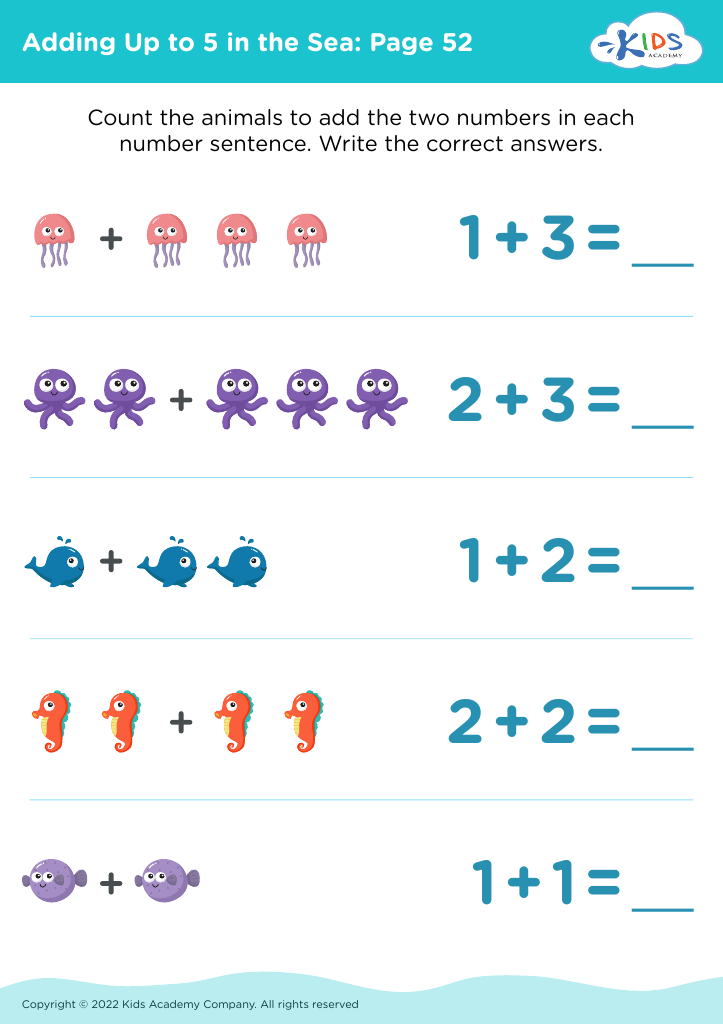
Adding Up to 5 in the Sea: Page 52
Worksheet


Parents and teachers should prioritize fine motor skills, particularly in activities like writing numbers and performing addition and subtraction, because these foundational abilities have widespread implications for a child's overall development and future learning success. Fine motor skills involve the coordination of small muscles, particularly in the hands and fingers, allowing children to perform precise tasks.

Writing numbers hones these skills, preparing children for more complex writing tasks and fostering essential hand-eye coordination. Additionally, comfortable and accurate number writing is crucial for effectively engaging in mathematical exercises like addition and subtraction. Mastering these early math skills builds confidence and a positive attitude toward learning, offering children a head start in critical thinking and problem-solving abilities.

Moreover, proficiency in addition and subtraction provides the numerical toolkit needed for daily life tasks and advanced academic subjects. Beyond immediate academic benefits, developing fine motor skills also influences independence in everyday activities, such as dressing or feeding, and frames a smooth transition into more formal educational settings. Therefore, because fine motor skills development interlinks with academic, social, and practical life competencies, placing emphasis on practices like writing numbers and simple math yields multifaceted benefits promoting a child's holistic growth and readiness for future challenges.