Enhance your child's math skills with our engaging Fraction Comparison Addition and Subtraction Worksheets! Designed for early learners, these worksheets provide a hands-on approach to understanding fractions through comparison, addition, and subtraction exercises. Students will gain confidence in their math abilities as they practice recognizing equivalent fractions and applying addition and subtraction techniques. Our resources are aligned with educational standards, ensuring fun and effective learning sessions. Ideal for classroom or home use, these worksheets cater to various learning styles and promote critical thinking. Download now, and watch your young mathematicians thrive in their understanding of fractions!


Check out this FREE Trial Lesson on Addition & Subtraction!

Z

Favorites
With answer key
Interactive
  • Fraction comparison
  • Addition & Subtraction
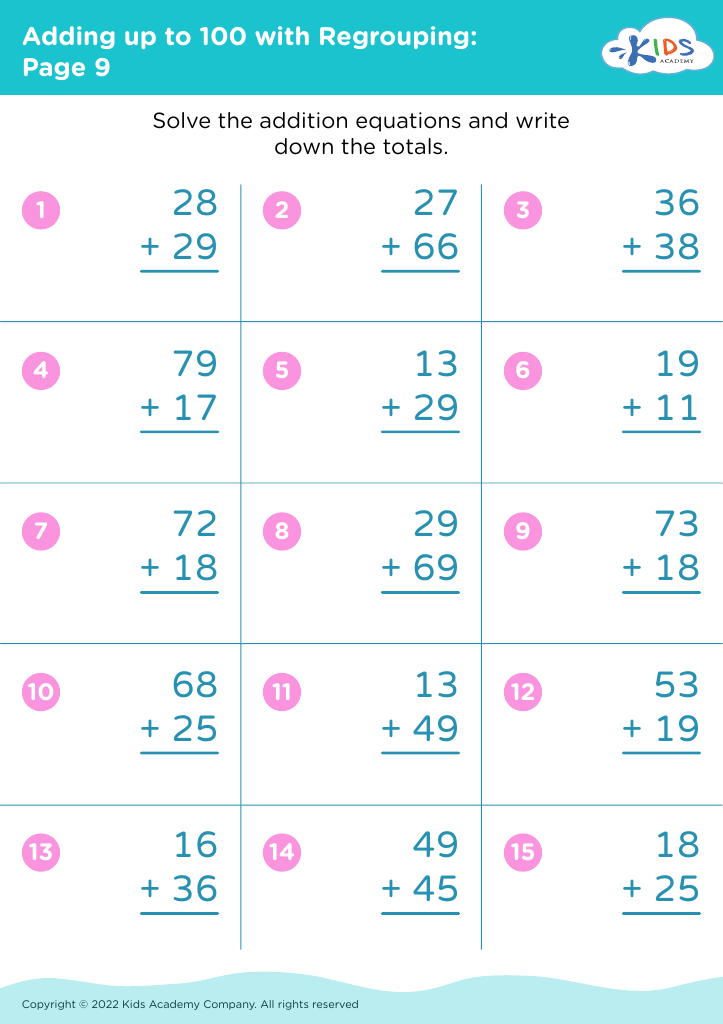
Adding up to 100 with Regrouping: Page 9
Worksheet
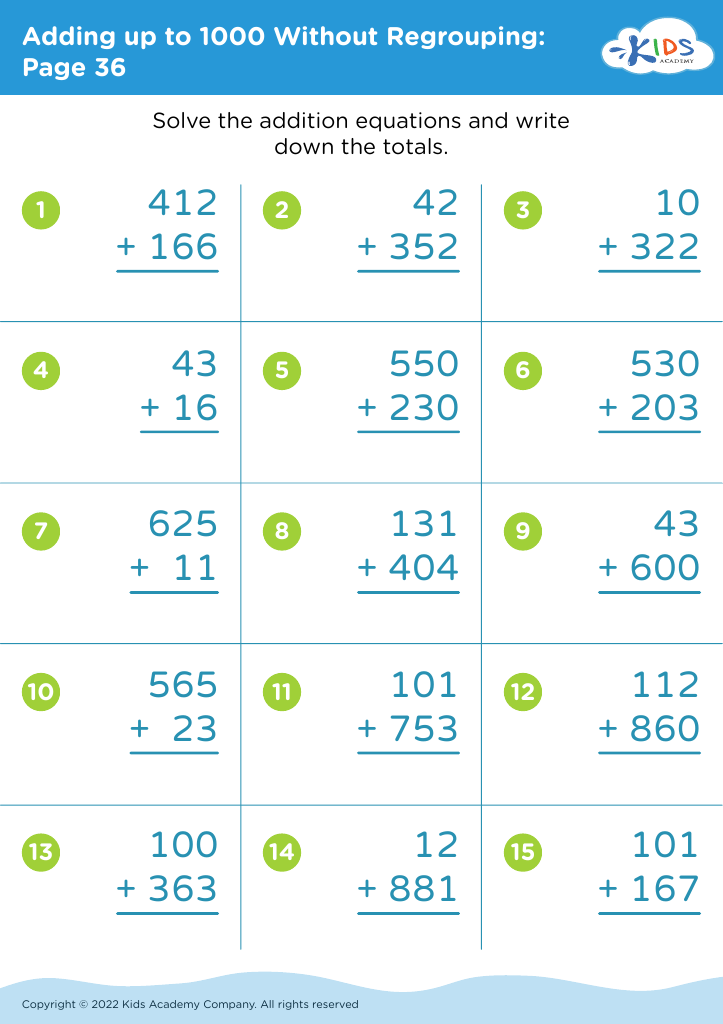
Adding up to 1000 Without Regrouping: Page 36
Worksheet
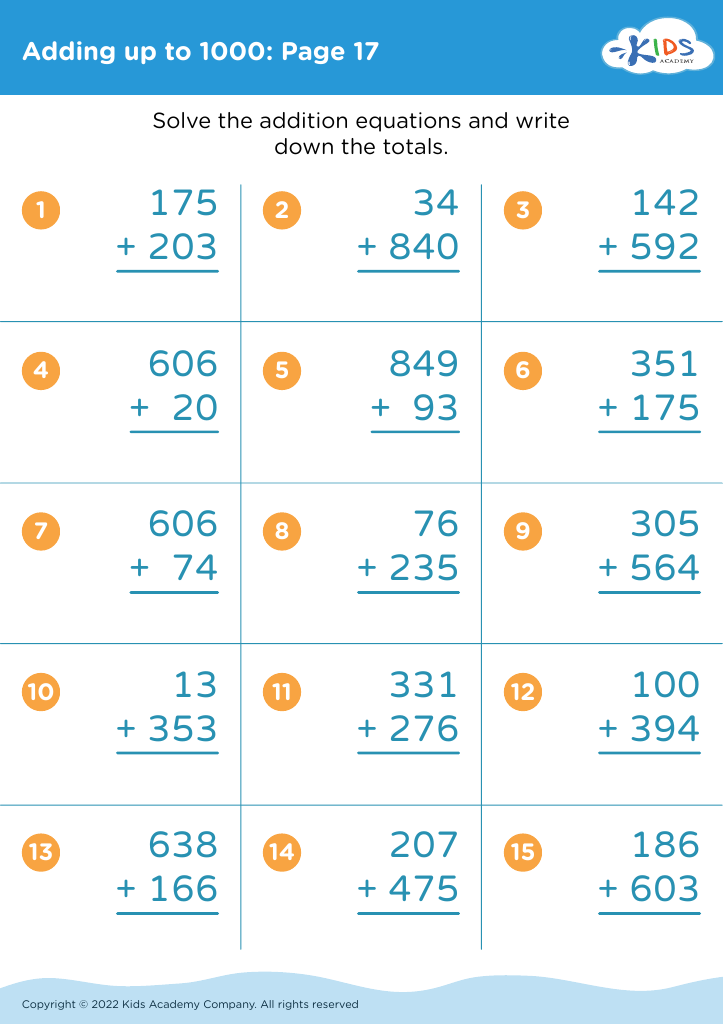
Adding up to 1000: Page 17

Adding up to 1000: Page 17

Adding up to 1000: Page 17
Worksheet
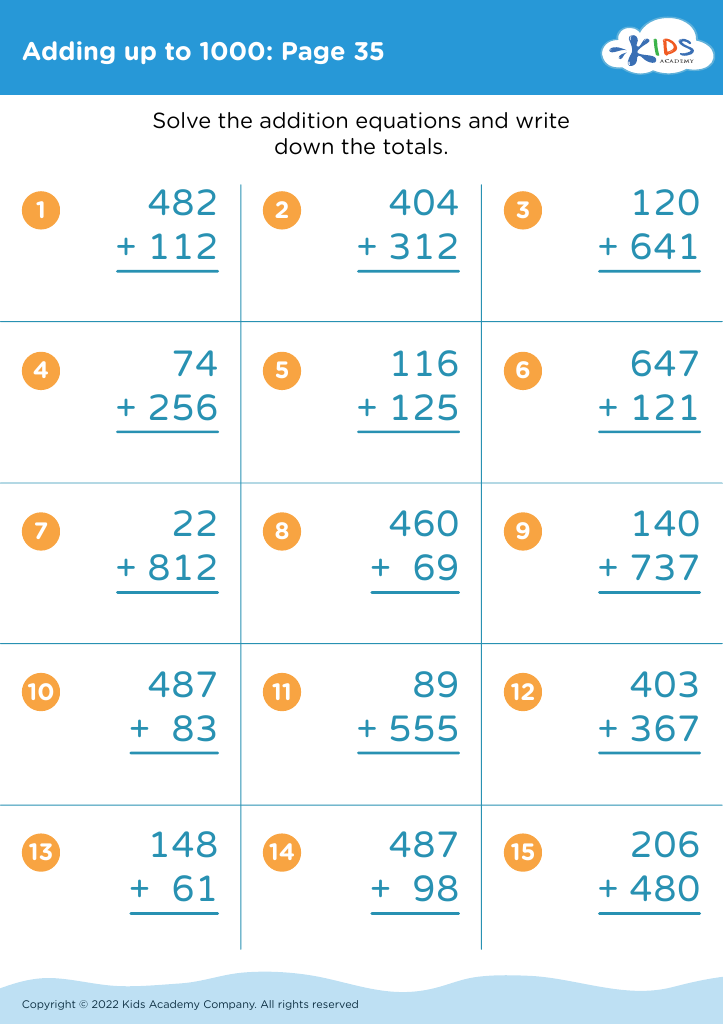
Adding up to 1000: Page 35

Adding up to 1000: Page 35

Adding up to 1000: Page 35
Worksheet
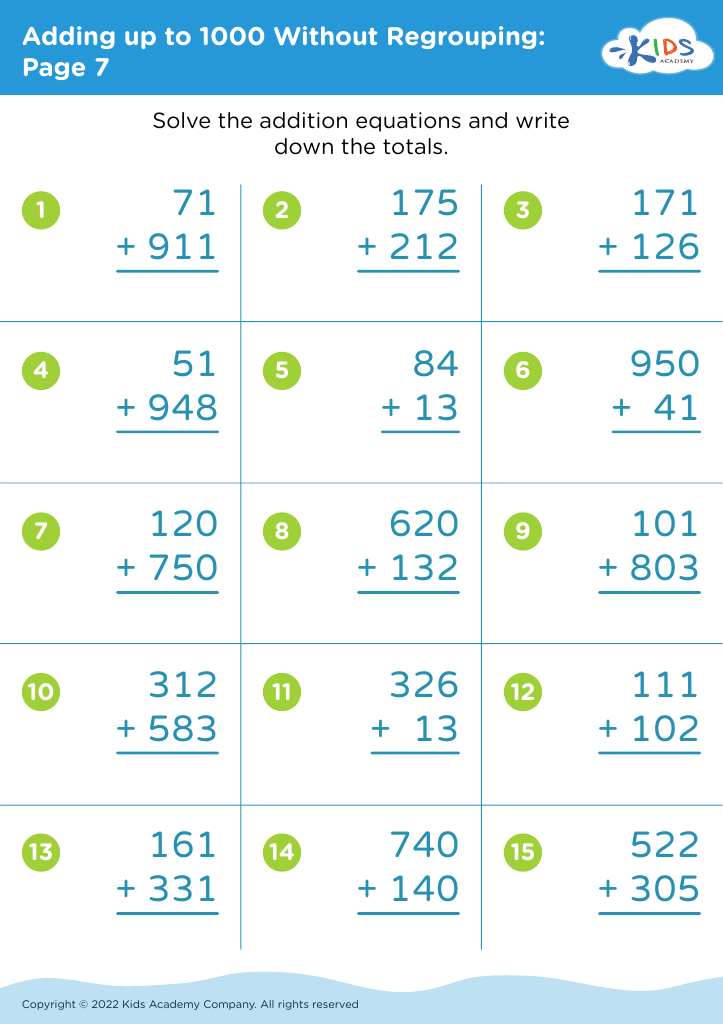
Adding up to 1000 Without Regrouping: Page 7
Worksheet
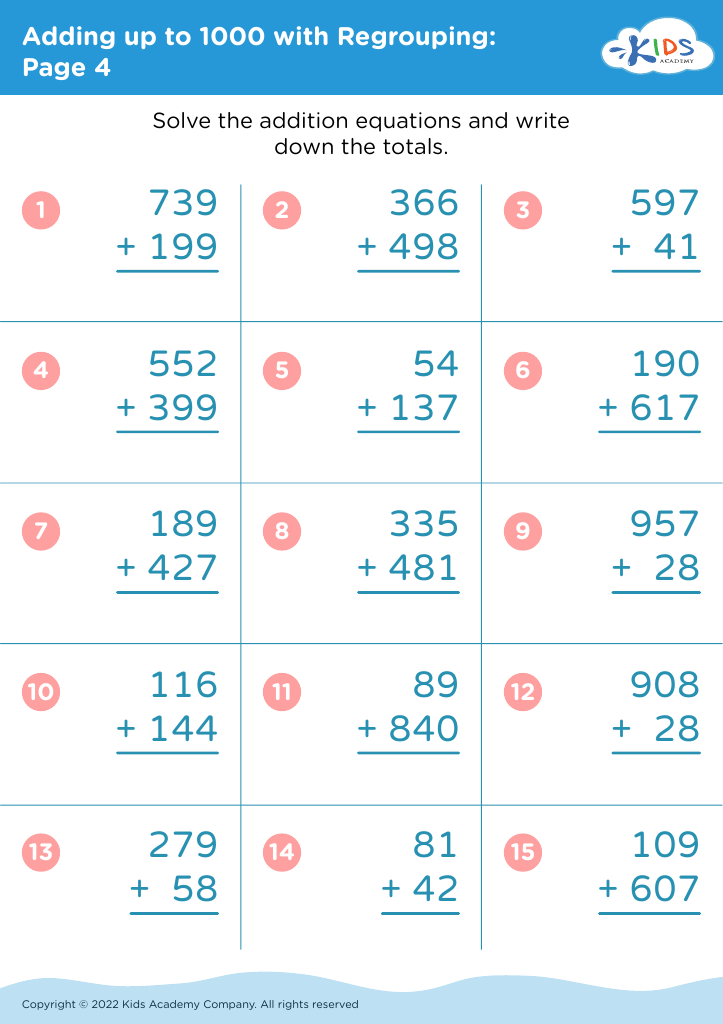
Adding up to 1000 with Regrouping: Page 4
Worksheet
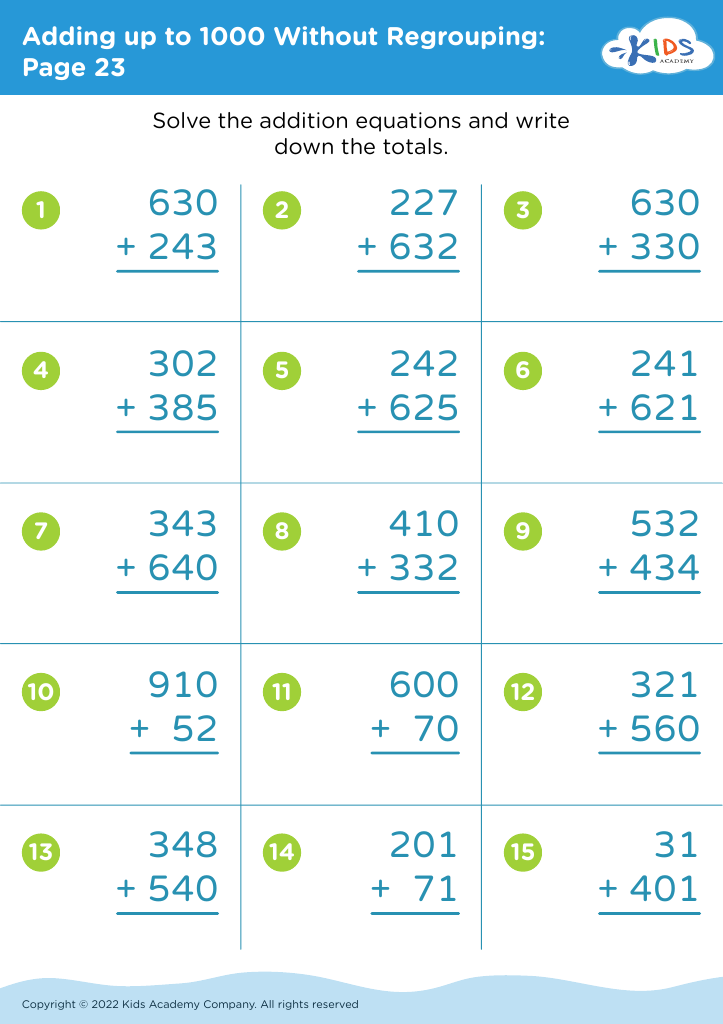
Adding up to 1000 Without Regrouping: Page 23
Worksheet
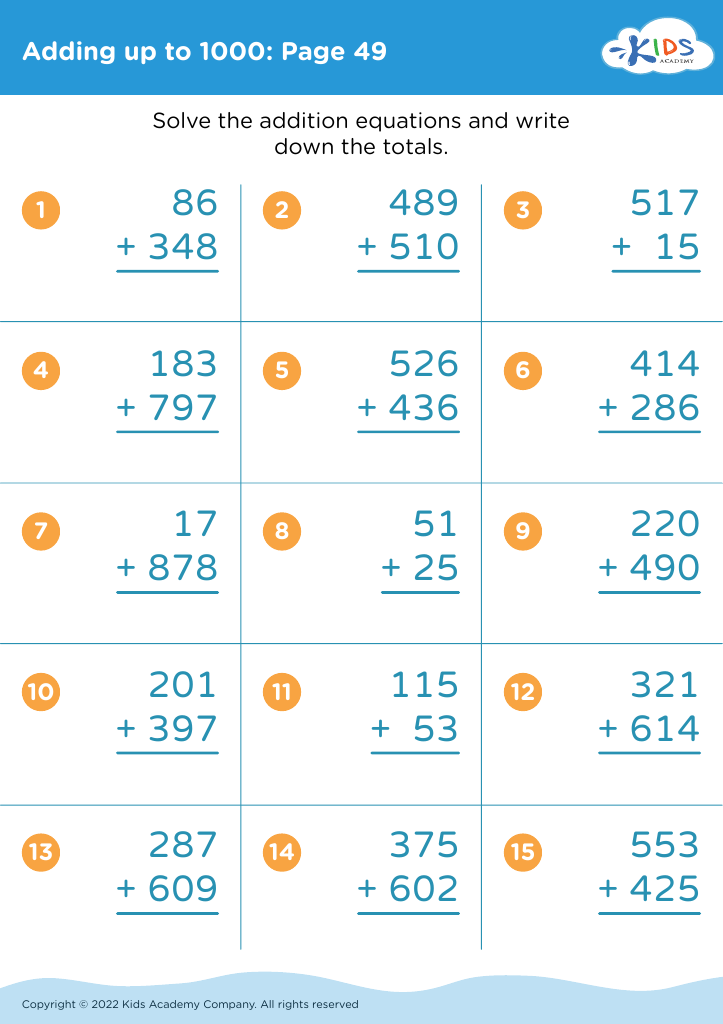
Adding up to 1000: Page 49

Adding up to 1000: Page 49

Adding up to 1000: Page 49
Worksheet
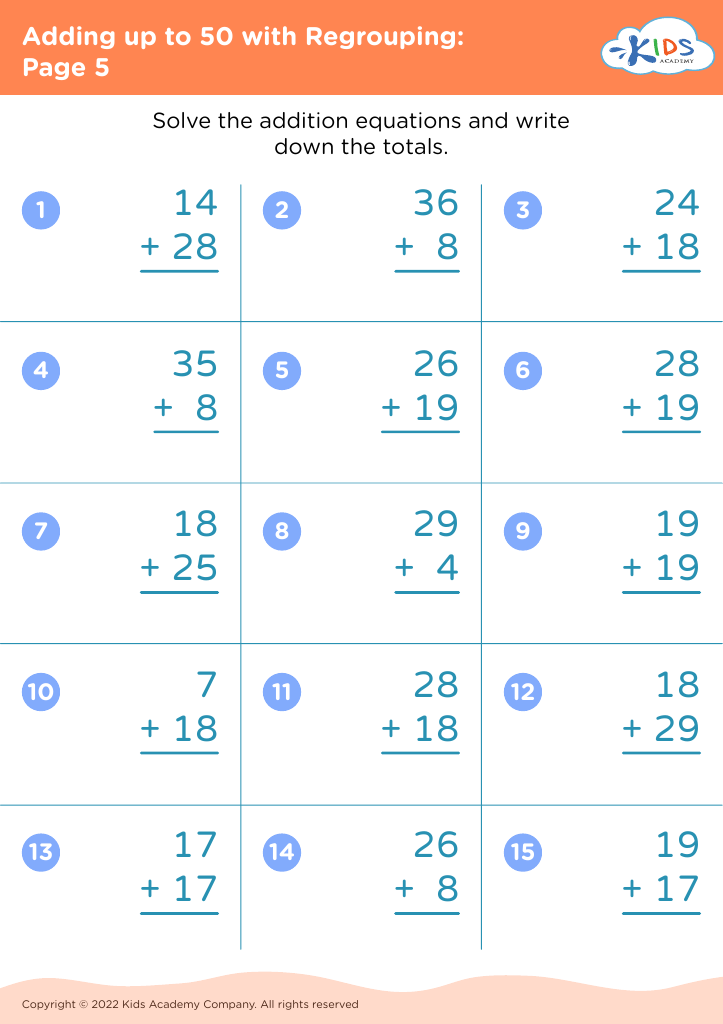
Adding up to 50 with Regrouping: Page 5
Worksheet
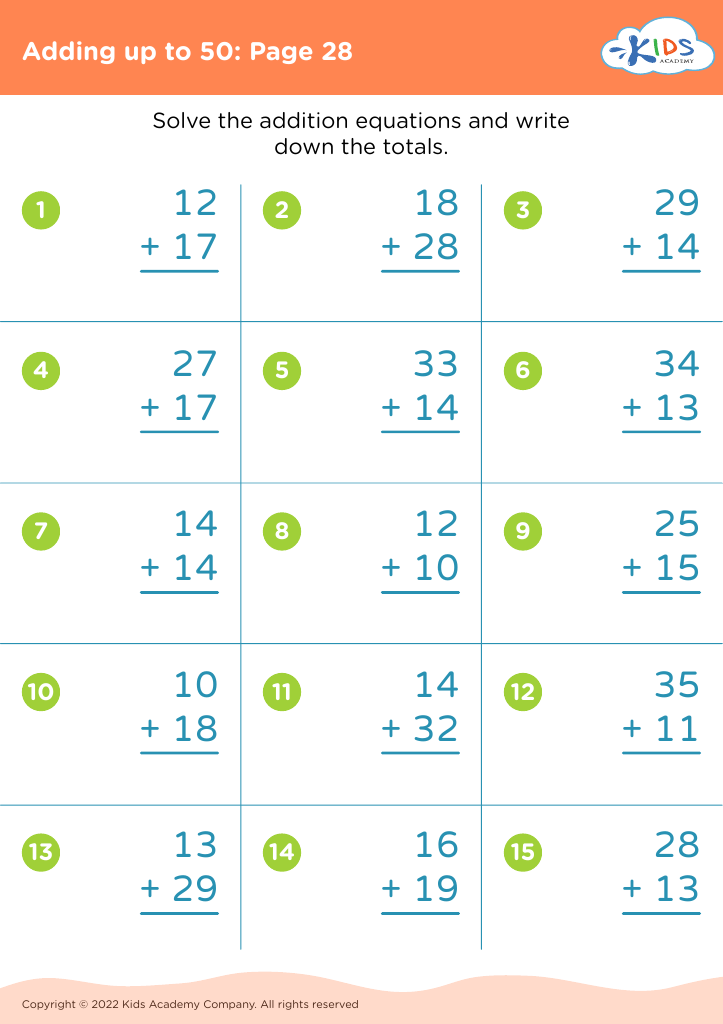
Adding up to 50: Page 28

Adding up to 50: Page 28

Adding up to 50: Page 28
Worksheet
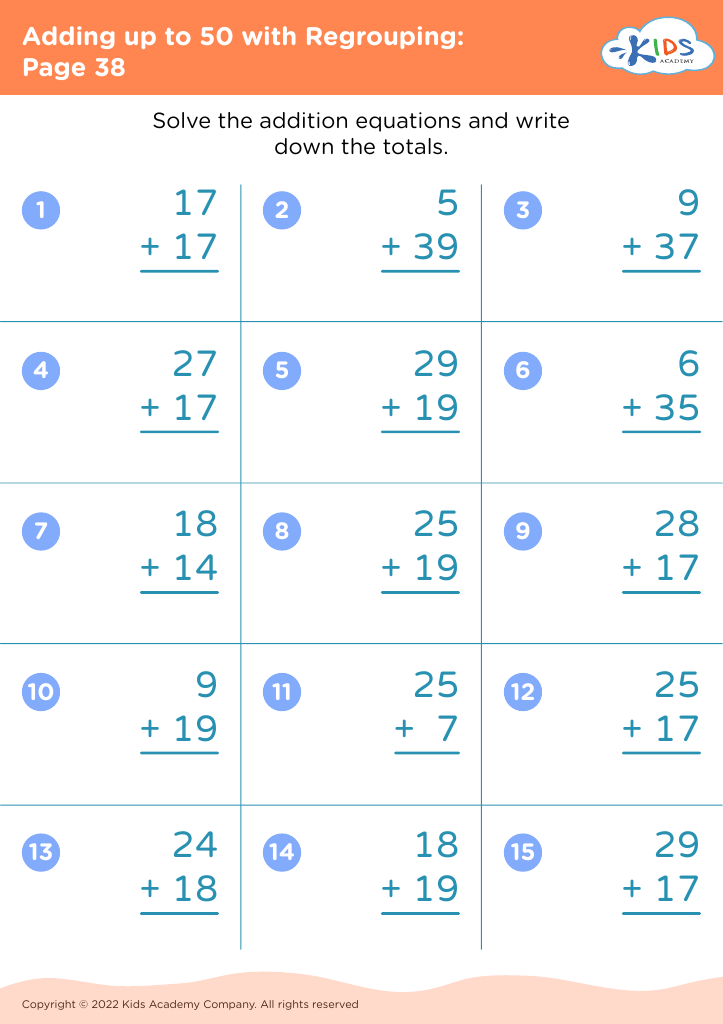
Adding up to 50 with Regrouping: Page 38
Worksheet
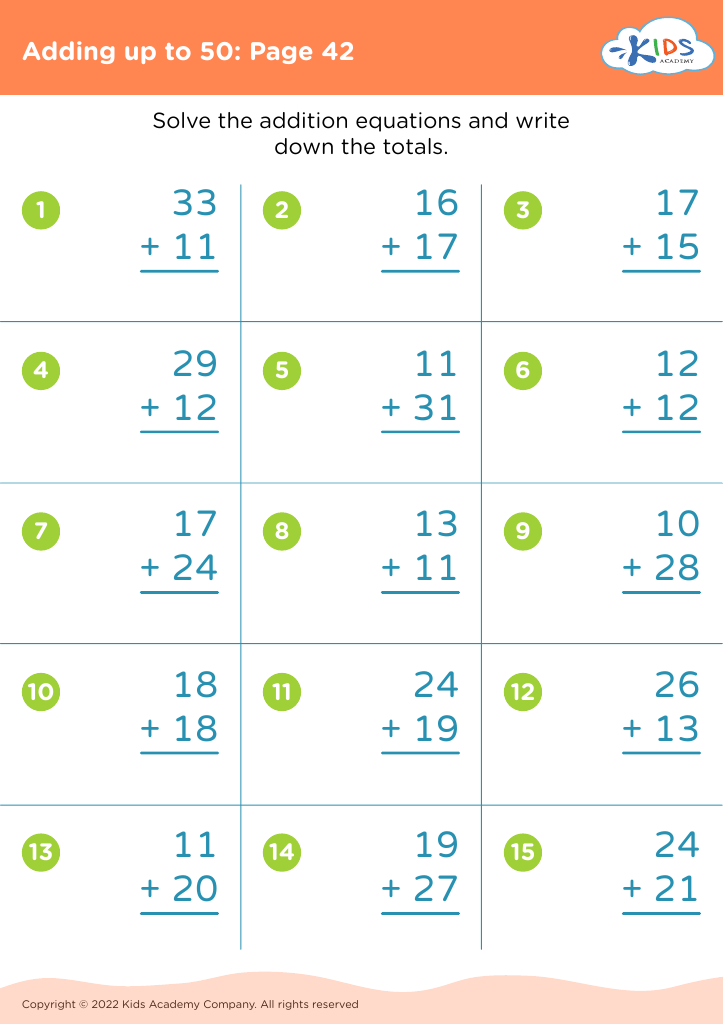
Adding up to 50: Page 42

Adding up to 50: Page 42

Adding up to 50: Page 42
Worksheet
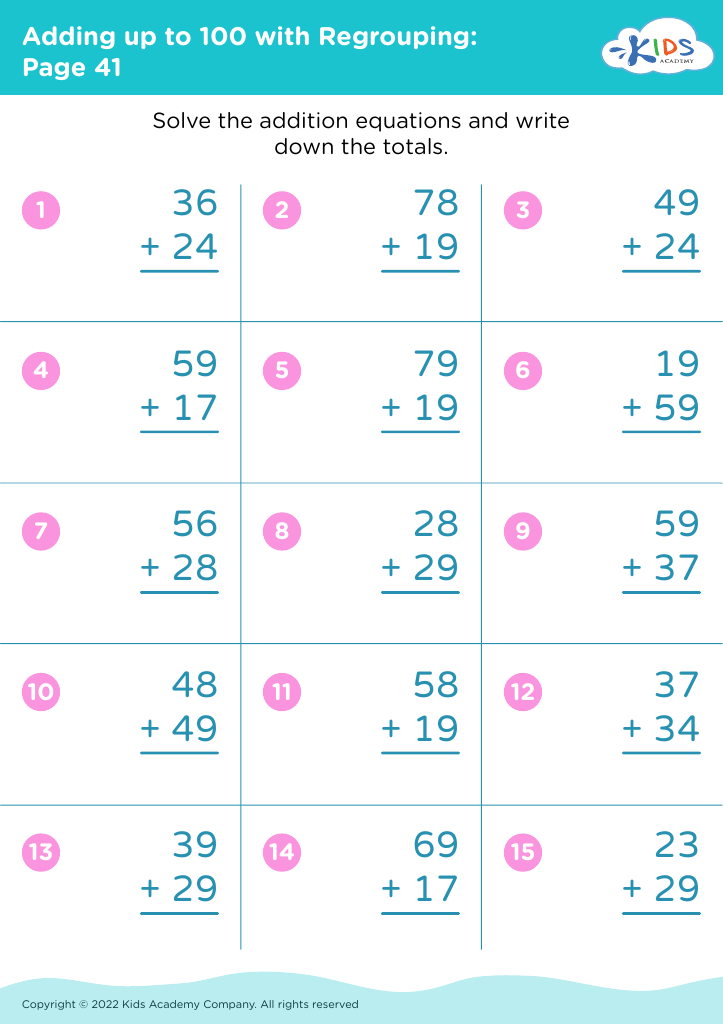
Adding up to 100 with Regrouping: Page 41
Worksheet
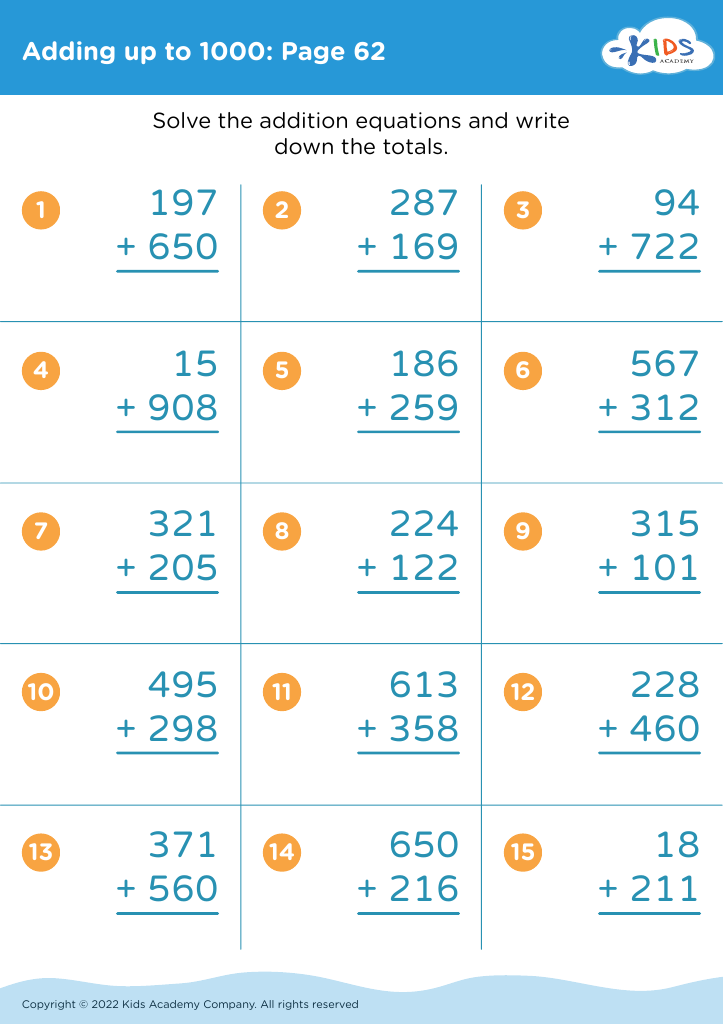
Adding up to 1000: Page 62

Adding up to 1000: Page 62

Adding up to 1000: Page 62
Worksheet
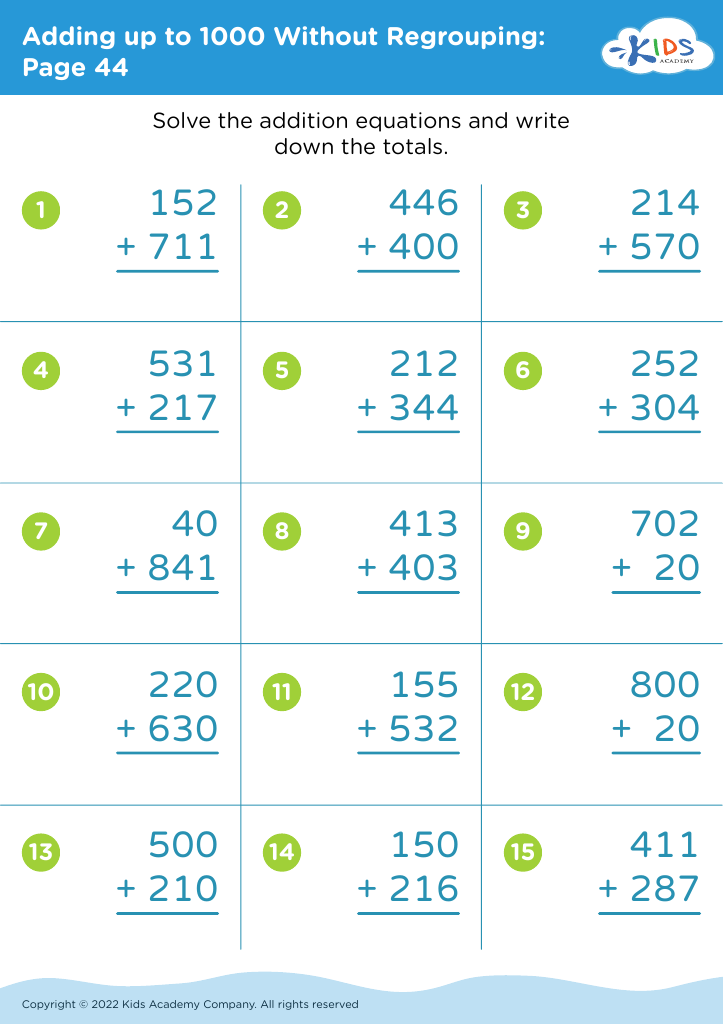
Adding up to 1000 Without Regrouping: Page 44
Worksheet
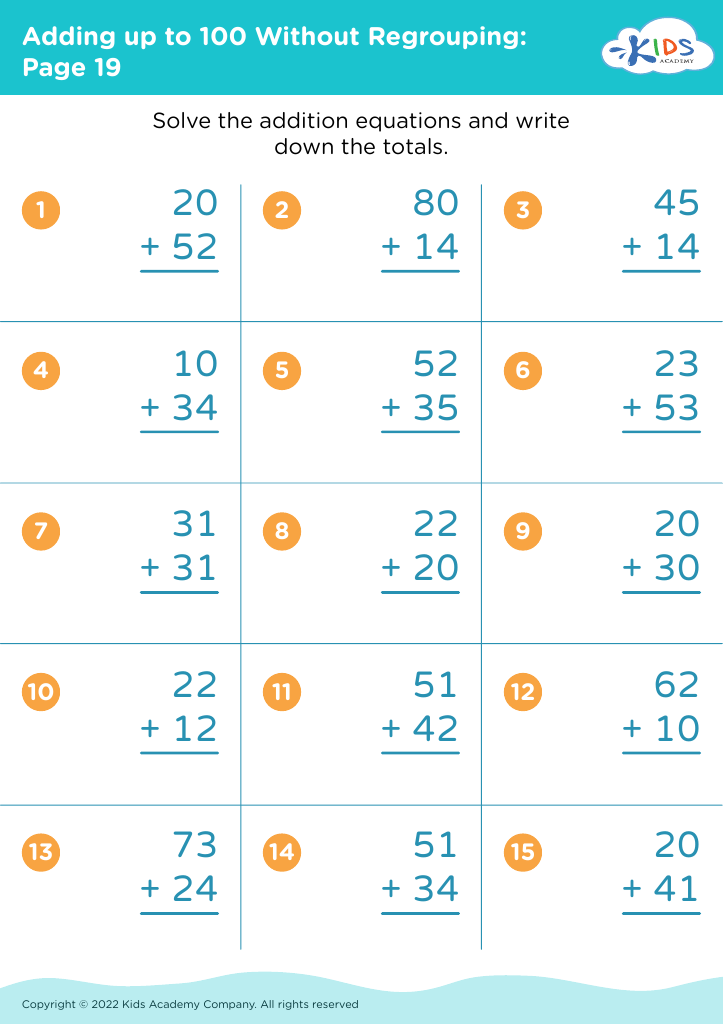
Adding up to 100 Without Regrouping: Page 19
Worksheet
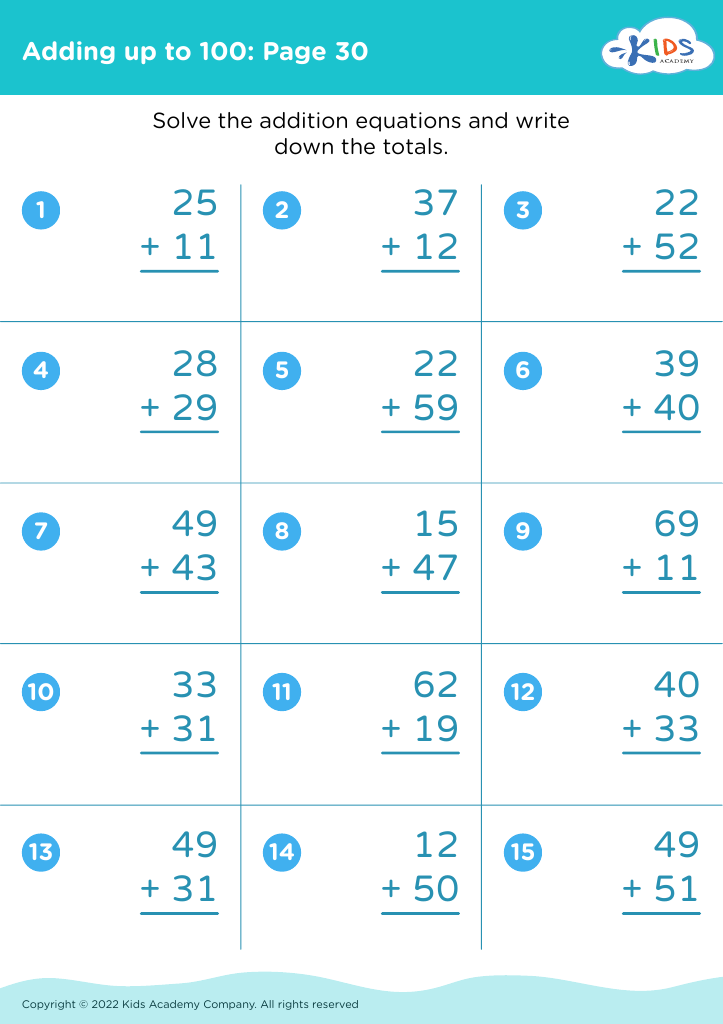
Adding up to 100: Page 30

Adding up to 100: Page 30

Adding up to 100: Page 30
Worksheet
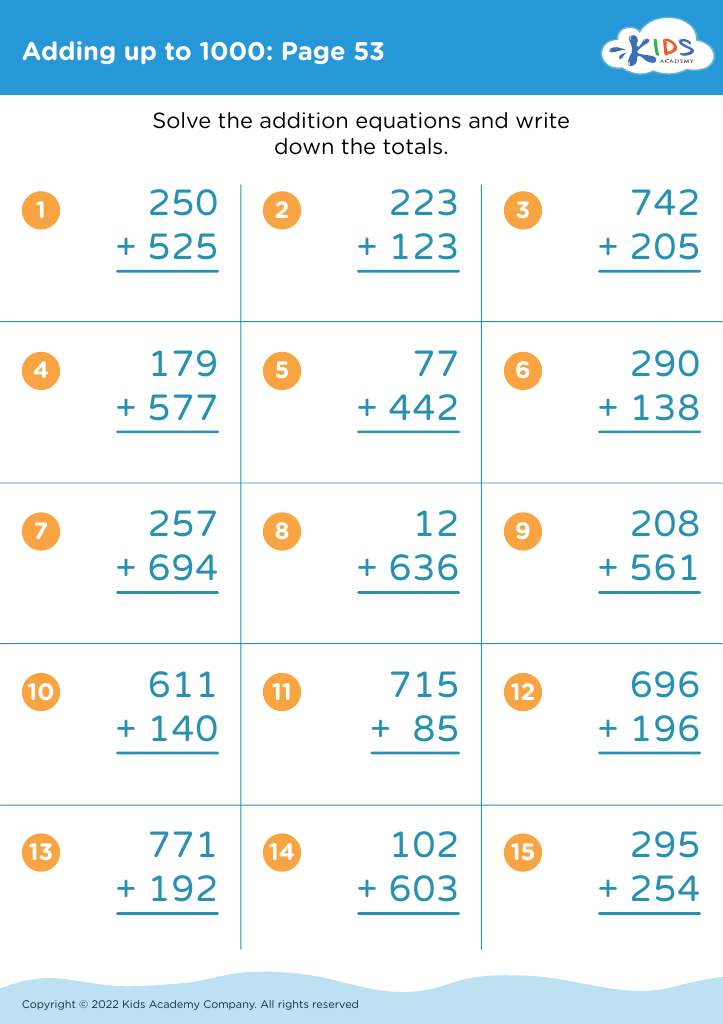
Adding up to 1000: Page 53

Adding up to 1000: Page 53

Adding up to 1000: Page 53
Worksheet
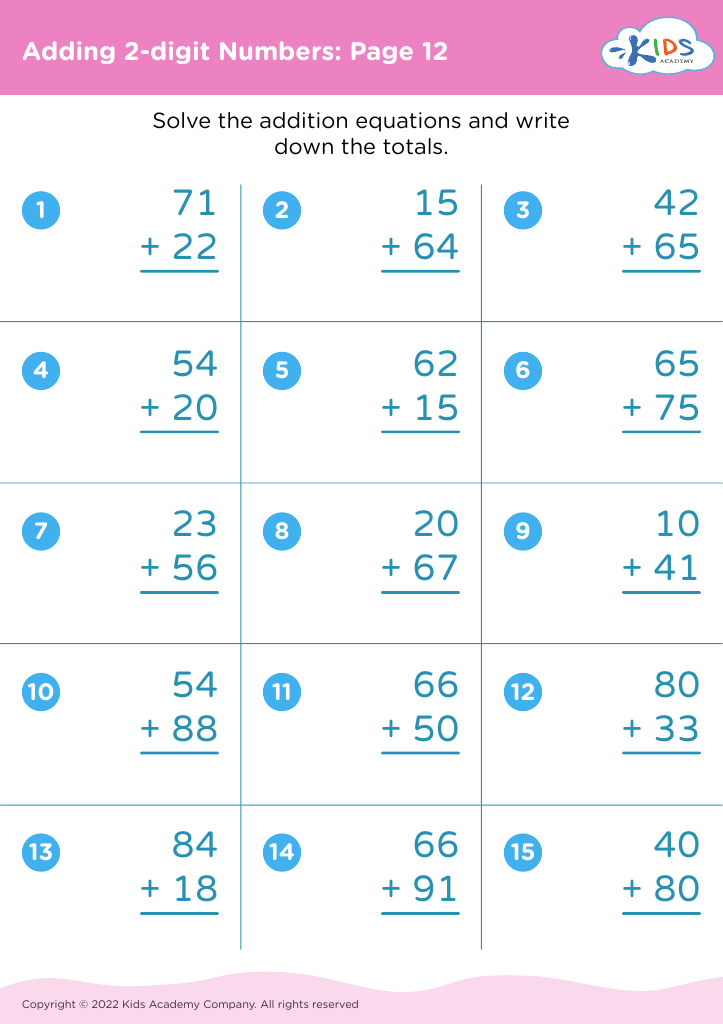
Adding 2-digit Numbers: Page 12

Adding 2-digit Numbers: Page 12

Adding 2-digit Numbers: Page 12
Worksheet
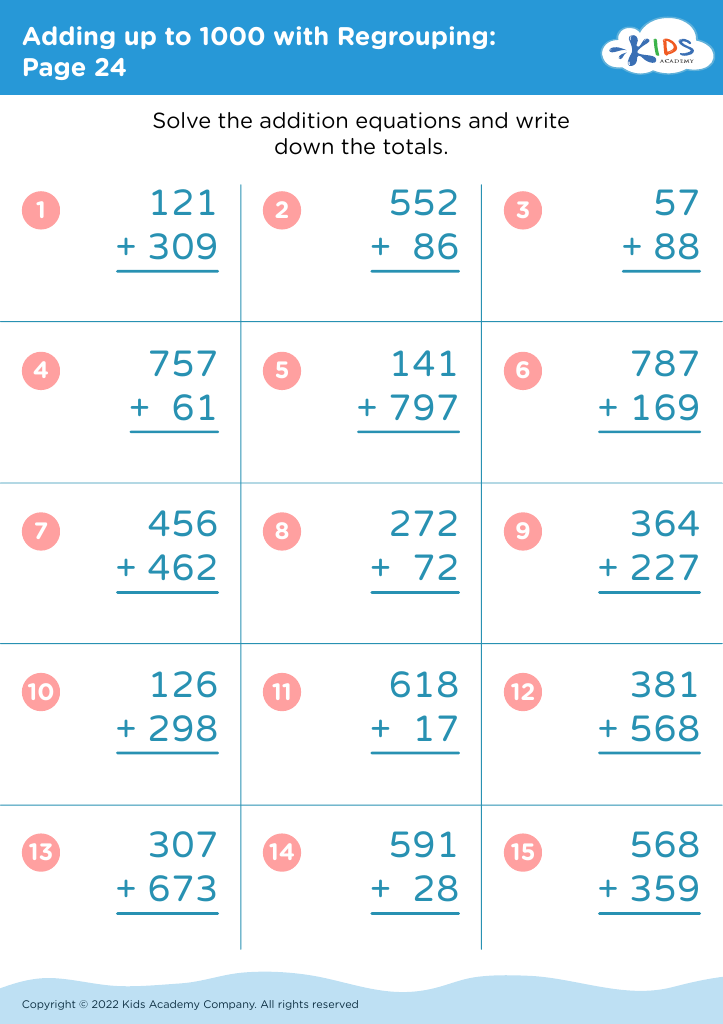
Adding up to 1000 with Regrouping: Page 24
Worksheet
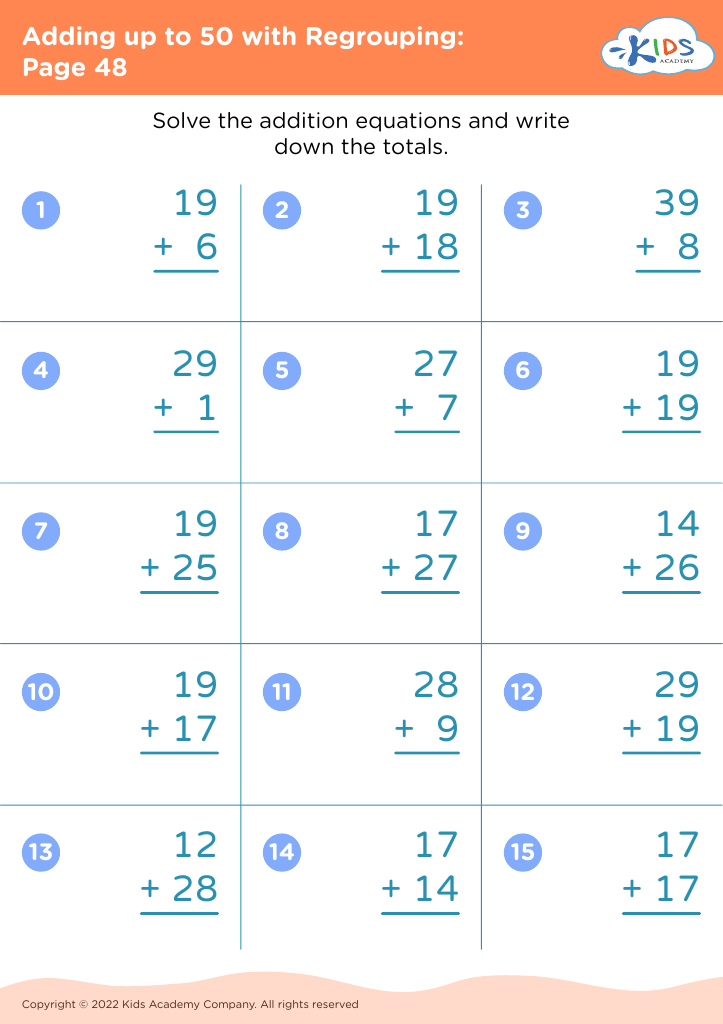
Adding up to 50 with Regrouping: Page 48
Worksheet
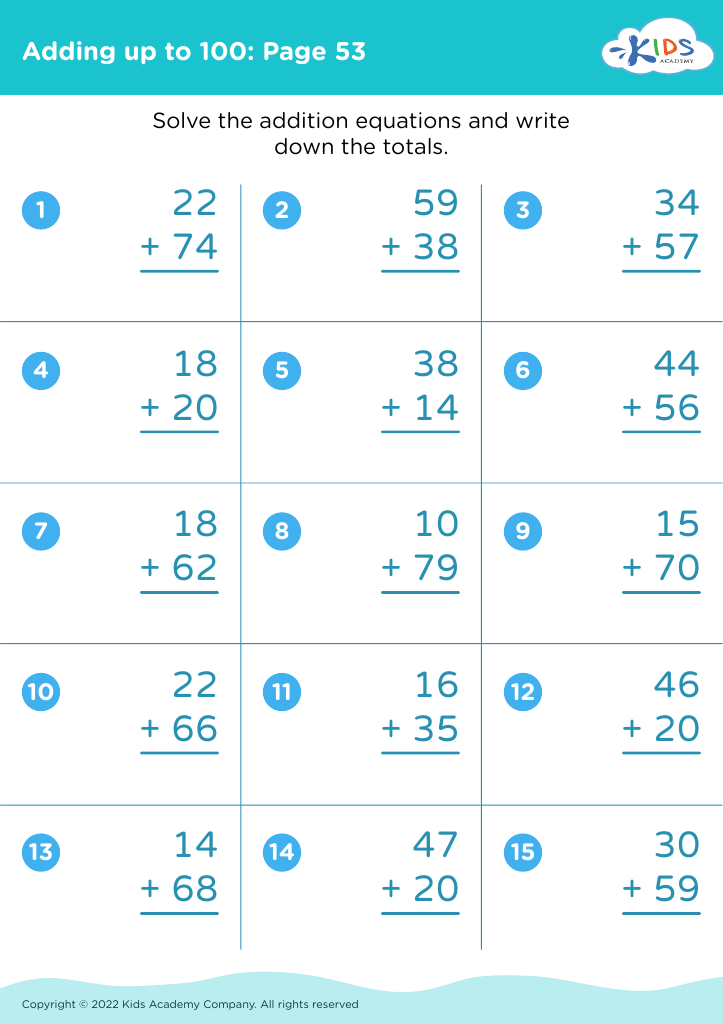
Adding up to 100: Page 53

Adding up to 100: Page 53

Adding up to 100: Page 53
Worksheet
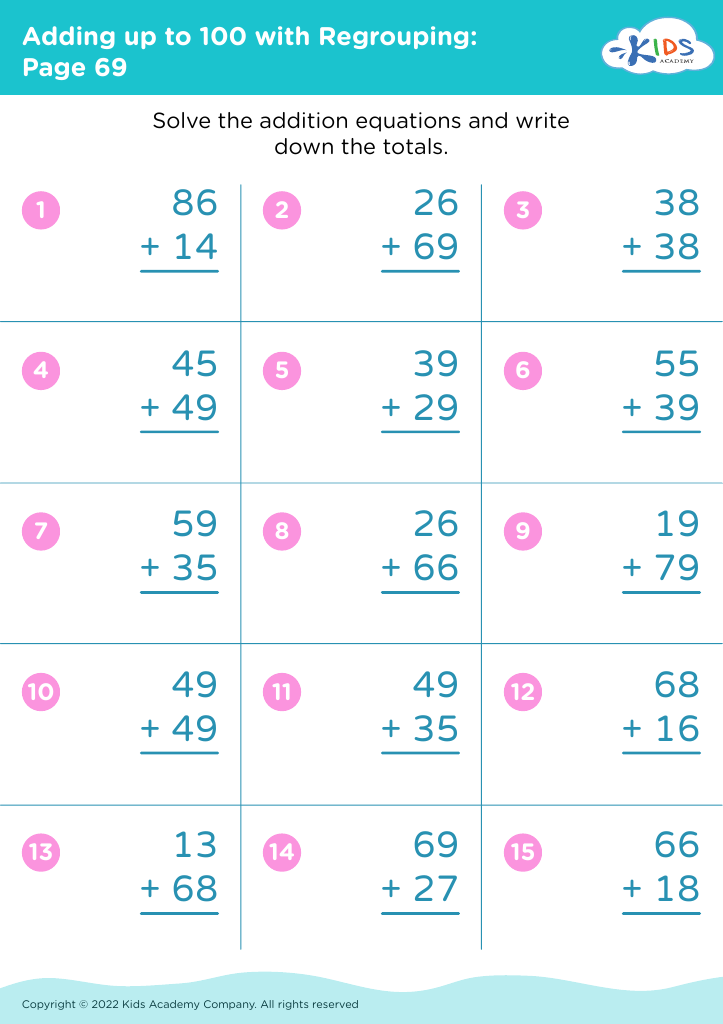
Adding up to 100 with Regrouping: Page 69
Worksheet
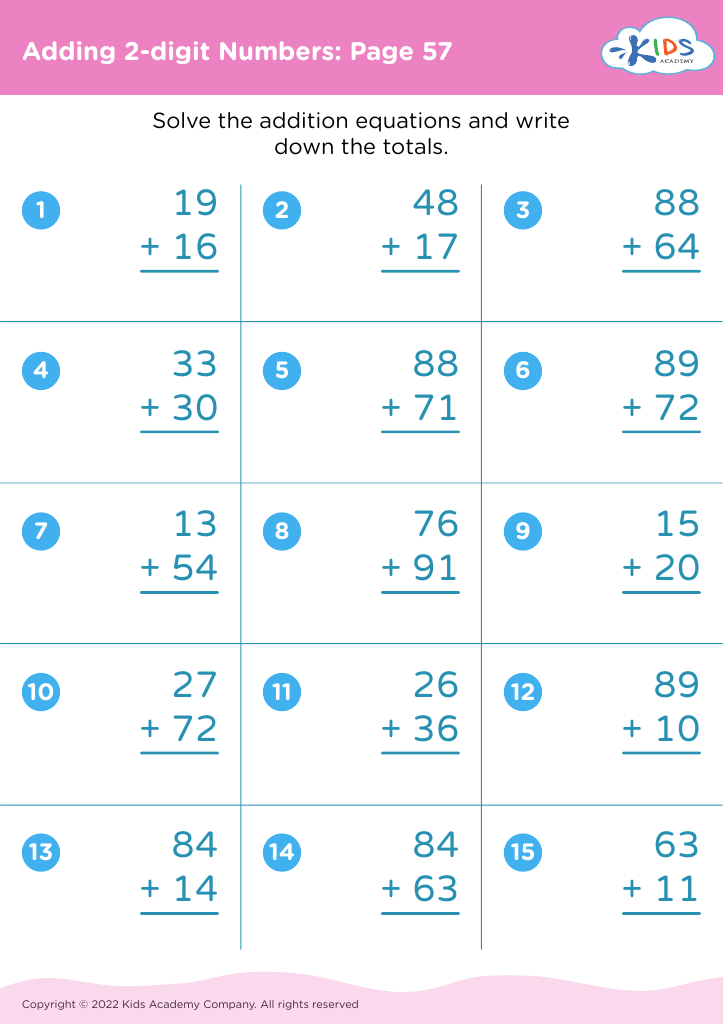
Adding 2-digit Numbers: Page 57

Adding 2-digit Numbers: Page 57

Adding 2-digit Numbers: Page 57
Worksheet


Understanding fraction comparison, addition, and subtraction is crucial for both parents and teachers, as these concepts form the foundation for a child's mathematical proficiency. Firstly, fractions are a common part of everyday life, from cooking to budgeting, so solidifying these skills helps children make sense of practical situations.

Teachers play a vital role by introducing these concepts in a structured manner, ensuring that students grasp how to compare fractions, recognize equivalent fractions, and perform operations with them. A strong understanding of fraction operations enhances students’ overall number sense, which is essential for mastering more advanced mathematical concepts in later grades, including ratios, percentages, and algebra.

Moreover, parental involvement further reinforces learning. By supporting their children through homework or everyday fractional tasks, parents demonstrate the relevance of math in real life. Engaging in discussions about fractions during cooking, sharing food, or measuring can make learning enjoyable and relatable.

Ultimately, when both parents and teachers prioritize fraction skills, they are investing in a child’s academic success and building a solid foundation for critical thinking and problem-solving skills that will benefit them throughout their education and beyond. Understanding fractions fosters confidence and competence in mathematics, empowering children for lifelong learning.