Fraction identification Addition & Subtraction Worksheets
5 filtered results
-
From - To
Explore our engaging Fraction Identification Addition & Subtraction Worksheets designed for early learners. These worksheets aim to enhance students' understanding of fractions by integrating addition and subtraction challenges. Perfect for kindergarten through second-grade classrooms, they provide a fun and interactive way for children to practice identifying fractions in various contexts. Through visually appealing exercises, students will strengthen their math skills, develop critical thinking, and boost confidence in handling fractions. With a range of activities available, educators can easily incorporate these worksheets into their lessons, fostering a solid foundation in mathematical concepts. Get started today and watch your students thrive!
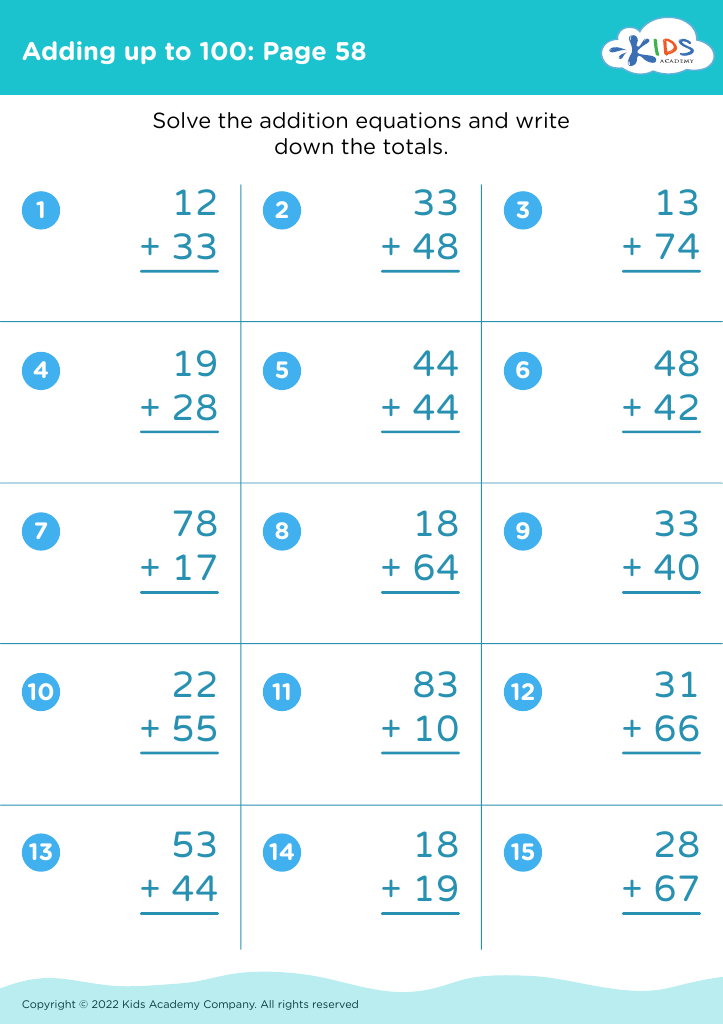








Fraction identification, addition, and subtraction are critical skills that lay the foundational groundwork for a child's mathematical development. Understanding fractions helps students make sense of parts of a whole, a concept that is not only fundamental in mathematics but also mirrors real-life situations—like slicing a pizza or measuring ingredients in cooking.
Parents and teachers should prioritize teaching these skills, as they enhance critical thinking and problem-solving abilities. Mastering fractions allows children to approach more advanced topics, such as ratios, proportions, and algebra, with confidence. Furthermore, proficiency in fraction operations is essential for standardized testing and future academic success.
Moreover, the concept of fractions fosters perseverance; students learn to approach complex problems step-by-step and to tackle challenges—key life skills that go beyond mathematics. Engaging in fraction activities encourages collaboration, as children often work together to solve problems, promoting social skills and teamwork.
Parental involvement and dedicated instruction from teachers can significantly impact a child's attitude towards math, turning it into an enjoyable, relatable experience. When families and educators emphasize fraction competencies, they empower children to view math as a useful tool for understanding their world, rather than merely an academic subject. Hence, caring about these skills shapes confident, capable learners.








