Fraction representation Addition & Subtraction Worksheets
3 filtered results
-
From - To
Enhance your child's understanding of fractions with our Fraction Representation Addition & Subtraction Worksheets! Specially designed for young learners, these engaging worksheets help students master adding and subtracting fractions and mixed numbers with ease. The fun, visually appealing exercises allow children to explore fractions through pie charts, number lines, and simple word problems. With clear instructions and practice problems, kids build confidence and proficiency in no time. Perfect for classroom use or extra practice at home, our worksheets support the development of critical math skills. Empower your child’s fraction knowledge today with our expertly crafted resources!
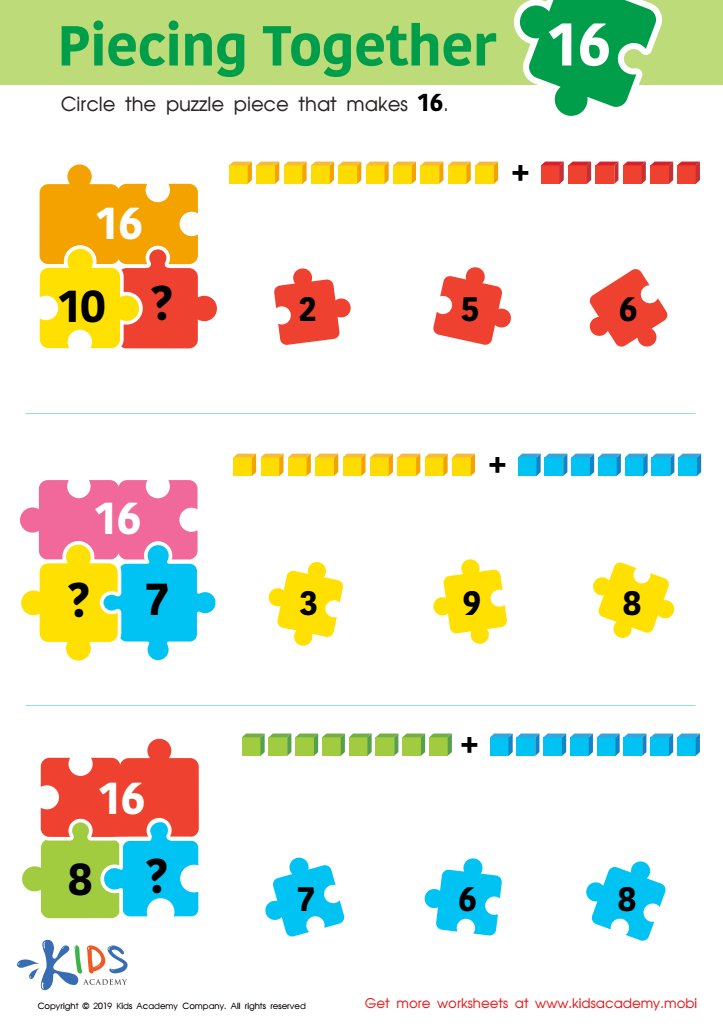
Piecing Together 16 Worksheet
 Assign to My Students
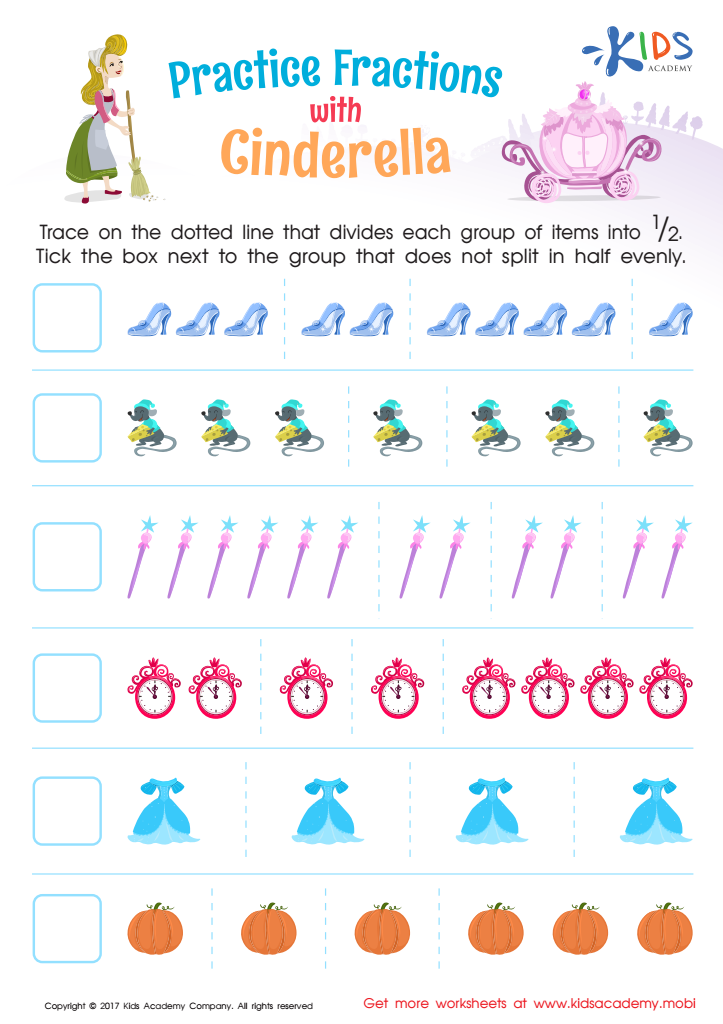
Fractions: Cinderella Printable








Parents and teachers should prioritize teaching fraction representation in addition and subtraction because it forms a foundational aspect of mathematical literacy that is essential for children's academic progression and everyday life skills. Understanding fractions enhances a child's ability to grasp more complex math concepts such as ratios, percentages, probability, and algebra. This foundational knowledge is not only crucial for math classes but also for subjects like science, where fractions are commonly used in experiments, measurements, and data analysis.
Additionally, fractions appear in everyday activities, from cooking and budgeting to time management and shopping. For instance, following a recipe or dividing a bill requires a practical understanding of how to add or subtract fractions.
Furthermore, proficiently handling fractions builds logical reasoning and problem-solving skills, prompting a deeper engagement with analytical thinking. Students who excel in fraction operations often find it easier to tackle higher-level math courses and standardized tests, opening up more academic and career opportunities.
By focusing on fractions, parents and teachers help students develop confidence and fluency in math, promoting a positive attitude towards learning and preparing them for real-world scenarios that demand numerical competency. This early investment in learning fractions thus yields long-term benefits, both academically and practically.








